Recalibrating Foundations for Future Fortune: The Curious Case of Ghana’s Petroleum Commission under Emeafa Hardcastle Esq.
Since assuming office in January 2025, Victoria Emeafa Hardcastle has set about reinforcing the Petroleum Commission’s technical and legal foundations, repositioning it as a credible interlocutor for global capital. Through renewed engagement with the Ghana Upstream Petroleum Chamber, the formalisation of in-country capacities, and a deliberate presence at international energy fora, the Commission has shifted from passive regulation to active market stewardship. Investor outreach has been paired with sharper governance, fiscal literacy, and stakeholder alignment, restoring confidence at a moment of upstream fragility. Her leadership, recognised internationally for its professionalism and inclusion, has placed strategic positioning rather than short-term concession at the centre of efforts to revive Ghana’s oil and gas fortunes.
There are moments in public administration when impact announces itself not with fanfare but with alignment. January 2025 was one such moment for Ghana’s upstream petroleum sector. With production sliding, exploration appetite thinning, and global capital recalibrating toward cleaner horizons, the appointment of Victoria Emeafa Hardcastle as Acting Chief Executive Officer of the Petroleum Commission was less a routine change of guard and more a test of institutional nerve.
Hardcastle arrived without illusions. A lawyer steeped in corporate structuring and energy regulation, and a former board member of the Commission itself, she understood both the mechanics and the malaise of Ghana’s upstream. What followed over the next twelve months was not a burst of policy theatre, but a disciplined campaign to restore credibility, coherence, and confidence.
Her first signal was philosophical. The Commission would no longer behave as a distant custodian of rules, but as an active enabler of value. That shift took form in April with a long overdue reengagement with the Ghana Upstream Petroleum Chamber. The meeting was procedural in appearance, but strategic in effect. Regulatory bottlenecks were surfaced, compliance expectations clarified, and dialogue restored as a working instrument rather than a ceremonial courtesy. In the same month, the Commission launched the In Country Capacities and Capabilities Catalogue, a deceptively technical intervention that addressed one of Ghana’s most persistent structural weaknesses: the under visibility of indigenous firms in a globalized petroleum supply chain.
From Accra, Hardcastle carried Ghana’s case outward. Her May keynote at the Global Energy Show in Calgary was calibrated for an audience wary of policy volatility and ESG uncertainty. She did not oversell. Instead, she argued for predictability, fiscal balance, and long term partnership, positioning Ghana not as a desperate frontier but as a jurisdiction ready to share risk and reward with clarity. The emphasis on frontier basins, particularly the Voltaian Basin which covers nearly 40 percent of Ghana’s landmass, reframed the country’s narrative from depletion to possibility.
June and July were months of methodical diplomacy. Engagements with Halliburton, Heliconia EAS, and the Natural Resource Governance Institute blended investment outreach with institutional strengthening. Internal capacity building on fiscal modeling ran alongside compliance reviews of deepwater blocks such as Cape Three Points. The message to operators was consistent: Ghana was serious about efficiency, transparency, and preparedness ahead of new drilling cycles expected in 2026.
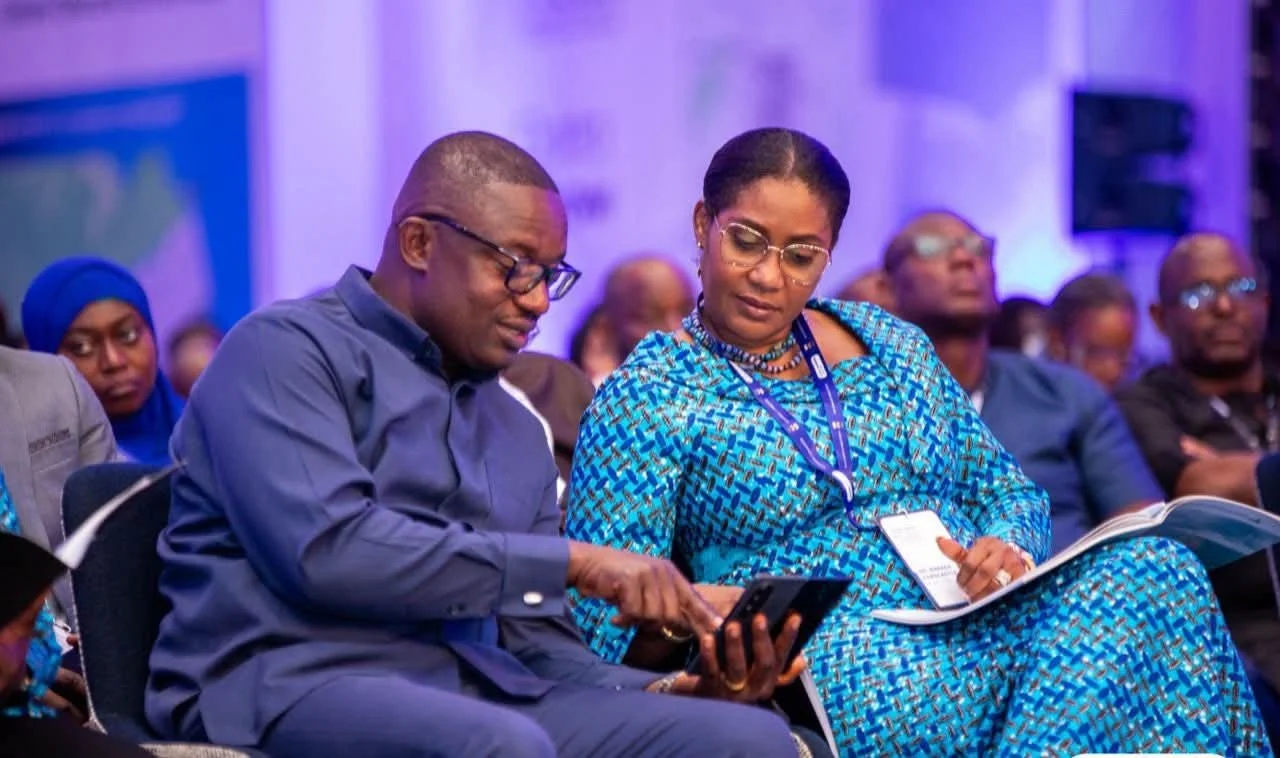
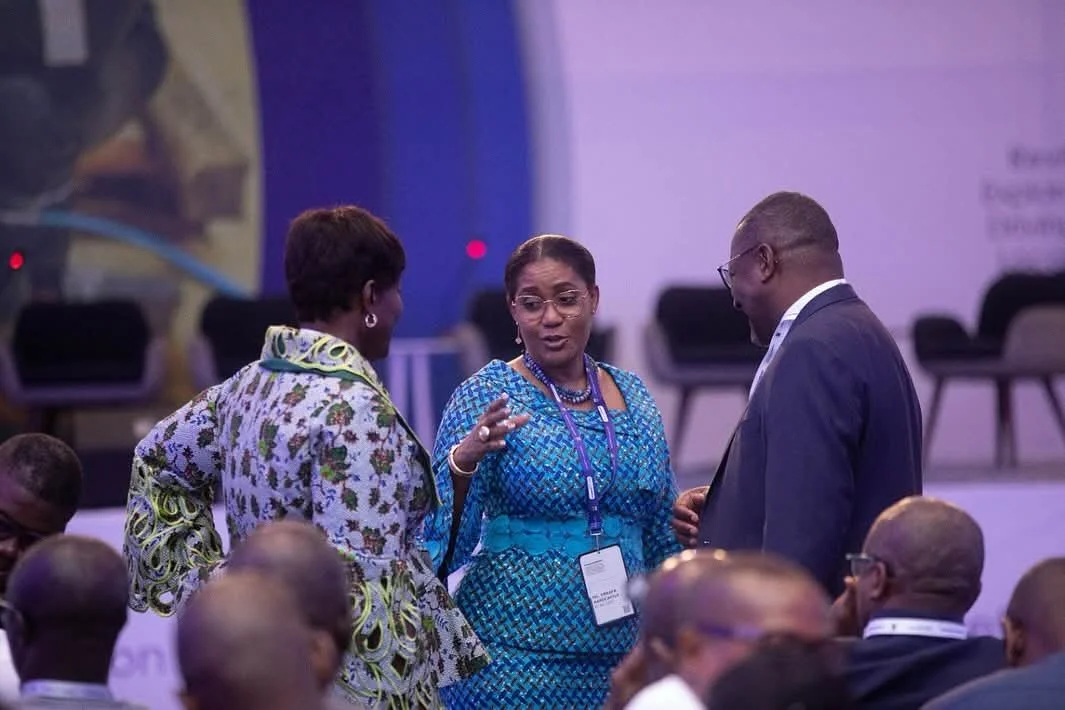
Governance architecture also shifted. The inauguration of a new Governing Board under Ernest Thompson injected multidisciplinary heft into the Commission’s oversight, particularly on fiscal reform and cost recovery frameworks. Environmental stewardship was folded into upstream planning through contributions to the National Marine Spatial Plan, while scientific collaboration with the Ghana Geological Survey Authority sharpened the technical case for onshore exploration.
By August, institutional collaboration deepened. A Promotion, Marketing, and Revenue Sharing Agreement with GNPC on Voltaian Basin data signaled a new seriousness about joint asset promotion. Parallel progress on strategic infrastructure, including the Tema LNG terminal and the Atuabo II gas processing expansion, underscored an upstream strategy tethered to midstream and downstream realities.
The final quarter tested the Commission’s ability to convert groundwork into momentum. African Energy Week in Cape Town and Africa Oil Week in Accra became platforms for reintroducing Ghana to global capital markets with revised fiscal terms and a clearer value proposition. Bilateral discussions with firms such as Energean and Petrobras were not merely exploratory, but targeted, reflecting months of prior preparation.
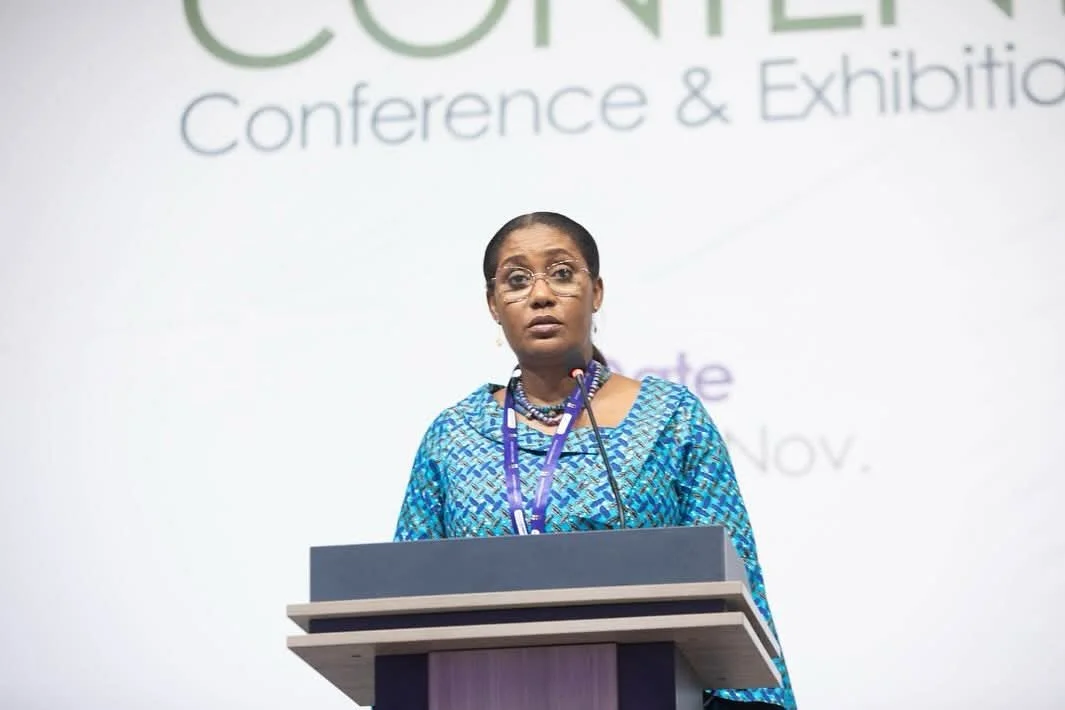
The crescendo came in November with the Local Content Conference and Exhibition in Takoradi. Against the stark arithmetic of declining production, the conference did not trade in nostalgia. It produced procurement forecasts, launched the In Country Capacities Catalogue formally, and catalyzed a Legislative Review Committee to interrogate petroleum laws that no longer fit contemporary realities. Local content was reframed not as a quota, but as an innovation strategy.
Throughout the year, Hardcastle threaded sustainability and inclusion into the Commission’s agenda. Host communities, particularly in the Western Region, were treated as stakeholders rather than afterthoughts. Gender inclusion was institutionalized through the Women in Petroleum programme, a commitment later recognized with the Women in Energy Excellence Award in the Trailblazer category.
Measured purely in announcements, the year might seem dense. Measured in institutional reorientation, it was profound. Under Hardcastle, the Petroleum Commission rediscovered its convening power. It became a place where investors listened, regulators coordinated, and national interest was articulated with confidence rather than defensiveness.
As 2026 opens, Ghana’s upstream challenges remain real. But the posture has changed. The regulator is no longer waiting for fortune. It is shaping the conditions under which fortune might reasonably return. In a sector where time, trust, and technical clarity are the true currencies, that may prove to be Victoria Hardcastle’s most consequential achievement.
Written By
Raymond Nuworkpor
Energy Market Analyst
