Low by Day, Lower by Night: Star Oil Rewrites the Rules of Ghana’s Downstream
From crisis-era price relief to market dominance, and now a provocative wager on Ghana’s night time economy - a call for even lower fuel prices at night by CEO Kwame Tieku, Ghana’s No. 1 OMC is testing how far consumer-first capitalism can stretch inside a regulated fuel market.
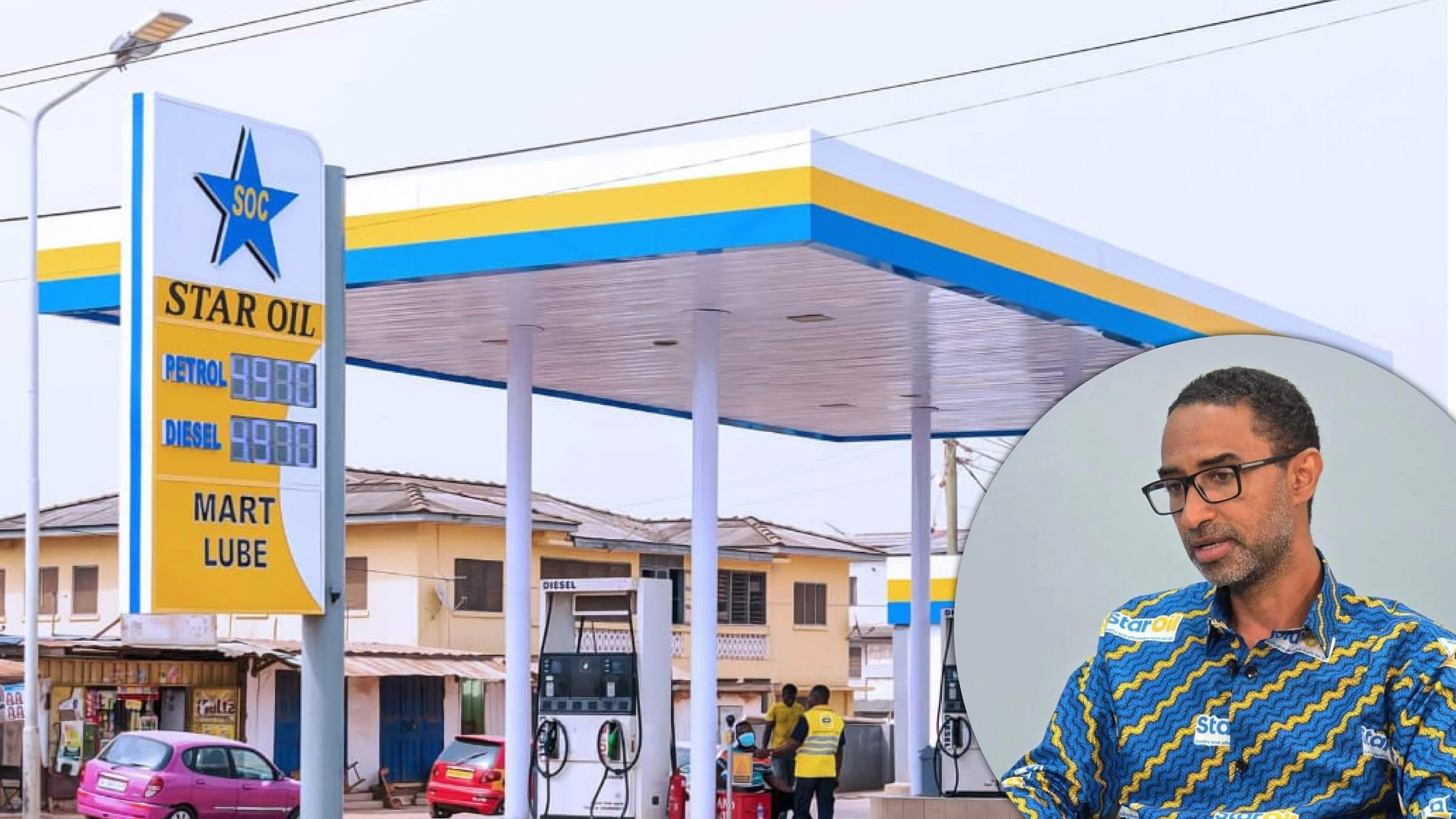
There are moments when a single pricing idea reveals far more than a balance sheet ever could. Star Oil’s recent suggestion that petrol could be sold at GH¢9.50 per litre between 10:00 PM and 4:00 AM was one such moment. On its face, it sounded almost playful. Beneath it, however, lay a serious challenge to Ghana’s downstream orthodoxy: that affordability, competition, and regulation must always sit in carefully fenced-off corners.
The proposal, floated publicly by Star Oil Chief Executive Philip Kwame Tieku, envisioned fuel stations transforming the quiet hours of the night into engines of economic activity. Taxi drivers on late shifts, delivery riders stitching together the logistics of modern commerce, and nightlife operators keeping cities awake would all benefit from materially cheaper fuel when demand traditionally thins out. The catch, and the provocation, was obvious. At that price point, Star Oil would undercut the National Petroleum Authority’s floor price, a regulatory safeguard designed to prevent destructive competition - a position he disagrees with.
It was not the first time Star Oil had unsettled the market by moving first.
The Long Memory of the Price-Crazy Years
To understand why the idea resonated, one must return to the bruising years between 2022 and 2025. Global crude volatility, a weakening cedi, and inflationary pressure pushed pump prices into territory many Ghanaians had never encountered. Petrol at GH¢15, GH¢17, even GH¢18 per litre became an unwelcome norm. Transport costs bled into food prices. Businesses quietly recalibrated. Households devolved into crushing poverty - this according to the IMF, for the purpose of putting the plight of the ordinary Ghanaian at this time:
“High inflation and tepid economic growth have worsened household welfare. An estimated 29.5 percent of the population lived in extreme poverty (measured at the international poverty line of US$2.15 per day) in 2023, up 3.1 percentage points from the previous year. At the Lower-Middle Income Country (LMIC) poverty line of US$3.65 per day, 54.7 percent of the population was considered poor in 2023.”
For added context, this was the fate of the ordinary Ghanaian in a best-case scenario, again according to the IMF: Poverty rates are expected to rise until 2026, peaking in 2025 at 31.5 percent—levels last seen in the late-2000s—before dipping to 30.6 percent. At the LMIC line, rates may hit 55.1 percent by 2026. This trend correlates with limited growth in services and agriculture, sectors where many poor and vulnerable households work, and increasing prices surpassing income growth for the poorest.

In this consumer environment, most oil marketing companies retreated into caution. Star Oil went the other way.
Under Tieku’s leadership, the company repeatedly moved to cut prices whenever market fundamentals allowed, often ahead of competitors. These reductions were not cosmetic. They reset consumer expectations and forced the rest of the downstream sector to respond. What emerged was not a race to the bottom, but a reassertion of competition in a market that had grown comfortable with pass-through pricing.
Crucially, Star Oil paired affordability with operational discipline. Investments in supply chain efficiency, temperature-compensated fuel handling, and stringent pump integrity checks dismantled the old assumption that cheaper fuel was synonymous with compromised quality. During a period when confidence in many sectors frayed, Star Oil quietly built something rarer: trust.
The cumulative effect was substantial. Millions of cedis remained in the hands of commuters, commercial drivers, and small businesses at a time when every saving mattered. By the time global conditions eased, Star Oil was no longer merely participating in the market. It was shaping it.
From Challenger to Market Leader
By January 2026, the transformation was unmistakable. With more than 254 stations nationwide, Star Oil had overtaken long-established players to become Ghana’s largest oil marketing company by volume. When it dropped petrol prices to GH¢9.97 per litre mid-month, the first sub-GH¢10 pricing since 2022, the rest of the industry followed.
This ascent was not built on price alone. In 2025, the company paid over GH¢2.63 billion in taxes and statutory levies, expanded its retail footprint, and deepened staff welfare programmes. Its rise from mid-tier operator to sector bellwether reflected a model that fused scale, efficiency, and an almost stubborn commitment to consumer value.
The Night Economy Question
It is against this backdrop that the night-time pricing proposal must be read. On one level, it is a tactical idea: shift demand into off-peak hours, optimise station utilisation, and reward a segment of the workforce that operates largely unseen. On another, it is a philosophical argument dressed as pricing.
Tieku has questioned whether rigid price floors unintentionally signal a lack of faith in market efficiency. For operators with lean cost structures, such controls can penalise excellence rather than prevent abuse. Time-based pricing, common in utilities and transport elsewhere, could introduce flexibility without collapsing the market.
Regulators, and some experts, understandably, are cautious. The NPA’s floor price exists to prevent predatory undercutting that could drive smaller players out, leading eventually to consolidation and higher prices. The fear is not unfounded. Fuel markets, once hollowed out, rarely recover their competitive texture.
Yet Star Oil’s own history complicates the critique. Its growth has coincided with, not extinguished, sector-wide competition. Its profitability has been rooted in operational efficiency rather than regulatory arbitrage. The question, then, is not whether rules matter, but whether they can evolve alongside a market that seems to have demonstrably matured.
Pricing as Policy
What makes Star Oil’s trajectory notable is not simply its scale, but its willingness to treat pricing as a form of economic participation. In effect, the company has acted as an informal stabiliser during periods of stress and a catalyst during recovery. Few private firms in Ghana’s recent commercial history have exerted such visible influence on everyday cost structures without direct state backing.
Whether the night-time discount ever materialises is almost secondary. The idea has already done its work by reopening a conversation about how energy markets can serve a changing economy. Ghana’s cities no longer sleep the way they once did. Logistics, services, and informal commerce increasingly operate around the clock. Fuel pricing that assumes a rigid day-night homogeneity may soon feel anachronistic.
Star Oil, under Philip Kwame Tieku, has made a habit of arriving early to such realisations. From the turbulence of the price-crisis years to its current position atop the downstream hierarchy, the company has consistently tested how far disciplined competition can go within a regulated framework.
In Ghana’s fuel market, leadership is no longer measured only by volume or reach. It is measured by who dares to ask the uncomfortable questions first, and who has the operational strength to survive the answers. On that score, Star Oil has already left the station.
