WAPCo Positions West African Gas Pipeline as Regional Integration Blueprint at SAIPEC 2026
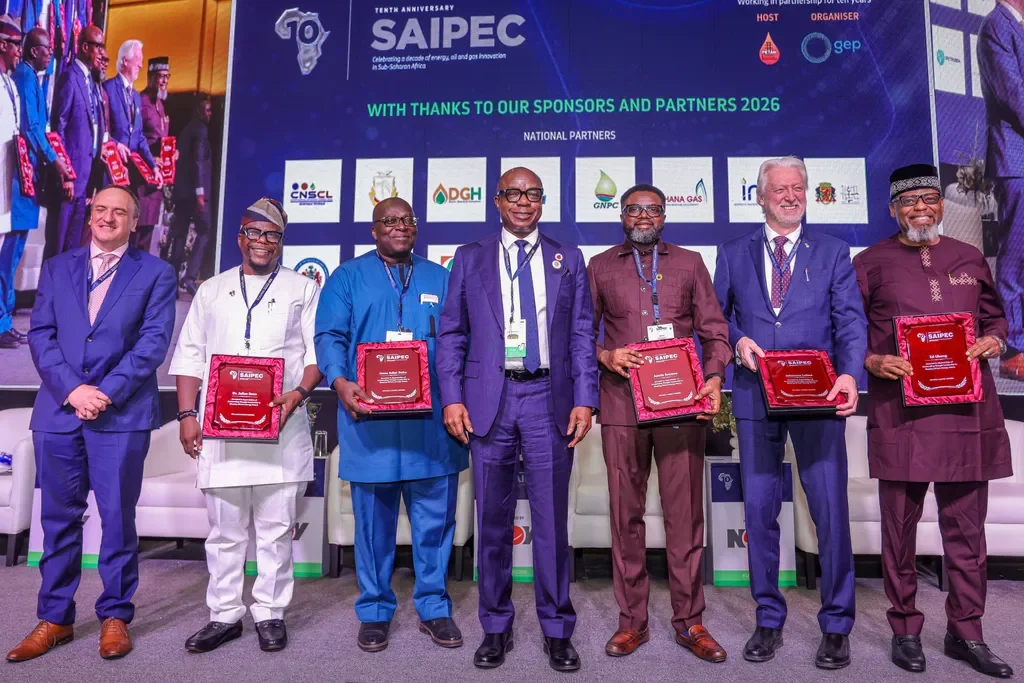
At the 10th Sub-Saharan Africa International Petroleum Exhibition and Conference (SAIPEC 2026), the West African Gas Pipeline Company Limited advanced a clear message: regional energy integration in West Africa is no longer theoretical. Through the operational track record of the West African Gas Pipeline, the company positioned treaty-backed, cross-border gas infrastructure as a functioning backbone for energy security, industrial growth and transition strategy.
Eko Convention Centre, Lagos, Nigeria | February 23, 2026 - At a moment when Africa’s energy transition is being recast less as a slogan and more as a systems challenge, the West African Gas Pipeline Company Limited stepped onto a continental stage with something rare in policy debates: proof of concept.
The West African Gas Pipeline Company Limited used the 10th edition of the Sub-Saharan Africa International Petroleum Exhibition and Conference (SAIPEC) to advance a clear proposition: that West Africa’s only operational cross-border gas pipeline offers a working template for regional energy integration and gas-led transition strategy.
Represented by its General Manager, Corporate Affairs, Isaac Adjei Doku, the company participated in the high-level strategic session titled “Gas as a Transition Fuel: Policies, Projects and Pipelines,” positioning the West African Gas Pipeline (WAGP) as a live case study in treaty-backed, multi-jurisdictional energy cooperation.
From Theory to Operating Asset
SAIPEC, hosted by the Petroleum Technology Association of Nigeria in strategic partnership with the Nigerian Content Development and Monitoring Board and NNPC Limited, has evolved into the region’s principal industry-led energy forum. Its 10th anniversary edition, themed “Celebrating a Decade of Energy, Oil, and Gas Innovation in Sub-Saharan Africa,” convened policymakers, operators, financiers and regulators to interrogate the mechanics of transition — not merely its rhetoric.
Mr. Isaac Adjei Doku joined a high-level panel on “Gas as a Transition Fuel: Policies, Projects and Pipelines.” The session, chaired by Paul Eardley-Taylor of Standard Bank, brought together a technically grounded cohort: Julius Rone of UTM FLNG; Olalekan Ogunleye; Jennis Anyawu; and Johann van Rensburg.
What distinguished WAPCo’s contribution was that it operates the only existing multi-country gas transmission system in West Africa — a pipeline spanning Nigeria, Benin, Togo and Ghana under treaty-backed governance. In a forum rich with forward-looking megaprojects, the WAGP offered a living case study.
Discussions focused squarely on the structural hurdles that stall cross-border energy assets: regulatory misalignment, sovereign sensitivities, and commercial risk allocation. Sustaining investor confidence in such infrastructure, he argued, depends on harmonised legal frameworks, disciplined operational performance, and continuous stakeholder engagement across jurisdictions.
That emphasis is not theoretical. It reflects nearly two decades of operating experience within a quadrilateral treaty architecture — a governance design increasingly relevant to emerging projects such as the Nigeria–Morocco gas corridor, now reframed as the African Atlantic Gas Pipeline (AAGP).
Performance as Credibility
WAPCo’s policy posture is reinforced by operational data.
At the Nigeria International Energy Summit 2026, Managing Director Abiodun Bodunrin disclosed that 2025 marked the strongest performance year in WAGP history: 99% asset availability and peak gas volumes 22% higher year-on-year. The gains were attributed to infrastructure upgrades and close coordination with upstream suppliers, including NNPC.
In energy diplomacy, numbers travel further than narratives. High availability in a cross-border asset is more than a maintenance metric; it is a signal to power utilities, industrial offtakers and sovereign planners that regional gas trade can underpin baseload reliability.
Why the “Transition Fuel” Debate Matters
The panel’s framing — gas as a transition fuel — sits at the heart of Africa’s energy calculus.
Globally, the Gas Exporting Countries Forum has welcomed the International Energy Agency’s 2025 outlook, which reaffirms natural gas as central to energy security, grid stability and industrial development in emerging markets. Electrification, digitalisation and variable renewables are expanding demand for flexible, dispatchable generation. In that architecture, gas performs the balancing function.
Regionally, Ghana’s Gas-to-Power policy anchors this logic. National strategy positions natural gas as the primary transition fuel for electricity generation, targeting a majority gas-based power mix to displace more expensive liquid fuels and stabilise tariffs. Similar imperatives are unfolding across West Africa, where industrialisation and urbanisation are accelerating power demand faster than renewable integration alone can accommodate.
WAPCo’s presence on the SAIPEC panel therefore bridged macro-policy and infrastructure reality. The WAGP already feeds thermal plants in Ghana and Togo, supports industrial users, and lowers generation costs relative to oil-based alternatives. In effect, it operationalises the transition argument.
Regional Integration as Energy Security
Beyond transition semantics, SAIPEC 2026 sharpened a strategic theme: energy integration as risk mitigation.
Discussions centred on improving gas supply reliability, expanding pipeline and compressor capacity, enabling new interconnections, and structuring innovative commercial arrangements to crowd in long-term capital. For West Africa — where domestic supply volatility, payment arrears and infrastructure gaps remain systemic constraints — regional pooling offers diversification benefits.
WAPCo has in recent months deepened this regional posture. The company participated in high-level engagements in Rabat exploring collaboration between WAGP and the proposed AAGP corridor, and at NIES 2026 advocated stronger cross-border policy coherence. The through-line is clear: integration requires not just steel in the ground, but governance alignment at the sovereign level.
The Strategic Signal
SAIPEC’s 10th anniversary edition was not merely commemorative. It was diagnostic. It underscored that Africa’s transition will not be linear, nor will it be purely renewable. It will be hybrid, infrastructure-intensive and partnership-dependent.
In that landscape, WAPCo’s intervention was calibrated. By foregrounding treaty architecture, operational discipline and commercial pragmatism, the company positioned the WAGP as a replicable model rather than an isolated asset.
For policymakers debating future corridors, financiers weighing risk, and utilities seeking reliability, the message was unambiguous: regional gas infrastructure, when underpinned by harmonised governance and demonstrable performance, can serve as both bridge and backbone in Africa’s evolving energy system.
At SAIPEC 2026, WAPCo did not argue for gas in the abstract. It pointed to a pipeline already doing the work.
