The National Petroleum Authority and Ghana’s Downstream Discipline
From market reassurance and safety enforcement to refinery engagement and policy coordination, the National Petroleum Authority (NPA) has opened 2026 reinforcing the regulatory architecture that underpins Ghana’s downstream petroleum market. A series of engagements, public advisories, and institutional consultations highlight the Authority’s expanding role in safeguarding supply stability, protecting consumers, and preparing the sector for a more dynamic economic environment.

Strengthening Institutional Coordination
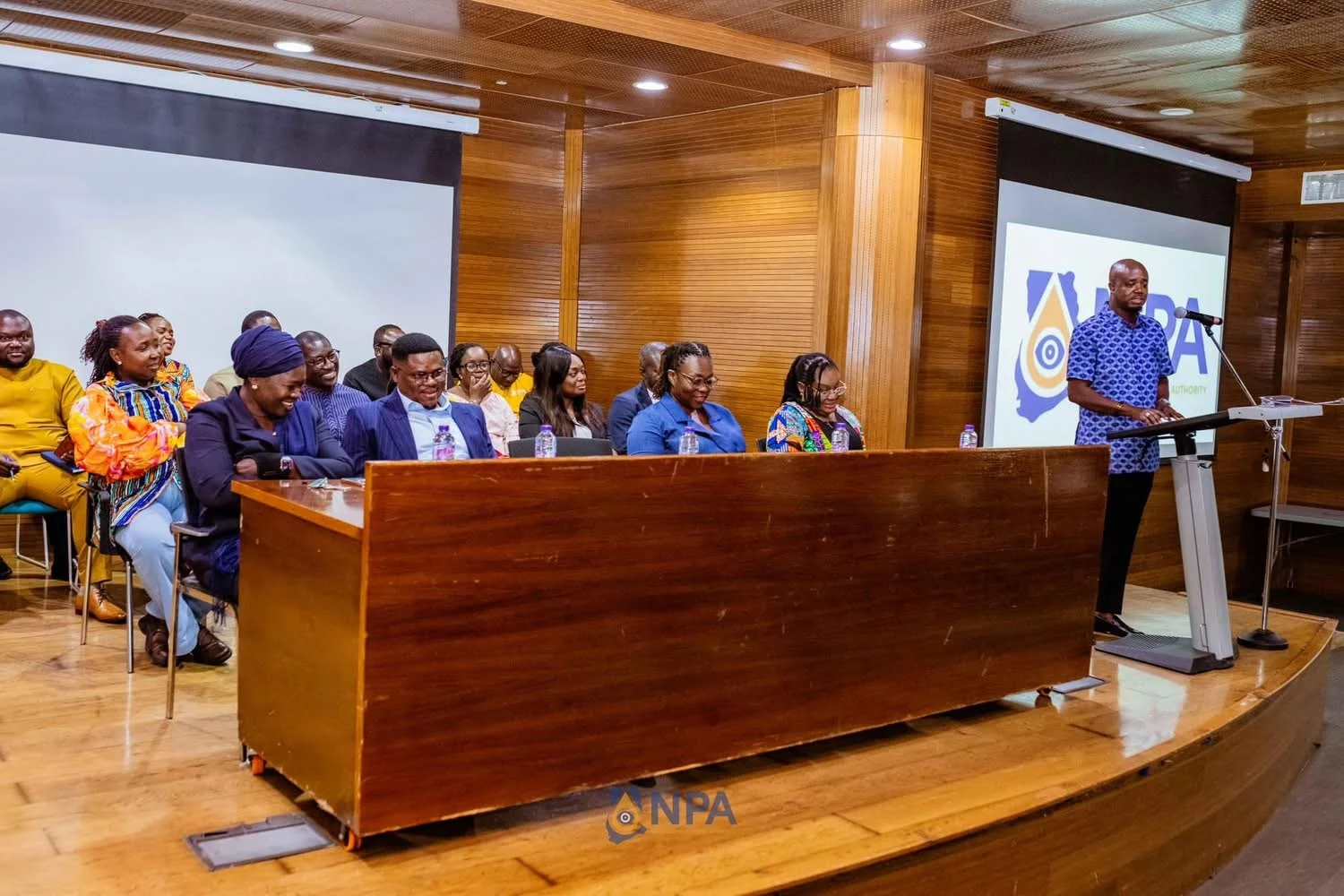
On January 20, 2026, the Authority’s executive committee convened for a strategic retreat to review directorate performance and align operational priorities for the year ahead. The exercise formed part of an internal effort to benchmark institutional performance and coordinate regulatory functions across departments.
These internal processes are intended to sharpen the regulatory agility required in a sector where supply logistics, pricing dynamics, and infrastructure development evolve rapidly.
Engagement Across Industry and Communities
Industry engagement has also featured prominently in the Authority’s early-year agenda. On January 15, 2026, the NPA leadership conducted a working visit to the Tema Oil Refinery, while an earlier visit on January 5, 2026, to Sentuo Oil Refinery reinforced regulatory dialogue with domestic refining operators. The engagements signal continued regulatory support for refining capacity and local participation in the petroleum value chain.
The Authority has also engaged traditional institutions to strengthen public awareness around petroleum safety. Delegations from the Oti Regional House of Chiefs on January 14, 2026, and the Nanumba Traditional Council on January 28, 2026, met with NPA leadership to discuss community partnerships and public education. In these engagements, the Authority encouraged traditional leaders to amplify safety messaging in their communities, particularly regarding the dangers of collecting fuel from accident sites.
Aligning the Downstream Sector with the 24-Hour Economy
On February 19, 2026, the NPA held a strategic meeting with stakeholders to discuss the pilot implementation of the government’s 24-hour economy programme within Ghana’s downstream petroleum sector. The engagement brought together major industry institutions including the Chamber of Oil Marketing Companies (COMAC), the Chamber of Bulk Oil Distributors (CBOD), and the Bulk Oil Storage and Transportation Company Limited (BOST).
Discussions focused on how fuel distribution networks, depot operations, and service station logistics could support round-the-clock commercial activity while maintaining supply reliability and market discipline.
Stabilising the LPG Market
On February 20, 2026, the NPA issued a public statement assuring consumers that Ghana’s liquefied petroleum gas (LPG) supply remains stable following commentary suggesting a possible shortage.
According to the Authority, Ghana currently holds more than one month of LPG supply cover, supported by domestic production from local refineries. An additional LPG cargo expected within two weeks is projected to strengthen supply buffers and ensure continued market availability. The Authority advised consumers to avoid panic buying and maintain normal purchasing patterns to support efficient distribution.
Safety First: Preventing Fuel Disaster at Accident Scenes
Public safety messaging has also featured prominently in the Authority’s activities. On March 2, 2026, the NPA issued a nationwide advisory cautioning citizens against siphoning fuel from overturned tanker vehicles.
Petroleum products remain highly volatile even when spilled, and the Authority warned that a single spark can trigger catastrophic explosions resulting in loss of life and property. The advisory urged the public to maintain a safe distance from accident scenes and allow trained responders such as the Ghana National Fire Service and the Ghana Police Service to secure and manage the site.
The warning forms part of a broader safety education effort aimed at preventing recurring tragedies associated with fuel transportation incidents.
Projecting Ghana’s Regulatory Model on the Continental Stage
The Authority has also used international platforms to articulate Ghana’s regulatory approach to downstream petroleum governance. Speaking at the Nigeria International Energy Summit 2026, NPA Chief Executive Godwin Kudzo Tameklo highlighted the role of disciplined regulation, transparent pricing structures, and consistent oversight in shaping a market that balances investor confidence with consumer protection.
The discussion examined Africa’s downstream petroleum potential and the importance of strengthening refining capacity across the continent to retain greater value within domestic economies.
A Regulator at the Centre of Market Stability
Across safety enforcement, supply assurance, policy coordination, and industry engagement, the National Petroleum Authority’s activities in early 2026 illustrate the layered work required to maintain stability in Ghana’s downstream petroleum market.
In a sector where logistics, pricing, and safety intersect daily with public life, the Authority’s role remains central: ensuring that fuel flows reliably through the economy while the regulatory framework governing the market remains firm, predictable, and trusted.