Ghana Gas Advances GPP2 Amid Strategic Domestic and International Engagements
From high-level industrial alignments at Tema Oil Refinery to diplomatic overtures to Rome, and civil society walk-throughs at the Atuabo Gas Complex, Ghana Gas is demonstrating operational rigor and strategic foresight this quarter—while CEO Judith Adjobah Blay, recently named Best Public Sector CEO, drives governance, partnerships, and industrial leadership, all with GPP2 poised to double gas-processing capacity and halve the nation’s LPG import reliance.

Forging Momentum Across Industry and Diplomacy
Ghana Gas kicked off 2026 by prioritizing key partners across the energy value chain and diplomatic spheres, generating momentum for what promises to be a truly eventful year. On January 27, 2026, the company engaged the Tema Oil Refinery (TOR) to explore Gas-to-Power integration, linking domestic gas directly to industrial energy supply and reducing reliance on imported liquid fuels. The following day, a high-level delegation visited the Italian Embassy in Accra, advancing bilateral cooperation and opening channels for potential direct investment into Ghana’s gas sector. These coordinated actions, paired with CEO Judith Adjobah Blay’s recognition as Best Public Sector CEO for 2025 at the 15th Radio and TV Personality Awards, reinforce GPP2 as both a strategic infrastructure initiative and a platform for operational and institutional leadership.
Strategic Ties and Open Doors
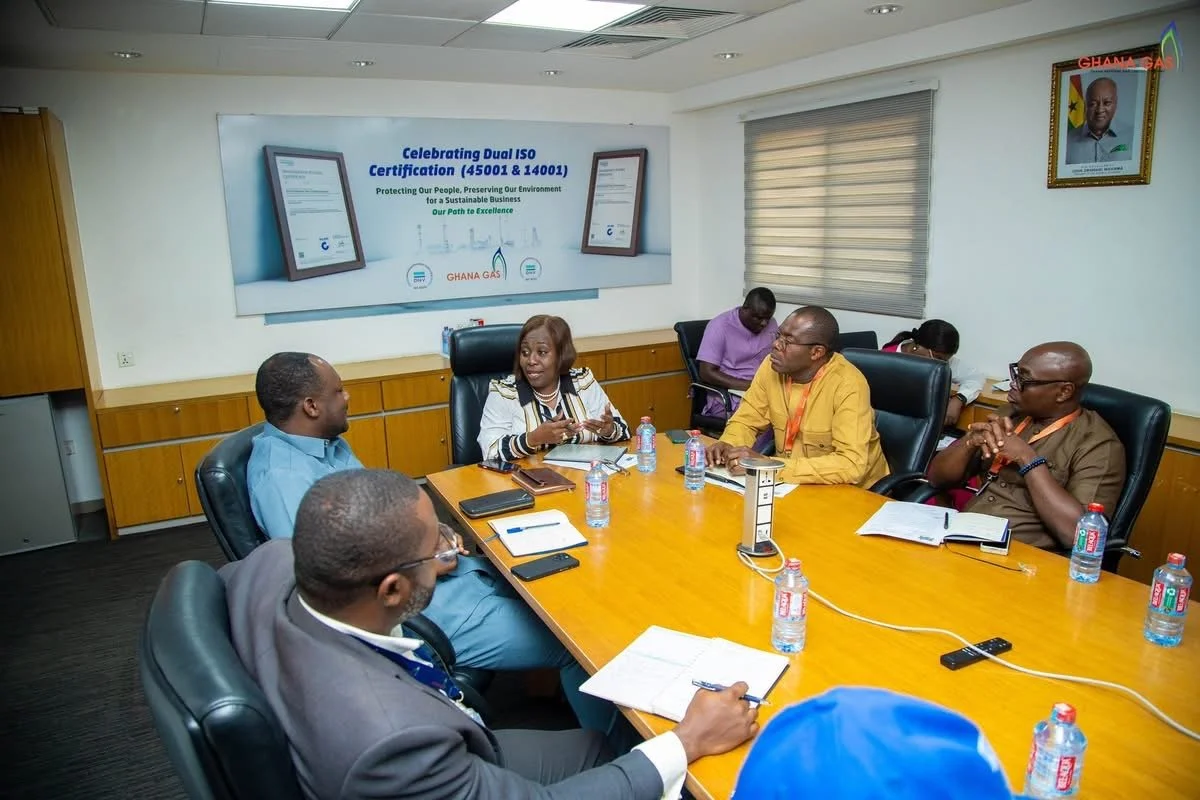
Operational credibility extended into industrial partnerships when, on February 18, Ms Blay joined executives at Sentuo Oil Refinery in Tema, maintaining a crucial partnership for Ghana’s pivot from liquid fuel dependence toward indigenous gas. Between February 24–25, 2026, the company hosted over 20 Civil Society Organisation delegates at the Atuabo Gas Complex and the Takoradi Distribution Station, providing a rare, ground-level view of processing, storage, and dispatch infrastructure, reinforcing both governance transparency and operational integrity. By February 26, the government-appointed technical committee had submitted its feasibility report for GPP2, signalling administrative readiness and awaiting Cabinet directive.
Ghana Gas’s Operations in Perspective
The operational spine supporting these developments is anchored at Atuabo, where the Gas Processing Plant currently handles 3,398,022 m³/day, approaching its design capacity of 4,247,527 m³/day (150 MMscfd). On-site electricity generation of approximately 300 MW, supplied through captive gas turbines, feeds both internal plant operations and the Western Power Enclave, representing roughly 5% of the nation’s 5,749 MW installed capacity. Self-reliance extends to borehole water systems and six-hour firefighting reserves, ensuring continuity under grid constraints and safeguarding against macroeconomic disruption from downtime. In 2025, scheduled maintenance was completed in 10 days, ahead of the planned 14, yielding measurable cost efficiencies.
The Takoradi Distribution Station complements Atuabo’s processing with a high-throughput capacity of 11,468,324 m³/day, while bulk LPG storage remains centralised at Atuabo. This arrangement guarantees reliable dispatch to industrial and power off-takers, sustaining bankable supply chains. GPP2, once approved, will initially mirror Atuabo’s capacity of 4,247,527 m³/day and expand in Phase 2 to 8,495,055 m³/day (300 MMscfd), increasing LPG recovery efficiency from 45% to 80% and potentially cutting national imports—231,000 mt in 2025—by roughly half. Currently, Ghana Gas produces 95,000 mt of domestic LPG, accounting for 21% of the national total of 449,000 mt, underscoring its central role in energy security.
The broader energy system frames GPP2’s relevance. Ghana produced 42.8 million barrels of crude in 2024; GPP2 will maximise indigenous gas utilisation, mitigating reliance on imported fuels — leveraging Ghana’s increased gas production fortunes from the latest US$3.5 billion upstream push. The current 300 MW on-site electricity output represents about 5% of national installed power capacity, while the reduction in LPG imports could relieve pressure on the 231,000 mt imported in 2025. Ghana Gas’ share of domestic LPG production—21%—positions the company as a critical stabiliser in the national energy market.

Import Substitution and Industrial Security
Economic consequences of these developments are measurable. Higher LPG recovery will reduce import dependency and stabilise domestic markets, while Gas-to-Power integration at TOR and formalised industrial off-takes provide reliable, predictable energy for manufacturing and refining. Enhanced transparency and governance credibility through CSO engagement strengthen institutional legitimacy, and the groundwork laid with Italy and Sentuo Group opens avenues for cross-border supply, positioning Ghana Gas within the regional energy landscape.
Leadership in Action
CEO Judith Adjobah Blay, the first female chief executive in a traditionally male-dominated sector, leveraged her platform at the First Annual National Forum on Women in Government and Media to highlight governance and operational excellence. She cited the 2025 plant maintenance shutdown, delivered in 10 days ahead of the planned 14, producing measurable cost savings, as an example of hands-on leadership. Her recognition as Best Public Sector CEO for 2025 at the 15th Radio and TV Personality Awards on February 7 underscores her dual impact: operational discipline and institutional thought leadership.
A Company in the Nexus of Ghana’s Energy Reset
Ghana Gas’ early-2026 developments—ranging from industrial engagements and diplomatic outreach to civil society transparency initiatives—underscore a deliberate alignment with Ghana’s broader energy transition. Beyond expanding throughput with GPP2, the company is reinforcing structural objectives: securing indigenous gas supply, stabilising domestic LPG markets, and reducing reliance on imported fuels. These actions reflect a careful calibration of operational capacity, governance credibility, and strategic partnerships, situating the company as a central enabler of the country’s energy reset.
