Ghana’s Petroleum Hub: From Declaration to Delivery
After a year dominated by investor outreach and memoranda of understanding, the Petroleum Hub’s first quarter of 2026 is marked by firmer signals: government moves to fast-track land acquisition, a formal working alliance between the Petroleum Hub Development Corporation (PHDC) and the Ghana National Petroleum Corporation (GNPC), proposals for a 1.2-gigawatt power plant and large-scale storage infrastructure, and structured engagement with civil society. Together, these developments signal a shift from expressions of interest toward implementation mechanics.
Implementation Signals Begin to Cluster
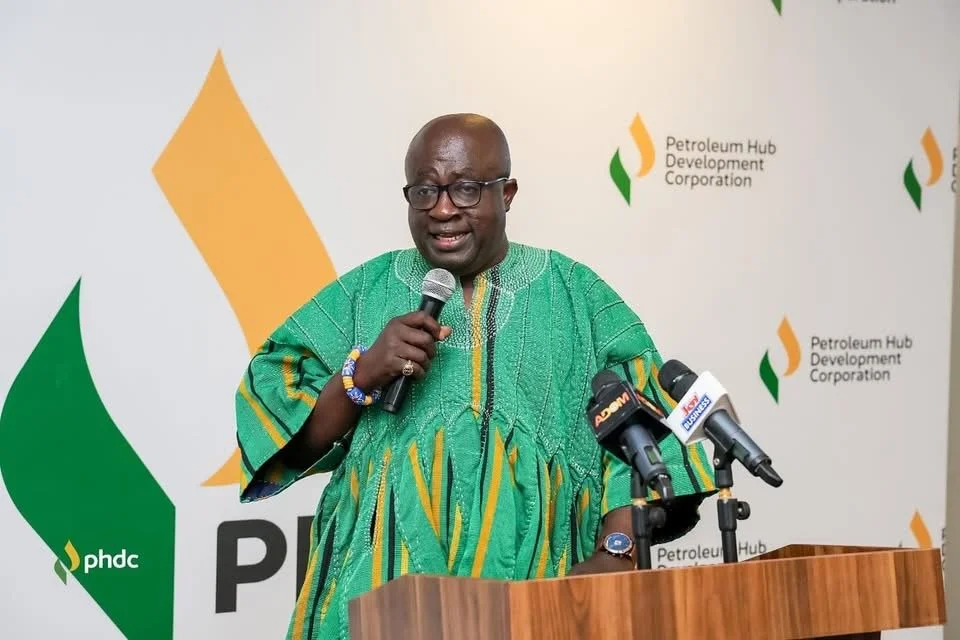
Momentum around Ghana’s planned Petroleum Hub project in the Western Region has entered a more operational phase in early 2026, as government, state institutions, and prospective investors begin aligning around key implementation steps for the proposed US$60 billion energy and petrochemical complex.
At the centre of the project is a planned refining system with capacity of about 900,000 barrels per stream day (bpsd), scalable to 1.5 million bpsd, supported by an integrated industrial ecosystem including five petrochemical plants and storage infrastructure expected to reach 10 million cubic metres. Once completed, the complex would rank among the largest integrated downstream energy developments on the African continent.
Government Moves to Accelerate Land Processes
On February 26, 2026, the Minister for Lands and Natural Resources, Hon. Emmanuel Armah-Kofi Buah, reaffirmed government support for the project during a meeting with a delegation from the Petroleum Hub Development Corporation led by Chief Executive Officer Dr. Toni Aubynn.
Mr Buah indicated that government would work to accelerate land processes associated with the project, including engagement with the Lands Commission, noting that compensation and land acquisition have historically been among the key issues affecting confidence in the project’s feasibility.
The minister also confirmed that government is advancing preparatory infrastructure around the project area in the Jomoro Municipality, including road development and other enabling facilities required to support the proposed industrial complex.
Dr Aubynn, responding on behalf of the corporation, welcomed the minister’s endorsement and emphasised that the Petroleum Hub remains central to Ghana’s long-term energy security strategy and industrial development ambitions. The project, he said, has the potential to generate sustainable employment opportunities for more than 700,000 Ghanaians.
PHDC–GNPC Alliance Signals Institutional Alignment
Institutional coordination has also intensified. On February 19, 2026, PHDC and the Ghana National Petroleum Corporation unveiled a ten-member joint working committee to explore areas of collaboration between the two state entities.
The committee is co-chaired by PHDC Deputy Chief Executive Officer for Operations and Technical Onasis Rosely and Michael N. A. Aryeetey, Deputy Chief Executive Officer for Exploration and Production at GNPC. Its mandate includes identifying areas where the two institutions can align their technical expertise and strategic resources to support development of the Petroleum Hub.
Civil Society Engagement Expands
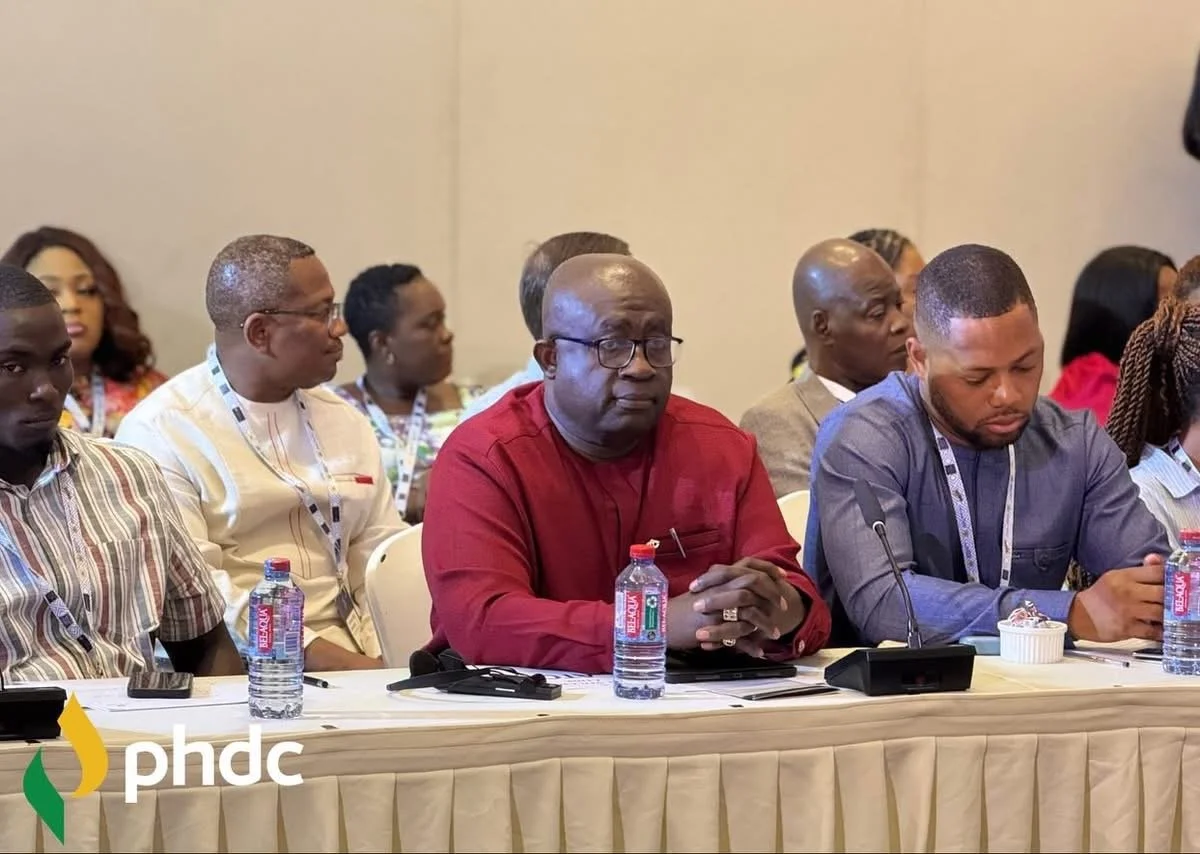
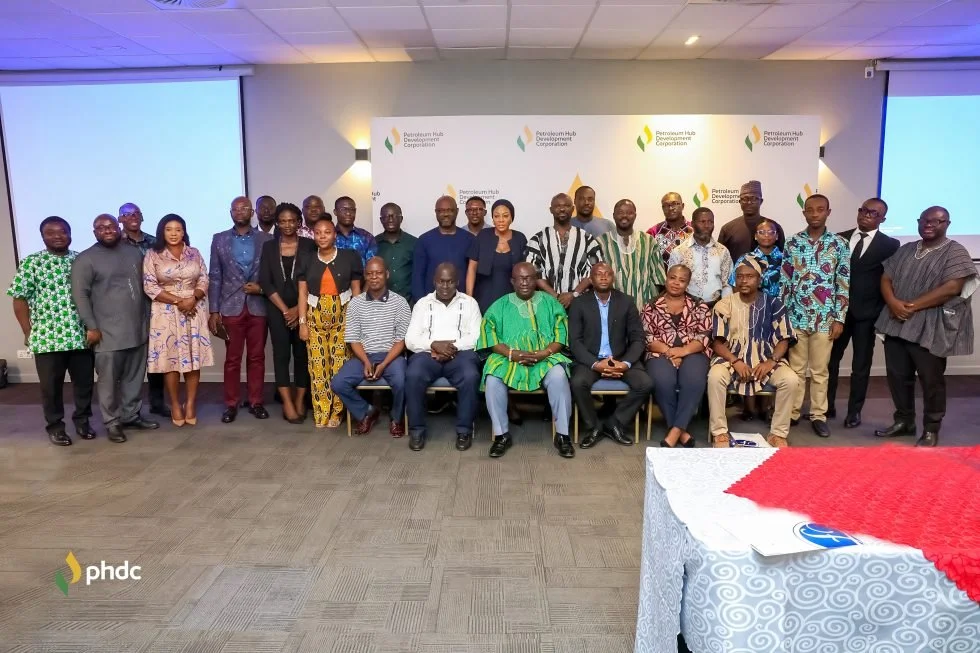
Stakeholder engagement is also expanding. PHDC has scheduled a strategic consultation with Civil Society Organisations (CSOs) for March 4, 2026, aimed at strengthening dialogue around the project’s scope, land requirements, feedstock arrangements, and long-term relevance within a global energy system increasingly shaped by energy transition dynamics.
Dr Aubynn described the engagement as a key component of the corporation’s stakeholder strategy, noting that shared understanding with civil society groups will be critical to sustaining confidence in the project as it progresses.
Investor Proposals Begin to Surface
Parallel to these institutional and stakeholder developments, investor-linked proposals connected to the broader Petroleum Hub ecosystem are beginning to emerge.
In February 2026, an investment consortium involving Egyptian firms initiated discussions with PHDC regarding the establishment of a fibre-reinforced liquefied petroleum gas (LPG) cylinder manufacturing facility in Ghana. The proposed plant would produce composite LPG cylinders significantly lighter than traditional steel cylinders and capable of remaining in service for up to 20 years.
The consortium has also signalled plans to invest approximately US$200 million across several components associated with the Petroleum Hub project, including storage infrastructure proposals with a cumulative capacity of about 7 million cubic metres.
Additional infrastructure proposals tied to the emerging industrial ecosystem include interest in developing a 1.2-gigawatt power plant to support the future complex, alongside residential and urban infrastructure developments linked to the anticipated industrial growth in the area.
Benchmarking the Project Against Ghana’s Energy System
The scale of the Petroleum Hub project has drawn attention partly because of its potential implications for Ghana’s broader energy system.
According to the Energy Commission, Ghana produced 42.8 million barrels of crude oil in 2024, while the country continues to rely heavily on imported refined petroleum products. Officials at the Tema Oil Refinery (TOR) have indicated that Ghana’s fuel import bill averages roughly US$400 million per month.
The Tema refinery currently operates at about 28,000 bpsd, with a nameplate capacity of approximately 45,000 bpsd.
Against that backdrop, proponents argue that large-scale refining and petrochemical infrastructure could reduce import dependence while positioning Ghana as a regional processing and export centre for petroleum products.
A Project Framed by Industrial Scale
Beyond refining, the Petroleum Hub is designed as a multi-sector industrial complex incorporating petrochemical production, storage terminals, logistics infrastructure, and associated energy facilities.
Ghana’s broader energy system provides additional context for the project’s scale. The country’s installed electricity generation capacity currently stands at approximately 5,749 megawatts, while national LPG penetration is estimated at 47.4%, according to Energy Commission statistics.
While major construction milestones have yet to be announced, the cluster of developments recorded during the first months of 2026 — ranging from government administrative support and institutional coordination to investor proposals and stakeholder consultations — suggests that the project may be entering a phase where implementation signals are beginning to accumulate.
