
Capital, Credibility, and the Crossroads: Building Bankable Energy Systems for Africa
At a pivotal moment for Africa’s energy future, when capital is disciplined, global energy narratives are shifting, and the continent’s demand curve continues to rise, leadership at the intersection of policy, capital, and execution matters more than ever.
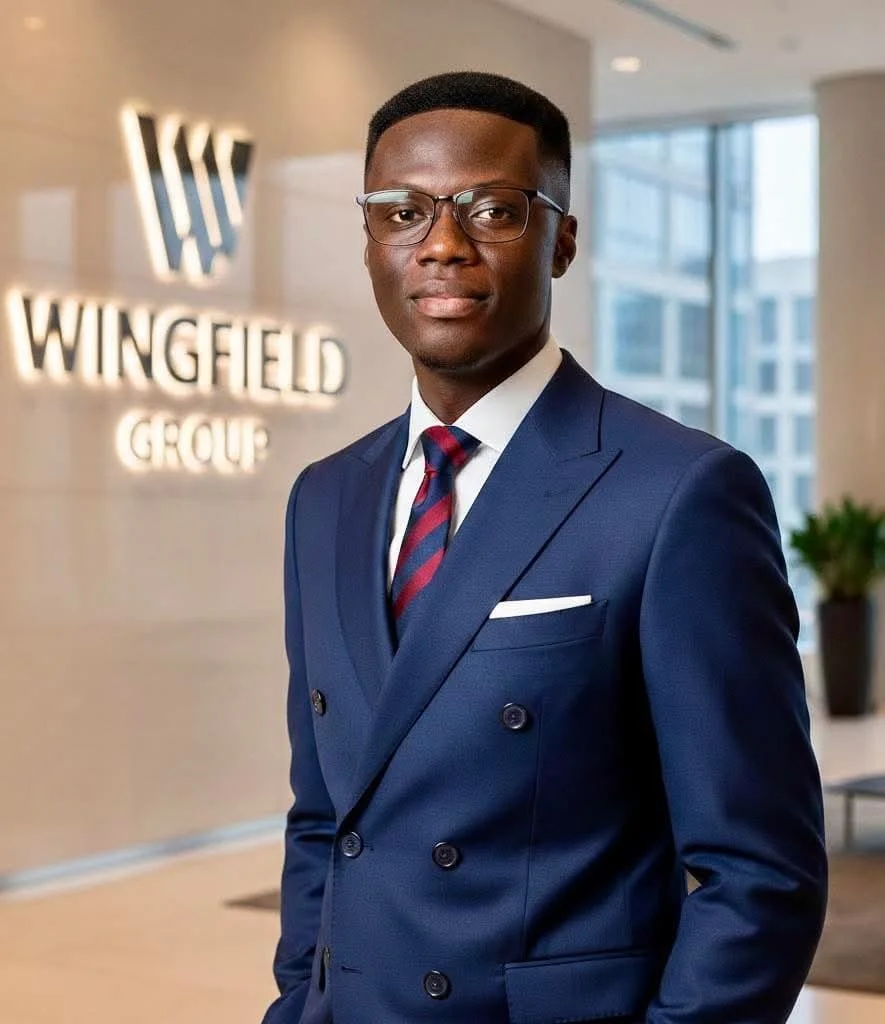
Few operate in that space as comprehensively as Joshua Narh, Founder and Chairman of Wingfield Group and Executive Chairman of the Energy Chamber, Ghana. With a career spanning oil and gas, gas-to-power, renewables, mining, and energy finance across West, East, and Southern Africa, Narh has built a reputation not merely as a commentator on Africa’s energy potential, but as a structurer of the transactions that test it.
In this exclusive Pulse Spotlight conversation, he speaks not in abstractions, but from the vantage point of someone who has mobilised capital, negotiated with IOCs and NOCs, advised governments, engaged DFIs and private equity funds, and watched projects either reach financial close or quietly stall under the weight of poor structuring.
His thesis is clear: Africa’s energy challenge is no longer about resource endowment. It is about alignment, execution, and disciplined capital deployment.
PP: To begin, how would you describe your journey into the energy sector and investment space, and what still motivates you most about this work today?
JN: My journey into the energy and investment space has been anything but accidental. It has been deliberate, earned, and shaped at the intersection of policy, capital, and execution on the ground.
I did not come into the sector from a purely technical or financial silo. I came in by working directly with projects, institutions, and investors who were trying to move energy ideas from paper into reality across Africa. I entered the space at a time when Africa’s energy narrative was still largely being framed externally, often disconnected from operational, political, and commercial realities on the continent. That gap between narrative and reality immediately became clear to me, and addressing it has defined much of my work.
Early exposure to how energy decisions are truly made, how upstream and downstream assets are financed, how gas is monetised, how power projects rise or fail based on offtake regulation, and execution gave me a panoramic view of the value chain. I’ve worked on endeavors across oil and gas, gas-to-power, power generation, renewables, mining, and energy finance, engaging governments, regulators, financiers, commodity traders, technical operators, and project sponsors across West, East, and Southern Africa. My experience has been end-to-end.
A significant part of my work has involved investment structuring and capital mobilisation for energy assets in markets such as Nigeria, Ghana, Kenya, Mozambique, Namibia, and South Africa. I’ve been deeply involved in investment roadshows, private placements, strategic advisory mandates, and high-level negotiations with IOCs, NOCs, private equity funds, banks, DFIs, and commodity trading houses. These engagements are not theoretical; they are anchored to real assets, real balance sheets, and real geopolitical, regulatory, and execution constraints.

Along the way, I’ve had the privilege of serving in advisory and leadership capacities within the African Energy ecosystem.
What continues to motivate me today is the unfinished business. Africa is still energy-poor, yet energy-rich. We sit on world-class hydrocarbon reserves, vast gas resources, and immense renewable potential, but capital misalignment, weak structuring, and policy inconsistency continue to hold us back. I’m driven by the challenge of bridging that gap, translating African energy opportunities into formats global capital understands, while ensuring the outcomes genuinely serve local economies, industrialisation, and energy security.
At this stage of my career, motivation no longer comes from titles or transactions alone. It comes from impact seeing a gas project reach FID, watching a power project move from concept to grid, helping governments rethink energy financing frameworks, and enabling African firms to sit confidently across the table from global players as equals. As long as Africa’s energy potential remains underutilised and as long as disciplined capital can still be mobilised to unlock it responsibly, I remain fully invested in shaping that story.
PP: When you talk to investors — both local and international — what are the central dynamics they are currently weighing when considering energy projects in Africa?
JN: When I sit across the table from investors today whether African family offices, regional banks, global funds, commodity traders, or DFIs the conversation is far more sophisticated than it was even five years ago. Capital is still available, but it is selective, structured, and increasingly unforgiving of weak fundamentals.
The first dynamic they are weighing is bankability over ambition. Investors are less interested in grand narratives and more focused on whether a project can realistically reach FID and generate predictable cash flows. That means clarity on reserves or resource certainty, credible offtake, cost discipline, and realistic timelines. In upstream oil and gas, they want to see assets with near-term production and manageable capex, not long-dated exploration risk. In gas-to-power and renewables, contracted revenues and sovereign support mechanisms are non-negotiable.
Secondly, political and regulatory coherence has moved to the top of the risk stack. Investors understand Africa’s political cycles, but they are now laser-focused on fiscal stability, sanctity of contracts, licensing transparency, and regulatory competence. Frequent changes to petroleum fiscal terms, unclear local content rules, or delays in approvals can kill a project faster than commodity price volatility. From my experience, jurisdictions that demonstrate policy consistency, especially around gas monetisation, are commanding capital attention.
The third major consideration is currency and repatriation risk. Local currency exposure, foreign exchange (FX) convertibility, and capital controls remain a real concern, particularly for power and infrastructure projects with local currency revenues. Investors are actively looking for natural FX hedges, export-linked revenues, dollar-denominated offtake, or credible sovereign-backed guarantees. This is where project structuring becomes just as important as the asset itself.
Lastly, investors are weighing the quality of sponsors and local partners more heavily than ever. Strong balance sheets help, but credibility, execution history, and alignment of interests matter more. They want to back teams that understand both African operating realities and international capital expectations, people who can manage governments, communities, lenders, and technical risks simultaneously. In many of the transactions I’ve worked on, capital followed the sponsor long before it followed the asset.
In summary, investors are not asking whether Africa is investable - that debate is over. They are asking who is structuring the deal, how risks are being mitigated, and whether the project can survive real-world stress. Those who can answer those questions convincingly are still raising capital and closing deals on the continent.
PP: From your vantage point, what differentiates energy projects that successfully attract capital from those that struggle to gain traction?
JN: From where I sit, the difference between energy projects that close and those that endlessly circulate in pitch decks is rarely about resource quality. Africa does not have a resource problem. What we have is a structuring, credibility, and execution gap.
The projects that attract capital get three things right.
First - clarity of the investment thesis. Successful projects are brutally clear about what they are, who they are for, and how money is made. They don’t try to be everything at once. An upstream asset knows whether it is a short-cycle cash play or a longer-term reserve build. A gas-to-power project understands whether it is merchant, contracted, or sovereign-backed. Investors respond to focus. Confusion kills momentum.
Second - credible sponsors and execution capacity. Capital follows people before it follows projects. Investors look closely at the sponsor’s track record, decision-making discipline, and ability to operate in complex African environments. I’ve seen technically sound projects stall simply because the sponsor could not demonstrate control over regulators, communities, or counterparties. Conversely, I’ve watched imperfect projects move forward because the sponsor was trusted to fix problems in real time.
Third - bankable risk allocation. Deals work when risks sit where they can be managed. Sovereign risk cannot sit with a private investor without mitigation. Construction risk must sit with contractors who can price it. Offtake risk needs credit enhancement where utilities are weak. Projects that acknowledge this reality and structure around it using guarantees, insurance, escrow mechanisms, or blended finance gain traction. Those that pretend risks don’t exist, do not.
What holds deals back is just as consistent.
The biggest killer is misalignment between ambition and reality. I regularly see projects pitched at scales that the local grid, market, or balance sheet simply cannot support. Investors are allergic to overreach. They prefer phased, modular growth that proves itself and earns expansion.
Another major obstacle is policy uncertainty and slow decision-making. Capital hates indecision more than it hates risk. When approvals drag, fiscal terms change midstream, or governments speak with multiple voices, investors disengage quietly and permanently. I’ve watched strong transactions lose momentum not because the economics failed, but because timelines became ungovernable.
Then there is weak project preparation. Incomplete data rooms, unresolved land issues, vague offtake arrangements, or optimistic timelines signal a lack of seriousness. Investors interpret that as future pain and they move on.
PP: How do you see the role of power generation, natural gas infrastructure, and renewable integration shaping investment flows right now?
JN: What we are seeing right now is a convergence moment. Power, gas, and capital are no longer being evaluated as separate verticals; they are being assessed as an integrated system. Investors who understand this are moving; those who don’t are being left behind.
Power remains the anchor. Every serious investor starts with one question: where is the demand and how is it paid for? Across Africa, electricity demand is real and growing, driven by urbanisation, mining, manufacturing, data centres, and population growth. But demand alone doesn’t unlock capital payment security does. This is why we are seeing investment concentrate around power projects that are either backed by credible sovereign frameworks, industrial offtakers, or embedded generation models.
Natural gas is increasingly the hinge that makes the system work. Gas sits at the intersection of power reliability, industrial growth, and energy transition. From an investment perspective, gas infrastructure processing plants, pipelines, compressed natural gas (CNG), liquified natural gas (LNG), and gas-to-power offers something investors value deeply right now: dispatchability with transition relevance. In markets like Nigeria, Mozambique, Ghana, and Namibia, gas is being repositioned not just as a fuel, but as enabling infrastructure for power stability, fertiliser manufacturing, petrochemicals, and export earnings. Capital is flowing to gas projects that are tied to real demand and existing or near-term production, not speculative long-dated developments.
Renewables, meanwhile, are no longer being looked at in isolation. The era of “solar-only” pitches is fading. Investors are now focused on integration - how solar, wind, storage, and gas work together to deliver firm power. Hybrid structures are attracting more attention because they solve a real problem: intermittency. Solar paired with batteries or backed by gas-fired generation offers a bankable profile that utilities and industrial offtakers can rely on. This integrated approach is where I see the strongest momentum today.
From the capital side, we are also seeing segmentation. Different pools of capital are chasing different parts of the system. DFIs and climate funds are leaning into grid upgrades, renewables, and storage. Commercial banks and private equity are more comfortable with gas-linked cash flows and contracted power. Commodity traders and infrastructure funds are positioning around gas and power assets that give them optionality across markets. Deals that understand this capital stack and design projects accordingly are the ones closing.
PP: Investors often talk about risk but also about opportunity. Where do you see the most untapped potential in African energy that isn’t getting the attention it deserves?
JN: One of the biggest misconceptions about African energy is that the most obvious opportunities are the most attractive ones. In reality, some of the highest-quality, most durable investment opportunities sit in places the market still underestimates or misunderstands. From my experience structuring, advising, and syndicating energy transactions across the continent, a few areas stand out very clearly.
First - domestic gas monetisation beyond headline LNG narratives. Too much attention still goes to large, export-oriented gas projects, while smaller-scale, domestic gas infrastructure remains undercapitalised. Processing plants, compression, virtual pipelines, CNG/LNG trucking, and industrial gas supply chains can deliver faster returns with lower geopolitical exposure. Gas linked to power, fertiliser, cement, mining, and manufacturing is one of Africa’s most bankable transition plays, but it requires investors who understand operations, not just reserves.
Second - midstream and enabling infrastructure. Pipelines, storage, terminals, and grid infrastructure are not glamorous, but they are where value compounds. Many African upstream and power projects stall not because resources or demand are lacking, but because the connective infrastructure is missing.
Third - industrial and captive power. Utility-scale generation gets the headlines, but captive and embedded power for mines, factories, data centres, and industrial parks is often far more investable. The offtakers are stronger, payment risk is lower, and tariffs are commercially realistic. I’ve seen investors achieve faster financial close and more predictable cash flows by backing power solutions tied directly to productive economic activity rather than overstretched national utilities.
Another underappreciated area is brownfield optimisation and near-term production assets. There is a tendency to chase frontier exploration or greenfield mega-projects, while existing oil and gas assets with declining output, suboptimal recovery, or poor capital allocation are overlooked. These assets, when paired with the right technical teams and disciplined capital, can generate significant value quickly.
Finally, and perhaps most importantly, there is enormous opportunity in energy-adjacent policy and financing innovation. Blended finance structures, local-currency solutions, regional power trading frameworks, and African-led financial institutions are still in early stages. Investors who engage early, helping to shape these frameworks, rather than waiting for perfection, stand to benefit disproportionately as the market matures.
PP: As the Executive Chairman of the Energy Chamber Ghana, how do you think the Chamber’s work supports investor confidence and sectoral partnerships?
JN: The Energy Chamber Ghana was conceived very deliberately not as a lobbying outfit in the traditional sense, but as a bridge between policy, capital, and execution. From my position as Executive Chairman, the guiding philosophy has been simple: if investors are going to commit long-term capital, they need clarity, credibility, and continuity. The Chamber exists to help create exactly that environment.
At its core, the Chamber plays a market-shaping and de-risking role. Investors are rarely short of opportunity in Ghana or across Africa; what they struggle with is fragmented information, policy ambiguity, and mixed signals from different parts of the system. Through structured engagements, policy dialogues, and industry-led forums, we help align government priorities with private-sector realities.
Equally important, the Chamber serves as a credible convening platform. One of our most practical contributions is bringing together stakeholders who do not always sit in the same room: upstream and downstream operators, power developers, gas aggregators, financiers, development partners, and policymakers. These are not ceremonial gatherings. They are working conversation fora.
We also place strong emphasis on bankability and investment readiness. The Chamber consistently pushes the sector beyond ambition to execution. Whether the discussion is centered on gas-to-power, upstream optimisation, midstream infrastructure, or renewable integration, we advocate for realistic project structuring, phased development, and risk allocation that reflects Ghana’s operating environment. Investors are far more comfortable when they see an industry body promoting discipline and commercial realism rather than hype.
Another critical pillar of our work is policy engagement grounded in commercial logic. The Chamber provides structured, informed feedback to government on proposed reforms, regulatory processes, and fiscal frameworks based on what global capital will actually underwrite. This is not advocacy against the state; it is advocacy for investable, durable policy. Poorly designed policy repels capital. Well-designed policy attracts it quietly and sustainably.
On the international front, the Chamber plays a key role in positioning Ghana within global investment pipelines. Through relationships with global energy institutions, investment fora, and partner chambers across Africa and beyond, we help ensure Ghana is visible, credible, and well understood. Capital is global, but confidence is local. Investors want to know there is a professional, organised ecosystem they can engage with long after the first transaction closes.
Ultimately, the Energy Chamber Ghana strengthens investor confidence by being honest about challenges while constructive about solutions. We don’t oversell the market, and we don’t understate its potential.

PP:What has your experience been in bringing together international players, local stakeholders, and public institutions around common investment narratives?
JN: Energy is one of the few sectors where alignment is not optional - it is existential. My experience in bringing together international players, local stakeholders, and public institutions has taught me that deals don’t fail because people disagree; they fail because they are not speaking the same language.
International investors typically come to the table focused on risk-adjusted returns, timelines, and governance. Local stakeholders are rightly concerned about participation, jobs, community impact, and long-term national value. Public institutions, on the other hand, are balancing policy objectives, political accountability, and fiscal stability. None of these perspectives are wrong, but without a common narrative, they pull in different directions.
A large part of my role has been acting as a translator and integrator. That means framing investment opportunities in a way that global capital understands, while ensuring those same projects are defensible within local political, social, and regulatory contexts. I’ve seen this play out repeatedly, whether in upstream oil and gas, gas-to-power, solar, or industrial energy projects, where alignment only emerged once each party could clearly see how their objectives were being met without undermining the others.
What works is grounding the narrative in national development outcomes. When projects are clearly linked to power reliability, industrial growth, fiscal revenues, or energy security, public institutions engage more constructively. When local stakeholders see credible pathways to participation and value capture, resistance falls. And when investors see policy alignment and execution capacity, capital commits. The narrative has to be coherent, evidence-based, and honest about trade-offs.
Another critical lesson has been the importance of process and trust-building. Alignment doesn’t happen in one meeting or at a conference panel. It’s built through repeated, structured engagements, technical sessions, closed-door discussions, site visits, and continuous follow-up. In many of the transactions I’ve been involved in, progress came not from grand announcements, but from patient consensus-building behind the scenes.
I’ve also learned that leadership in a diverse sector requires comfort with tension. Energy projects sit at the intersection of economics, politics, and society. Disagreements are inevitable.
PP: Finally, as you look toward the next five years, what continues to require the greatest focus from both investors and African energy leaders? What drives the sense of priority and direction in this field of endeavor?
JN: Looking ahead, the next five years in African energy will be defined less by resources and more by execution, integration, and financing discipline. The continent has world-class reserves, abundant gas, massive solar and hydro potential, but turning that potential into sustained, investable outcomes requires laser focus on a few interlocking priorities that affect both investors and African energy leaders.
From an investor’s perspective, the greatest focus must continue to be on structuring bankable projects that are locally grounded. Capital is available, but it is disciplined. Investors need clarity on offtake, creditworthiness, regulatory stability, and risk allocation. They are backing projects that are realistically phased, revenue-backed, and resilient to political, operational, or market shocks. Patience alone is not enough; alignment with local realities, disciplined project preparation, and credible risk mitigation are what transform opportunity into returns.
For African energy leaders, the focus must be on execution capacity and ecosystem maturity. Policy frameworks, institutional coordination, and local partnerships are only as good as their implementation. Leaders need to ensure that approvals move predictably, contracts are honored, and local talent and companies are positioned to participate meaningfully in projects. Capacity building, credible local operators, and robust governance structures are no longer optional. They are prerequisites for attracting global capital and ensuring projects reach financial close.
Equally critical is the strategic integration of energy transition solutions. Gas, renewables, storage, and efficiency technologies must be deployed pragmatically. Leaders who demonstrate this pragmatism will unlock both domestic and international capital, while ensuring projects are sustainable beyond political cycles.
Underlying all of these priorities is a simple truth: Africa’s energy story is inseparable from its economic story. Reliable, affordable, and scalable energy underpins industrial growth, jobs, and fiscal stability. Every decision, from structuring a gas pipeline to sequencing a solar project, has a ripple effect on economic growth, investor confidence, and local development. Leaders and investors alike are guided by this principle: energy leadership is ultimately about converting potential into tangible outcomes: measurable megawatts, productive industrial demand, viable exports, and long-term socio-economic value.
Over the next five years, success will be measured not by how many reserves we report, but by how effectively we deliver energy solutions that attract sustainable investment, power growth, and create enduring systems.
