
SONA 2026: Resetting Ghana’s Energy Equation
After years of mounting arrears, falling crude output and fragile power stability, Ghana’s energy sector entered 2025 under acute financial strain. In his State of the Nation Address, President John Dramani Mahama declared a decisive pivot: US$1.47 billion in debt cleared, the World Bank’s US$500 million Partial Risk Guarantee restored, gas arrears settled, and fresh multi-billion-dollar upstream commitments secured. The message to markets was unambiguous—Ghana is attempting not just to stabilise its energy system, but to reset its credibility at home and abroad.
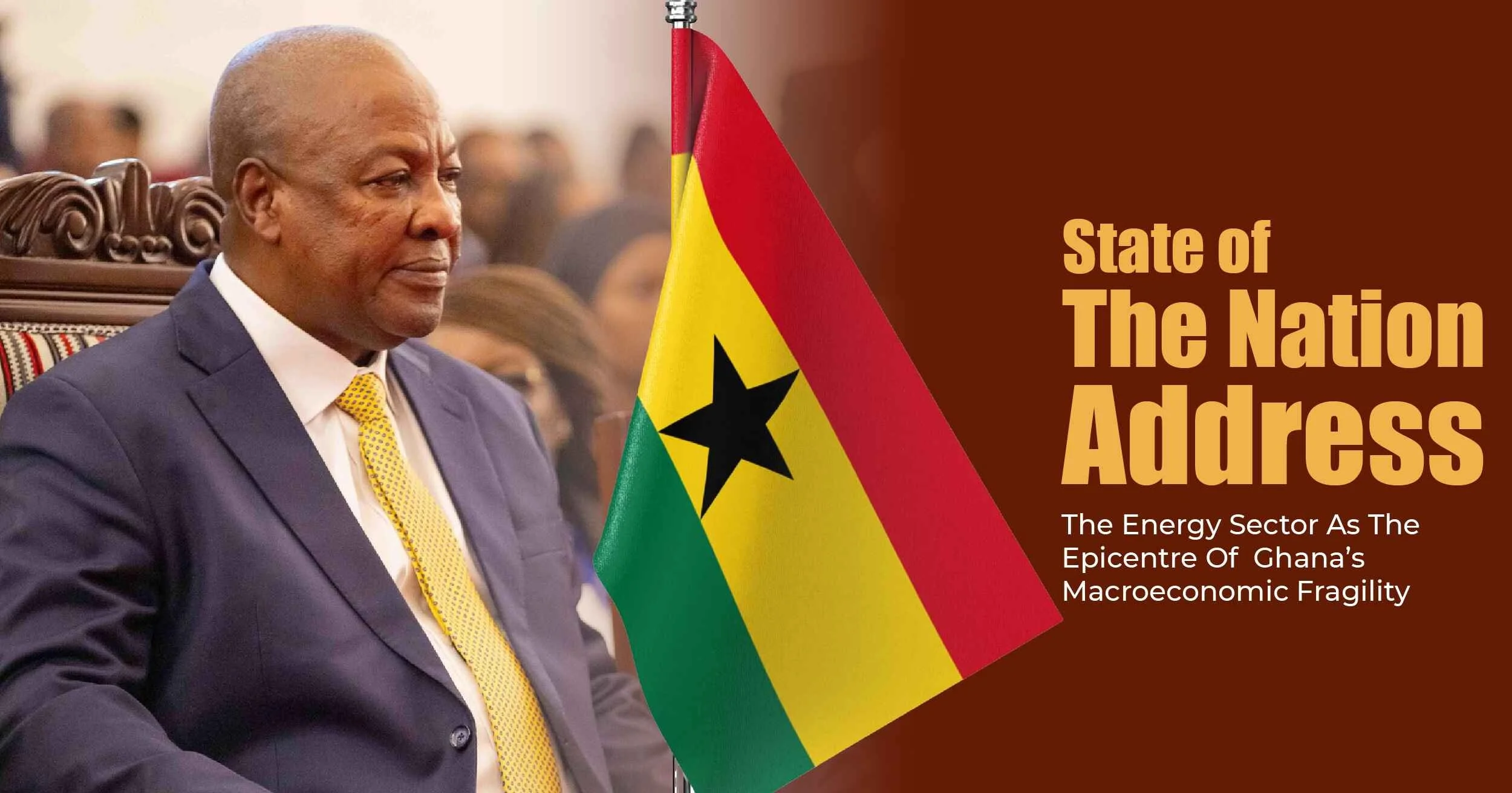
Accra, Ghana | March 3, 2026 - When President John Dramani Mahama rose to deliver his State of the Nation Address, the energy sector was framed not as a peripheral concern but as the epicentre of Ghana’s macroeconomic fragility—and, now, its prospective recovery. The portrait he painted was stark: an industry hobbled by debt, liquidity breakdowns, falling crude output and eroding investor trust. Yet the address was equally an exercise in narrative repositioning—asserting that, within twelve months, the administration has moved the sector from systemic distress to structured repair.
The question for analysts and market participants is not whether the sector was in crisis—evidence across 2021–2024 makes that clear—but whether the reforms outlined amount to a durable reset or a temporary stabilisation financed by fiscal compression elsewhere.
The Inherited Fault Lines
Power Sector: Liquidity Collapse and Systemic Risk
At the core of the power value chain, the government inherited a balance sheet under siege. The sector carried an estimated GHS 80 billion in legacy debts—an overhang that threatened the operational continuity of independent power producers (IPPs) and gas suppliers alike.
Most alarming was the exhaustion of the US$500 million World Bank Partial Risk Guarantee (PRG), originally structured in 2015 to underwrite nearly US$8 billion in private capital flows into the Offshore Cape Three Points (OCTP) project. The PRG—backstopping payment obligations to Eni and Vitol under the Sankofa Gas Project—had been fully drawn down after prolonged non-payment for gas. Its depletion signalled not merely a cash shortfall but a credibility rupture.
Distribution inefficiencies compounded upstream strain. The Electricity Company of Ghana (ECG) was collecting only 62% of the energy it purchased. Even more troubling, less than half of those collections were declared into the Cash Waterfall Mechanism (CWM)—the statutory framework designed to ensure transparent, proportional disbursement of sector revenues. The result: chronic liquidity gaps, mounting arrears to generators and gas suppliers, and power instability that weighed heavily on industrial output and investor confidence.
By 2024, Ghana’s grid was not collapsing—but it was operating under material stress, with commercial losses estimated at roughly 25% of generated power.
Petroleum Sector: Declining Output, Fractured Confidence
The upstream narrative was equally sobering. Between 2019 and 2024, crude production declined by approximately 32%, from 71.4 million barrels to 48.2 million barrels, according to reports by the Public Interest and Accountability Committee. A combination of policy uncertainty, protracted licensing cycles, unresolved unitisation disputes and regulatory opacity dampened fresh investment.
For a hydrocarbon economy reliant on Jubilee, TEN and OCTP for fiscal revenues and foreign exchange, the production slide translated directly into reduced government take and weakened current account resilience.
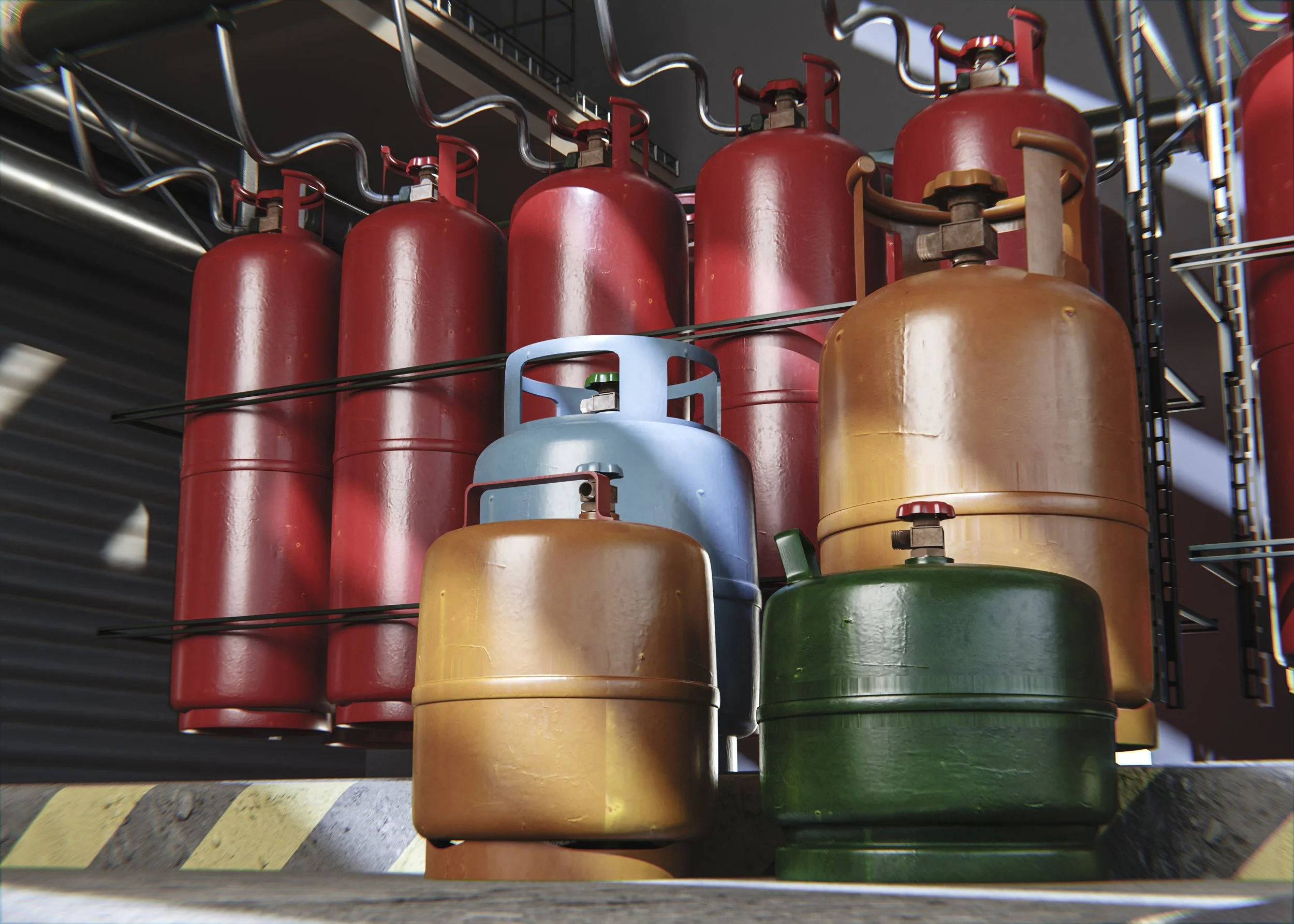
The midstream and downstream segments were hardly insulated. The Tema Oil Refinery had not processed crude since 2018, reducing Ghana’s ability to capture value domestically. LPG cylinder supply and local manufacturing capacity had stagnated, with the Ghana Cylinder Manufacturing Company operating well below potential.
The Stabilisation Phase: Clearing Arrears, Restoring Confidence
Against this backdrop, the administration’s first-order priority has been liquidity restoration.
Restoring the World Bank PRG
As of 31 December 2025, the government reports that it has fully repaid and reinstated the US$500 million World Bank PRG, including interest. This move restores the instrument to operational readiness and re-establishes a critical risk-mitigation backstop for gas supply obligations.
From a capital markets perspective, this action is less symbolic than structural. Risk guarantees are confidence multipliers; their exhaustion sends chilling signals to prospective investors. Their restoration reopens the conversation on Ghana as a credible counterparty.
Settling Gas Arrears
Between January and December 2025, the government settled approximately US$500 million in outstanding gas invoices to Eni and Vitol. Simultaneously, renegotiated Power Purchase Agreements with nine IPPs—AKSA, BXC, CENIT, Cenpower, Early Power, Karpower, Meinergy, Sunon Asogli and Twin City (Amandi)—secured over US$250 million in immediate savings and restructured US$1.1 billion in legacy obligations over 2026–2028.
Budget disclosures indicate that roughly US$1.5 billion was disbursed in 2025 to clear arrears, restore letters of credit for OCTP and remain current on invoices. Crucially, the government asserts that no new arrears are accruing—a departure from the past cycle of rollover debt.
Under the Energy Sector Recovery Programme, CWM enforcement has strengthened materially, with monthly declarations rising from approximately GH₵950 million in 2024 to GH₵1.7 billion by August 2025. The operationalisation of ECG’s Single Holding Account, jointly supervised by the Ministry and the Public Utilities Regulatory Commission (PURC), is intended to curb revenue leakages and hardwire payment discipline into the system.
Structural Reforms: Distribution and Private Participation
The liquidity reset, however, addresses only half the equation. The structural inefficiency within distribution remains the sector’s Achilles’ heel.
Cabinet approval of the Multiple Lease Method—introducing private-sector participation in billing and collections—marks a politically sensitive but economically rational pivot. If executed transparently, the reform could reduce technical and commercial losses and improve cost recovery without imposing further tariff shocks.
With national electricity access now at 89.05%, the next frontier is efficiency rather than expansion alone.
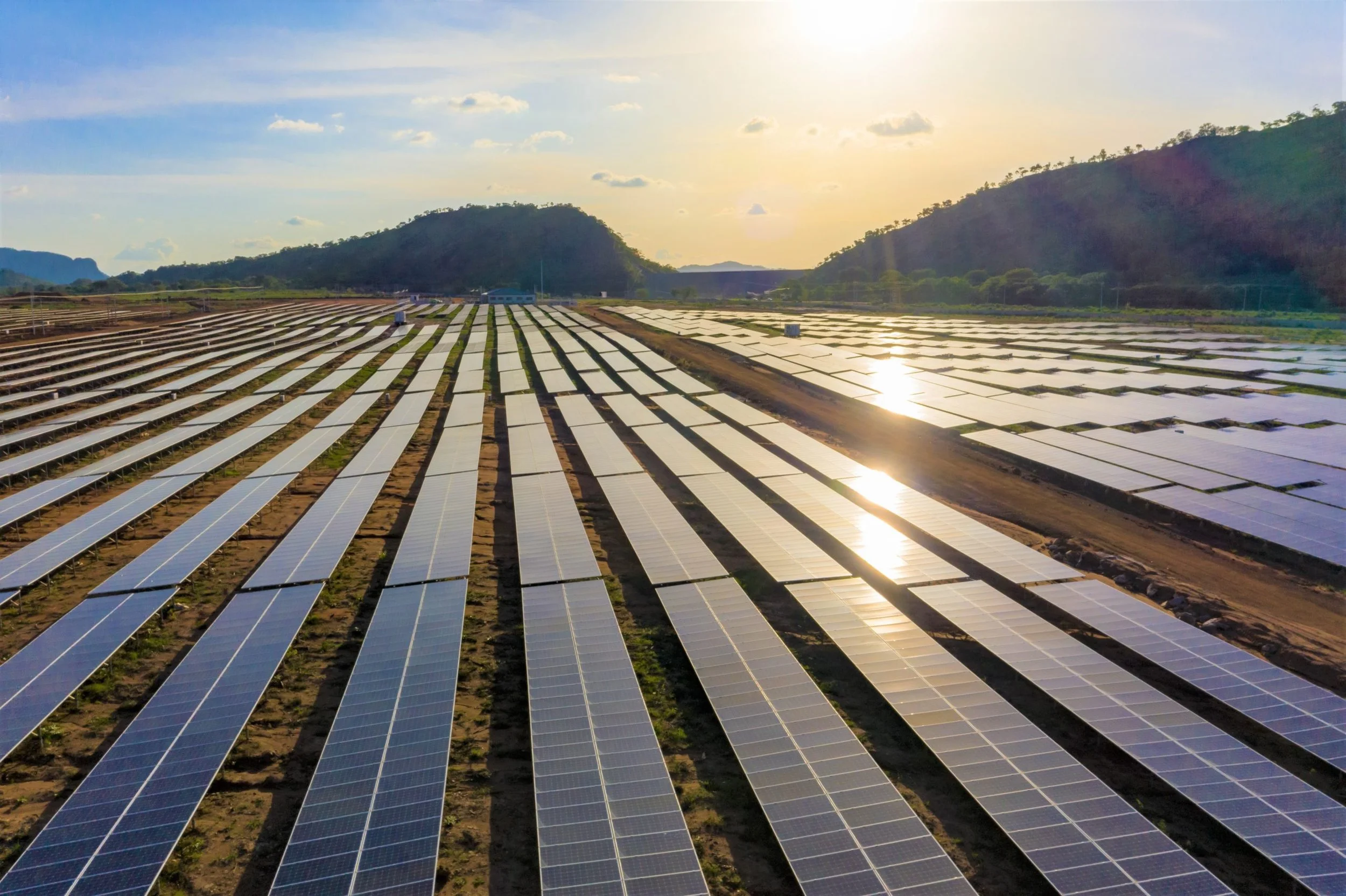
Photo Credit: Bui Power Authority
Renewables and Electrification: The Parallel Track
The energy transition agenda featured prominently.
The Bui Power Authority has completed an additional 50MW solar plant, while distributed rooftop installations added 30MW, bringing total installed renewable capacity to 285MW—roughly 5% of the generation mix.
A 200MWp solar project at the Dawa Industrial Zone is underway, with the first 100MWp expected by December 2026.
Beyond grid expansion, 35 mini-grids are under construction to serve 47 island and lakeside communities in Oti, Savannah and Bono East regions. Mini-grids have now been mainstreamed into the National Electrification Scheme, with 150 communities in Afram Plains North and South earmarked for deployment. The African Development Bank has committed US$100 million to fund renewable-based mini-grids.
The message is clear: grid stability and decentralised solutions must advance in tandem.
Upstream Rebound: Rebuilding Production Momentum
Perhaps the most consequential announcements concern fresh upstream capital commitments.
A Memorandum of Understanding with Jubilee and TEN partners—including Tullow Oil—unlocks US$2 billion for up to 20 new wells. A separate agreement with OCTP partners led by Eni commits US$1.5 billion to expand investment in the Cape Three Points Block 4 Contract Area.
Gas production has already expanded: OCTP capacity has increased from 240 to 270 million standard cubic feet per day, while Jubilee and TEN fields now supply roughly 130 mmscf/d, up from 110. New agreements are projected to add an additional 150 mmscf/d, with the government fast-tracking the Ghana Gas Processing Plant 2 to handle incremental volumes.
If realised, these commitments would arrest the multi-year production decline and reinforce domestic gas as the anchor fuel for power generation—displacing costlier liquid fuels and reducing tariff pressure.
Midstream and Downstream Revitalisation
In the downstream, the revival of Tema Oil Refinery marks a symbolic turning point. Following extensive turnaround maintenance, the refinery has resumed crude processing for the first time since 2018. Whether TOR’s revival proves commercially sustainable will depend on feedstock security, operational efficiency and disciplined governance.
Meanwhile, Ghana Gas’ acquisition and revitalisation of the Ghana Cylinder Manufacturing Company—supported by the National Petroleum Authority and Ghana Commercial Bank—aims to localise LPG cylinder production and enhance safety standards.
A Managed Recovery—Or a Temporary Reprieve?
The administration’s 2025–2026 energy strategy rests on three pillars: liquidity restoration, contractual discipline and forward investment. The US$1.47 billion debt clearance addresses the immediate destabilisation that characterised 2021–2024. The renegotiated PPAs and strengthened CWM architecture signal improved fiscal governance. New upstream commitments and renewable investments point toward capacity expansion and diversification.
Yet the durability of this reset will hinge on execution. Payment discipline must persist beyond a single fiscal year. Private participation in distribution must be insulated from politicisation. Upstream investment commitments must translate into drilled wells, not press releases.
Ghana’s energy sector has entered a stabilisation phase. Whether this moment evolves into a structural renaissance or reverts to cyclical stress will depend on the consistency of reform and the discipline of institutions.
For now, the narrative has shifted—from brinkmanship to recalibration. Markets will be watching whether the numbers continue to align with the rhetoric.
