Petroleum Commission and TGS Unite to Anchor Ghana’s Upstream Revival with Ramform Hyperion
Ghana’s upstream revival takes a decisive step forward as the Petroleum Commission leads the charge with the arrival of TGS’s Ramform Hyperion at Takoradi Harbour. This milestone underscores the regulator’s commitment to transparency, data-driven exploration, and restoring investor confidence in a sector urgently in need of renewed momentum.
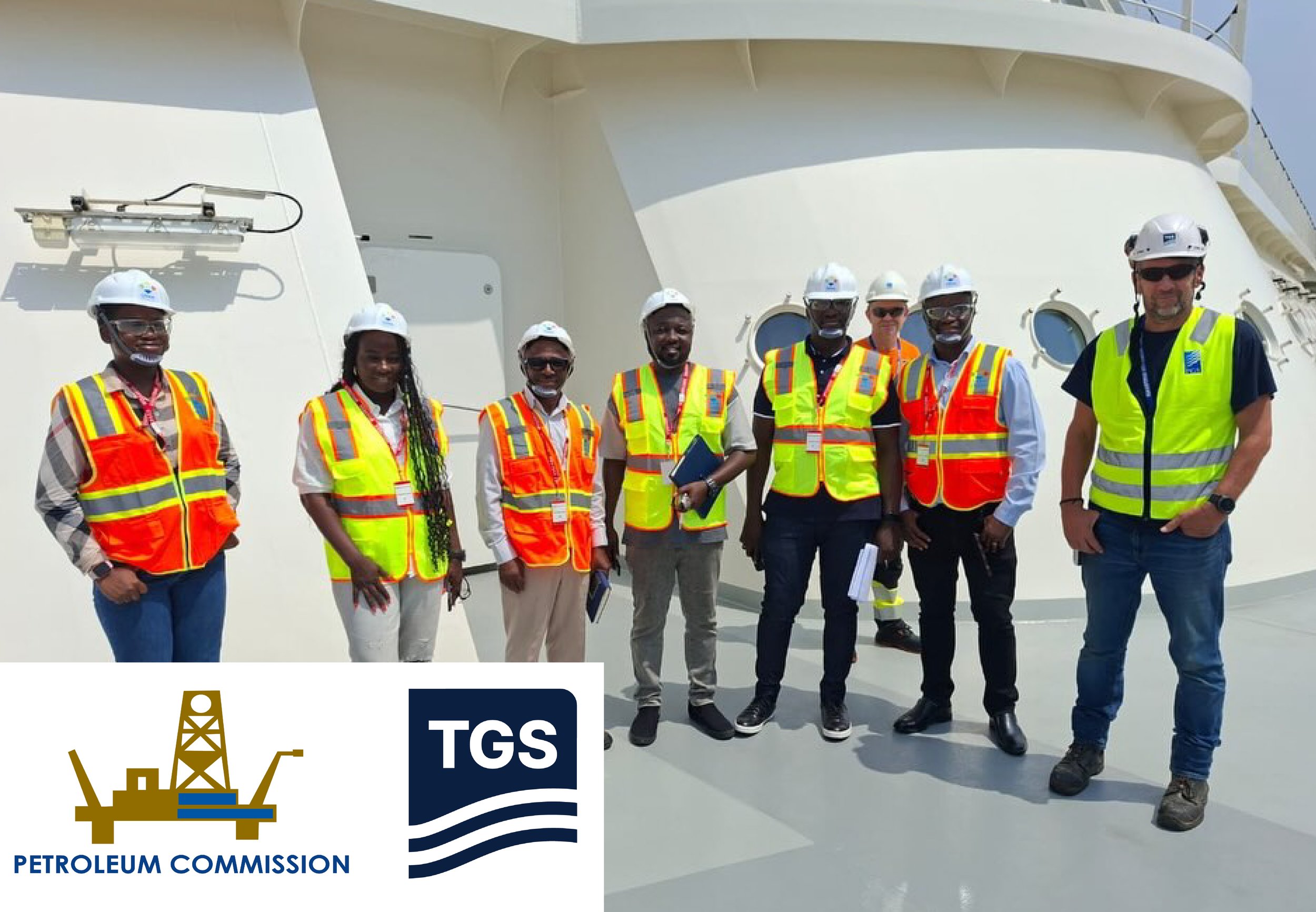
Takoradi Harbour, Ghana | February 6, 2026 - When the TGS Ramform Hyperion eased into the Takoradi Harbour earlier this week, the moment belonged as much to Ghana’s upstream regulator as it did to the vessel itself. The Petroleum Commission, which convened the engagement and hosted the visit, used the arrival to underline a policy shift that has been quietly taking shape within the country’s petroleum governance architecture: Ghana’s upstream recovery will be built on data, regulatory credibility, and disciplined risk reduction.
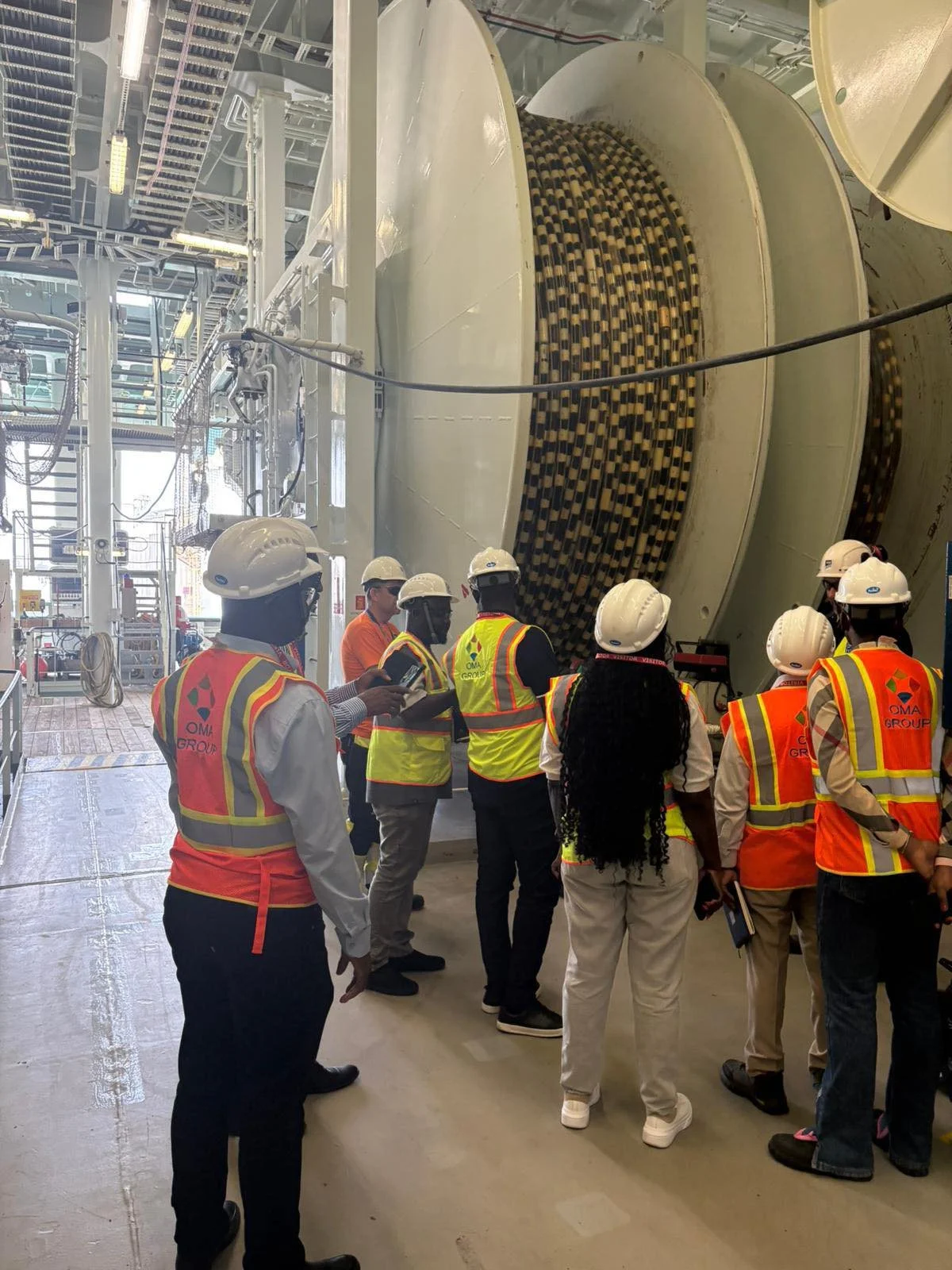
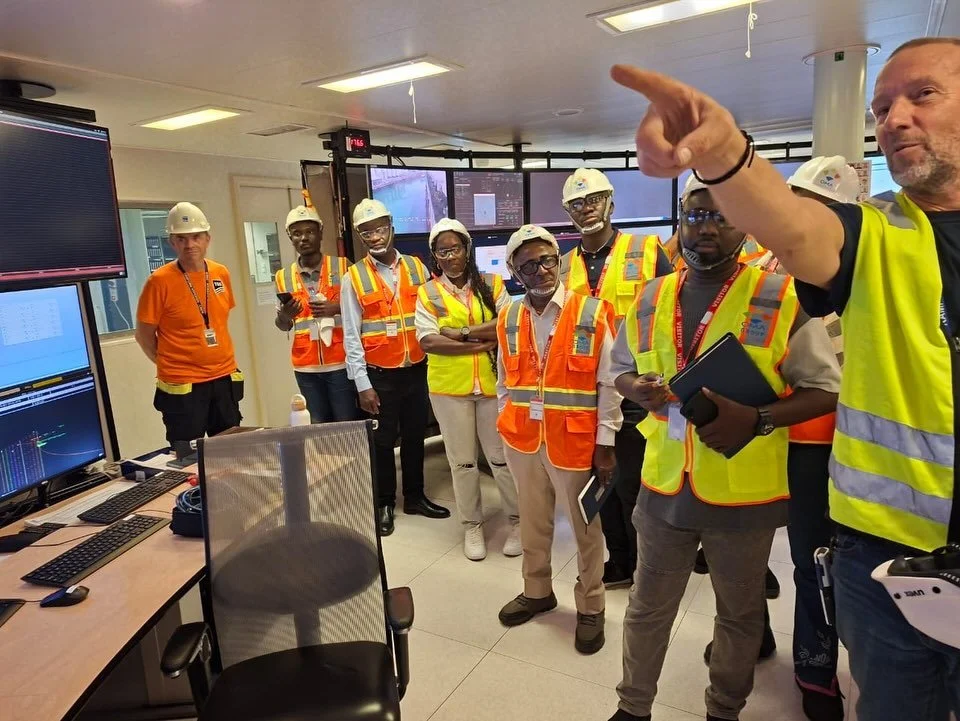
Members of the Commission’s Board and Management led industry stakeholders, clients, and partners aboard the Hyperion, inspecting its advanced seismic acquisition systems and the globally benchmarked HSEQ (Health, Safety, Environment and Quality) standards under which the Houston-based intelligence firm operates. The visit was not a courtesy tour. It was a regulatory statement. As the authority responsible for reconnaissance licensing and upstream oversight, the Petroleum Commission positioned the Hyperion’s deployment squarely within its broader strategy of rebuilding investor confidence through high-quality subsurface intelligence.
At a technical level, the vessel is owned and operated by TGS, the Houston-based global seismic data and subsurface intelligence firm, with operations in Ghana supported by its long-standing local partner, OMA Ghana. For more than a decade, TGS, working under the Commission’s regulatory framework, has acquired and processed multi-client seismic data across the Tano Basin, materially improving geological understanding in one of Ghana’s most commercially significant petroleum provinces. OMA’s role, spanning offshore logistics, installation and production support, labour and procurement services, and ship chandling, has provided the operational continuity that allows such data programs to function at scale.
Strategically, however, the Hyperion’s arrival reflects the Petroleum Commission’s deliberate pivot toward a data-first upstream model. This approach gained sharper definition following bilateral engagements between the Commission and TGS at Africa Energy Week 2025, where discussions centred on deepwater exploration, new gas development prospects, and the digital transformation of upstream operations. At those meetings, the Commission presented Ghana’s regulatory environment as one undergoing purposeful recalibration, anchored in transparency, regulatory certainty, and competitive fiscal terms designed to restore Ghana’s appeal to upstream investors.
The timing is not incidental. Ghana’s crude production has declined steadily over the past five years, a trend publicly acknowledged by Energy Minister Hon. John Jinapor, who recently warned that the fall from 71 million barrels in 2019 to approximately 48 million barrels in 2024/2025 represents not only lost revenue but a narrowing of opportunity for Ghanaian companies. Regulatory inefficiencies, policy inconsistency, and fiscal rigidity have been identified as key deterrents to new capital, prompting the establishment of a Legislative Review Committee to re-examine petroleum laws and fiscal terms.
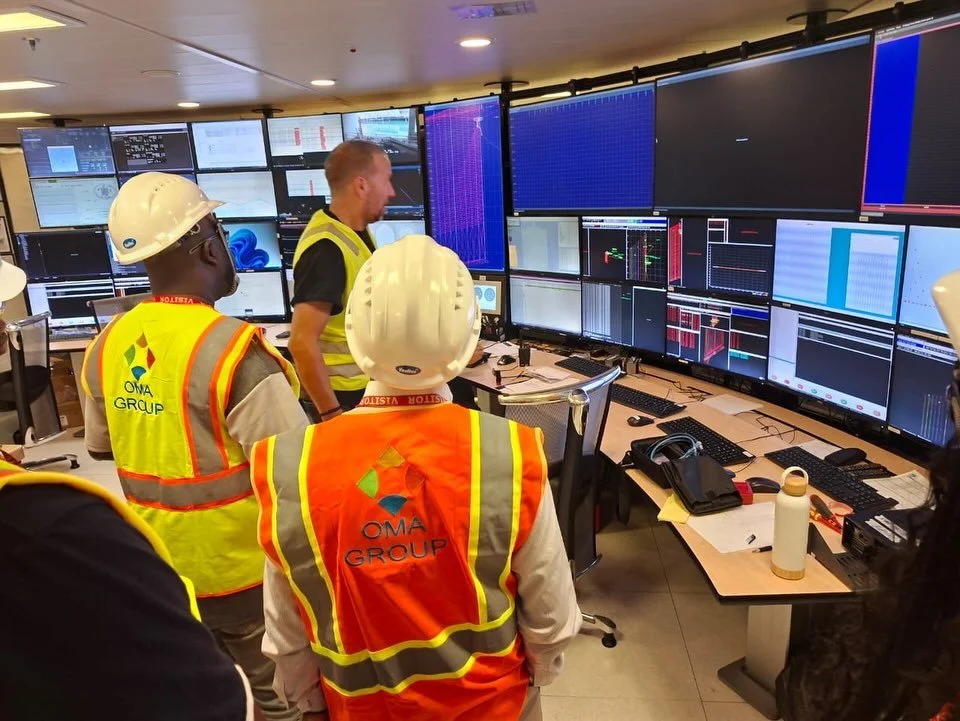

Within this context, the Petroleum Commission’s emphasis on high-quality seismic data serves a clear purpose: de-risking. Exploration risk, compounded by regulatory uncertainty (the recently-withdrawn Afina unitization directive comes to mind), has been among the most persistent obstacles to upstream investment. By prioritising globally competitive subsurface data acquisition, the Commission is attempting to lower the technical risk premium before acreage is marketed and capital is courted.
This philosophy aligns with broader institutional moves across the sector, including GNPC’s recent data-oriented collaboration with SONATRACH under the auspices of the African Petroleum Producers’ Organization, with the Voltaian Basin now firmly in focus. Across these initiatives, the message is consistent. Ghana intends to replace speculation with evidence, and opacity with clarity.
Ramform Hyperion’s call at Takoradi, therefore, functions as more than an operational milestone. It is an outward expression of the Petroleum Commission’s evolving role, not simply as a regulator of activity, but as an architect of market conditions. Whether this data-led strategy translates into new discoveries and revived production will depend on the parallel delivery of fiscal and legislative reform. But the Commission has made its opening move unmistakably clear.
In an upstream sector where confidence is scarce and competition for capital is fierce, Ghana’s regulator is staking its recovery on a familiar but often neglected principle: credible data, under credible regulation, is the most persuasive invitation an exploration market can extend.
