The GNPC-Sonatrach R&D Accord: Innovation and the Future of African Upstream Energy
Ghana’s national oil company is betting on knowledge as a strategic asset. GNPC’s landmark R&D accord with Algeria’s Sonatrach, brokered under the African Petroleum Producers Organisation, shifts African upstream cooperation from transactions to technology. The move positions GNPC at the centre of an innovation-led energy strategy as Ghana deepens gas security and advances new exploration frontiers.
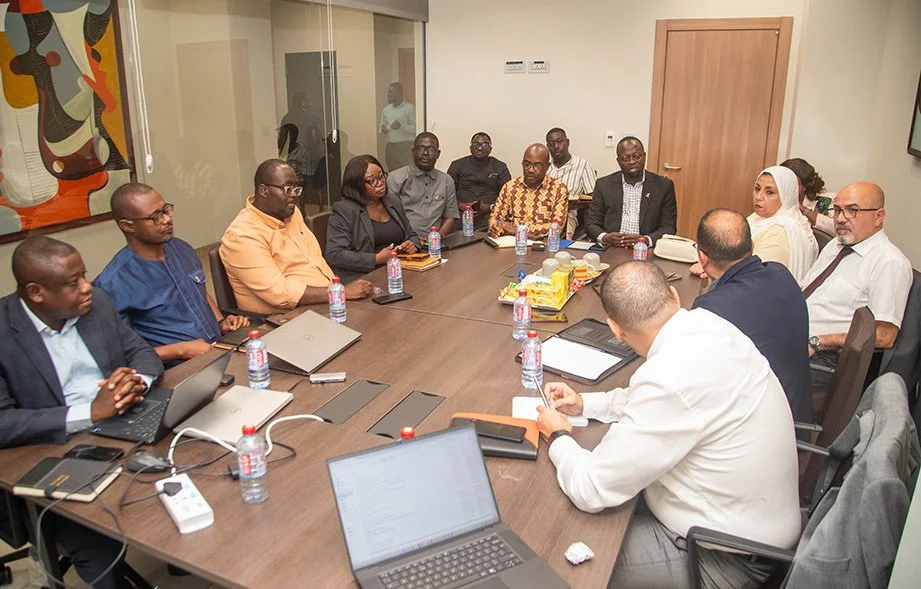
Brazzaville | January 7, 2025 - In a development poised to recalibrate upstream energy dynamics across West Africa and the Sahara, the Ghana National Petroleum Corporation (GNPC) and Algeria’s Sonatrach formalised a strategic research, development and innovation (R&D) partnership under the auspices of the African Petroleum Producers Organisation (APPO) yesterday. Contrary to conventional upstream agreements that emphasise acreage swaps or production sharing, this memorandum of understanding (MoU) places technology and knowledge transfer at the centre of Africa’s hydrocarbon strategy.
APPO, convening member states around shared aspirations for sovereign energy management, provided the institutional framework for the accord, underscoring its evolving role beyond dialogue facilitation into actionable sector cooperation. The signing ceremony in Brazzaville, Republic of Congo—home to APPO’s headquarters—was attended by Sonatrach and GNPC leadership alongside APPO’s newly appointed Secretary-General, signalling a concerted push for homegrown technical capacity building.
Innovation at the Core of African Energy Strategy
The African Energy Chamber (AEC), a formidable independent voice in the continent’s energy discourse, has unequivocally endorsed the partnership. In its public commentary, AEC described the MoU as a watershed moment for African national oil companies (NOCs), noting that it reflects an urgent pivot toward research-driven competitiveness in an era when global capital increasingly prizes technology-led efficiency and emissions management.
AEC’s analysis foregrounds several technical avenues covered under the MoU—ranging from 4D seismic imaging and artificial intelligence-enabled reservoir modelling to digital oilfield integration and improved oil recovery techniques—each calibrated to enhance recovery factors, optimise drilling outcomes, and extend asset life while embedding environmental performance into exploration and production protocols.
Importantly, AEC situates this collaboration within a broader policy landscape in which African energy actors seek agency over their technological pathways, resisting models that default to imported capacity and instead promoting intra-continental knowledge exchange.
Ghana’s Energy Architecture: From Gas Security to Frontier Exploration
The R&D accord arrives at a pivotal moment for Ghana’s energy sector. Ghana is concurrently consolidating natural gas supply infrastructure, with international partners Eni and Vitol ramping up operational capabilities in the Offshore Cape Three Points (OCTP) block. A phased upgrade of the Non-Associated Gas (NAG) processing system, completed in July 2025, has elevated capacity from 246 million to 270 million standard cubic feet per day (MMSCFD). This output now supplies roughly 70 percent of Ghana’s domestic gas needs, primarily for power generation, and underpins approximately 34 percent of the country’s electricity output.
These enhancements are part of a strategic shift to reduce reliance on oil-fired generation, promote cleaner fuel mixes, and support broader energy security objectives. Eni operates OCTP with a 44.4 percent interest alongside Vitol (35.6 percent) and GNPC (20 percent), an ownership structure that knits national and international capital into Ghana’s critical energy infrastructure.
In September 2025, the partners deepened this collaboration by signing a Memorandum of Intent (MoI) with the Government of Ghana to expand production capacity and explore adjacent opportunities, including the Eban-Akoma field in Block 4, declared commercially viable earlier that year. The MoI signals alignment between state policy and private capital to meet escalating domestic demand and drive export potential.
Macro Patterns: Integration of Technology, Capital, and Governance
Taken together, these developments reflect a dual trajectory in Ghana’s oil and gas sector: sustained expansion of mid-stream gas infrastructure that fortifies energy security, and a continent-wide push for innovation ecosystems that amplify sovereign control over upstream value creation.
The GNPC-Sonatrach R&D MoU extends beyond bilateral cooperation, symbolising a continental ambition to elevate technical proficiency, reduce operational costs, and integrate sustainability into hydrocarbon value chains. This mirrors an industry dialogue where actors such as APPO are evolving from passive conveners to active architects of Africa’s energy future.
The AEC has been vocal about the necessity of aligning such strategies with investment discipline and governance frameworks that can withstand market volatility and transition risks—a point underscored in contemporaneous debates on national oil company resilience.
Redefining African Energy Leadership
The GNPC-Sonatrach accord represents a strategic recalibration at the nexus of innovation, diplomacy, and resource optimisation. Its emphasis on R&D places Africa on a trajectory that could reshape not only domestic hydrocarbon performance but also regional energy cooperation models. Coupled with robust capital commitments from partners like Eni and Vitol, Ghana’s energy sector is poised at the intersection of technological maturation and infrastructure scalability.
For peer reviewers and industry stakeholders alike, this marks a departure from conventional narratives that frame African energy solely around resource extraction. Instead, the focus is shifting toward institutional capacity, technological autonomy, and pragmatic partnerships that collectively underpin a more resilient and forward-looking energy paradigm.
