
NPA CEO Inaugurates 15-Member Steering Committee For Centre Of Excellence For The Downstream Petroleum Sector
The National Petroleum Authority has collapsed policy ambition and execution into a single moment, launching its Downstream Centre of Excellence and inaugurating a 15-member steering committee to drive its design and delivery. The move places governance, skills development, and applied research at the core of a coordinated push to reposition Ghana’s downstream petroleum sector for long-term transformation under an increasingly demanding operating landscape.
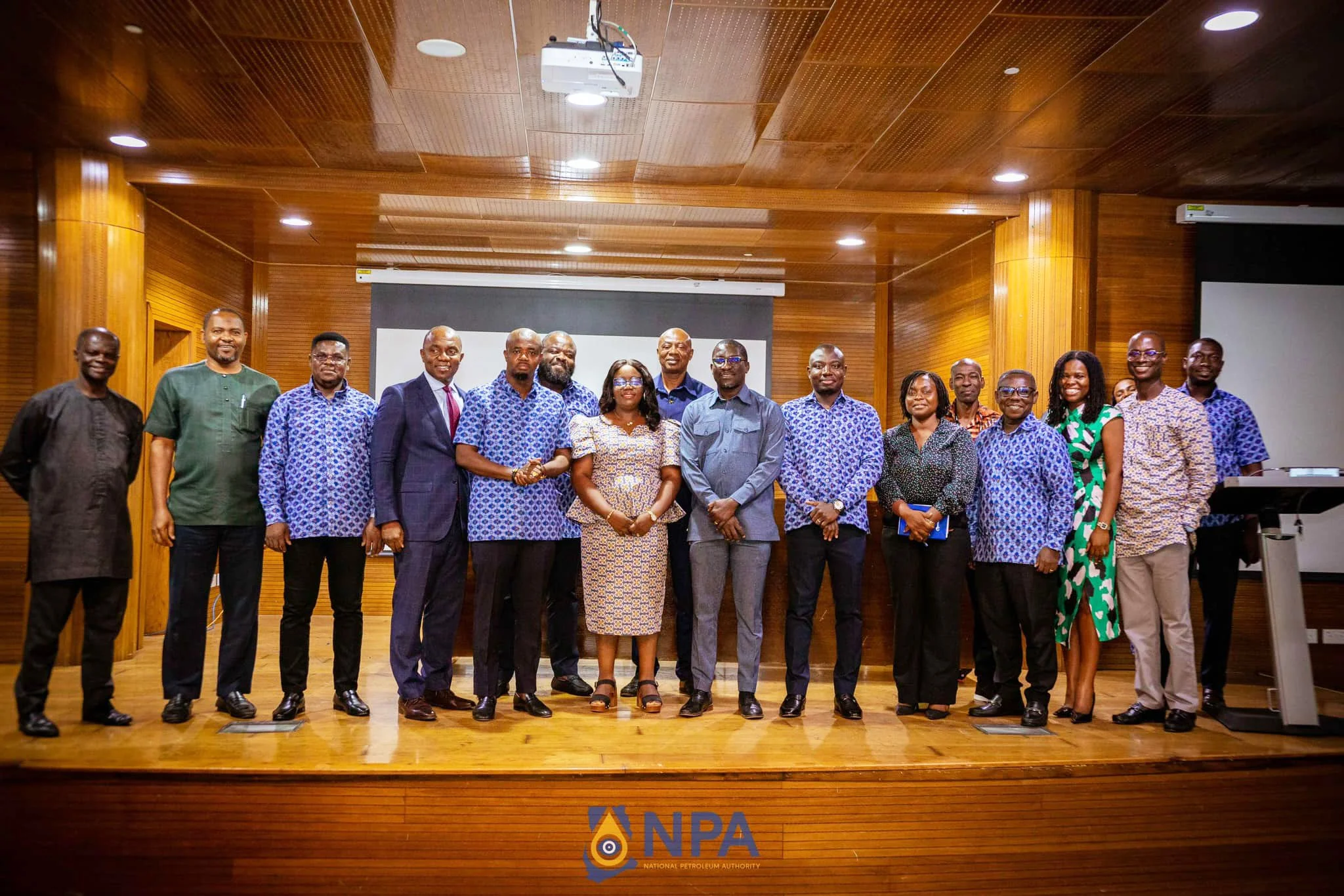
Accra, Ghana | April 20, 2026 - The Chief Executive of the National Petroleum Authority (NPA), Mr. Godwin Kudzo Tameklo (Esq), inaugurated a 15-member multi-stakeholder steering committee to spearhead the development of a Centre of Excellence for the downstream petroleum sector.
The inauguration took place on the same day the Authority formally launched the Downstream Centre of Excellence, marking a deliberate convergence of policy announcement and implementation architecture.
The launch framed the Centre not as an institutional add-on, but as a structural response to longstanding gaps in technical training, applied research, and coordination across the downstream value chain.
The inauguration effectively converted that policy ambition into governance machinery.
From policy signal to implementation structure
The proposed NPA Centre of Excellence is envisioned as a strategic institutional platform designed to support competency-based training and applied research within Ghana’s downstream petroleum sector. While the launch itself set out the “why,” the steering committee defines the “how.”
Its mandate is explicitly technical: to develop a comprehensive proposal for establishment, define governance and institutional architecture, and assess potential locations for the facility, among other responsibilities. In effect, it is tasked with translating a sector-wide reform idea into a functioning institution with operational credibility.
The committee is chaired by the Acting Deputy Chief Executive of the NPA, Dr. Dramani Bukari, and brings together senior officials from across the Authority alongside industry and technical stakeholders.
The full membership includes:
● Setsoafia K. Agbenoto, Director, Quality Assurance, NPA
● Prince Amoako, Acting Director, Finance, NPA
● Abass Tasunti, Director, Economic Regulation & Planning, NPA
● Rasheed Dauda, Head, Policy Coordination, NPA
● Godwin Yaw Konu, Acting Director, Business Development, NPA
● Linda Asante, Director, Inspections, Monitoring & HSE, NPA
● Dr. Joseph Wilson, Director, Research, Monitoring & Evaluation, NPA
● Bridgette Obiri-Yeboah, Acting Director, Licensing, NPA
● Dr. Riverson Oppong, CEO, Chamber of Oil Marketing Companies (COMAC)
● Dr. Patrick Ofori, CEO, Chamber of Bulk Oil Distributors (CBOD)
● George Nyaunu, National Petroleum Tanker Drivers Union
● Dr. Peter Boahin, Commission for Technical and Vocational Education and Training (CTVET)
● Dzidzor Klake, Head, Petroleum Product Marking Scheme, NPA (Secretary)
● Mudasiru Mahama, Technical Aide to the Acting Deputy Chief Executive (Member/Technical Support)
Industry representation is equally deliberate, drawing in leadership from COMAC, CBOD, the National Petroleum Tanker Drivers Union, and CTVET. The inclusion reflects an intent to anchor the Centre in both regulatory and market realities rather than treat it as a purely administrative construct.
The architecture of execution
For the NPA, the Centre of Excellence is being positioned as a long-term institutional anchor rather than a discrete training programme. The steering committee’s composition signals an attempt to fuse regulatory oversight, private sector execution capacity, and technical vocational alignment into a single governance loop.
Mr. Tameklo underscored that design logic at the inauguration.
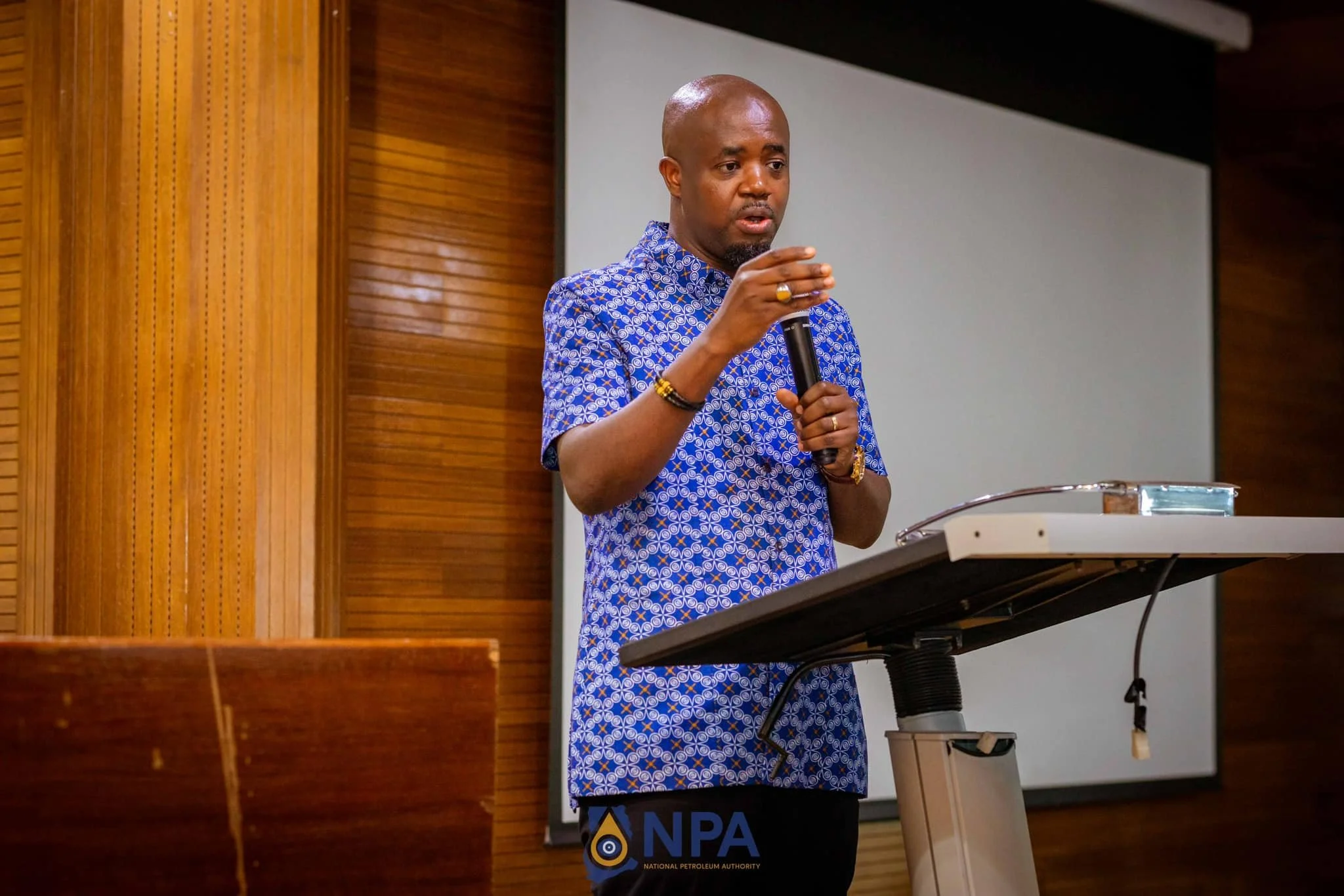
“There was a need to have a steering committee to help the Authority develop the best approach to establishing the Centre of Excellence. In terms of diversity and skillset, there is no better team than what has been inaugurated today,” he said.
The framing is notable for what it implies: the Authority is not outsourcing design, but embedding it within a multi-stakeholder structure intended to pre-empt fragmentation during implementation.
Reform ambition and institutional permanence
The Centre’s broader policy significance is rooted in its reform agenda. Ghana’s downstream petroleum sector has historically been characterised by uneven capacity development, regulatory complexity, and fragmented training pipelines. The Centre of Excellence is intended to address those structural constraints through a single institutional platform combining training, research, and industry standards development.
Mr. Tameklo reinforced this long-term positioning.
“The NPA Centre of Excellence will help bring reforms and transformation to the downstream petroleum sector, and it is an initiative that is here to stay,” he added.
That language—“reforms and transformation”—places the initiative in the category of structural adjustment rather than incremental policy reform.
Linking regulation, skills, and the 24-hour economy agenda
The initiative also arrives against a policy backdrop shaped by Ghana’s push toward a 24-hour economy model, which places new demands on energy reliability, logistics coordination, and workforce readiness across critical sectors, including petroleum distribution and retail. The Authority recently signed a Memorandum of Understanding with the 24H Economy Authority.
The launch of the Centre of Excellence explicitly positioned it within this policy direction, linking regulatory strengthening with human capital development as mutually reinforcing pillars. The formation of the steering committee reinforces that alignment, embedding implementation governance directly into the launch architecture.


What happens next
With the steering committee now formally constituted, the immediate task is technical: define the governance model, map institutional requirements, and determine physical and operational scope for the Centre.
In practical terms, this is where policy meets engineering—where broad reform language must be converted into budgets, curricula, partnerships, and measurable outputs.
The Centre of Excellence, still in its formative stage, now shifts from announcement to architecture. The test will be whether its design can match the scale of its ambition without becoming another well-intentioned but under-implemented reform node in Ghana’s energy sector landscape.
