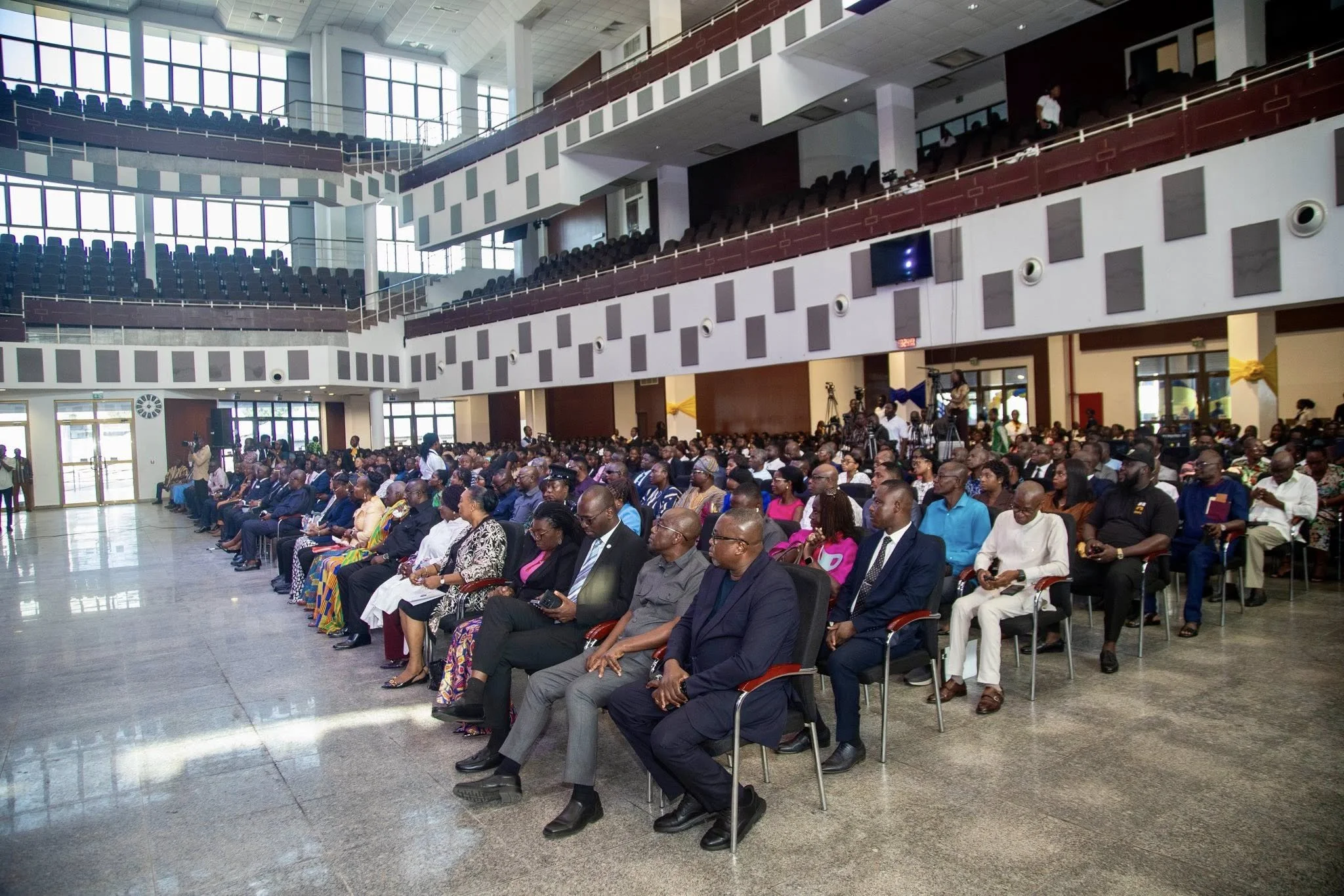
GNPC Honours a Foundational Architect of Ghana’s Petroleum State
At a moment when Ghana’s energy transition is increasingly defined by questions of capability as much as resource endowment, the Ghana National Petroleum Corporation has turned to its own institutional memory for answers. In Accra, the Corporation—working with the UPSA Law School—honoured Tsatsu Tsikata for his foundational role in shaping the country’s petroleum architecture. Yet the ceremony landed less as a retrospective than as a signal: even as GNPC pays tribute to its past architects, it is actively cultivating the next generation through a widening network of university engagements stretching from Ashesi University to University of Energy and Natural Resources and University for Development Studies.
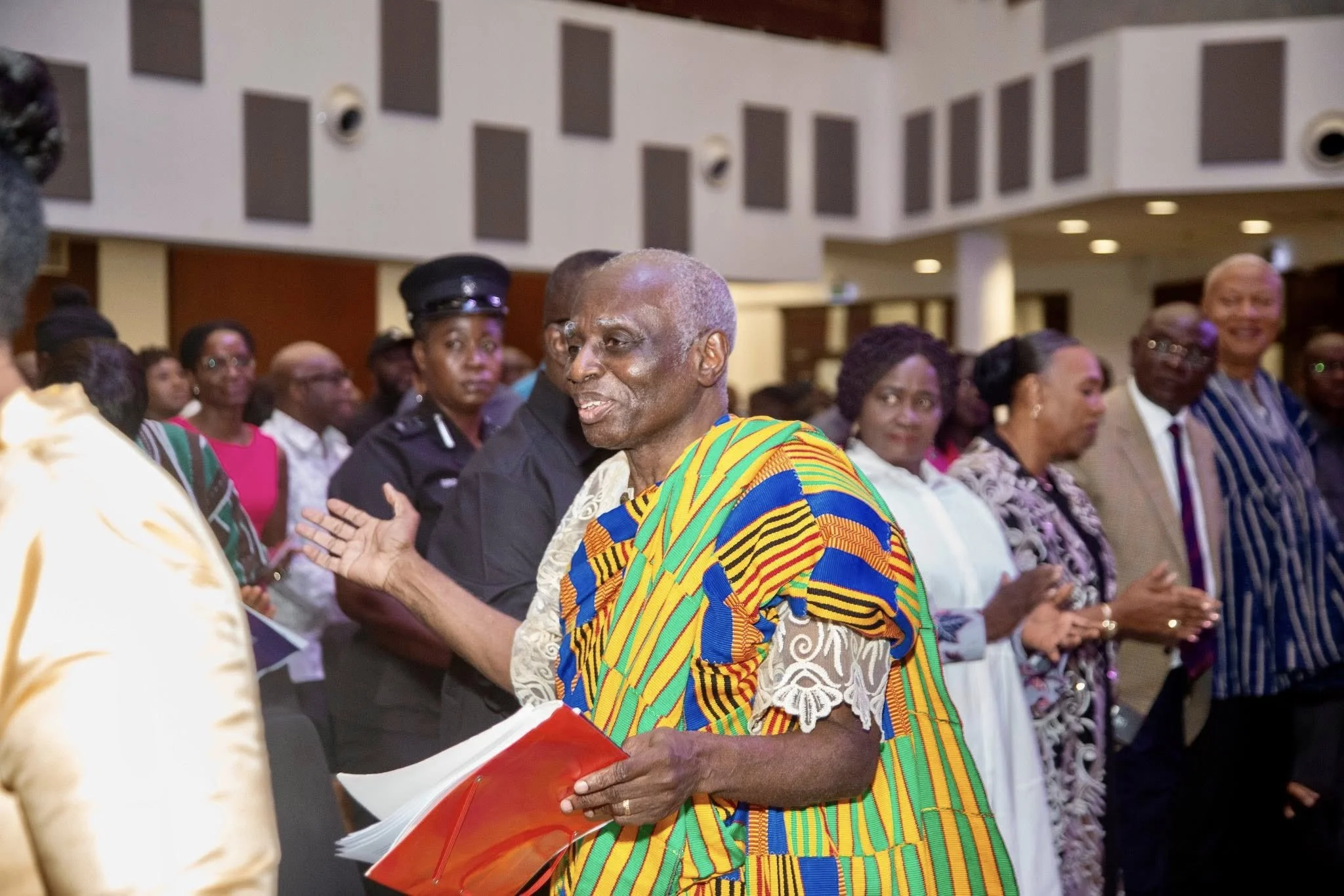
Accra, Ghana | April 20, 2026 - The Ghana National Petroleum Corporation, in collaboration with the UPSA Law School, has honoured Tsatsu Tsikata at its 2026 Honorific Lecture and Award ceremony in Accra—an event that does more than commemorate a career; it situates Ghana’s petroleum future firmly within the legacy of its institutional past.
The ceremony convened senior government officials, legal practitioners, and academia to recognise Tsikata’s enduring contributions across law, public service, and energy governance. As GNPC’s Chief Executive during its formative phase, his tenure is widely regarded as a structural inflexion point—when Ghana moved from aspiration to capability in offshore exploration and upstream development.
A Foundational Era in Ghana’s Petroleum Story
In a solidarity message, GNPC’s Acting Chief Executive Officer, Kwame Ntow Amoah, underscored the strategic weight of that era: “Under your leadership, GNPC laid the foundation for Ghana’s emergence as a new oil province.” The remark reflects a broader institutional consensus—one that credits early leadership with enabling Ghana’s eventual transition into a producing nation.
That early phase was not merely exploratory in the geological sense; it was architectural. GNPC, under Tsikata, pushed into uncharted basins, built technical depth, and initiated foundational thinking around gas infrastructure and regional energy integration. These moves, incremental at the time, now read as preconditions for the country’s contemporary upstream profile.
From Legacy to Capability: GNPC’s Talent Development Push
Yet the Accra ceremony is best understood not as a retrospective in isolation, but as the latest node in a deliberate sequence of engagements by GNPC—linking legacy, capacity, and continuity.
In recent months, the Corporation has intensified its forward-facing posture on talent development. Its engagement at the University for Development Studies—specifically with the Geological Engineering Department at the Nyankpala campus—marked a structured intervention in skills pipeline development. Over two days, GNPC professionals interfaced directly with students, blending technical exposure with career preparation.


Led by Daniel Ayihi, the delegation framed the initiative in pragmatic terms: “This drive, for us at GNPC, is not motivated by a need to be seen,” he noted. “We place great importance on giving students practical exposure to industry… and shaping their readiness for the world of work.”
The programme moved beyond optics—incorporating aptitude assessments, CV clinics, and technical sessions aimed at closing the gap between academic training and industry expectations. “Industry readiness is built over time,” Ayihi added. “The earlier students are exposed to how organisations like GNPC operate, the better positioned they are to develop the mindset and discipline required to contribute meaningfully.”
A Deliberate Outreach Sequence Across Campuses
This intervention at UDS followed an earlier outreach at the Ashesi University 2026 Career Fair, where GNPC engaged high-performing students on internship pathways and long-term career trajectories within the energy sector. A similar engagement at the University of Energy and Natural Resources reinforced this pattern—suggesting a coordinated, multi-campus strategy rather than episodic outreach.
Taken together, the chronology is instructive. GNPC’s presence at Ashesi and UENR established early-year visibility among emerging talent; the UDS engagement deepened that interface through technical immersion; and the honouring of Tsikata in Accra completes the arc—anchoring these forward-looking initiatives in the institutional memory of how Ghana’s petroleum sector was first built.
Linking Institutional Memory to Future Growth
This sequencing signals something more deliberate than commemoration or recruitment in isolation. It reflects a Corporation attempting to reconcile two imperatives: preserving the strategic clarity that defined its early years, while cultivating the human capital required to navigate a far more complex energy transition landscape.
As Amoah noted, GNPC continues to build on these foundations—expanding gas infrastructure, sustaining production, and advancing frontier exploration, including work in the Voltaian Basin. These ambitions, however, hinge less on geology than on capability: the ability to train, retain, and deploy technically proficient Ghanaian professionals at scale.
In that context, the Accra ceremony becomes less about honouring a single figure and more about institutional signalling. It draws a straight line from the strategic decisions that positioned Ghana as an oil-producing nation to the current efforts aimed at ensuring that the next generation can sustain—and redefine—that position.
For GNPC, the message is unambiguous: legacy is not static. It is a framework to be operationalised—across lecture halls, recruitment pipelines, and boardroom strategy alike.