Government Steps In on Fuel Prices as Hormuz Disruption Drives Costs Higher
Tension in the Strait of Hormuz has triggered a global fuel shock, sending crude prices sharply higher and forcing governments across countries into rapid-fire policy responses. In Ghana, authorities will absorb GHS2 per litre on diesel and GHS0.36 on petrol from April 16, in a targeted intervention to cushion households and transport operators from surging pump prices. The move mirrors a broader international pattern—from fuel levy cuts and price caps to aggressive demand controls and work-week reductions—as states scramble to contain inflationary spillovers, stabilise supply chains, and manage the political economy of energy security in an increasingly volatile oil market.
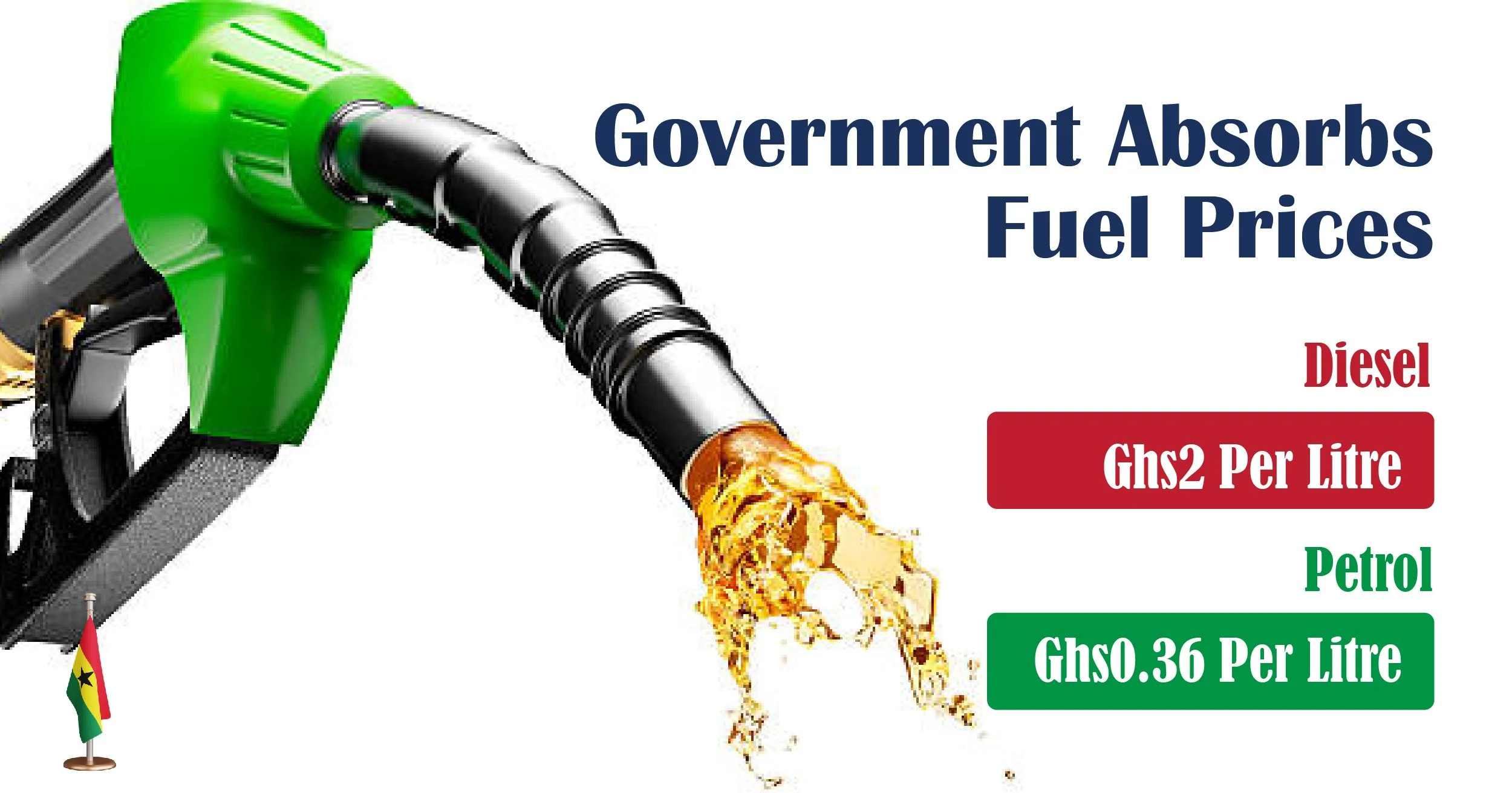
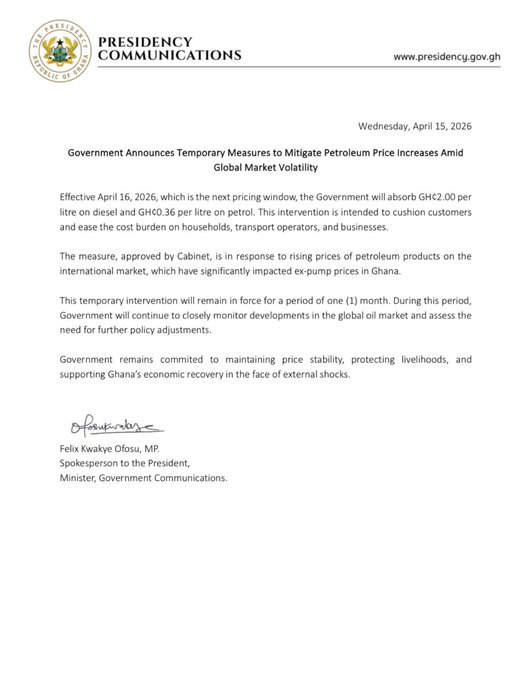
Accra, Ghana | April 16, 2026 — The government will absorb GHS2 per litre on diesel and GHS0.36 per litre on petrol, effective April 16, in its most concrete intervention yet to cushion consumers from a global oil shock triggered by escalating tensions in the Middle East. The measure, approved by Cabinet, is intended to ease the cost burden on households, transport operators and businesses, and will remain in force for an initial period of one month as authorities monitor developments in the global oil market.
The decision, confirmed following an emergency cabinet meeting on April 9, crystallises a broader package of measures rolled out by the Mahama administration as crude prices nearly doubled and downstream costs surged across import-dependent economies.
From Global Shock to Local Strain
The policy response traces back to late February, when conflict in the Middle East sent benchmark crude prices from roughly $66–$68 per barrel to nearly $120. The shock rapidly transmitted into Ghana’s downstream market, with the National Petroleum Authority (NPA) setting floor prices for the first pricing window of the month, effective April 1 at GHS17.10 for diesel and GHS13.30 for petrol.
By early April, the scale of the pass-through was unmistakable. President John Dramani Mahama acknowledged in his speech at the Kwahu Business Forum that petrol had climbed above GHS13 per litre, with diesel trading between GHS15 and GHS16, warning that global volatility was feeding directly into domestic prices.
Yet the administration maintained that supply security was intact. According to the NPA, Ghana holds roughly six to seven weeks of cover in petroleum stocks—largely commercially held inventories by Bulk Distribution Companies—supported by steady inflows of product cargoes and diversified sourcing strategies. The regulator confirmed multiple vessels at anchorage and a steady pipeline of deliveries through early April, ensuring continuity of supply even as costs spiked.
Cabinet Moves to Cushion the Blow
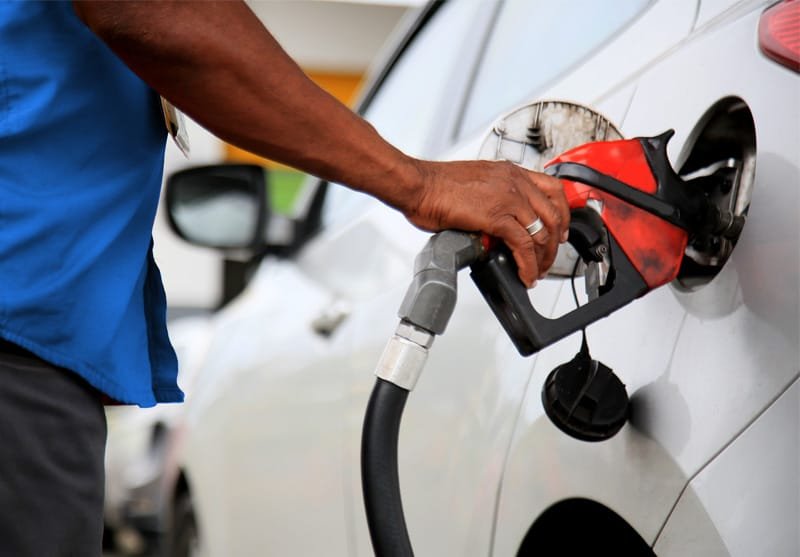
Against this backdrop, the President convened an emergency Cabinet meeting on April 9 to calibrate a response. The outcome: a targeted intervention aimed at reducing pump prices without distorting supply incentives.
Cabinet directed the Ministers for Finance and Energy to remove selected taxes and margins beginning with the next pricing window, with the measures to remain in force for an initial four-week period. The newly confirmed absorption rates—GHS2 per litre on diesel and GHS0.36 on petrol—operationalise that directive.
The policy tilt reflects a clear prioritisation of diesel. In an interview on April 12, Dr. Patrick Kwaku Ofori, CEO of the Chamber of Bulk Oil Distributors, argued that diesel prices had crossed a “harsh” threshold above GHS17 per litre and warranted targeted relief, describing the government’s intervention as a “hit” taken to demonstrate solidarity with consumers.
Complementary measures reinforce the cushioning strategy. Cabinet has instructed the fast-tracking of 100 Metro Mass buses to provide lower-cost public transport along high-traffic corridors, while reaffirming a ban on fuel allowances for ministers and senior officials—moves designed to temper both demand and public perception.
Costs Spiral Beneath the Surface
Even as supply holds, the underlying cost structure has deteriorated sharply.
According to both the NPA and the Chamber of Bulk Oil Distributors, importers are contending with a surge in premiums—from around $20 to as high as $170–$200—alongside exponential increases in insurance costs and demurrage charges. In separate interviews, industry executives noted that vessel insurance has jumped from tens of thousands of dollars to well over $1 million, underscoring the geopolitical risk premium now embedded in fuel supply chains.
Dr. Patrick Kwaku Ofori further clarified that commonly cited benchmarks in the downstream sector represent break-even thresholds covering landing costs, storage and regulatory fees, rather than profit margins.
The economics of importation have shifted accordingly. NPA Chief Executive Godwin Tamakloe noted that diesel cargo costs have more than doubled, rising from roughly $700 per metric tonne to over $1,400 in the wake of the crisis.
The relative stability of the cedi has emerged as a critical buffer. Tamakloe emphasised that “but for the exchange rate dynamics, we would be doing twice the price at the pump,” pointing to currency stability as the primary factor containing domestic price escalation.
Regional Fallout: Growth Revisions and Fragility
The reverberations extend well beyond Ghana.
The World Bank has revised Sub-Saharan Africa’s 2026 growth forecast downward to 4.1%, from an earlier projection of 4.4% published in October 2025, citing spillovers from the Middle East conflict alongside high debt burdens and structural constraints. The downgrade underscores the region’s vulnerability to external shocks even as it attempts to recover from successive global crises.
The African Development Bank offers a slightly more optimistic projection of 4.3% growth, but similarly emphasises the need for fiscal discipline and structural reforms to withstand volatility.
For import-dependent economies, the transmission channel is clear: higher energy costs feed into inflation, widen fiscal deficits, and compress household purchasing power.
Policy Tracker: How Governments Are Responding
IEA Energy Crisis Policy Tracker
Data from the International Energy Agency’s policy tracker shows that governments are deploying a wide range of administrative, fiscal and demand-side measures to contain the impact of rising energy prices.
In Egypt, authorities have introduced strict energy conservation measures across the public sector, including one-day remote work policies, limits on official travel, early closure of government facilities to reduce electricity consumption, and nationwide campaigns urging reduced lighting and fuel use. Commercial activity has also been curtailed, with mandated early closing hours for shops and public appeals to conserve energy, alongside a push to expand public transport usage.
Pakistan has adopted even more aggressive administrative controls, including a four-day work week for public officials complemented by remote work arrangements, a ban on foreign travel by government staff, and a shift to fully online education. Authorities have also prohibited official dinners and physical meetings, enforced early closure of markets and event centres, reduced highway speed limits, and introduced measures such as free public transport and restrictions on government vehicle purchases.
In Africa, responses reflect more targeted fiscal interventions. South Africa has moved to cut fuel levies to soften pump prices, while Mozambique has imposed caps on retail fuel prices. Zambia has opted to reduce value-added tax on petrol and diesel to ease cost pressures on consumers.
In Asia, Korea has combined demand restriction with targeted support. Public sector workers are subject to mandatory two-day odd-even driving restrictions based on licence plates, with private sector participation encouraged. The government has also implemented domestic fuel price caps, promoted voluntary reductions in energy use among major industrial consumers, and introduced cash support schemes targeting lower-income households and vulnerable groups.
In the United Kingdom, authorities have moved to reinforce consumer protections amid rising energy costs, expanding heating support for vulnerable households while accelerating the Warm Homes Plan to improve energy efficiency. The government is also advancing approvals for plug-in solar systems as part of a wider push toward household energy resilience. In parallel, ministers have issued public warnings against fuel price gouging, signalling tighter scrutiny of pricing behaviour as global energy pressures intensify.
What emerges from the tracker is a clear pattern: governments are not only cushioning consumers through fiscal measures but also actively suppressing demand and enforcing behavioural adjustments to manage energy consumption. Ghana’s intervention—centred on targeted price absorption, tax and margin adjustments, and public transport expansion—aligns with this broader global response, albeit with a stronger emphasis on price stabilisation than demand restriction.
Strategic Questions Beyond the Crisis
The immediate focus remains price stabilisation, but the crisis has reignited deeper structural debates.
In his April 12 interview, Dr. Patrick Kwaku Ofori argued for structural reforms including the privatisation of the Tema Oil Refinery, citing persistent challenges with capital investment and operational efficiency. He also pointed to gaps in storage infrastructure, noting that consumption has significantly outpaced storage expansion over the past decade.
The Chamber has further advocated for alternative fuel strategies, including ethanol blending, and greater investment in public transport systems to structurally reduce national fuel demand.
At the same time, industry players credit Ghana’s deregulated downstream framework for enabling Bulk Distribution Companies to maintain supply reliability despite global disruptions.
A Delicate Balancing Act
The government’s decision to absorb part of the fuel cost marks a calculated intervention in a highly volatile market. It offers immediate relief but comes with fiscal implications at a time when external pressures are mounting.
For now, the combination of stable supply, currency support, and targeted policy action has bought time. But with global uncertainty still elevated and the Hormuz-linked shock yet to fully unwind, the durability of that balance will be tested in the weeks ahead.
