GNPC Deepens Community and Local Content Interventions
GNPC is widening its social investment footprint with a new round of healthcare, livelihood and vendor-capacity interventions across key petroleum-linked communities. From a fresh healthcare MoU for the Western Region to fishing-sector support along the Western and Central coast and procurement training for local suppliers, the Corporation is positioning CSR and local content as central planks of its upstream mandate.
Western Region, Ghana | May 4, 2026 - The Ghana National Petroleum Corporation is widening the definition of upstream value beyond crude barrels, gas offtake and licence extensions, rolling out a fresh sequence of social investment and local content interventions that tie host-community welfare directly to the operational future of Ghana’s petroleum sector.
In the space of a week, GNPC and its upstream partners moved on three fronts: a new healthcare MoU with the Ghana Health Service for the Western Region; an artisanal livelihood empowerment programme for more than 1,000 verified canoe owners and fishermen across Western and Central coastal districts; and a vendor-capacity programme in Tema, delivered with the Public Procurement Authority, to prepare Ghanaian suppliers for a more transparent and competitive procurement environment.
Together, the interventions mark a deliberate broadening of GNPC’s community-impact architecture at a time when the Corporation is also managing a longer upstream horizon following the extension of the Jubilee and TEN licences to 2040, renewed stakeholder engagements around the Jubilee and TEN fields, and continuing obligations around the Saltpond Decommissioning Project.
A Healthcare MoU for the Western Region
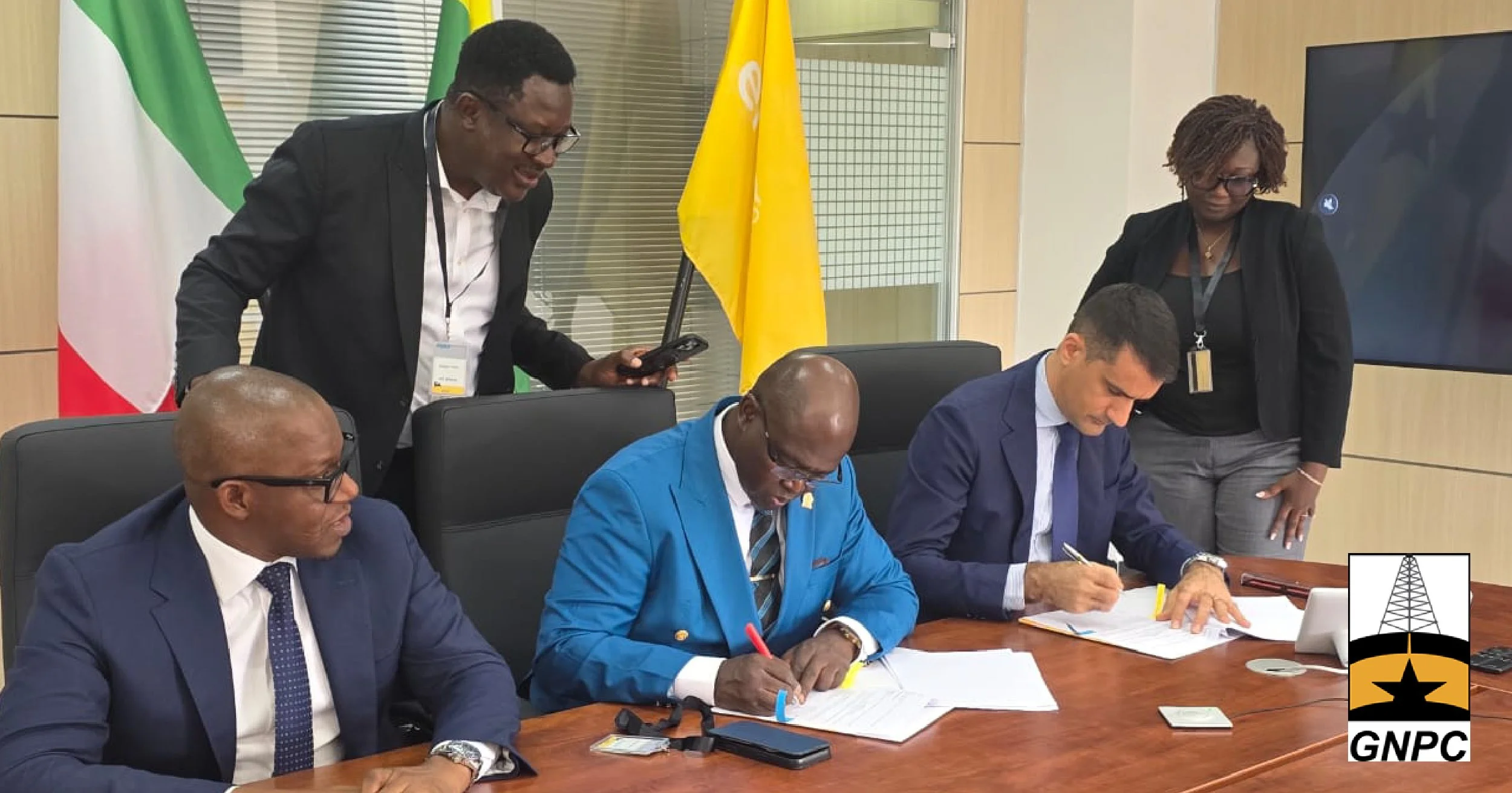
The first move came on April 20, when GNPC, together with its upstream partners led by Eni, signed a new Memorandum of Understanding with the Ghana Health Service to support the next phase of healthcare development interventions in the Western Region.
The agreement is not a standalone gesture. It builds on earlier interventions between 2014 and 2017 across Sanzule, Bakanta, Krisan and Eikwe, where the partners supported the construction and equipping of CHPS compounds, refurbishment of health centres, rehabilitation of hospitals, and provision of emergency response assets including land and marine ambulances.
Those interventions improved access to care and strengthened basic healthcare systems in host communities, but subsequent assessments identified fresh gaps: emergency response capacity, critical medical equipment and targeted infrastructure upgrades. The new MoU is designed to respond to those needs through a more coordinated phase of support, with the Ghana Health Service serving as the coordinating and regulatory authority to align the interventions with national healthcare priorities and existing development plans.
For GNPC, the healthcare framework gives social investment a sharper institutional anchor. Rather than treating community support as episodic goodwill, the Corporation and its partners are placing the next phase under a public-health coordination structure, with approvals to be secured for an implementing partner to lead detailed design and execution.
Fishing Communities at the Edge of Offshore Operations
Also on April 20, GNPC, working with upstream partners led by Eni and Vitol Upstream Ghana Limited, launched an artisanal livelihood empowerment programme in Takoradi for fishing communities along the Western and Central Regions.
The programme will reach more than 1,000 verified canoe owners and fishermen across fourteen coastal metropolitan, municipal and district assemblies, including Jomoro, Ellembelle, Ahanta West, Sekondi-Takoradi, Cape Coast and Mfantseman.
Its logic is practical. Offshore petroleum operations and artisanal fishing activity share a sensitive marine operating environment. The programme therefore provides fishing gear and equipment, alongside training to help beneficiaries use the support effectively and safely. It is both livelihood support and risk management: a community intervention aimed at helping fishing and offshore operations coexist with fewer disruptions and less exposure to avoidable hazards.
Speaking at the launch, GNPC’s Social Performance Manager, Patience Lartey, stressed that the value of the intervention would depend on how well the equipment is used and maintained, while urging fishermen to use the protective gear provided.
The launch also sits within a broader pattern of coastal engagement. In March, GNPC and its Jubilee and TEN partners held discussions with Western Region traditional authorities on offshore operations, production outlook, community development and safety concerns, including the risks posed by canoe incursions into restricted operational zones.
That earlier engagement came after GNPC had also met Nkusukum Traditional Area leaders on the Saltpond Decommissioning Project, where fisherfolk concerns centred on timelines and restricted access linked to safety protocols. GNPC management said the project remained active, with delays tied to contractual processes, cost verification and mandatory third-party technical assessments.
Local Content Moves from Policy to Capability
The third leg came on April 27 in Tema, where GNPC, in collaboration with the Public Procurement Authority, organised a targeted capacity-building programme for its local vendor base.
The training brought together registered suppliers across service areas including catering, cleaning, branding and technical support services. Its focus was the practical application of Ghana’s public procurement framework and the use of the Ghana Electronic Procurement System, GHANEPS, with the aim of improving the quality, compliance and competitiveness of vendor submissions.
This is the less photogenic but strategically important part of the story. If GNPC is to deepen local participation in its supply chain while maintaining procurement discipline, local vendors must be able to compete within the rules, not around them.
“Local content requires capability. At GNPC, our focus is to ensure that Ghanaian businesses are well-prepared to compete, comply, and deliver within a structured and transparent procurement environment,” GNPC’s Manager for Supply Chain and Local Content Development, Seidu Salim Braimah, said.
The programme was delivered in two phases. The first, led by GNPC’s Deputy Manager for Supply Chain and Local Content Development, Barbara Afriyie-Owusu, walked participants through GNPC’s procurement processes, including how to prepare responsive and competitive tenders and avoid common submission errors. The second, facilitated by PPA officials, provided a hands-on walkthrough of registration, bid setup and tender submission on GHANEPS.
GNPC says the longer objective is to position local vendors to access opportunities within exploration and production procurement, particularly as the Corporation advances its ambition to become an operator in the near term.
The Wider Upstream Context
The sequencing is important. GNPC’s latest interventions are arriving after a period of intensified stakeholder engagement across both producing and legacy petroleum assets. At Saltpond, the Corporation is managing community expectations around decommissioning, safety restrictions and potential future upstream activity. In the Western Region, GNPC and its Jubilee and TEN partners are engaging chiefs and coastal stakeholders on mature-field performance, offshore safety and continued investment in production sustainability.
The extension of the Jubilee and TEN licences to 2040 has given the sector a longer investment runway. But it also raises the bar for social legitimacy. Mature fields require sustained capital, improved technology and continued exploration; host communities, in turn, expect a clearer development dividend from assets operating off their coastlines.
That is where GNPC’s recent activity begins to look less like routine CSR and more like an operating compact: healthcare systems for host communities, livelihood support for fishermen exposed to offshore-operational risks, and procurement training for local suppliers seeking entry into the Corporation’s supply chain.
From Social Spend to Strategic Licence
GNPC has long framed its social investment work as part of its national oil company mandate. In 2025, the Corporation reported support for 2,649 scholars and delivery of classroom blocks, dormitories, science laboratories, community centres, sanitation facilities and boreholes, alongside initiatives addressing menstrual hygiene, education infrastructure and tertiary scholarship support.
The latest April interventions extend that architecture into three politically and operationally sensitive zones: health access in Western Region host communities; livelihood resilience in fishing communities along the Western and Central coast; and local vendor readiness in the procurement pipeline.
For Ghana’s national oil company, the message is unmistakable. Upstream value is no longer being measured only by production profiles, reserve additions or export flows. It is also being judged by whether petroleum activity leaves behind stronger institutions, safer coastal livelihoods and a deeper Ghanaian supplier base.
That is the harder test for GNPC’s next phase: converting social investment from a parallel CSR programme into a durable part of Ghana’s upstream bargain.
