GOIL Reclaims Market Pole Position as Ghana’s State-Born Energy Giant Sharpens Shift from Scale to Service
GOIL PLC’s return to the top of Ghana’s fuel retail market is more than a commercial rebound—it is the latest chapter in the reinvention of one of the country’s most enduring national energy institutions. From its origins as AGIP’s local marketing arm to its rise as a publicly listed diversified energy group, GOIL is leveraging financial restructuring, aggressive market competition, and strategic expansion across downstream, upstream, and industrial segments to reclaim leadership while redefining its future around total service excellence.
Accra, Ghana | April 30, 2026 — GOIL PLC, one of Ghana’s three publicly listed oil marketing companies and its longest-standing indigenous downstream heavyweight, is once again asserting its dominance at the summit of the country’s fiercely contested fuel retail market, using a blend of historic institutional resilience, aggressive operational restructuring, and diversified energy expansion to reclaim leadership while pivoting toward what management now describes as “total service excellence.”
The latest Oil Marketing Company (OMC) performance statistics published by the National Petroleum Authority (NPA) show GOIL widening its lead in the first quarter of 2026, posting a 12.23% national market share by March, ahead of Star Oil’s 11.59%. This builds on February’s recovery, when GOIL had already edged back into first place with 11.65% after an intense price war that had briefly seen competitors challenge its supremacy.
The numbers are more than a monthly leaderboard reshuffle. They mark a strategic resurgence for a company whose journey mirrors Ghana’s own petroleum evolution—from foreign-operated retail outpost to government-acquired national energy institution, and now to a publicly traded diversified energy group.
From AGIP Legacy to Ghanaian National Champion
GOIL’s origins trace back to June 1960, when AGIP PETROLI established its marketing operations in Ghana. In 1974, the Government of Ghana acquired full ownership, transforming the company into Ghana Oil Company Limited as part of broader efforts to strengthen domestic participation in strategic sectors.
That transformation laid the foundation for GOIL’s emergence as a national energy institution rather than merely another fuel retailer.
Its 2007 listing on the Ghana Stock Exchange marked a major inflection point, opening the company to public investment while retaining its identity as a proudly Ghanaian brand. Subsequent rebranding—from Ghana Oil Company Limited to GOIL Company Limited in 2019 and later GOIL PLC in 2021—signalled not just corporate modernisation, but a deliberate repositioning toward broader energy and allied sector expansion.
Today, GOIL stands as one of Ghana’s flagship listed petroleum firms, with stated capital exceeding GHC185 million, nearly 392 million issued shares, and a board structure designed to balance public accountability with private market discipline.
Beyond Fuel Pumps: Building an Integrated Energy Group
While GOIL’s retail footprint remains its most visible strength—with over 440 service stations, the largest in Ghana—its contemporary strategy is increasingly defined by vertical and horizontal integration.
Under Group CEO and Managing Director Edward Abambire Bawa, who assumed office in April 2025, GOIL has accelerated its evolution into a four-pillar energy group encompassing retail fuel marketing through its nationwide OMC network, bulk petroleum distribution via GOEnergy, upstream exploration through GOIL Upstream, and industrial infrastructure participation through GOBitumen.
This diversification is not cosmetic.
GOEnergy has become a significant bulk distribution player, originally established to secure supply reliability for GOIL before expanding into broader commercial distribution.
GOIL Upstream positions the company within Ghana’s offshore petroleum future, particularly through its substantial interest in the Deep Water Cape Three Points block, where it seeks technically competent and financially capable strategic partners to unlock deepwater exploration opportunities.
GOBitumen, meanwhile, extends GOIL into bitumen production and distribution for road construction and infrastructure supply chains through its Tema-based production and storage terminal.
GOIL’s product architecture itself underscores this broader strategic footprint. Beyond premium fuels such as Super XP RON 95 and Diesel XP, the company’s portfolio spans lubricants, marine gas oil, aviation fuel, mining diesel, domestic LPG, auto LPG, premix fuel, raw bitumen, polymer-modified bitumen, and bitumen emulsions.
Together, these ventures signal GOIL’s strategic attempt to reduce vulnerability to downstream volatility while embedding itself more deeply across the petroleum and energy value chain.
Quality, Standards, and the Bawa Turnaround
GOIL’s renewed momentum did not come without substantial financial restructuring.
According to Bawa, upon assuming office, management inherited severe liquidity pressures, including approximately $110 million in ring-fenced obligations to BP that constrained competitiveness and contributed to periodic product shortages.
Management’s immediate response centred on stopping what Bawa described as the operational “bleeding” by refinancing foreign-denominated liabilities into cedi-based obligations, reducing BP-linked debt to roughly $30 million while restoring broader product sourcing flexibility and cost competitiveness.
This restructuring appears to be paying off.
GOIL’s share price surged 95% in 2025, with sustained momentum into 2026. The company itself attributes this upward trajectory to growing investor confidence in its strategic direction, operational efficiency, and market positioning.
Beyond financial recovery, GOIL’s pursuit of service leadership is anchored in institutional systems. The company maintains ISO 9001:2015 certification for quality management and ISO 14001:2015 certification for environmental management, alongside an integrated HSSEQ framework designed to strengthen operational safety, regulatory compliance, environmental stewardship, and customer satisfaction.
These standards now form a central pillar of GOIL’s service excellence narrative.

Public Mandate Meets Commercial Competition
Unlike purely private OMCs, GOIL’s business model remains partly shaped by a broader social mandate.
Bawa has emphasised that GOIL maintains operations in underserved and less commercially attractive communities—stations near schools, hospitals, and remote districts that may generate modest daily volumes but fulfil wider national access objectives.
This creates a dual burden: balancing commercial competitiveness with strategic public utility.
Yet despite these structural obligations, GOIL has remained highly competitive in Ghana’s increasingly aggressive downstream market, successfully navigating intense pricing battles against major rivals such as Star Oil.
Its resurgence in early 2026 demonstrates that institutional legacy and social responsibility need not undermine competitive market performance.
From Leadership to “Total Service Excellence”
Having reclaimed market leadership, GOIL’s management is now seeking to reposition the company’s next frontier beyond pure market share.
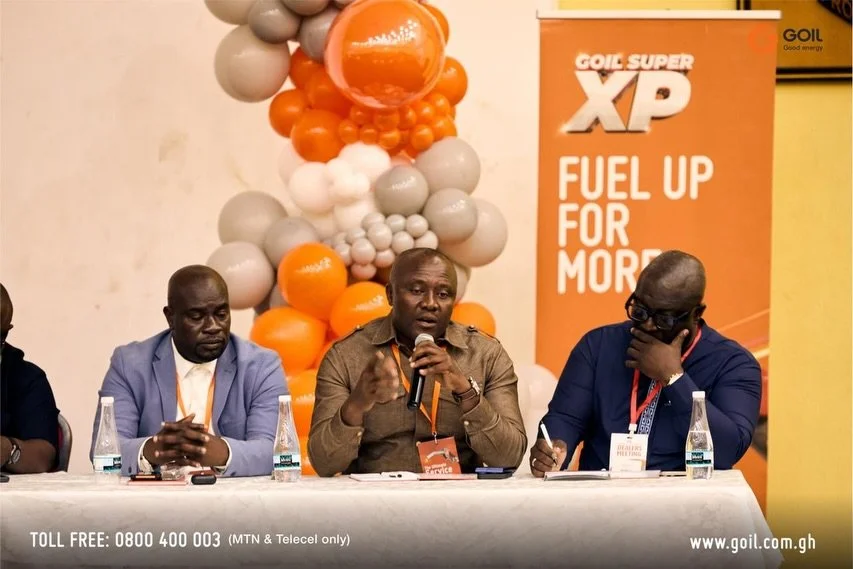
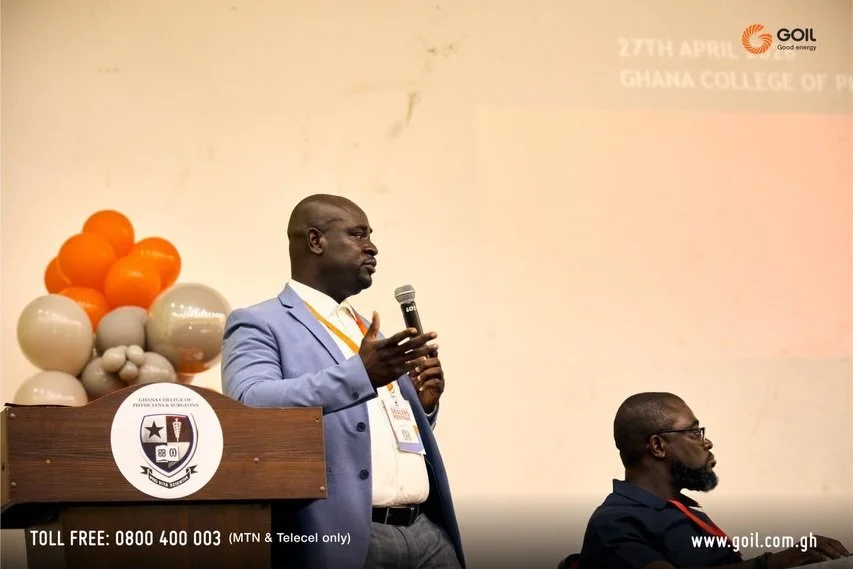
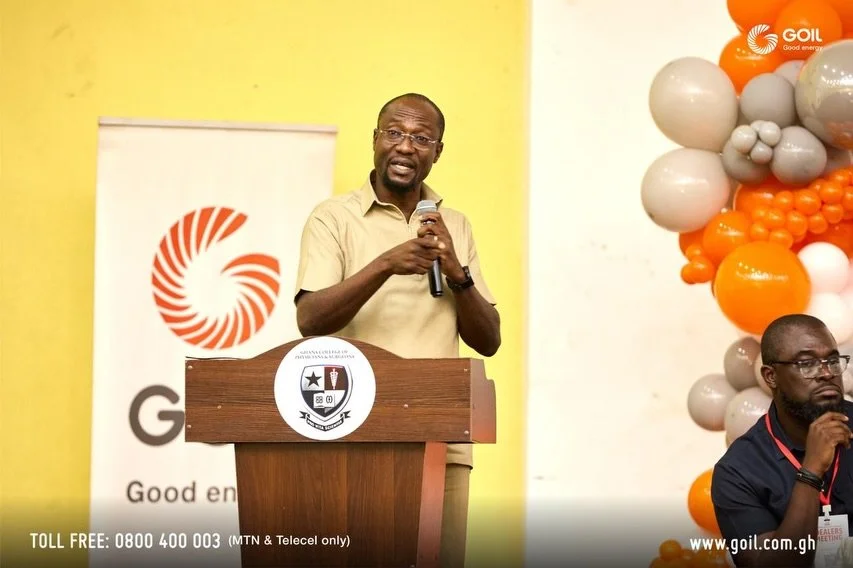
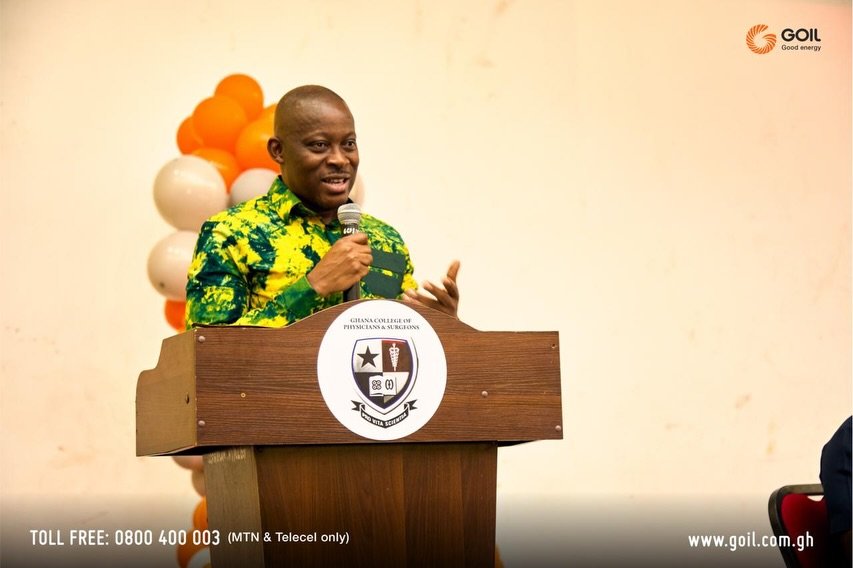
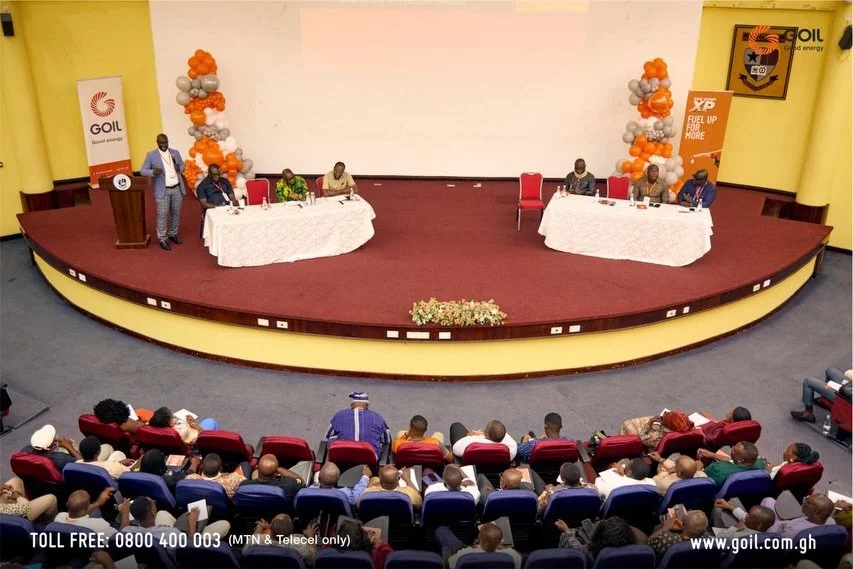
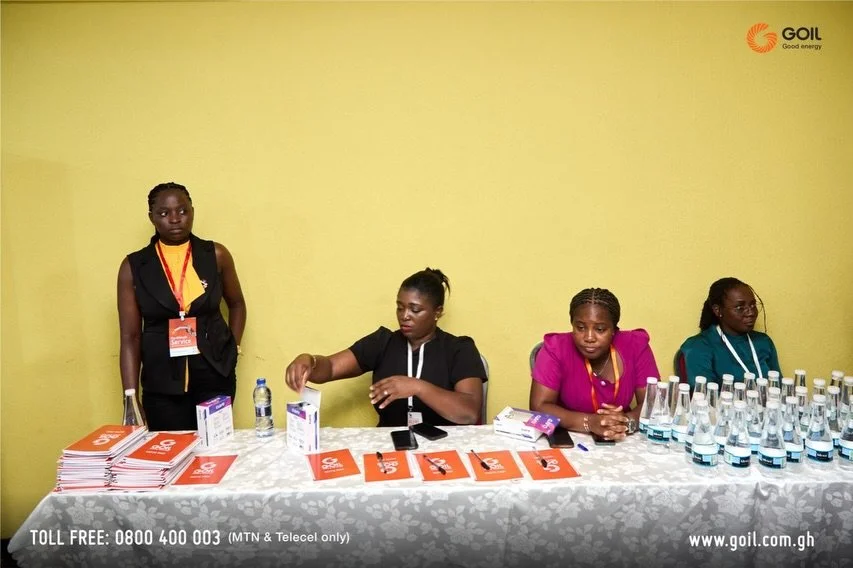
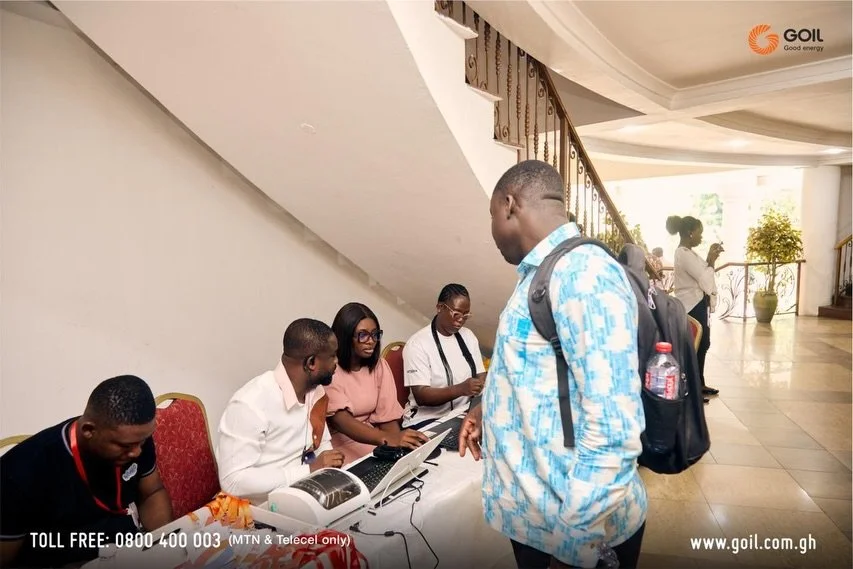
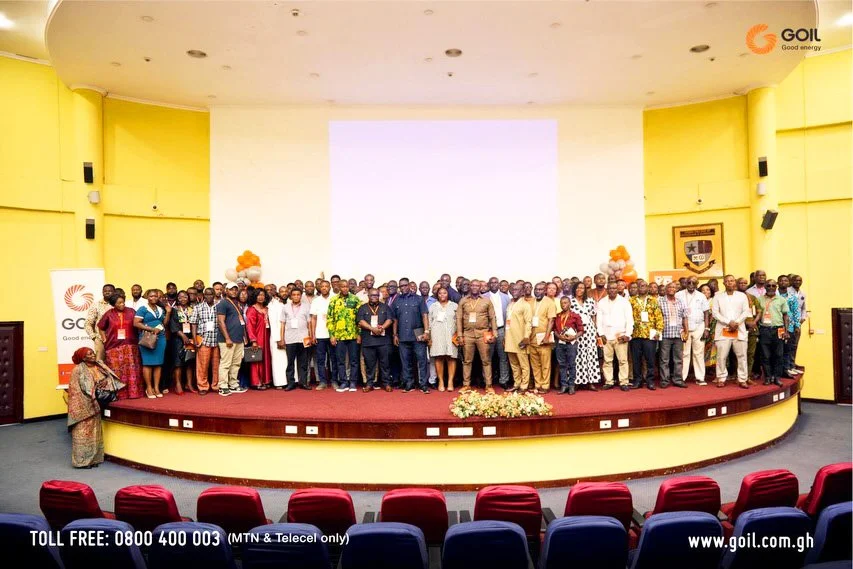
At recent stakeholder engagements involving over 200 dealers across key operational zones, Bawa praised staff and marketers for restoring GOIL’s premium standing, but stressed that leadership in volume alone is insufficient.
The company’s strategic focus is now shifting toward comprehensive service excellence—placing greater emphasis on customer experience, dealer cohesion, operational discipline, and long-term brand durability.
For GOIL, this may prove the more difficult challenge.
Dominating volumes is one battle; institutionalising service superiority across a liberalised and increasingly competitive downstream ecosystem is another.
The Strategic National Brand in a Liberalised Future
GOIL’s story is ultimately one of institutional adaptation.
It has weathered political transitions, deregulation, foreign exchange volatility, debt overhangs, and intensifying private-sector competition.
Its transformation from AGIP successor to a listed diversified energy group reflects both Ghana’s broader economic liberalisation and the enduring strategic relevance of indigenous national champions within critical sectors.
As Ghana’s downstream petroleum market becomes increasingly shaped by leading OMCs—and as publicly listed operators face growing investor and regulatory scrutiny—GOIL’s performance now carries significance beyond its own balance sheet.
It is not merely competing for fuel market share.
It is testing whether a historically government-rooted enterprise can evolve into a world-class, investor-relevant, diversified energy institution while retaining its developmental ethos and Ghanaian identity.
For now, GOIL’s first-quarter performance suggests that transformation remains firmly in motion.
