Ghana Gas at Sentuo: Diplomacy, Discipline and the Long Arc of Energy Sovereignty
When the Chief Executive Officer of Ghana National Gas Limited Company joined the Sentuo Group at the Sentuo Oil Refinery Limited to mark the Chinese New Year in Tema, the optics carried strategic weight. In a season defined by renewal, the engagement underscored a harder reality: Ghana’s march toward energy sovereignty will be secured not by symbolism, but by disciplined partnerships that anchor its gas-to-power transition and industrial expansion.
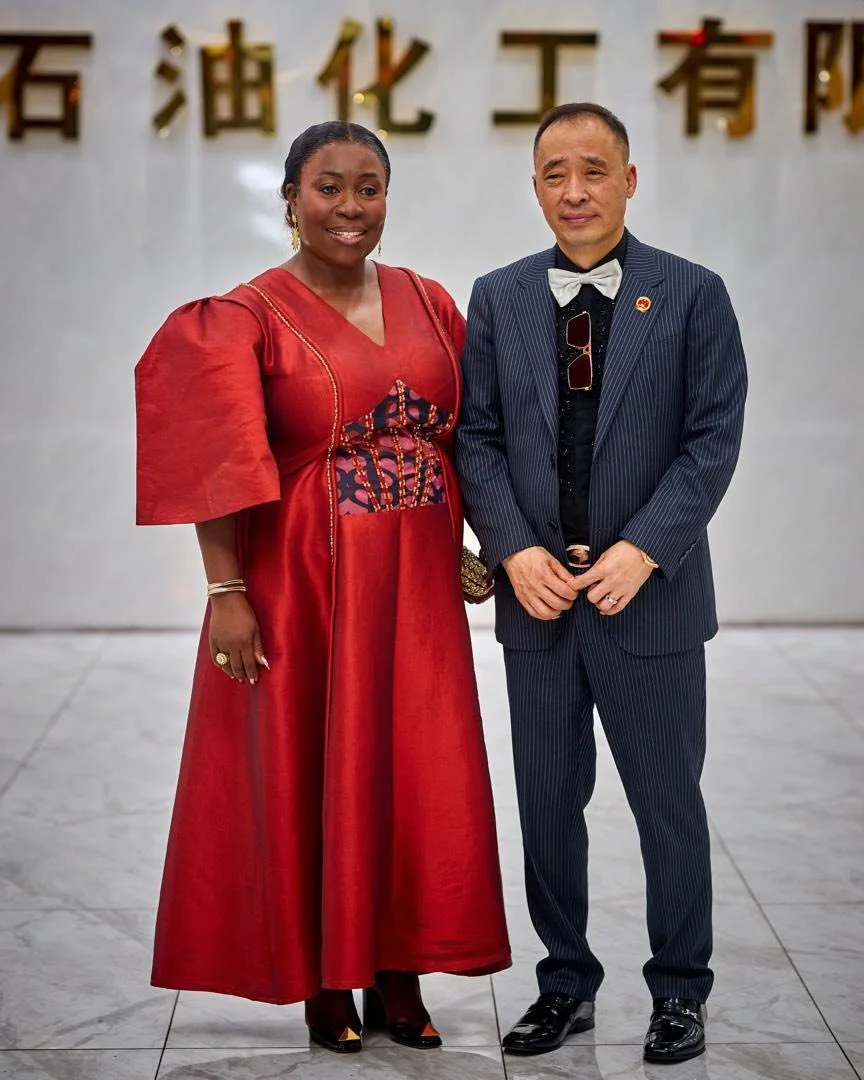
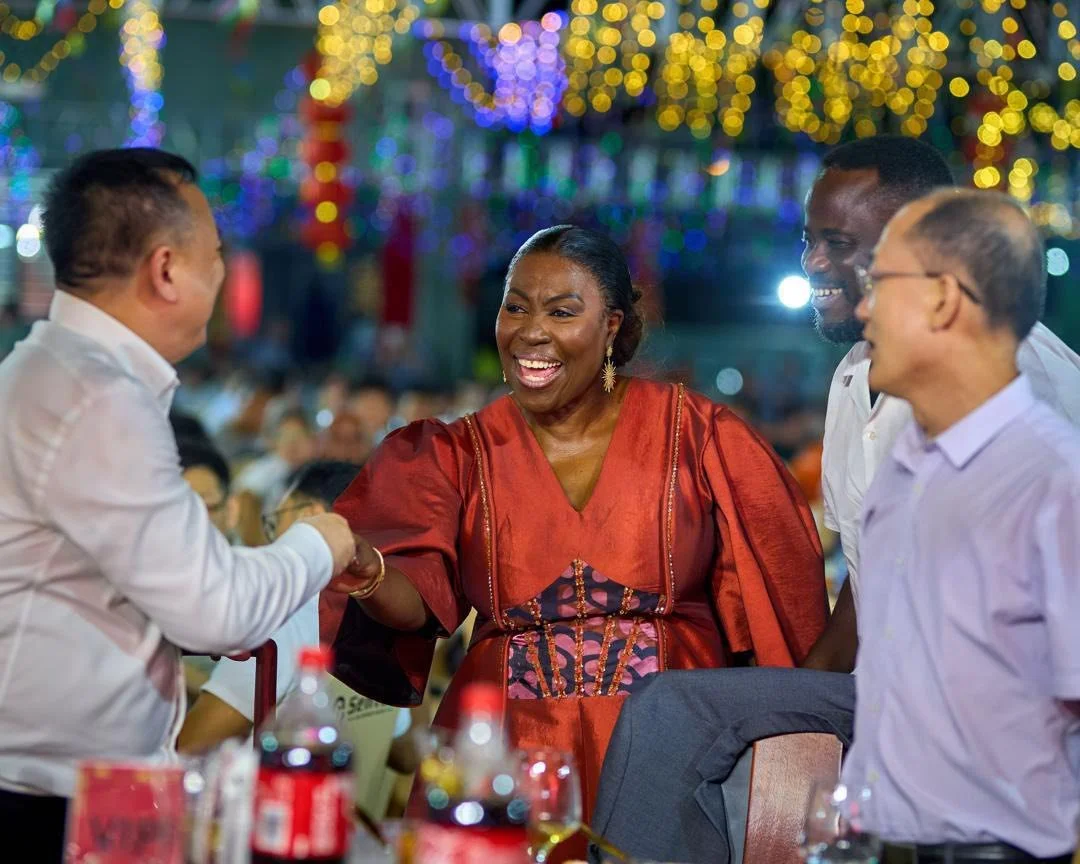
Tema, Ghana | February 18, 2026 - When the Chief Executive Officer of Ghana National Gas Limited, Ms Judith Adjobah Blay, joined the Sentuo Group's executives at the Sentuo Oil Refinery Limited in Tema to mark this year’s Chinese New Year, the symbolism was hard to miss.
On the surface, it was a Spring Festival celebration—an exchange of courtesies, cultural observances and goodwill. In substance, however, it reflected something more strategic: the steady institutionalisation of partnerships that will underpin Ghana’s pivot to gas, deepen industrial off-take discipline and, ultimately, consolidate energy sovereignty.
That distinction matters.
Ghana’s energy debate has shifted decisively over the past five years. Policymakers are now explicit: the country must reduce exposure to imported liquid fuels for power generation and anchor electricity supply on indigenous gas resources. The gas-to-power transition is no longer aspirational rhetoric; it is operational doctrine. For Ghana Gas, the state’s mid-stream gas aggregator and processor, that doctrine translates into two imperatives—secure upstream throughput and guarantee credible, bankable off-take.
It is within this framework that the Sentuo engagement should be understood.
Beyond Ceremony: The Strategic Subtext
Sentuo’s refinery complex in the Tema Industrial Zone is not incidental to Ghana’s industrial future. Conceived under China’s Belt and Road development strategy for energy cooperation in Africa, Sentuo’s first phase, completed in October 2022, established an initial capacity of 2 million tonnes per year. Phase two, brought onstream in January 2024, scales that capacity to 5 million tonnes annually—placing it among the most significant downstream additions in West Africa in recent years.
For Ghana Gas, whose mandate is to process and deliver natural gas to power plants and industrial users, the rise of large, energy-intensive industrial clusters in Tema presents both opportunity and obligation. Reliable gas supply is the competitive edge that can differentiate Ghana’s industrial zone from regional peers. But reliability is not accidental; it is engineered through structured engagement with off-takers.
Indeed, the Chinese New Year visit follows a July 2025 engagement in which Ghana Gas met key industrial off-takers in Tema—including Sentuo—to reinforce supply coordination and address operational bottlenecks. That earlier visit was not ceremonial; it was technical. It focused on demand profiles, supply predictability and the broader alignment required to optimise industrial gas utilisation.
The Spring Festival appearance, therefore, reads less as a stand-alone diplomatic gesture and more as continuity—relationship maintenance layered atop commercial coordination.

Governance Momentum and Institutional Credibility
The visit also lands against a backdrop of renewed visibility for Ghana Gas. Under Ms Blay’s leadership, the company has pursued what it describes as strategic growth anchored in governance reform and operational discipline. The emphasis has been on strengthening corporate controls, improving stakeholder confidence and positioning Ghana Gas as a credible counterparty in an increasingly competitive energy ecosystem.
That credibility matters at a time when Ghana’s broader upstream agenda—reportedly targeting up to US$35 billion in investments to revitalise exploration and production—seeks to anchor long-term energy sovereignty. Upstream ambition without midstream discipline is a hollow proposition. Gas must not only be discovered; it must be processed, transported and monetised efficiently.
In that sense, Ghana Gas sits at the fulcrum of the sovereignty conversation. Its capacity to convert domestic gas molecules into a dependable power supply reduces foreign exchange exposure, stabilises tariffs and enhances macroeconomic resilience.
Strategic partnerships with industrial off-takers such as Sentuo are therefore not peripheral. They are central to ensuring that processed gas has predictable demand, that infrastructure investments are justified by throughput and that the entire value chain functions as an integrated system rather than a series of disconnected assets.
Energy Sovereignty in Practical Terms
Energy sovereignty is often invoked in sweeping, nationalistic language. In practice, it is granular. It is about contract enforcement. It is about payment discipline. It is about maintaining processing plants at optimal uptime. It is about ensuring that gas volumes are not stranded due to uncertain downstream demand.
Ghana’s historical overreliance on imported liquid fuels for power generation exposed the system to volatile international prices and exchange rate shocks. The pivot to gas—particularly domestically produced gas—seeks to correct that structural vulnerability.
However, domestic production alone does not guarantee sovereignty. The midstream must aggregate supply effectively, and the downstream must consume it reliably. Large industrial complexes such as Sentuo’s refinery are critical nodes in this architecture. Their demand profiles help stabilise the system, diversify revenue streams and reduce sole dependence on power generation off-take.
It is in this context that Ghana Gas’ presence at Sentuo’s Chinese New Year celebration assumes a strategic texture. It signals continuity of engagement with a major industrial consumer. It reinforces the message that Ghana’s energy transition is collaborative rather than insular. And it situates industrial diplomacy within the broader project of economic resilience.


Ghana–China Energy Linkages: Pragmatism Over Posture
The Ghana–China energy relationship is frequently framed in geopolitical shorthand. Yet at the operational level, it is pragmatic. Sentuo’s refinery, leveraging technology from Shanghai HoTo Engineering, represents tangible capital deployment in Ghana’s downstream sector. Its expansion from 2 million to 5 million tonnes per year underscores confidence in Ghana as a processing and trading hub.
For Ghana Gas, engagement with such entities is not ideological; it is functional. The objective is to integrate gas supply into an expanding industrial base, regardless of the nationality of capital, provided regulatory and commercial standards are met.
The Chinese New Year celebration, with its themes of renewal and prosperity, offered a cultural backdrop to reaffirm these working relationships. But the operative variable remains performance: reliable supply, transparent billing and sustained operational uptime.
The Year Ahead
As Ghana deepens its gas-to-power transition, the demands on Ghana Gas will intensify. Infrastructure expansion, maintenance regimes, and stakeholder coordination will require disciplined execution. The company’s recent governance and leadership recognition suggests institutional momentum; the test will be whether that momentum translates into measurable system stability.
The Sentuo engagement is therefore best interpreted as part of a broader continuum: sustained outreach to off-takers, reinforcement of commercial relationships and alignment with national energy strategy.
In the language of diplomacy, it was a celebration. In the language of energy economics, it was risk management.
And in the language that matters most—sovereignty—it was a reminder that national ambition is ultimately realised not in speeches, but in the daily choreography of partnerships that keep the gas flowing and the lights on.
