Genser Energy’s 135 MMSCFD Gas Conditioning Plant Nears Commissioning as Ghana Expands Processing Capacity
At 95 percent completion, the 135 MMSCFD gas conditioning plant in Prestea is approaching phased commissioning from April 2026, with full capacity expected by August. Designed to process natural gas into propane and butane for domestic supply and export, the facility adds a significant private-sector node to Ghana’s midstream architecture and broadens the country’s gas value chain beyond state-owned processing assets.
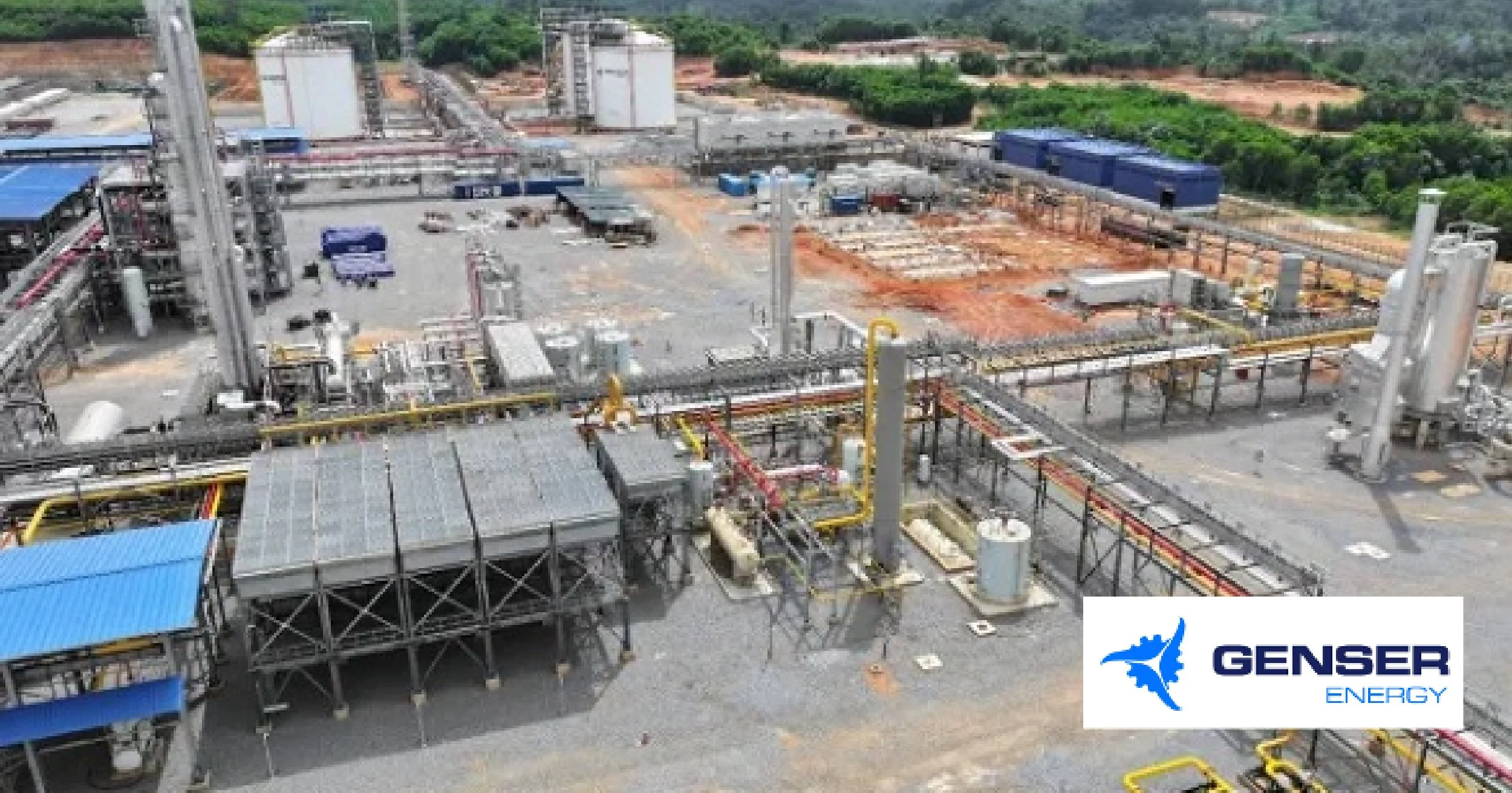
Prestea, Western Region, Ghana | February 24, 2026 - Ghana’s gas sector is edging into a new phase. A 135 million standard cubic feet per day (mmscfd) gas conditioning plant under construction in Prestea is now 95 percent complete and scheduled for phased commissioning from April 2026, reaching roughly half-capacity by June and full throughput by August.
The project, led by Genser Energy, marks one of the most consequential private midstream investments since the establishment of state-led infrastructure at Ghana National Gas Company’s Atuabo processing plant. Where Atuabo consolidated upstream flows into a national backbone, Prestea is designed to condition gas into natural gas liquids such as propane and butane, with storage and export infrastructure tied to the Takoradi port corridor.
The distinction is technical but material. Conditioning and cryogenic separation expand the value extracted per molecule of gas. For Ghana, this widens the domestic LPG pool, improves fuel flexibility for industry and mining, and creates optionality for export revenues through propane and butane cargoes. For a power sector that has periodically wrestled with fuel mismatches and stranded capacity, it adds another node of processing beyond the state system.
Beyond Generation: Integrating the Chain
Genser’s midstream push does not sit in isolation. Over the past five years, the company has commissioned 430 kilometres of natural gas pipelines, making it the largest private pipeline owner in the country. Its 20-inch primary trunk line links Dawusaso to the Prestea regulating and metering station, while branch lines extend to dedicated industrial loads across the Western and Central regions. A second 24-inch corridor toward Kumasi is positioned to support relocated thermal assets from Tema and Aboadze.
The strategy is vertically coherent. Upstream access agreements feed privately built pipelines. Those pipelines supply captive power plants, largely serving mining concessions operated by multinational firms. Since 2019, Genser has converted its major plants from liquid fuels to natural gas, citing efficiency metrics above 98 percent across facilities.
At Tarkwa, a 66MW installation comprising Solar Titan and Mars turbines supplies Gold Fields’ concession. Damang delivers 25.5MW to a sister operation in the Prestea-Huni Valley district. Chirano, redesigned in two phases and reconfigured fully for gas in 2023, stands at 33MW. Edikan and Wassa each contribute 33MW, linked via dedicated branch pipelines.
The portfolio reflects a deliberate industrial logic: secure gas, deliver power at high reliability to export-oriented mines, and reduce exposure to diesel or LPG volatility. The Prestea conditioning plant deepens that logic by monetising the gas stream further downstream.
Cryogenic Storage and Export Ambition
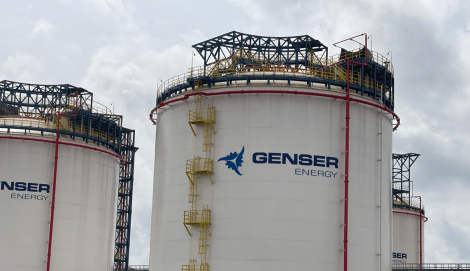
Parallel to the Prestea build, Genser is constructing cryogenic storage tanks at Takoradi, including a 10,000 cubic metre butane tank and a 30,000 cubic metre propane tank. The configuration suggests a bidirectional model: domestic distribution into Ghana’s LPG market and export through marine terminals.
For policymakers focused on energy self-reliance, the implications are layered. Ghana’s gas architecture has historically been anchored by public infrastructure and upstream production from Jubilee and TEN. Private midstream capacity introduces redundancy and competitive discipline, but also regulatory complexity. Alignment with the national gas master plan, tariff structures, and export controls will determine whether additional processing capacity strengthens the system or fragments it.
EPC Pedigree and Cross-Border Signals
Genser’s engineering, procurement and construction record includes eight power plants built over 18 years, including a build-operate-transfer arrangement at Bogoso and a 7.5MW plant in Burkina Faso commissioned in 2022. The Chirano integrated gasification configuration, completed in 2014, underscored technical depth in syngas treatment before the pivot to conventional gas turbines.
That experience reduces execution risk at Prestea, though commissioning timelines in cryogenic projects often hinge on integration testing and upstream supply consistency. The April to August ramp-up window will be an early indicator of throughput reliability.
Local Content and Peripheral Investments
The company’s parallel emphasis on human capital and rural development forms part of its operating model. Its Optimus graduate programme, now in its ninth cohort, places 25 graduates through 18-month rotational assignments across engineering, IT, finance and communications. A separate cross-border trainee programme prepares Ghanaian and Ivorian recruits for deployment between Accra and Abidjan, reflecting regional expansion ambitions.
Capacity-building efforts have included women-in-STEM workshops at Takoradi Technical University in partnership with SEO Africa, reaching nearly 400 students. In agriculture, collaboration with the Essumegya Traditional Council and the Rural and Water Outreach Foundation has advanced a 10-hectare acerola plantation project aimed at community-owned income generation.
These initiatives do not alter the balance sheet of a gas plant. They do, however, anchor operations in host communities and signal an intent to cultivate a domestic technical bench, a recurring constraint in West Africa’s energy projects.
Systemic Stakes
For Ghana’s broader gas ecosystem, the Prestea plant represents a test of private midstream viability at scale. If commissioning proceeds on schedule and NGL offtake agreements crystallise, the project could recalibrate the role of private capital in gas processing and storage. It may also sharpen debate around pricing frameworks, third-party access to pipelines, and coordination with state entities.
Ghana’s power sector remains overcontracted in nominal capacity, yet periodically constrained by fuel and liquidity. Additional processing capacity alone will not resolve structural payment arrears or demand growth mismatches. But it does expand the toolkit.
In that sense, the 135 MMSCFD facility is less a headline event than an infrastructure inflection point. It extends Ghana’s gas story beyond extraction and generation into value-added processing, export logistics and regional integration. Whether that architecture matures into a competitive midstream market or remains a cluster of bilateral arrangements will depend less on steel in the ground than on policy coherence in the years ahead.
