
Inside Atuabo: Ghana Gas Opens Its Operations to Civil Scrutiny as Expansion Plans Await Cabinet Nod
As Ghana weighs the construction of a second gas processing plant, the Ghana National Gas Limited Company has moved to anchor expansion in transparency—opening its Atuabo complex to civil society scrutiny in a calculated bid to strengthen public trust, institutional credibility and the case for Gas Processing Plant 2.
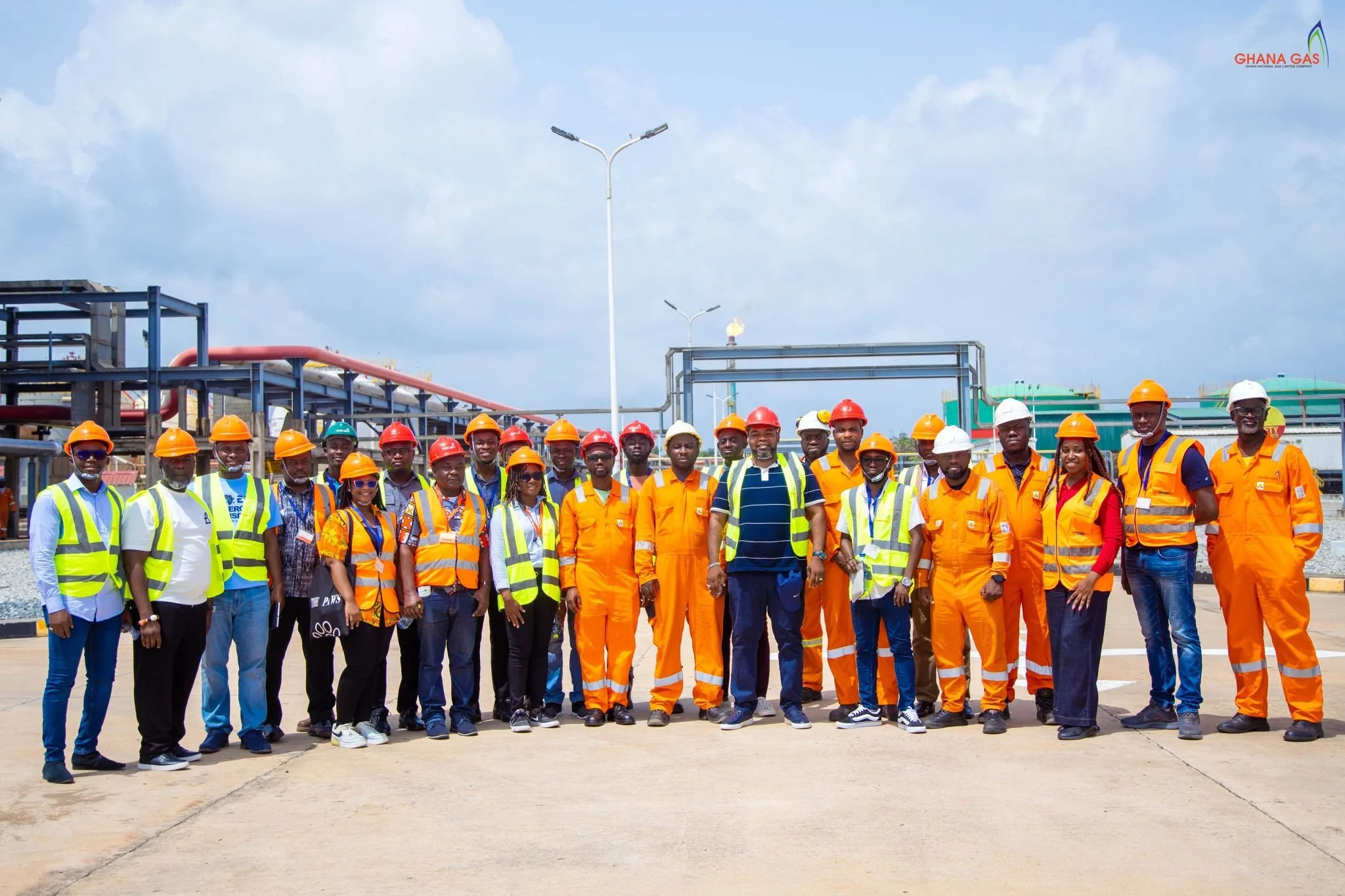
Atuabo, Western Region, Ghana | February 26, 2026 - In Ghana’s energy sector, infrastructure has often advanced faster than public understanding. In the Western Region, the Ghana National Gas Limited Company sought to narrow that gap.
Over two days—24 to 25 February—the state-owned midstream operator hosted a delegation of Civil Society Organisations (CSOs) at its Atuabo Gas Complex and Takoradi Distribution Station, granting rare, ground-level access to the technical and safety architecture underpinning one of the country’s most strategic assets. The visit, officials say, is not ceremonial. It forms part of the company’s 2026 Corporate Strategic Plan, which places structured stakeholder engagement alongside operational expansion.
It also arrives at a consequential moment: the technical committee established to evaluate the feasibility of a second gas processing plant has completed its work and submitted its report. Ghana Gas is now awaiting Cabinet direction to commence construction of Gas Processing Plant 2 (GPP2).
From Dialogue to Due Diligence
The tour was a follow-up to a November 2025 engagement between Ghana Gas and CSOs—an interaction that signalled a shift in posture under the leadership of Chief Executive Officer Judith Adjobah Blay. Ms. Blay, whose tenure has drawn industry recognition for institutional reform and strategic repositioning, has made stakeholder confidence a parallel objective to infrastructure growth.
At the Atuabo Gas Complex, Richard Ernest Kirk-Mensah, Head of Corporate Affairs, framed the visit in governance terms. Granting civil society direct exposure to plant operations, he argued, enables independent actors to perform their watchdog function with technical clarity rather than conjecture.
The underlying calculus is straightforward: in a sector where capital intensity and public risk intersect, transparency is no longer optional. It is reputational insurance.


Anatomy of a Strategic Asset
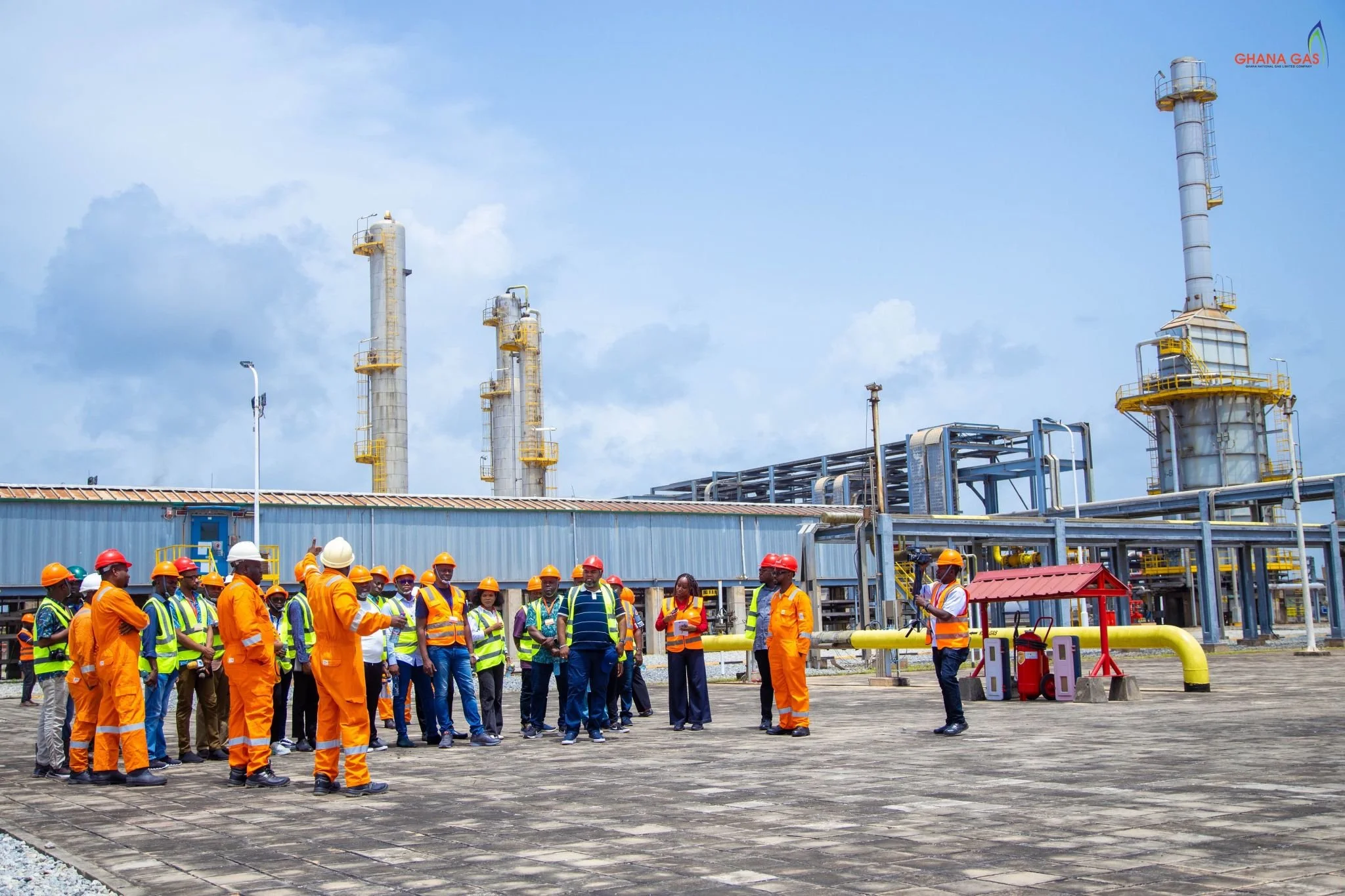
From the reception of raw gas through processing, storage and dispatch, plant managers walked the delegation through the full value chain at the Atuabo Gas Processing Plant. The emphasis was not merely on throughput, but on system integrity.
Managers underscored the plant’s operational self-reliance: on-site electricity generation and dedicated borehole water systems reduce dependence on external utilities—an important resilience feature in a grid-constrained environment. Safety infrastructure featured prominently. Fire hydrants are distributed across the facility, backed by water reserves sufficient to sustain continuous firefighting operations for up to six hours without replenishment.
Such specifications may read as technical footnotes. In reality, they are central to risk management in a hydrocarbon processing environment where downtime carries macroeconomic consequences.
On the second day, the delegation visited the Takoradi Distribution Station, where officials detailed the processes involved in the processing and dispatch of gas to off-takers. The message was consistent: reliability and safety are engineered, not improvised.
The GPP2 Question
If transparency was the immediate theme, expansion was the subtext.
Mr. Kirk-Mensah confirmed that the government-appointed technical committee studying the feasibility of a second processing plant has concluded its assessment and submitted its findings. The company is awaiting Cabinet’s directive to proceed.
For civil society, the implications are tangible. Duncan Amoah, Executive Secretary of the Chamber of Petroleum Consumers (COPEC), described the existing plant as a “game changer,” crediting it with strengthening domestic gas utilisation. He urged expedited action on GPP2, arguing that expanded processing capacity would bolster domestic LPG production and reinforce energy security.
The logic aligns with Ghana’s structural energy challenge. As power demand grows and LPG penetration deepens, constraints in gas processing capacity risk reintroducing import dependence—precisely the vulnerability the original Atuabo facility was designed to reduce.
Institutional Momentum
The tour sits within a broader narrative. Ghana Gas has, in recent months, positioned itself as both operator and institution-builder—strengthening governance frameworks, deepening regional stakeholder engagement, and projecting strategic clarity about its midstream mandate.
In a sector where state-owned enterprises are often judged by opacity and inertia, opening critical infrastructure to scrutiny is a calculated departure. It signals confidence in operational standards—and an understanding that the social licence to operate is as essential as the physical licence to build.
Whether Cabinet’s eventual decision on GPP2 accelerates Ghana’s gas ambitions will depend on fiscal space, market forecasts and political timing. But if last week’s engagement is any indication, Ghana Gas is laying the groundwork not only for expanded capacity, but for expanded trust.
In energy economics, capacity adds megawatts. Credibility adds durability.
