
Cenpower Meets Ministry of Energy as Ghana Enters a New Era of Power Sector Discipline
Cenpower Generation Company Limited paid a courtesy call to the Ministry of Energy and Green Transition, underscoring collaboration with Government to strengthen the electricity market. The discussions took place in the backdrop of cleared legacy debts, strict adherence to the Cash Waterfall Mechanism, as the government moves to boost domestic gas output and lower fuel costs—key steps toward more reliable and sustainable power generation.
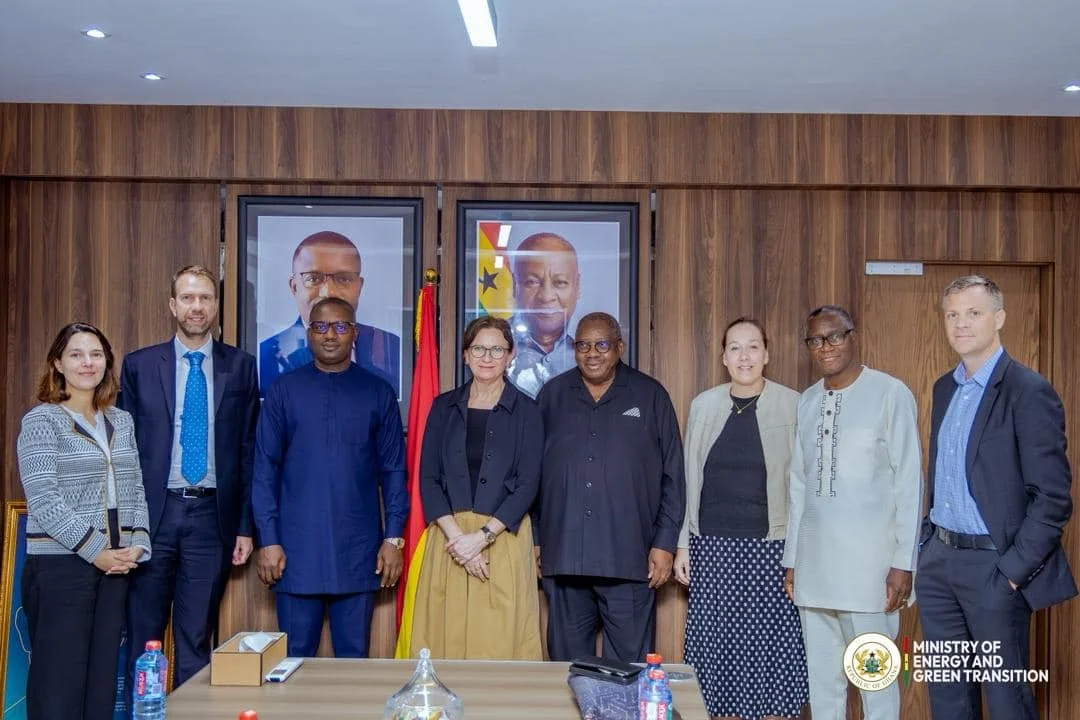
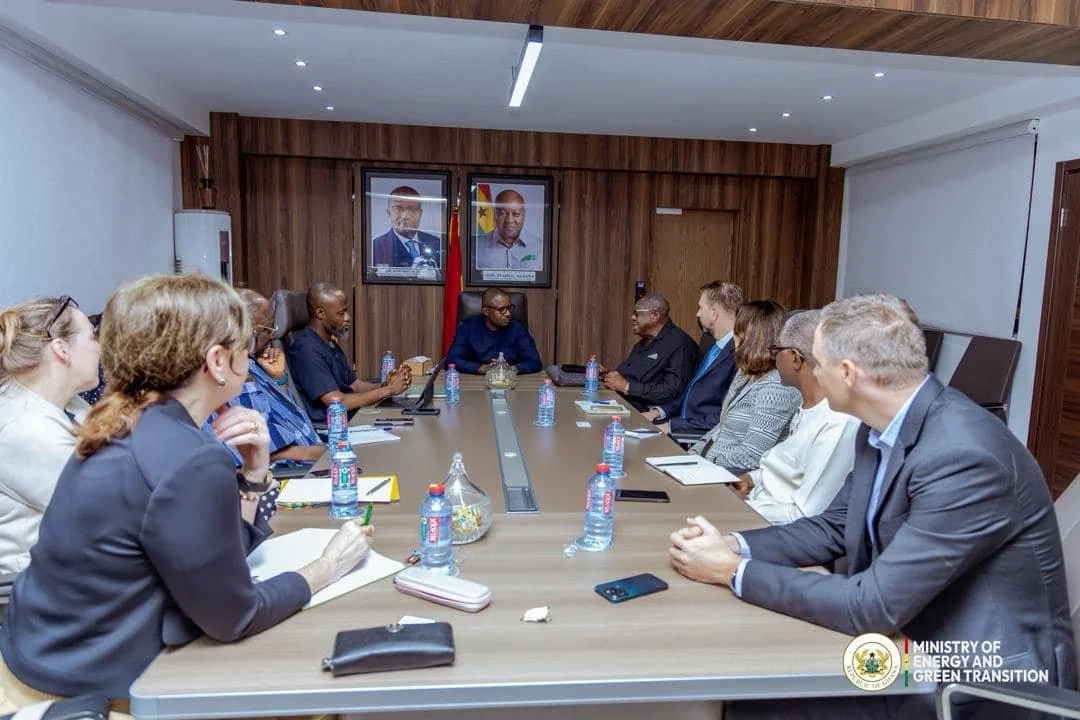
Ministries Enclave, Accra | February 19, 2026 - The Minister for Energy and Green Transition, Hon. John Abdulai Jinapor, received a courtesy call from Cenpower Generation Company Limited, one of the country’s leading independent power producers. On the surface, it was a familiar industry engagement. In substance, it marked another waypoint in a broader effort to recalibrate the financial architecture of Ghana’s power sector.
According to the Minister, discussions were “fruitful and constructive,” centered on developments within the sector and avenues for continued collaboration in support of President John Dramani Mahama’s energy objectives. The Government’s stated vision is twofold and deliberately paired: an enduring, reliable power supply, underpinned by strict fiscal discipline and sector sustainability.
For a power sector long dogged by arrears, renegotiations and tariff sensitivities, that pairing matters.
From Arrears to Accountability
The courtesy call lands against the backdrop of what many have described as a power sector reckoning. Earlier this year, Government announced the payment of approximately US$1.47 billion to settle a substantial portion of legacy energy sector debt, including obligations owed to independent power producers such as Cenpower.
For market watchers, the signal was clear. Clearing arrears is not merely housekeeping; it is a prerequisite for restoring creditworthiness across the value chain. Independent power producers depend on predictable cash flows to service debt, maintain plants and secure fuel. When payments stall, the entire system absorbs the strain.
The more consequential shift, however, lies in the rules now governing current payments.
The Cash Waterfall: Discipline by Design
A core component of the reset is strict adherence to the Cash Waterfall Mechanism, a structured payment framework designed to allocate sector revenues in a predefined order of priority.
In practical terms, the mechanism functions like a tiered distribution system. Revenues collected within the electricity market are “poured” into a central account and disbursed sequentially to key participants, based on agreed formulas. The objective is to ensure transparency, minimize discretion and reduce the accumulation of fresh arrears.
Under the current dispensation, officials have signaled a non-negotiable commitment to the mechanism. Payments are to follow the formula, not politics. For IPPs, including Cenpower, this reduces uncertainty around receivables. For Government, it imposes fiscal guardrails in a sector historically prone to slippages.
Industry sources indicate that early results are encouraging. More disciplined disbursements are easing liquidity pressures and helping stabilize operations across generation and fuel supply.
Lowering the Cost of Power at the Source
Financial order, however, is only one side of the ledger. The other is structural cost.
The Government has simultaneously outlined moves to increase domestic upstream gas output and reduce the unit cost of gas supplied to thermal power plants. Because a significant share of Ghana’s electricity is generated from gas-fired plants, the price of gas directly shapes the cost of power generation.
Reducing gas input costs does not eliminate all sector challenges. But it lowers the baseline from which tariffs, subsidies and payment obligations are calculated. In other words, cheaper gas upstream can translate into more resilient and predictable generation costs downstream.
For independent power producers, this offers dual relief: improved payment discipline on the revenue side and potentially lower fuel costs on the expenditure side.

Signaling to the Market
The Cenpower engagement, therefore, should be read less as a ceremonial visit and more as a strategic alignment session.
Independent power producers are central to Ghana’s generation mix. Their continued investment, maintenance cycles and financing structures depend on confidence in the regulatory and fiscal environment. Courtesy calls in this context serve as reassurance that policy direction and operational realities are not drifting apart.
For President Mahama’s administration, the calculus is equally pragmatic. Reliable power supply underpins industrial growth, investor sentiment and macroeconomic stability. But reliability purchased at the expense of fiscal sustainability simply postpones the problem.
The emerging approach attempts to reconcile both imperatives: pay down legacy debt, enforce disciplined revenue allocation, and attack structural cost drivers at the fuel level.
The Road Ahead
Skeptics will rightly note that Ghana’s power sector has seen reform attempts before. What differentiates this phase will be consistency. Strict adherence to the Cash Waterfall Mechanism must persist beyond initial momentum. Gas cost reductions must be durable, not episodic. And stakeholder engagement must translate into bankable outcomes.
For now, the signals are aligned. Cenpower’s courtesy call and the Minister’s emphasis on collaboration reflect a sector moving, cautiously, toward equilibrium.
In energy markets, credibility is built in installments. Ghana appears intent on paying this one on schedule.
