NPA Escalates Roadside Safety Push with “Stay Back, Stay Safe” Campaign
Ghana’s petroleum regulator is intensifying its public safety offensive, launching a nationwide campaign to deter civilians from swarming fuel tanker accident scenes. The initiative sharpens earlier warnings and signals a deeper regulatory pivot toward behavioral risk management in the downstream sector.
Accra | February 19, 2026 - In a sector where margins are counted in pesewas and risk in milliseconds, Ghana’s downstream regulator is turning its attention to a combustible habit that has outlived too many warnings.
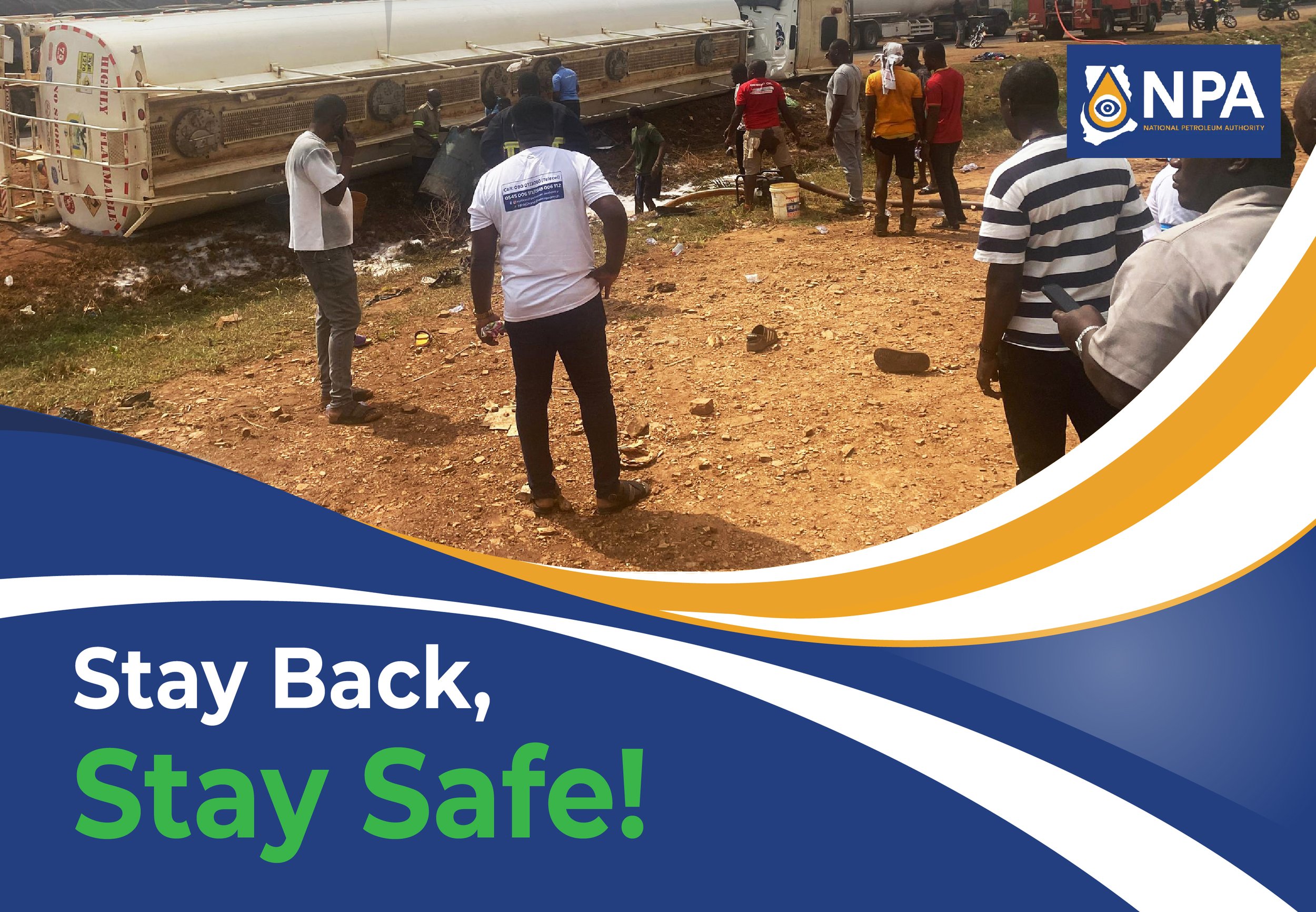
The National Petroleum Authority has launched a nationwide safety drive aimed squarely at a recurring and deadly spectacle: members of the public swarming accident scenes involving fuel tankers in a bid to siphon petroleum products.
Speaking at the Africa Extractives Media Fellowship training session in Accra on February 18, the Authority’s Director of Business Development, Godwin Yaw Konu, unveiled the campaign, branded “Stay Back, Stay Safe.” Its objective is blunt and non-negotiable: prevent fatalities at fuel tanker accident sites.
A Costly Crowd
According to Mr. Konu, the NPA has observed with mounting concern a growing pattern of people gathering around overturned or damaged tankers to collect leaking fuel. What may appear to some as opportunistic retrieval of “free” product is, in regulatory language, a high-voltage ignition risk.
Petroleum products such as petrol are highly volatile. Even minor sparks, static discharge, or heat from nearby engines can trigger explosions. In such conditions, a roadside becomes a powder keg, and a crowd becomes a casualty list waiting to happen.
The “Stay Back, Stay Safe” campaign is therefore structured not as a public relations flourish, but as a behavioral intervention. It seeks to reset instinct. When a tanker overturns, the first response should be distance, not proximity.
Building on an Escalating Warning
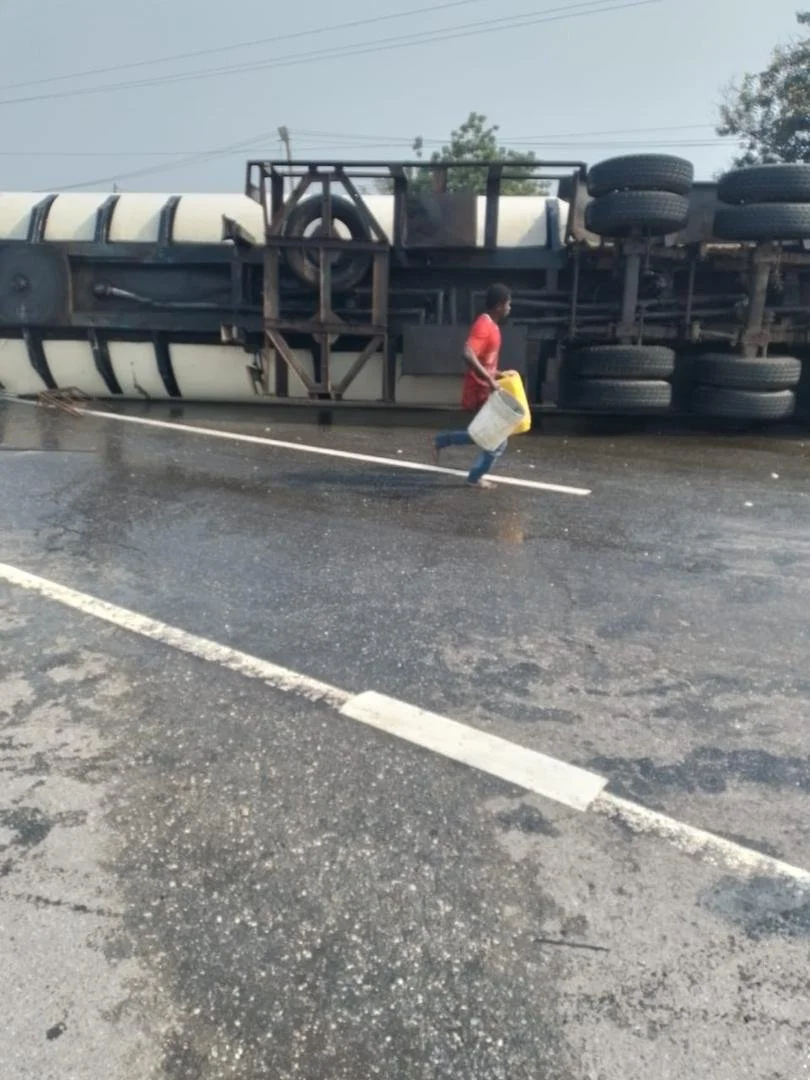
The campaign did not emerge in a vacuum. It follows a series of increasingly urgent interventions by the regulator in response to recent incidents, including a fuel spillage on Nsawam Road that drew civilians attempting to siphon product from a toppled tanker. The episode triggered swift condemnation from the NPA and reinforced warnings from the Ghana National Fire Service on the catastrophic risks associated with such actions.
Earlier this year, the NPA’s Chief Executive, Godwin Kudzo Tameklo Esq., sharpened the message further. In public remarks following similar incidents, he cautioned that no quantity of siphoned fuel justifies the risk of death, underscoring that lives are worth more than any marginal economic gain.
The regulator has also sought to institutionalize the message at the grassroots level. On January 29, the Regent of the Wulensi Traditional Area, Naa Osuman Salifu Wumbei, accompanied by the Wulensi Saha, Naa Mohammed Adams Ijor-Nda, paid a strategic visit to the NPA leadership. The engagement highlighted the need to expand safety education and corporate social responsibility initiatives into local communities where tanker traffic intersects with densely populated settlements.
For the NPA, traditional authorities are not ceremonial stakeholders. They are force multipliers in public sensitization campaigns. Mr. Tameklo has explicitly called on chiefs and opinion leaders to caution their constituents against siphoning fuel from accident scenes, positioning community leadership as a first line of behavioral regulation.
Regulation Beyond Paper
The latest campaign signals a broader regulatory shift. In mature petroleum markets, safety compliance extends beyond licensing, depot inspections, and pricing oversight. It requires managing the human factors that surface when infrastructure fails on public roads.
Fuel tanker accidents, while statistically infrequent relative to overall volumes transported, carry asymmetric risk. The aftermath is where risk metastasizes. A mechanical failure becomes a social hazard the moment a crowd gathers.
“Stay Back, Stay Safe” is therefore less about enforcement and more about recalibrating risk perception. It aims to embed a simple reflex into public consciousness: when petroleum is on the ground, safety lies in retreat.
For market participants, the campaign also carries reputational implications. Repeated fatal incidents at accident scenes can erode public confidence in petroleum distribution logistics and strain relations between regulators, transporters, and host communities. Proactive safety education, in that sense, is not peripheral. It is core to system stability.
The Regulatory Test
Whether the campaign succeeds will hinge on execution at scale. National messaging must translate into local behavior. That requires coordination with transport unions, district assemblies, traditional councils, and emergency responders.
The NPA’s intervention reflects a sober recognition that regulation does not end at the depot gate. It extends to the roadside, where volatility meets vulnerability.
In a downstream sector defined by flammability and friction, the Authority’s message is strategically simple: distance saves lives.
