$1 Billion Tank Farm MoU Signals Acceleration of Ghana’s Petroleum Hub Project
Ghana’s long-anticipated Petroleum Hub project is beginning to move from concept to concrete. A newly signed $1 billion agreement to construct two million metric tons of storage tanks at Jomoro marks one of the largest early infrastructure commitments to the project, signaling that 2026 may indeed become the year the vision starts translating into steel, jobs, and industrial momentum. The deal arrives amid a cascade of institutional alignments, investor MoUs, and firm government backing that together are steadily assembling the commercial and political architecture of what planners hope will become West Africa’s premier petroleum trading and refining corridor.
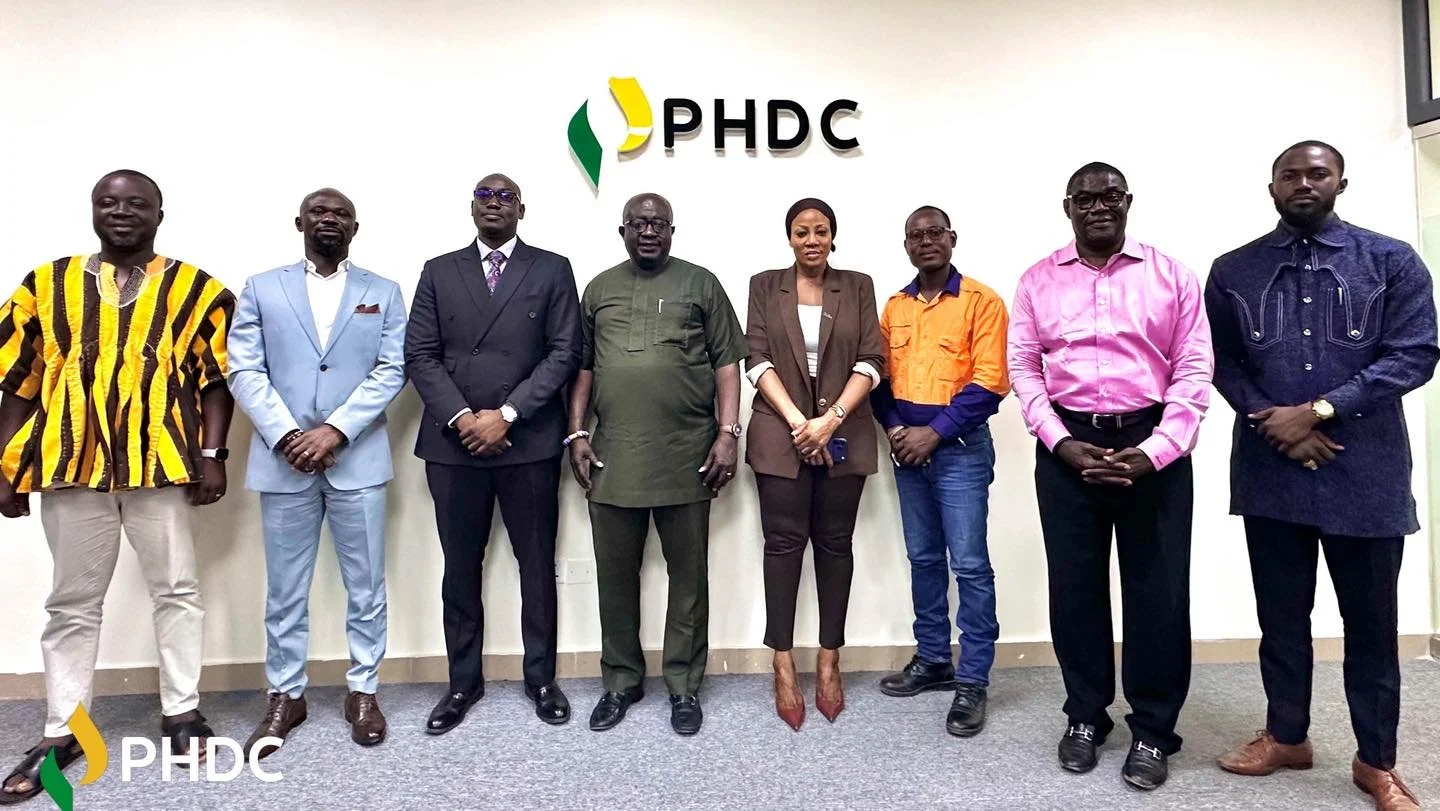
Airport Residential Area, Accra | March 17, 2026 - A US$1 billion agreement to construct two million metric tons of petroleum storage tanks at Jomoro has become the latest signal that Ghana’s long-anticipated Petroleum Hub project is shifting from blueprint to build phase.
The Memorandum of Understanding signed on March 17 between the Petroleum Hub Development Corporation (PHDC) and Mighty Gager Company Limited marks one of the most significant capital commitments yet toward the infrastructure backbone of the planned hub in the Western Region.
At the signing ceremony, PHDC Chief Executive Officer Toni Aubynn described the agreement as a foundational step in turning the petroleum hub vision into tangible industrial infrastructure.
“I want to thank you for your desire to partner with us. I believe this will not just be an MoU signing but the first step towards seeing tank farms of two million metric tons of storage being developed,” Dr. Aubynn said.
For the petroleum hub project, storage capacity is not merely a logistical feature. It is a strategic lever. Large-scale tank farms allow crude oil, refined products and petrochemical feedstocks to be aggregated, traded and redistributed across regional markets. The infrastructure effectively turns a location into a commercial node in the global petroleum trading network.
Dr. Aubynn underscored that broader strategic ambition, noting that the petroleum hub vision extends beyond physical assets.
Building a hub, he said, involves “strategically positioning Ghana to control and benefit from the petroleum trade and related businesses within the region,” while leveraging the country’s geographic location to become a key node in the global petroleum value chain.
For Mighty Gager, the agreement signals readiness to move quickly from paperwork to implementation.
“We are expected to hit the ground running. This is the first step of the agreement,” said the company’s CEO Kevin Gager, adding that the firm has already begun coordinating with foreign partners to activate the project.
“We are moving in fast with our partners to formally get things going,” he said.
The tank farm development, expected to significantly expand storage capacity within the future petroleum hub, is also projected to generate substantial employment opportunities for Ghanaians during both construction and operation.
A Chronology of Momentum
The storage tank agreement did not emerge in isolation. It sits within a sequence of developments that, over the first quarter of 2026, have steadily thickened the institutional and investment architecture surrounding the Jomoro project.
The most explicit governmental endorsement came on February 26, when Ghana’s Minister for Lands and Natural Resources Emmanuel Armah-Kofi Buah threw the weight of his office behind the initiative during a courtesy call by a PHDC delegation.
“I now firmly believe in the Petroleum Hub project,” the Minister declared, pledging to deploy “every available resource and influence” to realise the vision of transforming Jomoro into the “Rotterdam of Africa.”
Just days earlier, on February 19, PHDC had moved to strengthen institutional coordination within Ghana’s energy sector through a joint working committee with the Ghana National Petroleum Corporation.
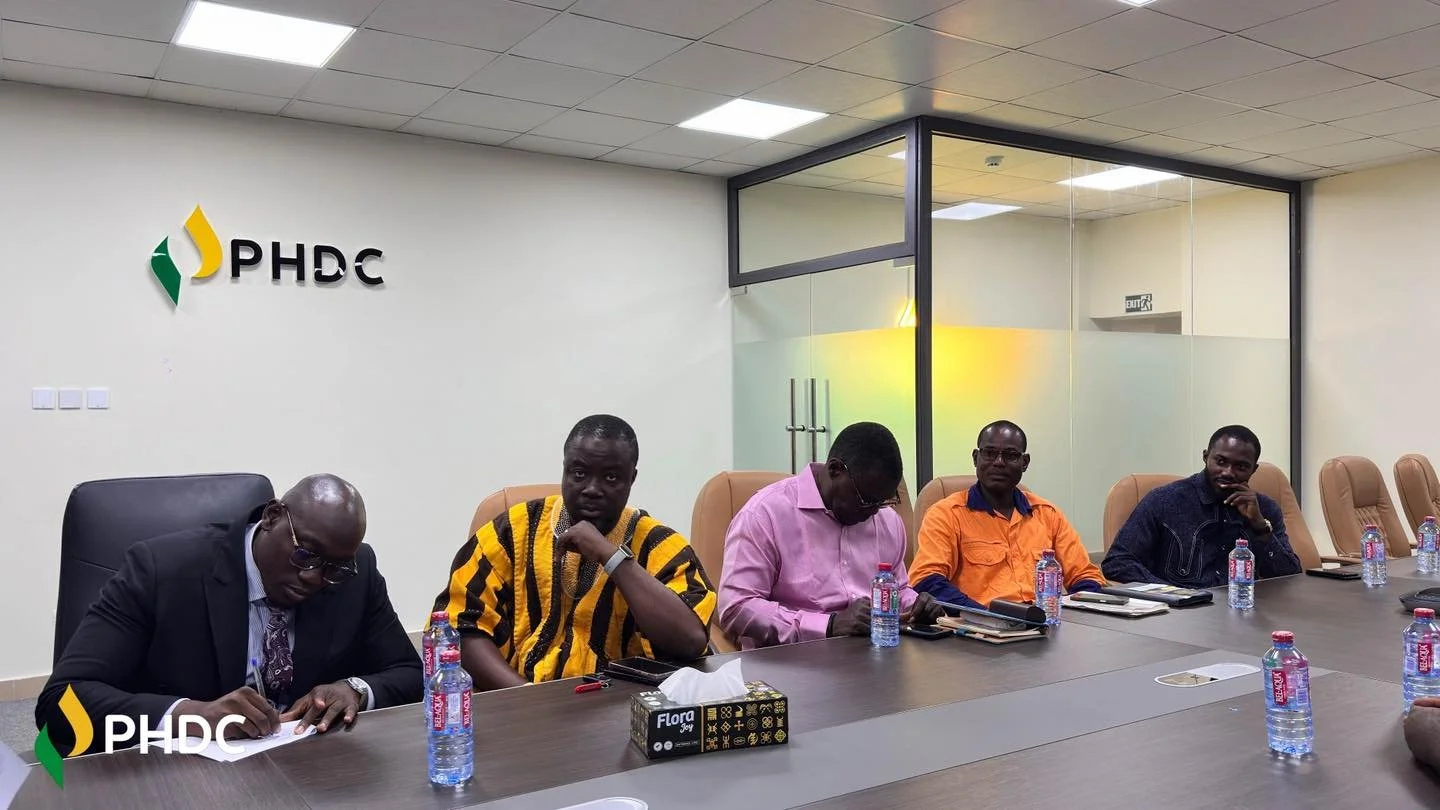

The ten-member committee, co-chaired by PHDC’s Deputy CEO for Operations and Technical Onasis Rosely and GNPC’s Executive Director for Exploration and Production Michael N. A. Aryeetey, is tasked with identifying areas of collaboration to strengthen national energy security while unlocking industrial growth.
“With Ghana setting its sights on achieving energy security and embarking on a massive industrialisation drive, collaboration and synergy among institutions within the energy sector cannot be overemphasised,” Mr. Rosely said.
The project’s public engagement phase followed shortly after. On March 4, PHDC convened more than 25 civil society organisations in Accra for a strategic dialogue aimed at building broader national awareness and participation around the petroleum hub initiative.
The meeting, held at the Fiesta Royale Hotel and led by Dr. Aubynn, was described by the corporation as a “highly productive and successful strategic engagement,” signaling that the project’s leadership is moving to anchor the development within a wider coalition of stakeholders.
Building the Industrial Architecture
Alongside these institutional and diplomatic efforts, a parallel stream of commercial agreements has been quietly constructing the early operational architecture of the petroleum hub.
PHDC has already signed several memoranda of understanding designed to support preparatory works, engineering planning and infrastructure development.
Among them is a GH₵300 million agreement with Mannschaft to support early groundwork activities, a planning and design collaboration with global engineering firm Surbana Jurong, and a storage infrastructure agreement involving Chemexa and Afdat that anchors participation in the hub’s bulk storage segment.
Industrial interest around the project has also begun spreading beyond core petroleum infrastructure.
A consortium of Egyptian investors, including Chemexa Petrochemical Trading and Kaolin, is advancing plans to establish a fibre gas cylinder manufacturing facility aimed at producing lighter, safer and fully recyclable LPG cylinders.
Infrastructure ambitions continue to expand as well. China Railway Construction Corporation Limited (CRCC) has expressed interest in developing a 1.2-gigawatt power plant to support the energy demands of the hub’s industrial ecosystem, while the Tema Development Company has signaled plans for residential developments within the emerging economic zone.
These parallel investments reflect the scale of the broader vision.
The petroleum hub project, conceived as a multi-billion-dollar refining, petrochemical and logistics complex, is designed to anchor Ghana’s long-term energy security while catalysing industrial development across the Western Region.

The Employment Equation
One of the most closely watched indicators of the project’s impact is job creation.
According to PHDC estimates, Lot One of the petroleum hub alone could generate more than 30,000 jobs, spanning construction, engineering services, logistics, housing, and downstream industrial activity.
The $1 billion storage tank agreement with Mighty Gager, therefore, represents more than infrastructure investment. It serves as an early signal of the labour demand that large-scale industrial construction will bring to the region.
For policymakers and local communities alike, that employment potential forms a central part of the project’s economic promise.
2026: The Year of Action
For years, Ghana’s petroleum hub concept existed largely as a long-range strategic aspiration.
In 2026, the narrative appears to be shifting.
With institutional coordination underway, government backing publicly declared, civil society engagement expanding, and private investors beginning to commit capital, the project’s leadership has increasingly framed the current year as the moment when planning begins to give way to execution.
The $1 billion storage tank MoU, in that context, is less a standalone agreement than a marker along a widening path of activity around Jomoro.
If the momentum continues, Ghana may be witnessing the early stages of what its architects hope will become one of the most consequential industrial developments in West Africa’s energy landscape.
