
The Republic's New Harvest
Financing Ghana's Solar Sovereignty
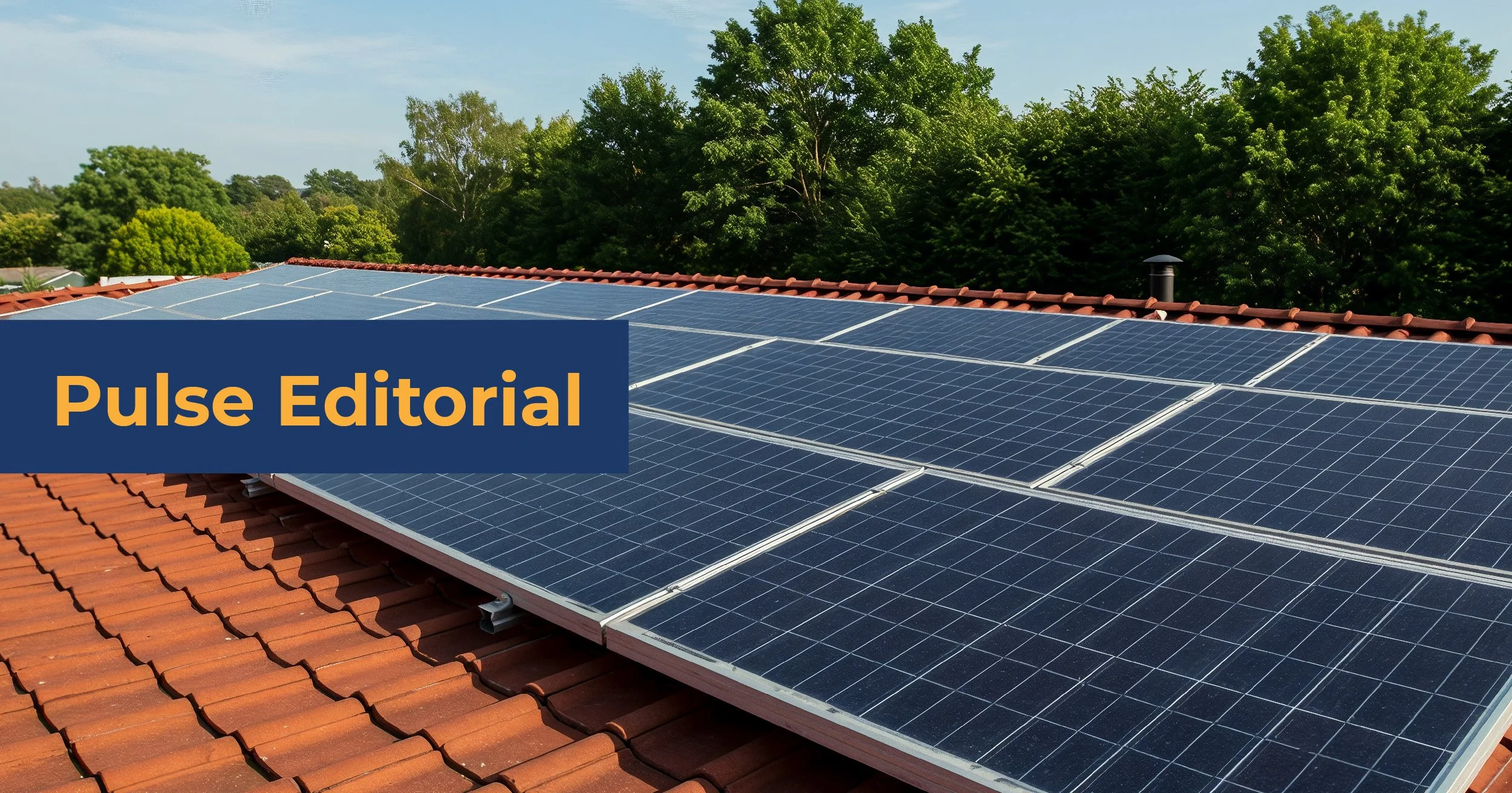
Under the equatorial sun of Accra, a quiet revolution stretches across rooftops. Schools, hospitals, and government offices now host untapped energy, fiscal relief, and global carbon value.
President John Dramani Mahama placed this vision at the center of national policy during the 2026 State of the Nation Address. The national rollout of rooftop solar is more than infrastructure—it is a strategy to cut electricity bills, ease thermal generation pressure, and monetize solar power globally. Through Article 6 of the Paris Agreement, Ghana effectively "exports" its emission reductions to Switzerland via Internationally Transferred Mitigation Outcomes (ITMOs), turning local rooftops into financial instruments.
The Urgency of Demand
Thermal generation supplies nearly 64 percent of electricity. Each rooftop megawatt reduces daytime grid stress and aligns supply with public-sector demand.
Three Pillars of Transformation
The strategy rests on three interconnected pillars: The Financial Trinity, Policy Discipline, and Human Capital as the Grid's Battery.
The Financial Trinity
Capital flows through three channels: green bonds, concessional climate finance, and public-private partnerships. Green bonds, guided by the Securities and Exchange Commission Ghana's 2024 framework, finance rooftop solar installations, with repayment sourced from budget allocations and energy savings.
Concessional finance reduces borrowing costs. The World Bank ($250 million), IFC ($130 million), the African Development Bank ($85 million), and the Green Climate Fund ($16.2 million) provide low-interest, long-term facilities. Public-private partnerships inject private discipline. The IFC-LMI Holdings collaboration supports a 150 MW solar facility, with capital recovery via long-term energy service agreements.
Policy Discipline
Capital alone is not enough. During the 2011–2016 power crisis, 43 power purchase agreements (PPAs) were signed, many unsolicited, creating excess capacity and fiscal strain. Post-2018 reforms terminated 11 contracts, saving $586 million annually. In a masterstroke of fiscal intelligence, these "ghost savings" now effectively underwrite nearly the entire $200 million rooftop solar investment. Ghana is not merely buying panels; it is recycling past inefficiencies into future sovereignty. Transparent procurement via the national PPA register and Ghana Electronic Procurement System ensures disciplined execution.
Human Capital as the Grid's Battery
Infrastructure is inert without skilled people. Ghana's DSTC Solar Training Centre has trained over 2,000 technicians across three countries. Vocational programs and university pipelines under the National Clean Energy Programme expand capacity further. Twelve thousand bidirectional smart meters serve as the "nervous system," connecting human skill to the grid and linking fiscal accountability to kilowatt-hours saved. This ensures every dollar invested translates into measurable energy output.
The Harvest Ahead
This rooftop rollout reshapes public energy demand, generates carbon revenue under Article 6, and transforms strategic finance, policy discipline, and human skill into national energy sovereignty.
Across classrooms, hospitals, and offices, students study under solar-powered lights, patients benefit from uninterrupted power, and ministries reduce operating costs. The Republic's new harvest is real: under the same equatorial sun that began the story, Ghana's solar sovereignty shines across the nation.
