
Battery Storage in West Africa: Grid Stabiliser or Expensive Experiment
In West Africa, the weather is the grid infrastructure.
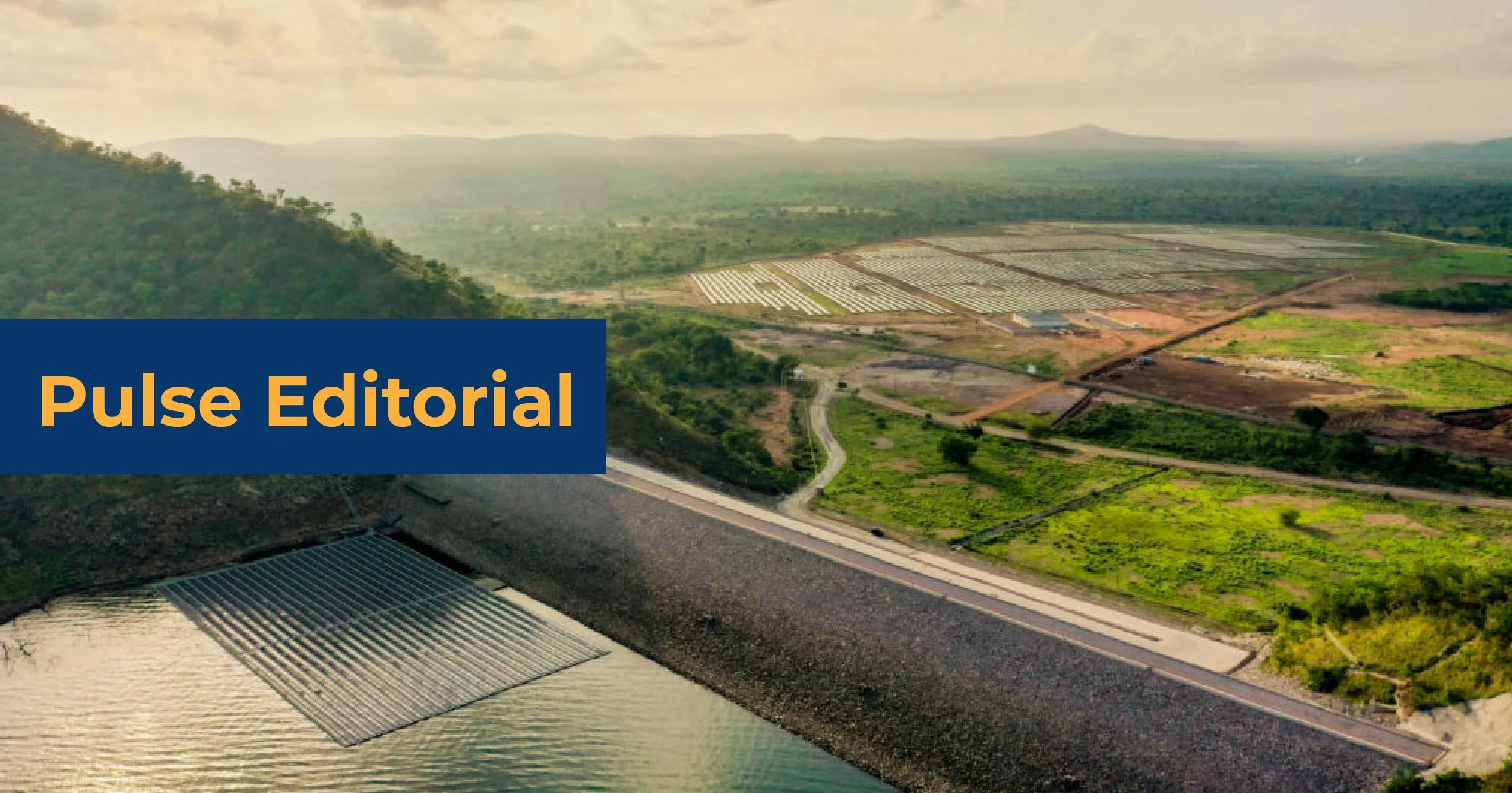
Photo Credit: Bui Power Authority
When a cumulus shadow passes over a solar farm near Bui, engineers at the Ghana Grid Company watch frequency needles twitch. Solar output can crater in seconds. Reserves, already thin, dip below operational targets. The grid breathes unevenly. This is not failure. It is physics, and it is expensive.
Battery energy storage systems (BESS) have emerged as the proposed answer. But the question remains urgent: do they stabilize the grid at defensible cost, or merely shift fiscal strain from utilities onto strained public balance sheets? The evidence now arriving from Ghana suggests the technology has crossed a threshold, though policy and capital remain stuck at the border.
The Bui Hydro Solar Hybrid offers the first clear case. Here, 55 MW of floating solar meets the reservoir's hydropower backbone, with 30 MWh of lithium ion storage sitting at the complex's heart. Ghana's frequency standard is 49.8 to 50.2 Hz, a 0.4 Hz corridor. In the first half of 2021, the national grid held this range just 75.5% of the time. The remainder represents instability, wear on machinery, and implicit fuel costs.
The temporal gap reveals why batteries matter. Thermal plants respond in seconds. Batteries respond in milliseconds. That thousand fold acceleration is not marginal improvement—it is the difference between absorbing a disturbance and propagating it. At Bui, the battery bank inhales midday solar spikes before they strain transformers, and smooths cloud induced volatility before it reaches transmission lines. West African Power Pool modeling confirms that BESS only responses produce superior frequency nadirs following 400 MW disturbances. When paired with conventional reserves, the hybrid approach settles the grid within one to two seconds.
The operational arithmetic compounds. Solar generation peaks late morning; demand peaks 18:00 to 22:00. A 20 to 30 MWh battery discharging 10 to 20 MW covers one to three hours of evening ramp. Diesel units idle less. Gas turbines avoid the fuel gulping inefficiency of part load operation. Operators report tighter frequency bands than solar only dispatch permits.
Then there is Kaleo. The 28 MW solar installation feeds a 34.5 kV line to Wa substation. It is clean electrons, competently engineered. But there is no battery. No frequency support. No ramp smoothing. No peak shifting. The plant displaces thermal fuel, certainly all solar does but the grid absorbs every watt of variability upstream. At 28 MW, this is manageable. As solar penetration deepens across the region, the "Kaleo model" becomes a mechanism for shifting cost and risk onto system operators, and ultimately onto ratepayers.
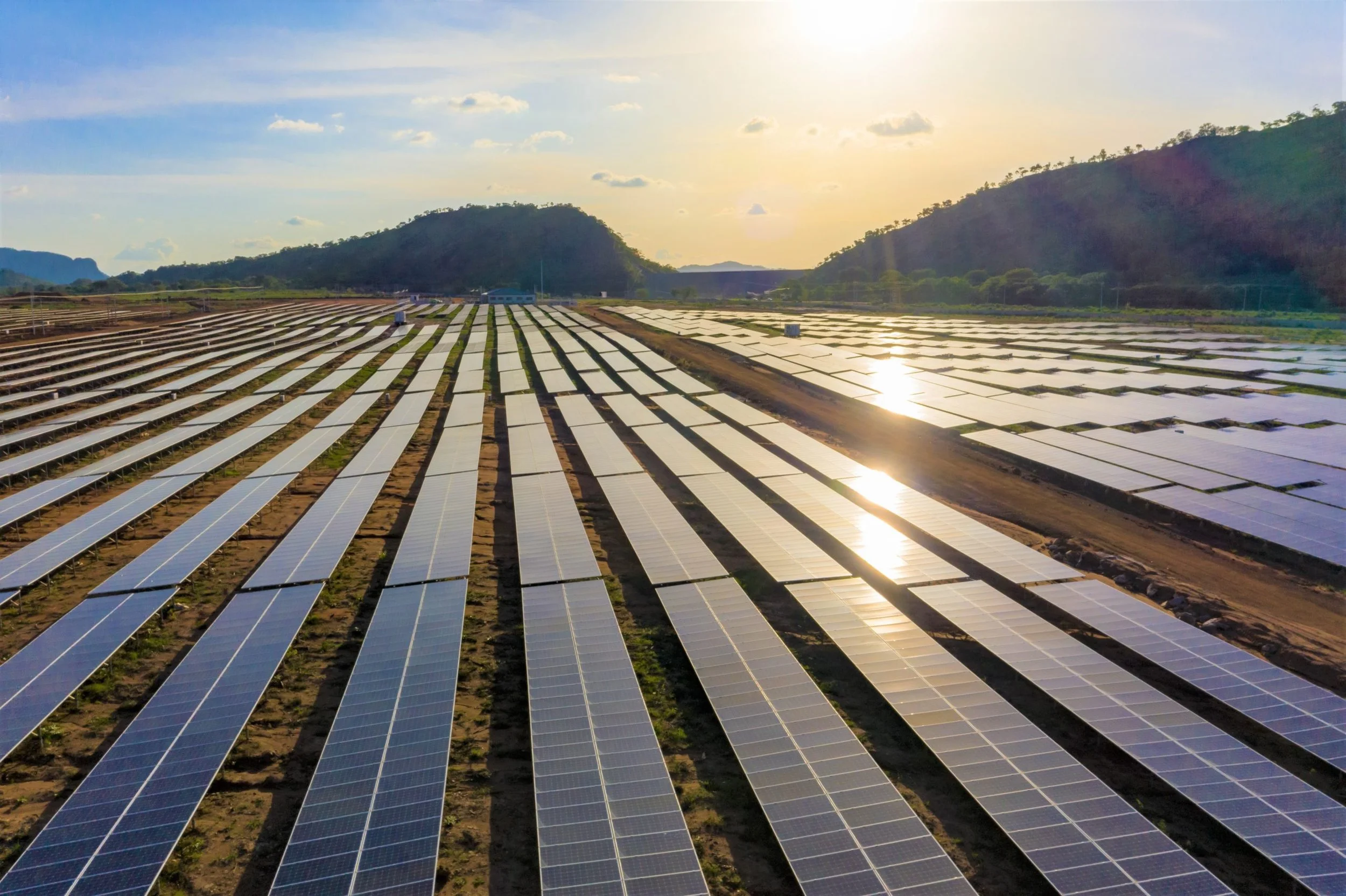
Photo Credit: Bui Power Authority (Copyright: 2021 Steve Ababio)
The economic case has firmed faster than many anticipated. Global benchmarks for 4 hour battery systems now run $78 to 125/MWh. Battery pack prices hit $192/kWh in 2024, with levelized costs projected as low as $65/MWhin optimal conditions.
West Africa pays a frontier premium. Logistics, import duties, and limited local technical capacity push installed costs to $120 to 150/MWh. Yet the alternative is steeper. Diesel peaking plants, still critical across the region, run approximately $246 to 370/MWh when fuel logistics and remote location costs are fully loaded. Open cycle gas turbines operate at $150 to 200/MWh; combined cycle plants near $102/MWh but lack operational flexibility. Batteries offer faster response, zero fuel burn, and none of the particulate emissions that choke growing cities.
Senegal is already building the next template. Walo Storage—16 MW solar paired with 10 MW/20 MWh BESS—was commissioned July 2025 and inaugurated January 2026, at a cost of €40 million. The plant delivers frequency regulation, spinning reserve, and black start capability, services that thermal fleets struggle to provide simultaneously.
The verdict from Bui and emerging projects is unambiguous: BESS is no longer experimental technology. It stabilizes frequency, smooths ramps, and partially shaves peaks at roughly half the cost of diesel alternatives. The physics are settled. The engineering is proven.
The real bottleneck is institutional. Regulators have not built tariffs that pay for frequency response, reserve capacity, or the fuel that never gets burned. Procurement is fragmented, so countries negotiate alone and pay frontier prices instead of pooling demand to hit global benchmarks. And the data from plants like Bui, the proof that would de risk the next wave of investment, stays locked in filing cabinets or proprietary databases. The technology works. The market structure does not.
The technology has arrived. Policy and finance are still en route.
