
Waste to Energy in Accra - Commercial Promise or Costly Distraction?
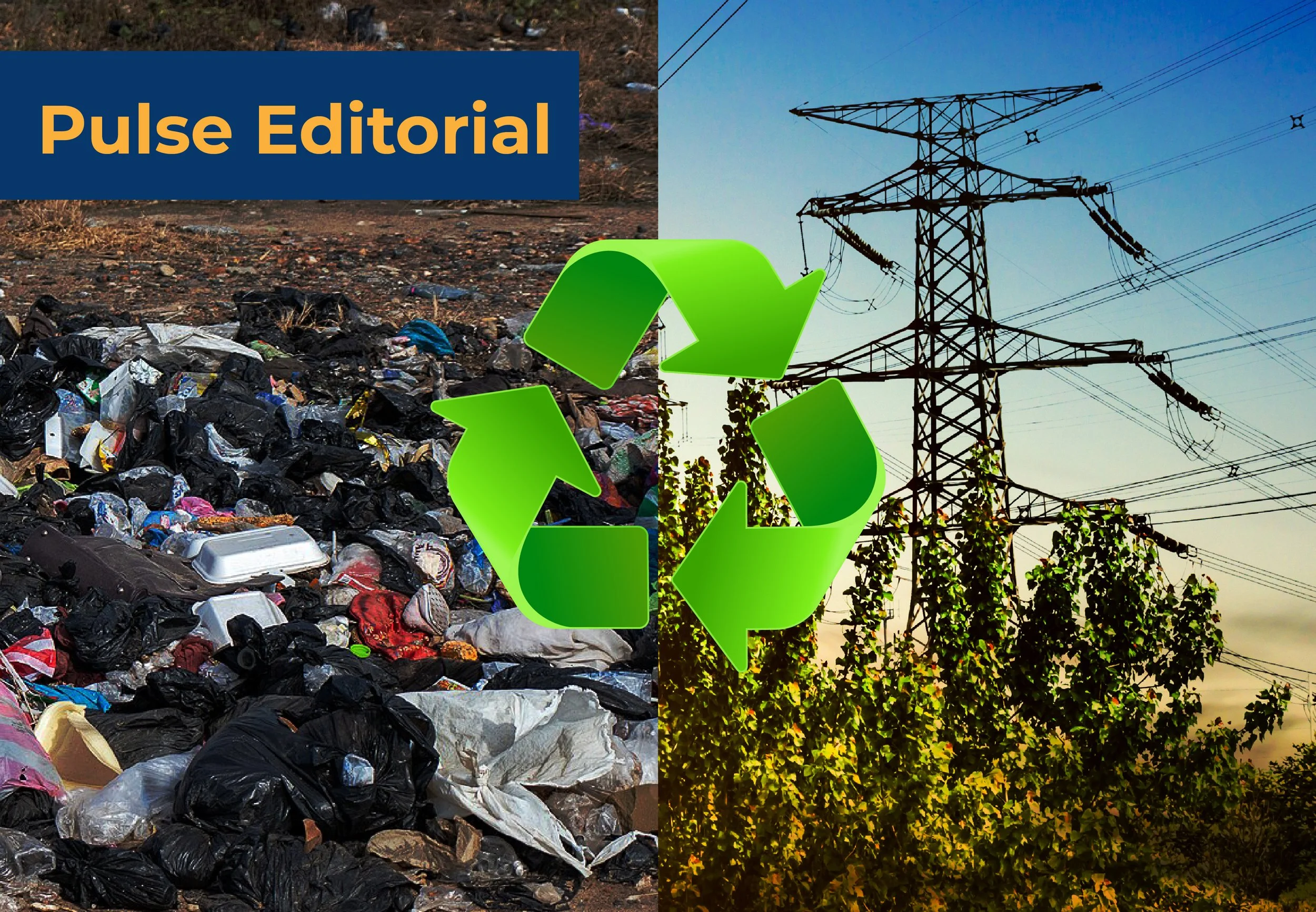
Accra produces roughly 2,000–3,000 tonnes of municipal solid waste daily. Formal collection handles about 80% of this load. Informal operators, including hundreds of tricycle "borla taxis," collect the rest, often depositing waste at unregulated dumps along waterways. The Odaw River and Agbogbloshie remain persistent public hazards.
The city's waste stream is 60–66% organic, with average moisture around 55%. Rainy seasons can increase moisture, lowering net calorific value. In thermal conversion, energy first evaporates water before generating steam. Higher moisture reduces output per tonne. Industry guidance suggests a plant needs roughly 1,200 tonnes/day to operate commercially.
Waste to Energy delivers more than electricity. It functions as a Baseload Sanitation Service, providing 24-hour dispatchable power while mitigating landfill overflow and flood risks. Revenue streams include tipping fees, power sales, and carbon credits. Assumptions often used in modeling are 12–15 /tonne tipping fees, a PPA of 0.10–0.12 /kWh, and avoided emissions of 100,000 tCO2e at 10–15 /tCO2e. These are illustrative, not Ghana-specific. No PURC-approved WtE tariff currently exists. Carbon revenue would supplement, not replace, core income.
Following the 1.47 billion power sector settlement in 2025, confidence has improved. The PURC 2026–2030 Multi-Year Tariff Order fixed its benchmark exchange rate at 12.01 cedis per dollar. That regulatory anchor now frames every serious energy investment decision.
Gross annual revenue under these assumptions ranges between 12 and 18 million dollars. Capital costs are typically $4,000–6,000/kW, requiring $100–150 million for a 25 MW plant. Imported equipment accounts for roughly 70% of CAPEX. If the cedi weakens beyond 14 per dollar, debt service escalates and margins compress. Blended finance from the African Development Bank and Green Climate Fund could cover 20–30% of CAPEX.
Alternative technologies illustrate trade-offs. Landfill gas at Kpone leverages existing waste, with lower CAPEX and 24-hour output but limited scalability. Solar plus four-hour storage achieves 0.08–0.10 /kWh and 20–25% IRR but leaves an 8–12 hour nightly thermal gap. WtE's value lies in filling that gap while providing environmental benefits, including reduced leachate, compost byproducts, and informal sector employment.
Bankability depends on enforceable feedstock agreements, structured PPAs, and reliable integration of borla taxis. Equity of 30–40% remains typical. Article 6.2 of the Paris Agreement positions Ghana as a leader in internationally transferred mitigation outcomes, offering potential carbon finance to improve project viability.
The verdict is conditional. WtE is promising if Accra secures roughly 1,200 tonnes/day through structured aggregation, sets economically viable tipping fees, secures a tariff that reflects 24-hour baseload sanitation value, and blends concessional finance. Without these guardrails, WtE risks being outcompeted by landfill gas expansion or solar-plus-storage solutions.
Waste to Energy in Accra is not a silver bullet. It is infrastructure requiring precise calibration of feedstock, finance, and policy. Executed correctly, it converts urban waste into predictable power while delivering tangible environmental and social benefits.
