The Clean Cooking Plan vs. The Charcoal Sack
Health Gains Slowed by Habit
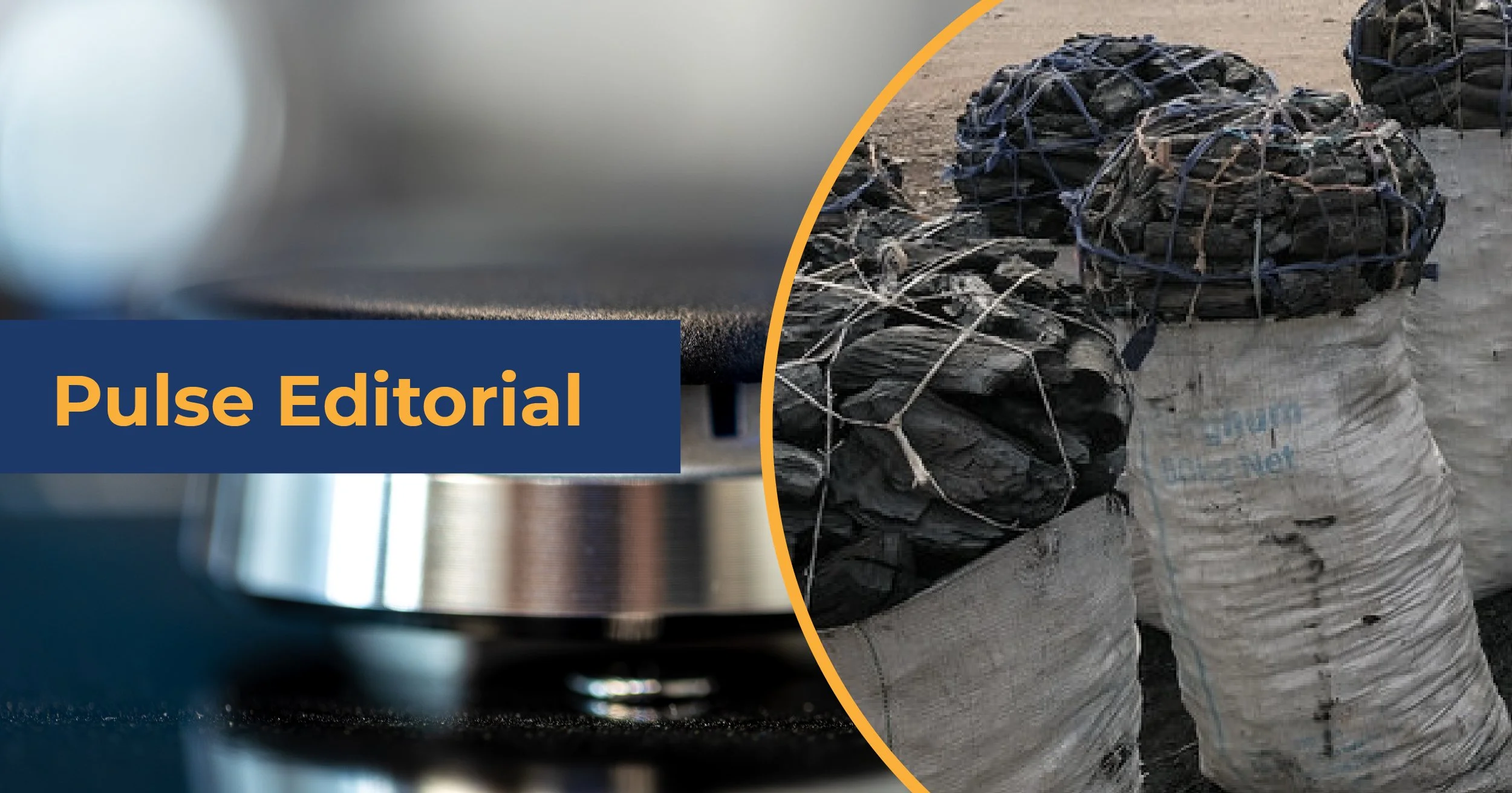
Before Accra finds its voice, the charcoal moves. At four in the morning, the trucks roll in from the Brong-Ahafo heartland, heavy with 50-kilogram sacks stacked to the cab roof, carrying the carbonized remains of the forest toward the wholesale yards of Agbogbloshie. The air smells of wood smoke and diesel and red laterite dust. Retailers are already waiting. By the time the city wakes, handcarts are threading through compound gates, sacks are being split into smaller portions, and the first fires of the day are drawing breath in kitchens across every neighbourhood from Nima to Labadi. It is not yet six o’clock. The system has already won.
There is. And yet the charcoal sack endures. It survives ministries, policies, targets, summits, and subsidy programmes with the quiet indifference of a system that knows something the planners do not: that energy, at the base of the income pyramid, is not a technology choice. It is a daily cash flow problem. Solve that problem, and the charcoal sack disappears. Fail to solve it, and no amount of policy architecture will move a single household off the Old Map.
Ghana is failing to solve it. The evidence is now impossible to ignore.
A Number That Should Stop A Room
In 2023, air pollution killed 32,500 Ghanaians. That figure, drawn from the State of Global Air 2025, is not a projection or a model output. It is a body count, one that has climbed 16 percent since 2020 alone, compounding across more than a decade of clean cooking policy that was designed, explicitly, to reduce it. Ghana's mortality rate from air pollution now stands at 177 deaths per 100,000 people, ten times the rate of high-income countries, and it has overtaken HIV/AIDS, malaria, and road accidents to become the second leading cause of death in the country.
The source is not a mystery. In Ghana, 71 percent of all pollution-related deaths trace directly to household cooking. Among children under ten, household air pollution kills 4,541 every year. The WHO's 2016 country data attributed 20,988 premature deaths to household air pollution alone. The number has only grown since. Every charcoal fire lit in an enclosed kitchen is a small, private catastrophe. Multiply it by millions and it becomes a national emergency that no one has declared.
The Map That Will Not Fold
The ISSER 2024/2025 policy brief is unsparing: 77 percent of Ghanaian households use charcoal or wood as a primary or secondary cooking fuel. The Ghana Living Standards Survey 7 sharpens the point further: 67.4 percent name biomass as their main fuel. LPG adoption, the flagship measure of the clean cooking agenda, has reached 28.7 percent nationally, up from 13.6 percent, but that number counts LPG uptake specifically, not total clean energy access. The gap between what that figure implies and what is actually happening in Ghanaian kitchens is enormous.
Greater Accra, the showcase of Ghana's LPG ambition, records 70 percent LPG penetration. Charcoal still claims 23 percent of its households. Firewood claims another 3 percent, inside the capital. Rural Ghana sits at 15 percent LPG access. And the pace of change is slowing: ISSER data shows that clean energy adoption decelerated between 2014 and 2022 compared with the previous cycle. The policy window is narrowing as the death toll rises.
The Insurgent That Never Retreats
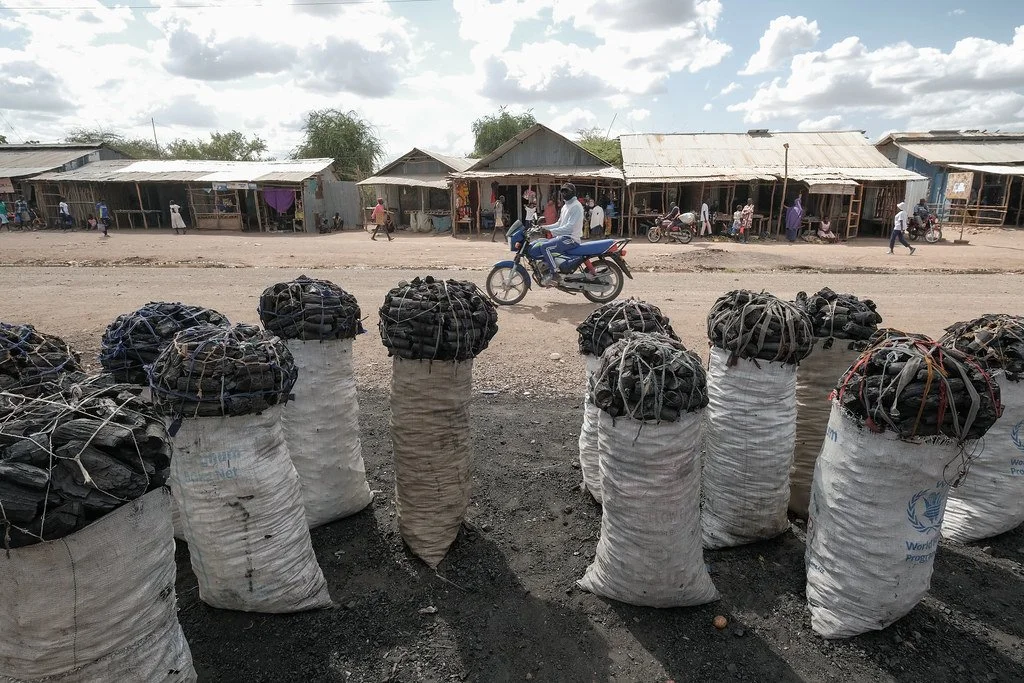
The charcoal supply chain does not compete with the state's clean cooking ambitions. It ignores them. Production radiates from the Brong-Ahafo, Northern, and Savannah forest zones, carried by smallholders with earth kilns and almost no overhead. The product moves on any road, needs no cold chain, no pressure vessel, no trained installer. It sells in any denomination, at any hour, at the compound gate. In supply chain terms, charcoal is antifragile. It grows stronger under every policy pressure that fails to reach the last mile.
As LPG promotion expands, the charcoal trade adjusts price, extends credit, and deepens distribution into the urban periphery where no gas cylinder network follows. It does not lose market share. It defends it. This is not a legacy industry fading under the weight of progress. It is a living, adaptive system that has correctly identified exactly where the formal energy sector is absent and built itself into every one of those gaps.
Every Target. Every Deadline. Missed.
Ghana's National LPG Promotion Policy targets 50 percent household penetration by 2030. The Sustainable Energy for All initiative set the same threshold for 2020, measured 22.3 percent penetration in 2017 and never reached its goal. Current national LPG penetration is 37 percent. Rural penetration is 15 percent. The tally since 2010: zero targets met, zero deadlines honoured, zero trajectories on track to change.
The geopolitical underpinning of Ghana's LPG strategy adds structural fragility to the policy gap. Supply flows through the Atuabo Gas Processing Plant in the Western Region, processing associated gas from the Jubilee Field, and through the West African Gas Pipeline connecting Nigerian reserves to Ghanaian markets. Both corridors have faced disruption: Atuabo from upstream field variability, the pipeline from supply pressure failures in Nigeria. A clean cooking strategy anchored to a single transit corridor through a geopolitically complex sub-region is not a strategy. It is a bet.
Cleaner,Safer And Faster
Here is the numbers behind the conversation: LPG costs a Ghanaian household approximately GHS 200-400 per month depending on cylinder size and consumption patterns, while charcoal costs approximately GHS 60-150 monthly. Although charcoal is now cheaper on a per-useful-energy basis approximately 58% less expensive than LPG when accounting for stove efficiencies, the health and safety benefits of LPG remain substantial. LPG is cleaner, safer, and faster than charcoal.
A study in Frontiers in Environmental Science found that LPG users spend between 103 and 115 percentage points less on healthcare than wood-burning households between 2012 and 2017. Specifically, LPG households were 115.09 percentage points less likely to incur healthcare expenditures in 2012/13, and 103.25 percentage points less likely in 2016/17. This represents an 11.84 percentage-point reduction in LPG's healthcare advantage over the period, while charcoal's advantage over wood declined by 26.25 percentage points (from 54.40 to 28.15 percentage points less likely to spend on healthcare). The economics of transition are not ambiguous. They are overwhelming.
And yet the charcoal sack wins. It wins because the GHS 60–150 it costs each month is paid in fragments: a small scoop at dawn, another at noon, another at dusk. The GHS 200–400 LPG refill is one transaction, one lump sum, one moment when a household at the edge of daily solvency must produce money it does not have in reserve. The MECS landscape review found that 87 percent of Ghanaian households stack fuels, meaning they own LPG stoves and still burn charcoal (MECS, 2021). The stove is a credential. The charcoal is the reality.
The Stove That Changed Nothing
The more a household used it, the lower their CO exposure. Not marginally. Significantly. This is the verdict of the field evidence: improved biomass is an incremental solution in a problem that demands a categorical one. Ghana's 3 Million Biomass Cookstoves programme, ongoing toward its 2030 target, is distributing tools that the best available science now shows cannot deliver the health outcomes the programme was designed to achieve.
The Prize Of Clean Air
Ghana does not have a clean cooking technology problem. It has a last mile financing problem, a distribution infrastructure problem, and a political accountability problem baked into life. The charcoal vendor solved all three: credit, small sales, personal trust. No program has matched him. Deaths rose to 32,500 in 2023 . The Parsons GeoHealth study found improved stoves delivered no exposure reduction; only electric worked. The sack is symptom, not villain. The villain is a system asking the poorest to bear highest entry costs for shared benefits. $37 billion needed is moon to $470 million delivered. Agbogbloshie markets keep winning. Ghana keeps paying.
