
The Power Plan vs. The Blackout.
Renewable targets tested after sunset.
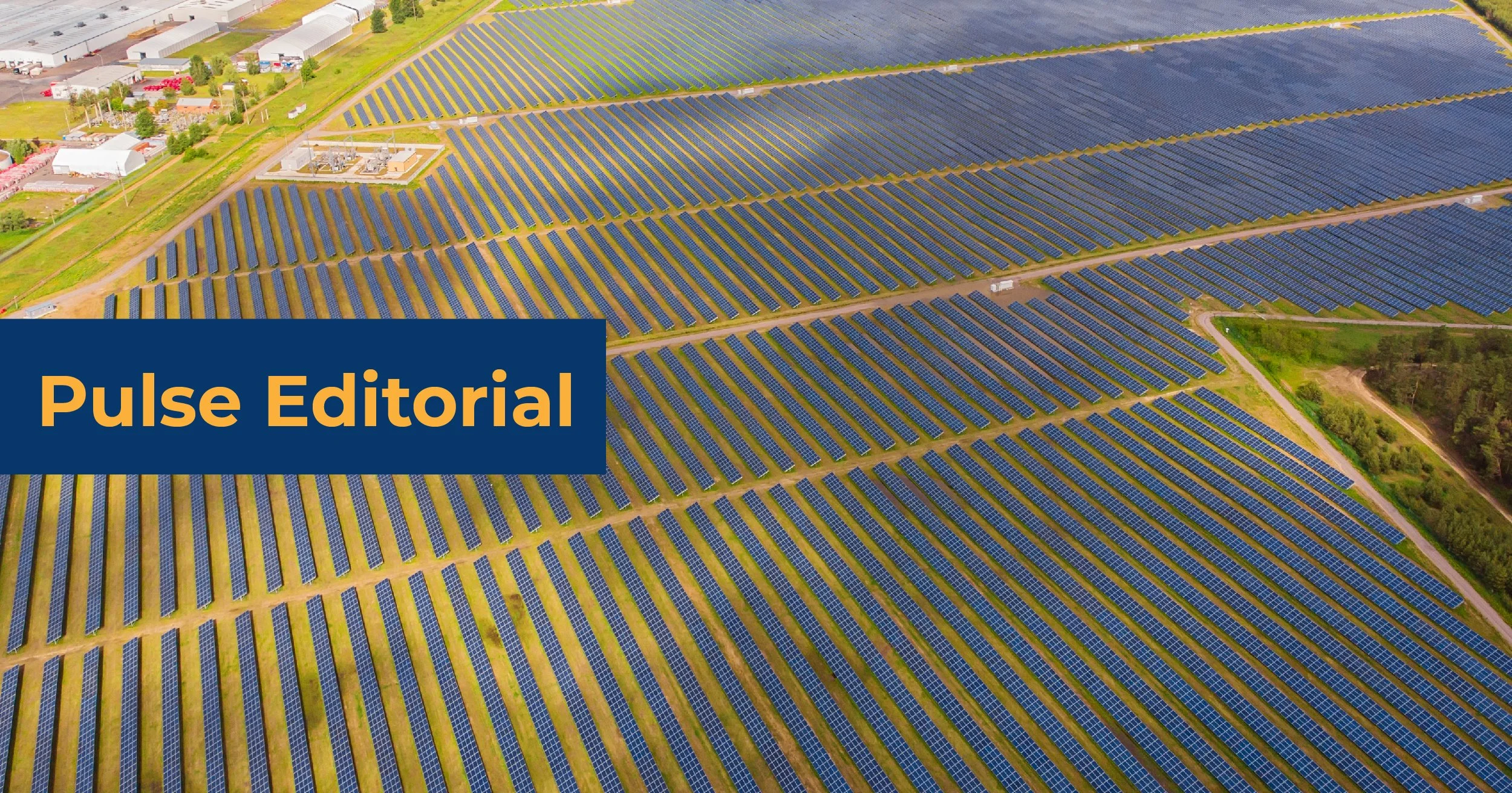
In Accra, the future of green energy dims before dinner. That is when the sun dips below the Gulf of Guinea, taking with it the bulk of Ghana’s 132 megawatts of solar and wind power. But the city is just waking up. Across Tema, Lapaz, and Kotobabi, the dinner rice is hitting the stove. Generators are coughing to life in compound yards. Somewhere in a government office, a diesel unit is humming at full draw. By 8:00 PM, demand hits its fever pitch. In that two-hour window, the green revolution is not just quiet. It is invisible.
The Renewable Energy Master Plan is Ghana’s answer to the energy transition. Drafted in 2019, it targets 1,363 megawatts of grid-connected renewable capacity by 2030 and frames a $5.6 billion investment programme, 80 percent of which is expected to come from private capital. Ghana’s Ministry of Energy confirmed as recently as October 2025 that the 10 percent renewable share target for 2030 remains official policy. The plan is real. The ambition is real. What is not yet real is the trajectory.
As of the end of 2024, Ghana had installed 117 megawatts of non-hydro renewable capacity (solar, wind, and biomass), representing approximately 2.2 percent of total installed generation capacity of 5,260 MW. Solar and wind together accounted for roughly 0.5-1.0 percent of actual electricity generated in 2024, with thermal generation at 66% and hydro at 33%. The gap between the plan on paper and the electrons on the wire is not a small one. It is, by any objective measure, the distance between intention and a country’s energy reality.
A Number That Should Stop A Boardroom
The warning is not abstract. Ghana’s generation fleet runs on thermal capacity, gas and oil, which accounts for 66 percent of installed capacity and 60.57 percent of actual generation in 2024. The remaining generation burden falls largely to hydropower, itself increasingly unreliable as precipitation patterns shift. The West African Gas Pipeline, which connects Nigerian reserves to Ghana’s thermal plants, has a documented history of supply pressure failures. The Atuabo Gas Processing Plant faces upstream variability from the Jubilee Field. A national electricity supply system anchored to a single geopolitically exposed transit corridor is not a strategy. It is a bet placed on someone else’s stability.
Here is where the numbers become a provocation. As of late 2025, the energy sector carried approximately $5.6 billion in debt . On January 12, 2026, the Ministry of Finance announced a $1.47 billion energy sector debt payment, of which $393 million went directly to Independent Power Producers in settlement of outstanding capacity charge arrears. And it is that same recovering balance sheet that is now expected to sign long-term Power Purchase Agreements with renewable energy developers who need financial guarantees the grid is only beginning to offer again. The PPA freeze is not bureaucratic inertia. It is the logical conclusion of a grid too broke to commit to power it cannot guarantee will work at 8 PM. The financing gap for renewable deployment remains at approximately 90 percent of what the Master Plan requires annually.
The character missing from most accounts of Ghana’s energy crisis is the Independent Power Producer. It is the IPPs who hold the debt ledger and the keys to the thermal plants keeping the lights on every evening that solar cannot. Owed billions in accumulated capacity charge arrears, and only partially settled in January 2026, they are also, paradoxically, the only reason the grid has not collapsed under evening demand. Any honest conversation about transition must begin by accounting for what they are still owed and what happens to evening supply if they walk.
The Duck Curve Arrives In Accra
There is a technical problem that Ghana's energy planners have so far discussed in cautious language, but which the data now requires stating plainly. Ghana's grid load profile peaks in the evening. The country's record system peak demand, including exports and the VALCO aluminium smelter load, was 3,952 megawatts recorded on December 19th, 2024.The domestic peak, excluding export and industrial loads, was approximately 3,742 megawatts based on 2025 first-half projections.
Solar generation ends before that peak begins. Ghana's installed solar fleet is anchored by the Bui Power Authority's 55-megawatt facility, comprising 50 megawatts land-based and 5 megawatts floating solar on the Bui reservoir.The plant produces power for approximately 11 to 12 hours during the day. When the evening ramp-up begins, when households switch on lights and air conditioning and businesses run their evening operations, solar is already offline and the grid falls entirely to thermal and hydro. Bui does operate a 30-megawatt-hour battery energy storage system (96% complete as of 2024), the only utility-scale installation of its kind in the country and a genuine proof of concept. Against a national evening system peak measured in thousands of megawatts (3,952 MW recorded December 2024, projected 4,338 MW for 2025), 30 megawatt-hours of storage is not yet a solution. It is the first sentence of one.
Ghana is not just facing a power gap. It is facing a math problem. You cannot transition away from thermal power when your solar panels go to sleep exactly when your customers turn on the lights.
Ghana's renewable development budget for 2025 was GH₵332.9 million (approximately $27 million at current exchange rates). The Master Plan requires $460 million annually . The arithmetic does not close.
Every Target. Every Deadline. Still Waiting
The pattern is becoming familiar to anyone who tracks Ghana's energy sector across cycles. The Feed-in Tariff, the instrument designed to attract private renewable investment with guaranteed offtake prices, has been under moratorium since 2019 and formally replaced with a competitive procurement system in 2020. New power purchase agreements for renewables have been frozen since 2017 pending a competitive procurement framework that has not yet arrived . The Net Metering Code was approved in 2023 but not fully implemented, as the Electricity Company of Ghana lacks the bidirectional meters and billing systems required to operationalise it . The Renewable Energy Authority Bill was before Parliament in 2025 . It has not yet been enacted, with the Energy Minister confirming in March 2026 that consultations are still underway and the proposal has not yet been submitted to Cabinet.
The policy architecture exists. The targets are published. The international community is paying attention and, in the case of the World Bank's Partial Risk Guarantee, providing credit enhancement worth $597.15 million, fully repaid and restored by December 2025, to rebuild investor confidence. But the distance between architecture and deployment is measured in megawatts that have not been built (only 117 MW non-hydro renewable against 1,363 MW target), in contracts that have not been signed (Feed-in Tariff moratorium since 2019, PPA freeze since 2017) , and in evenings where a country with some of Africa's highest solar irradiance potential still relies on imported gas to keep the lights on.
