
Regulating with Resolve: How Godwin Edudzi Kudzo Tameklo Is Recasting Ghana’s Downstream Petroleum Order
When Godwin Edudzi Kudzo Tameklo assumed leadership of Ghana’s National Petroleum Authority in January 2025, the downstream petroleum sector was contending with a volatile global energy market, domestic economic strain, and rising public scrutiny over pricing, safety, and supply integrity. What has followed has been neither cosmetic reform nor rhetorical repositioning. Instead, the NPA under Mr. Edudzi Tameklo has pursued a methodical consolidation of regulatory authority, blending enforcement muscle, digital modernisation, and regional diplomacy into a governance style that has quietly reshaped how Ghana’s petroleum downstream is supervised, disciplined, and projected beyond its borders.
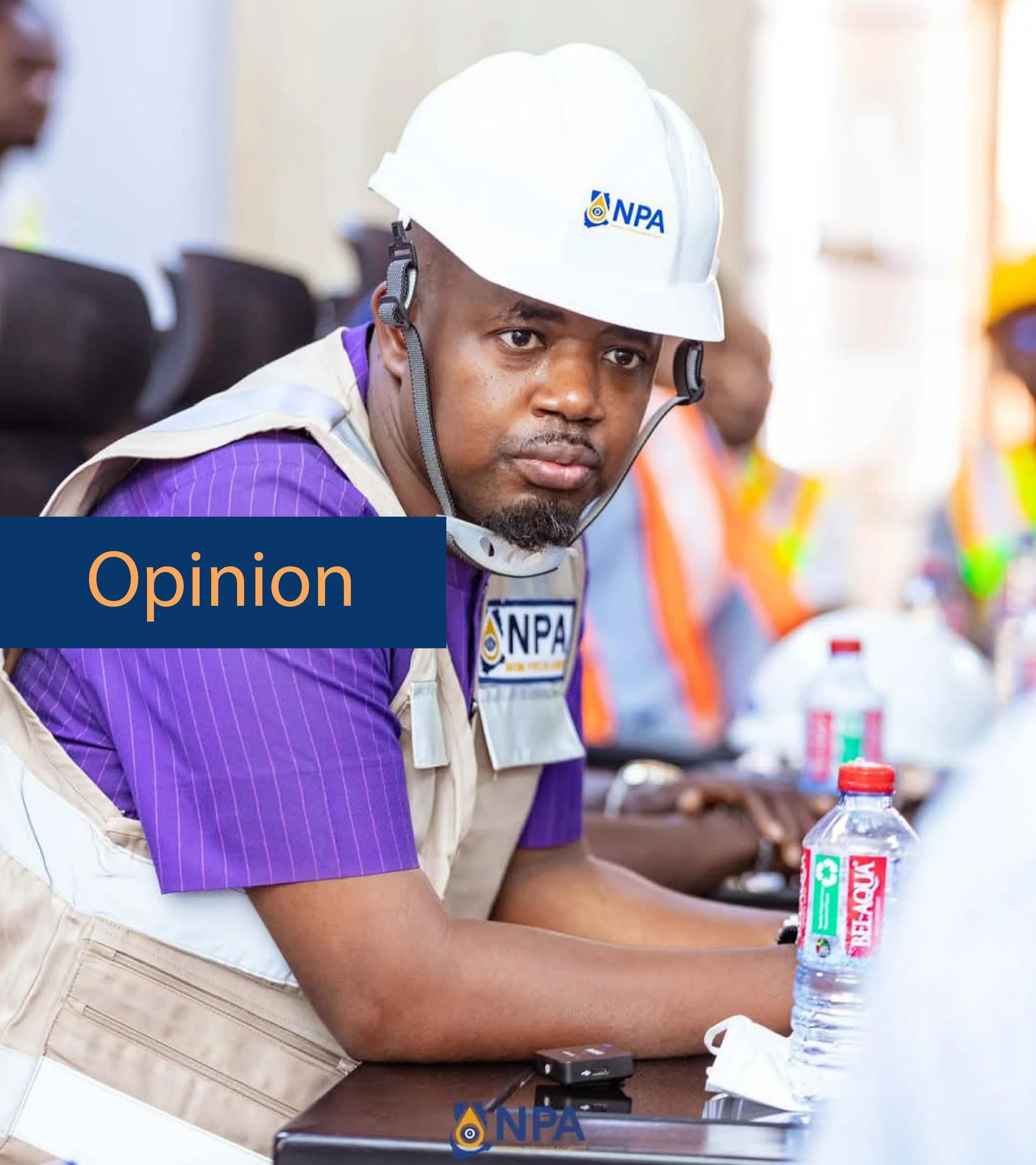
A Certified, Digitally-Savvy Regulator
The most consequential change at the National Petroleum Authority over the past year has not been policy expansion, but institutional recalibration. Under Mr. Godwin Edudzi Kudzo Tameklo , digital oversight and standards enforcement were elevated from support functions to the core of regulatory authority, reshaping how compliance is monitored and how credibility is maintained in Ghana’s downstream petroleum sector.
By the close of 2025, the Authority had attracted multiple national and continental recognitions, not for headline policy announcements, but for the steady work of institutional modernisation. Awards for regulatory innovation, digital connectivity, and standards enforcement reflected a deliberate pivot toward technology-enabled supervision on both continental and national fronts. Secure inter-regional digital integration, improved compliance monitoring, and transparency-driven systems were treated not as optional enhancements, but as essential regulatory infrastructure.
This recalibration repositioned the NPA as a regulator increasingly fluent in the grammar of data, connectivity, and accountability, a meaningful shift in a sector long burdened by opacity and uneven enforcement. Digitalisation, in this context, functioned less as a modernization slogan and more as a governance instrument, tightening oversight while reducing discretionary gaps.
The NPA’s 20th anniversary celebrations in November 2025 doubled as a quiet statement of intent. Forums on LPG adoption, consumer protection, and the evolution of deregulation were less about institutional nostalgia than about continuity and confidence in regulatory memory. In a liberalised petroleum market where policy amnesia can be costly, the emphasis on institutional learning signalled a regulator anchoring reform in experience rather than experimentation.
Enforcement with Institutional Teeth
The defining regulatory shift under Mr. Edudzi Tameklo has been the restoration of consequence. Where enforcement in Ghana’s downstream petroleum sector had often relied on moral suasion and administrative warnings, the NPA recalibrated its posture toward legal finality and institutional authority. The activation of prosecutorial powers under Article 88(4) marked a structural change, repositioning the Authority from a referee constrained by persuasion into a regulator capable of compelling compliance through law.
This shift was not symbolic. Strategic engagements with the judiciary, work toward an updated legal and regulatory framework, and closer collaboration with security agencies collectively reinforced the credibility of enforcement actions. Targeted crackdowns on illicit fuel operations were pursued not as episodic gestures, but as part of a broader effort to close regulatory loopholes that had long enabled leakage, arbitrage, and informal activity across the downstream value chain.
The scope of enforcement also widened. Naval collaborations along the Western coastline to combat fuel smuggling reflected an understanding that downstream regulation does not begin and end at filling stations and depots. Ports, borders, and maritime corridors became integral to the regulatory map. Enforcement, in this framing, shifted from event-driven interventions to an ecosystem-wide posture, one that recognises how illicit activity migrates when regulatory pressure is uneven.
Taken together, these measures reasserted the state’s presence in a sector where credibility is cumulative and evasion adaptive. The result has been a regulatory environment in which compliance carries clearer consequences and enforcement signals are harder to dismiss. In a downstream market sensitive to both price and perception, that clarity has become a stabilising force.

Consumer, Labour, and the Politics of Stability
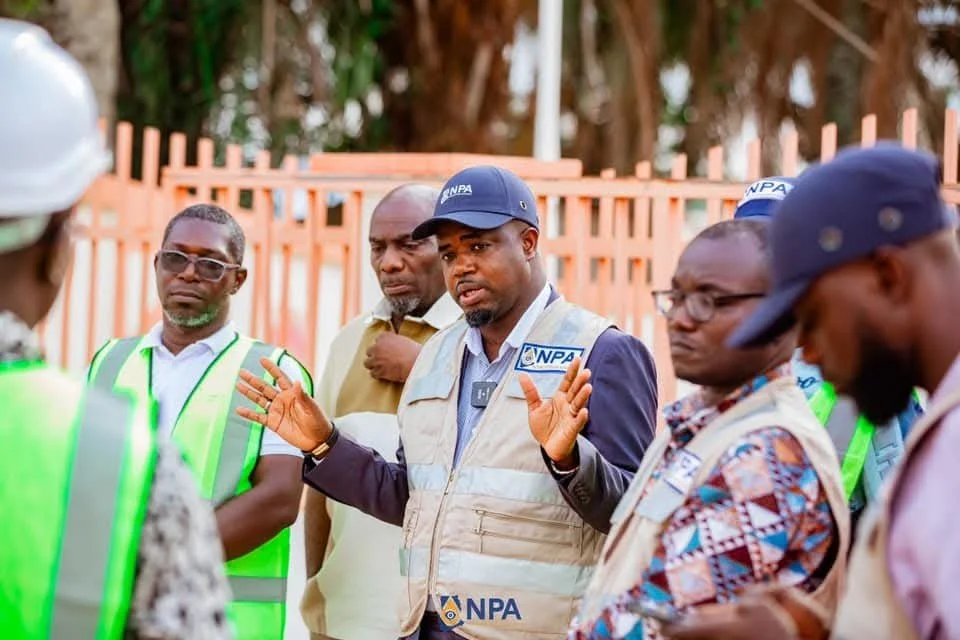
A notable feature of Mr. Edudzi Tameklo’s regulatory approach has been an expansive reading of stakeholder management. Consumer protection and labour relations have not been treated as peripheral obligations but as central components of downstream stability. In a sector where disruption travels quickly through prices, supply chains, and public sentiment, regulatory effectiveness has depended as much on engagement as on enforcement.
Consumer complaint frameworks were standardised through structured consultations, introducing greater consistency in how grievances are recorded, assessed, and resolved. Consumer Week activities, LPG safety campaigns, and public engagements at cultural festivals and tertiary institutions extended regulatory presence beyond formal compliance settings into everyday civic life. This visibility reinforced the NPA’s role not only as an enforcer but also as an arbiter of safety and fairness in a liberalised market.
Equally consequential were sustained dialogues with organised labour and industry associations. Engagements with tanker drivers, bulk road vehicle operators, petroleum marketers, and industry executives reflected an understanding that price stability and supply continuity are negotiated outcomes as much as regulatory ones. In a downstream system where industrial action or logistical disruption can cascade rapidly, dialogue functioned as a form of risk management rather than concession.
By integrating consumer interests and labour realities into its regulatory posture, the NPA sought to reduce the probability of sudden shocks and reactive policymaking. Stability, in this context, was not assumed. It was actively managed.
Managing Scarcity Before It Becomes a Crisis
It is equally safe to say that one of the quieter but more consequential aspects of the NPA’s recent posture has been its approach to scarcity management. During periods of heightened public anxiety over fuel availability in mid-2025, the Authority resisted the familiar pattern of reactive reassurance and instead focused on disciplined stock management, transparent distribution, and steady public communication. The objective was not to dramatise control but to prevent perception from outrunning reality.
The management of national fuel reserves during this period reflected a regulator attentive to the psychology of markets as much as their mechanics. Real-time monitoring of supply flows, coordinated release schedules, and clear engagement with marketers helped deflate speculative behaviour before it could harden into panic buying or artificial shortages. In a deregulated downstream environment, where expectations can amplify volatility, this restraint mattered.
This sensibility carried into the NPA’s support for the downstream’s role in Ghana’s 24-Hour Economy agenda. Rather than treating extended operating hours as a question of volume alone, regulatory attention centred on safety standards, technology readiness, and operational resilience. The message was implicit but firm: expansion without control merely shifts risk. By foregrounding preparedness over pace, the Authority signalled a preference for durability over acceleration.
The Refining Conversation
Few issues in Ghana’s downstream petroleum discourse carry as much historical weight as the Tema Oil Refinery. Under Mr. Edudzi Tameklo, the NPA’s engagement with the refinery has been notably pragmatic, resisting both nostalgia-driven revivalism and premature declarations of renewal. Instead, the Authority has worked to reset the conversation around feasibility, capital realism, and regulatory clarity.
By publicly quantifying the capital requirements for a full revival of the refinery, the NPA introduced a level of transparency that had often been absent from past debates. This candour helped recalibrate expectations, shifting discussion away from political sentiment toward financial and technical constraint. When maintenance-led restoration enabled a resumption of operations, the Authority’s subsequent regulatory support reflected consistency rather than opportunism, reinforcing the principle that compliance and readiness precede endorsement.
Parallel engagements with private refiners further anchored this approach. The message was uniform: local refining capacity matters, but only when governed by safety, efficiency, and commercial discipline. In this framing, refining is not simply an industrial aspiration, but a strategic buffer against import dependence, supply disruption, and employment erosion. The NPA’s role has been to stabilise the rules of engagement, allowing the economics, rather than rhetoric, to determine viability.
A Lesson in Downstream Diplomacy
Beyond Ghana’s borders, the National Petroleum Authority under Godwin Edudzi Kudzo Tameklo has pursued a form of regulatory diplomacy rooted in credibility rather than assertion. Engagements with peer regulators across the sub-region and the continent have positioned Ghana less as an evangelist of policy models and more as a reference point for practical regulatory execution. Study visits, technical exchanges, and bilateral engagements were framed around shared problems of pricing discipline, digital oversight, and market integrity rather than abstract harmonisation.
Engagements with ARDA, SONABHY, Sierra Leone, and Namibia reflected an outward-facing confidence rooted in domestic coherence. Participation in continental energy platforms further extended Ghana’s regulatory voice into conversations on cleaner fuels and transition pathways, reinforcing the idea that effective national regulation can scale into regional leadership.
The Shape of the Legacy So Far
Measured in systems rather than slogans, Mr. Edudzi Tameklo’s tenure at the National Petroleum Authority has pushed the downstream regulator toward a firmer institutional centre. Enforcement has gained consequence, digital oversight has become structural rather than cosmetic, and stakeholder engagement has been absorbed into the logic of market stability rather than treated as public relations. The result is a regulator that appears more deliberate in how it exercises authority and more confident in where it draws its boundaries.
What distinguishes this phase is not the absence of challenges, but the manner in which they have been approached. Instead of episodic intervention, the NPA has leaned toward continuity. Instead of a reactive posture, it has favoured anticipatory control. These choices have not eliminated volatility or risk, but they have narrowed the space for disorder in a sector where credibility is cumulative and lapses are expensive.
In a downstream market long shaped by fragmentation and uneven enforcement, the recent evolution of the Authority suggests a regulator rediscovering the value of quiet competence. The gains are incremental, the architecture is still incomplete, but the direction is coherent. For now, Ghana’s downstream petroleum order appears steadier, more legible, and better governed for it.
Written By
Raymond Nuworkpor
Energy Market Analyst.
