
NPA Hails TOR’s Return as Ghana Reclaims Its Refining Backbone
Ghana’s downstream regulator has saluted the Tema Oil Refinery’s return to refining ways, a symbolic nod that doubles as an economic signal: after years of import dependence, the country’s flagship refinery is once again playing its role as an anchor of energy sovereignty.
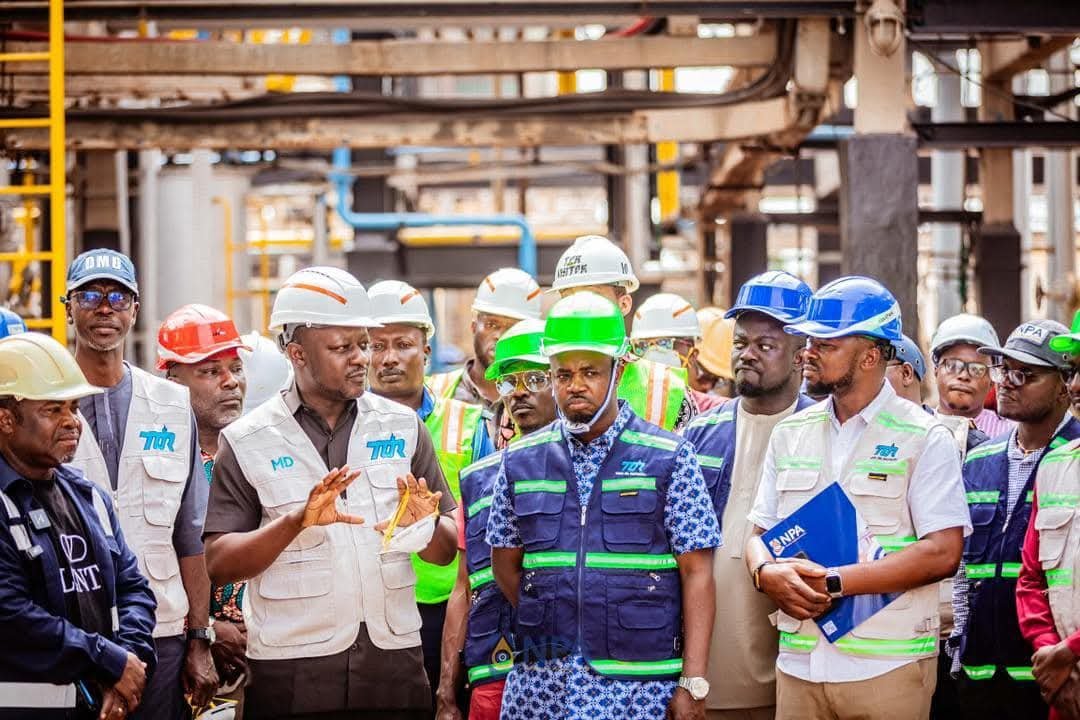
Tema | January 15, 2026 - The National Petroleum Authority has formally endorsed the revival of the Tema Oil Refinery, with its Chief Executive, Edudzi Tameklo, positioning the refinery’s return as both a regulatory milestone and a strategic necessity for Ghana’s downstream petroleum sector. During a working visit to TOR on January 15, the NPA leadership toured key operational units to verify compliance following regulatory approval for the refinery’s restart, signaling that oversight and revival are now moving in tandem. “I will be the number one champion for the need to support TOR, because if TOR is working, it makes my work easier,” Mr. Tameklo told refinery management, framing TOR’s functionality as integral to effective sector regulation rather than a parallel concern. The visit underscored a shift from cautious reentry to institutional alignment around sustained operations.
Meeting with TOR’s Managing Director, Edmond Kombat, and the refinery’s general management team, the NPA delegation was briefed on operational improvements underpinning the restart. Management pointed to tighter laycan management and logistics coordination, which have resulted in fully stocked tanks and improved throughput discipline, early indicators of restored operational control. For a refinery long constrained by interruptions and legacy inefficiencies, the emphasis on inventory management and readiness was intended to demonstrate that the restart is being governed by systems rather than improvisation.
Mr. Tameklo used the engagement to draw a direct line between TOR’s revival and global benchmarks, referencing lessons from his recent visit to Nigeria’s Dangote Refinery. Scale, automation, and modern plant discipline, he argued, are no longer optional. “No one should be sent to go and turn a valve,” he said, stressing the importance of automated systems both for efficiency and safety. At the same time, he cautioned that regulatory enthusiasm must never override plant integrity, noting the shared responsibility of regulator and operator to distinguish between readiness and risk. “We must be mindful of our responsibility to ensure that we do not say ‘proceed’ when what is required is ‘stop work’, because the integrity of the plant must not be compromised,” he said.
The NPA chief also situated TOR’s return within a broader macroeconomic context, pointing to its potential impact on fuel price stability and foreign exchange conservation. Ghana consumes an estimated 5.5 million metric tons of petroleum products annually, equivalent to roughly 110,000 barrels per day, with more than 90 percent historically imported. That dependence has exposed the economy to global price volatility and driven foreign exchange outflows. Even partial displacement of imports through local refining, regulators argue, offers meaningful relief to the balance of payments while shortening supply chains.
Since resuming operations in late 2025, TOR has been refining about 28,000 barrels per day, below its 45,000 bpd nameplate capacity but on a stated path toward full utilization as upgrades come online. Alongside Sentuo Oil Refinery, the 40,000 bpd privately owned facility commissioned in 2024, TOR anchors Ghana’s limited domestic refining base. At optimal current utilization, the two refineries could together supply roughly 60–75 percent of national demand, still leaving gaps for imported products but materially reducing exposure to external disruptions.
The partial coverage already delivers tangible benefits. Locally refined fuels lower shipping and insurance costs, improve supply freshness, and support jobs across refining, storage, and distribution. For downstream industries, from manufacturing to agriculture, the availability of domestically processed fuels offers greater predictability in energy inputs, reinforcing the strategic case for rebuilding refining capacity rather than relying almost exclusively on imports from Europe and the Middle East.
Looking further ahead, TOR’s management has outlined a far more ambitious trajectory. Plans under a proposed $10 billion reset agenda include a new 100,000 bpd greenfield refinery integrated with petrochemical production, alongside upgrades to existing units and digital systems. If executed from 2026, these investments could lift TOR’s total capacity beyond 160,000 bpd, positioning Ghana not only to meet domestic demand but to export refined products to neighboring markets.
Combined with Sentuo’s Phase 2 expansion to 100,000 bpd in 2024, Ghana could, by the late 2020s, command surplus refining capacity in excess of 215,000 barrels per day. Such scale would fundamentally alter the country’s downstream profile, slashing import bills, deepening petrochemical value chains, and creating thousands of skilled jobs while raising environmental and safety standards through modernized operations. For the NPA, its public championing of TOR’s revival signals more than regulatory approval; it reflects a recalibration of Ghana’s downstream strategy, with domestic refining once again treated as a cornerstone of energy security and industrial ambition.
