BOSTEnergies at One: Engineering the Future with Transformational Pragmatism
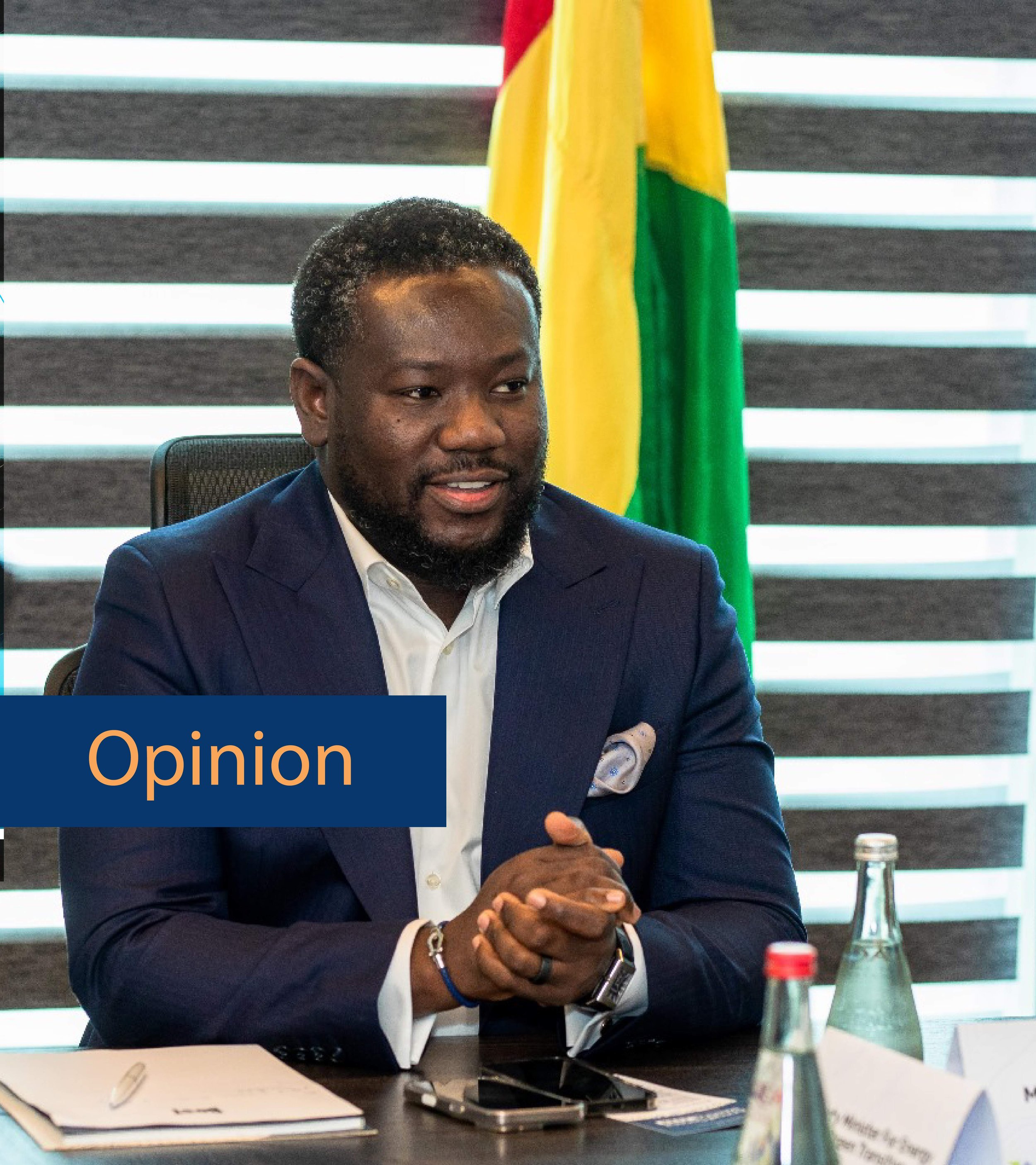
One year into new leadership, BOSTEnergies has prioritised institutional repair over spectacle. Through rebranding, governance reform, and operational consolidation, the company is repositioning itself for sustained profitability and relevance within Ghana’s evolving energy landscape.
One year after a management change at the top, BOSTEnergies has made its direction unmistakably clear: operational discipline at the core, profitability as the objective, and the energy transition as the horizon. Under Afetsi Awoonor, the state-owned utility has focused on fixing fundamentals, reasserting governance, and deliberately repositioning itself from a petroleum-only custodian into a transition-ready energy infrastructure company. The past twelve months have been about laying credibility, not chasing noise, as BOSTEnergies aligns its mandate with Ghana’s evolving energy economy.
This approach matters in a sector where ambition has often outpaced execution. Rather than announcing sweeping transformations, the current leadership has concentrated on restoring internal order, clarifying strategic priorities, and signalling seriousness to regulators, partners, and the market. Whether this emphasis ultimately delivers sustained financial performance remains an open question, but the shift in posture is difficult to miss.
The Bulk Oil Storage and Transportation Company Limited (BOST), a state-owned entity responsible for managing Ghana’s strategic petroleum reserves and distribution infrastructure, underwent a significant management transition in early 2025 following the inauguration of President John Dramani Mahama’s administration. Mr Afetsi Awoonor was appointed Managing Director in January 2025, marking the start of a new phase focused on operational efficiency, sustainability, and profitability. Over the past year, BOST, rebranded as BOSTEnergies in August 2025, has made visible efforts to align with Ghana’s National Energy Transition Framework, deepen community engagement, and reposition itself within the broader energy conversation.
At the same time, the leadership has been candid about the limits of what can be achieved in a single year. While reputational and organisational shifts have been notable, the financial turnaround remains a work in progress, with management maintaining its stated target of achieving profitability by the end of 2025.
Rebranding and Strategic Shift Toward Sustainability
One of the most prominent milestones was the official rebranding to BOSTEnergies, approved during the company’s 2025 Annual General Meeting on 27 August 2025. The move symbolised a pivot from traditional petroleum storage and transportation to a broader focus on sustainable and future-facing energy solutions, including solar integration, waste reduction, and alternative fuels.
Beyond symbolism, the rebrand has served as an internal signal, encouraging a rethinking of long-term relevance in an energy system undergoing transition. Energy and Green Transition Minister John Abdulai Jinapor commended the board and management for their progress during the initial months while urging faster innovation to support Ghana’s green agenda. In parallel, the establishment of a dedicated Renewable Energy Department has provided an institutional anchor for these ambitions, even as concrete commercial outcomes remain at an early stage.
The State Interests and Governance Authority (SIGA) has reinforced this direction through its 2025 performance contract, emphasising cost optimisation, revenue growth, and asset maximisation. The expectation that BOSTEnergies should return to profitability and declare dividends by year-end reflects a renewed insistence on commercial discipline alongside public interest obligations.
Industry Awards and Recognition
BOSTEnergies' efforts under the new management have been validated through several prestigious awards. In September 2025, the company secured a double win at the National Business Honours Awards, underscoring its operational improvements and contributions to Ghana's energy sector.
This was followed by its crowning as Energy Company of the Year (Petroleum) at the Ghana Energy Awards on November 29, 2025, beating competitors like Petrosol, Platinum Energy, and GOIL. The award highlighted BOST Energies' dynamism, innovation, and role in stabilizing fuel supply, with Minister Jinapor praising the company's renewed strategic focus in October 2025.
Operational and Infrastructure Enhancements
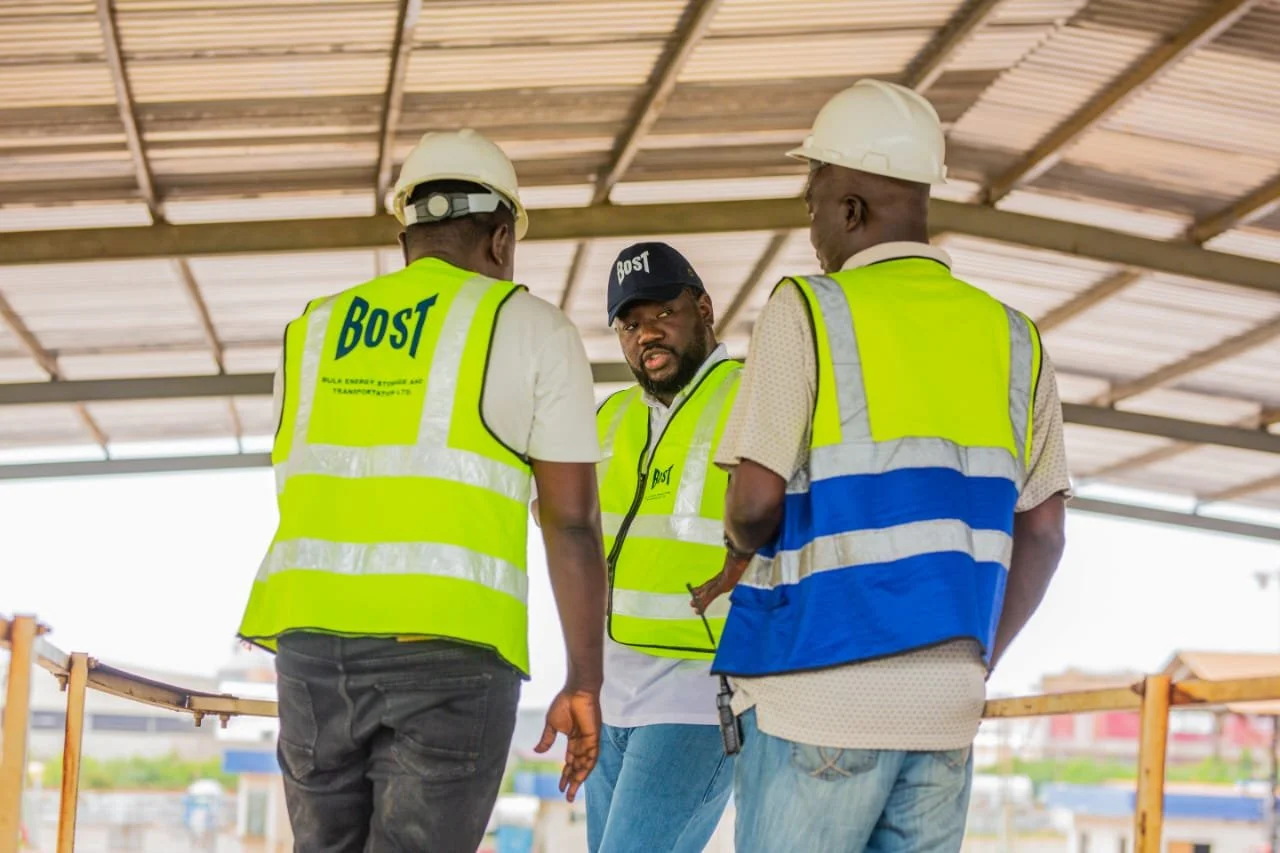
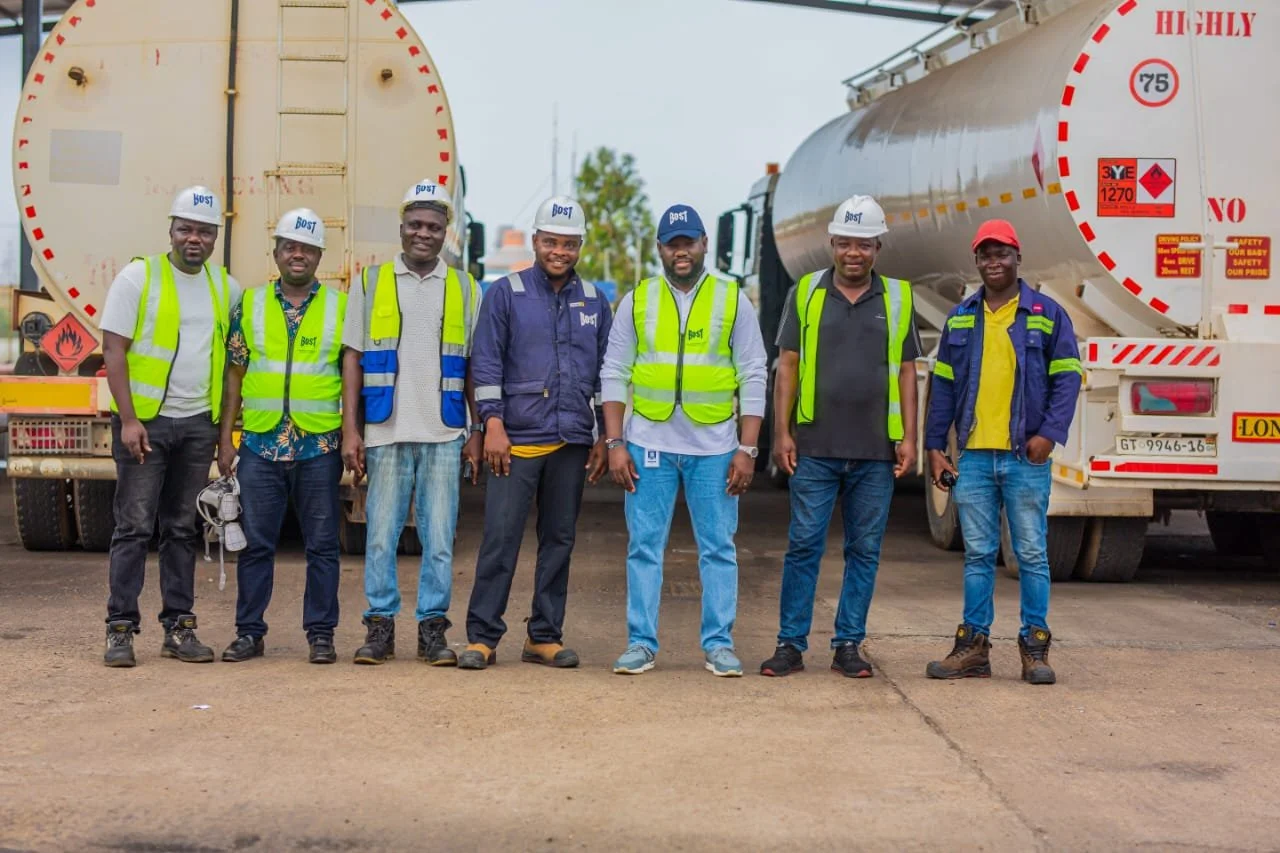
Operational reform has been a central pillar of the past year. The new management has prioritised infrastructure rehabilitation, digitalisation, and governance reforms aimed at improving efficiency and accountability. Investments have focused on upgrading aging facilities, strengthening safety protocols, and deploying digital systems to enhance oversight and reduce operational inefficiencies.
In July 2025, BOSTEnergies deepened collaboration with the Tema Oil Refinery through facility tours and technical discussions focused on downstream coordination and national fuel security. These engagements reflected a growing recognition that system-wide coherence, rather than isolated institutional performance, is critical to Ghana’s energy resilience.
The company also expanded its international footprint, signing a cooperation agreement with Liberia’s National Oil Company (NOCAL) in late 2025. The partnership signals an intention to play a more active role in regional energy cooperation, even as BOSTEnergies continues to consolidate its domestic operations.
Community Engagement and Social Responsibility
BOSTEnergies has actively fostered community ties, a critical aspect of its post-management change strategy. In November 2025, company leadership engaged the Ga Traditional Council to explore avenues for youth development and cultural collaboration. In the same period, Managing Director Awoonor commended the chiefs and people of Buipe for their support, emphasising the role of community cohesion in sustaining business operations.
Social responsibility initiatives have complemented these efforts. The company’s Breast Cancer Awareness Month campaign in October 2025, themed “Breast Cancer Has No Gender: Awareness for All,” aimed to broaden health education and encourage inclusivity. While such initiatives sit outside core commercial activity, they contribute to trust-building and social licence, both of which are essential for infrastructure-dependent entities.
Financial Outlook and Challenges
Financial performance remains the most consequential measure of success. The 2024 financial statements, adopted at the 2025 AGM, showed a turnaround from a GH¢292 million loss to a GH¢398 million profit under the previous management. The current leadership’s focus has been on sustaining and building upon this momentum rather than claiming credit for it.
SIGA has set ambitious expectations for 2025, with an emphasis on measurable financial gains and improved asset utilisation. As of January 2026, full-year results under the current management are not yet available, leaving the profitability target intact but untested. This underscores the reality that structural reform in state-owned enterprises is often gradual and uneven.
Challenges persist, including the need to move beyond historical losses and address governance weaknesses exposed in late 2024. How effectively BOSTEnergies navigates these pressures will shape its long-term credibility and financial resilience.
Conclusion
In closing, the first year under new management has been defined by strategic reorientation, visible institutional repair, and renewed engagement with stakeholders. While industry accolades and rebranding have drawn attention, the more consequential work has taken place within systems, processes, and governance frameworks.
As BOSTEnergies enters its second year under Afetsi Awoonor, the emphasis is expected to shift from intent to outcomes. Whether the foundations laid over the past twelve months translate into sustained profitability and a credible role in Ghana’s energy transition will determine whether this period of transformational pragmatism delivers lasting value.
Written By
Raymond Nuworkpor
Energy Market Analyst
