Nigeria Authorises First Paris-Aligned Carbon Credit Project, Testing Integrity of Emerging Market Framework
Nigeria has crossed a critical threshold in its climate strategy, authorising its first carbon credit project under the Paris Agreement and activating the machinery of its long-gestating carbon market framework. The issuance of a Letter of Authorisation to BURN signals more than project approval—it marks Nigeria’s formal entry into Article 6 carbon trading, with real capital, real credits, and real accountability now in play. As millions of credits tied to clean cooking begin to flow toward global markets, the country is positioning itself to tap into climate finance at scale. The question now is whether execution will match ambition, and whether this first deal sets the tone for a high-integrity market—or exposes the fault lines early.

Kano, Nigeria | March 25, 2026 - Nigeria has taken a decisive step into the mechanics of global climate finance, authorising its first carbon credit project under the Paris Agreement—an inflexion point that moves Africa’s largest economy from policy design to market execution.
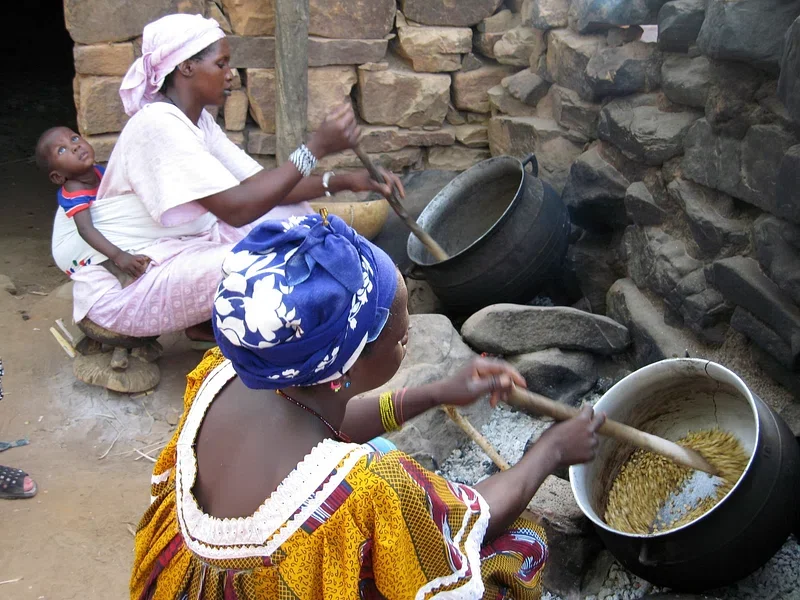
The approval, granted by the National Council on Climate Change (NCCC), takes the form of a formal Letter of Authorisation (LOA) issued to clean cooking firm BURN. The LOA permits the company to generate and internationally transfer carbon credits under Article 6 of the Paris Agreement, marking the first authorisation of its kind in Nigeria. Structured for supply into the aviation sector via the Carbon Offsetting and Reduction Scheme for International Aviation (CORSIA), the project is expected to yield roughly 5.2 million credits tied to the distribution of fuel-efficient cookstoves across Nigerian households. Beyond emissions reductions, the initiative targets a familiar development nexus: cutting reliance on firewood and charcoal while improving public health outcomes.
BURN’s operational footprint underscores the scale underpinning the project. Since 2019, its Nigerian operations have sold approximately 450,000 fuel-efficient cooking appliances, impacting around 2 million lives. The company’s 3,700m² manufacturing facility in Kano currently produces about 40,000 units per month, with installed capacity to reach 100,000 units, and longer-term ambitions to scale further. Its workforce of roughly 700 employees, with women comprising about half, situates the project squarely at the intersection of climate action and inclusive economic development.
“Nigeria is committed to building a transparent and high-integrity carbon market that channels climate finance into real development outcomes for our people. The issuance of this Letter of Authorization reflects the continued implementation of Nigeria’s carbon market framework and our readiness to participate responsibly in international carbon markets. We welcome initiatives such as BURN’s clean cooking programme, which illustrate how climate solutions can reduce emissions while improving the health and livelihoods of Nigerian households,” said NCCC Director-General Dr. Omotenioye Majekodunmi, framing the authorisation as both a market signal and a governance commitment.
From Concept to Market Entry
Nigeria’s entry into carbon markets has been deliberate, unfolding over several policy layers in the past half-decade.
The institutional foundation was laid with the Climate Change Act of 2021, which established the NCCC as the apex body to coordinate climate policy, oversee national action plans, and manage climate finance flows. That legal backbone set the stage for a more structured engagement with international carbon markets.
By 2024, Nigeria had moved into framework design, releasing a draft “Carbon Market Framework for International Carbon Market Participation.” The document signalled intent to align with Article 6 mechanisms, even as global rules—first operationalised at COP26 in Glasgow—continued to be refined through subsequent Conference of the Parties meetings.
In 2025, the government sharpened its ambition with the Carbon Market Activation Policy, positioning the country as “a leading African hub for high-integrity carbon market investments.” The policy outlined a potential to unlock between 87.2 and 124.7 million tonnes of CO₂-equivalent reductions by 2030, translating into an estimated market value of $736 million to $2.5 billion. Crucially, it tied carbon markets directly to economic development—jobs, clean energy deployment, and new revenue streams.
The architecture moved from policy to execution in January 2026, when Nigeria formally launched its national carbon market framework. This included plans for a national carbon registry and alignment with international standards—key prerequisites for credibility in cross-border credit transfers.
The BURN authorisation now marks the first operational test of that architecture.
What is Being Traded—and Why it Matters
At the core of the transaction is a carbon credit: a tradable unit representing one tonne of greenhouse gas emissions reduced or removed from the atmosphere. These credits are generated through activities such as clean energy deployment, reforestation, methane capture, or—in this case—fuel-efficient cooking technologies that reduce biomass consumption.
Once verified under strict methodologies and accounting rules, credits can be bought and sold across borders. Under Article 6, countries can transfer these emissions reductions—known as internationally transferred mitigation outcomes (ITMOs)—to help meet national climate targets.
The Paris Agreement structures this market through three pillars: Article 6.2, which governs bilateral transfers of emissions reductions; Article 6.4, which establishes a UN-supervised global crediting mechanism; and Article 6.8, which enables non-market cooperation. The BURN project sits squarely within this architecture, leveraging Article 6 to channel mitigation outcomes into global demand centres such as aviation.
Two distinct markets underpin these transactions. Compliance markets are driven by regulation, in which governments mandate emissions caps and allow trading, as in emissions trading systems. Voluntary markets, by contrast, are driven by corporate or individual climate commitments. Nigeria’s framework is designed to straddle both, with a clear tilt towards compliance-grade credits under Article 6.
Bridging the climate finance gap
The economic rationale is straightforward but urgent. Global climate finance remains significantly below what is required to meet the Paris Agreement’s 1.5°C target. Estimates suggest current flows are three to six times lower than needed by 2030, with developing economies facing the widest gaps.
Carbon markets offer a mechanism to close part of that gap. By putting a price on carbon, they create a revenue stream for emissions-reduction projects that would otherwise struggle to secure financing. In 2024 alone, carbon pricing mechanisms covered roughly 28% of global emissions and generated over $100 billion in revenues—funds increasingly channelled into low-carbon infrastructure and adaptation initiatives.
Nigeria’s bet is that a credible, high-integrity market can attract a share of this capital. Projects like BURN’s illustrate the model: private-sector implementation, internationally recognised verification, and monetisation through global demand.
Regional context and competitive positioning
Nigeria’s move also reflects a broader continental shift. African countries are increasingly positioning themselves within Article 6 markets, not just as suppliers of credits but as architects of credible frameworks.
Ghana, for instance, has already operationalised cooperative approaches under Article 6.2 in partnership with Switzerland, authorising the transfer of mitigation outcomes. These early movers are effectively writing the playbook for how carbon markets can deliver both climate and development dividends.
Nigeria’s scale, however, gives it a different weight. With a large emissions base, significant clean energy potential, and an expanding policy framework, it has the capacity to become a major supplier of high-quality credits—if governance holds.
The governance test
That caveat is central. Carbon markets have faced persistent criticism over credit quality, additionality, and transparency. Poorly governed systems risk becoming conduits for low-value offsets rather than engines of genuine emissions reduction.
Nigeria’s framework explicitly recognises this risk. The emphasis on a national registry, alignment with Article 6 accounting rules, and central oversight by the NCCC is designed to ensure environmental integrity and prevent double-counting.
In effect, Nigeria is now on the clock. The transition from policy ambition to market credibility hinges on whether early projects deliver measurable emissions reductions and tangible local benefits.
If they do, the country could unlock a new frontier of climate finance while setting a benchmark for the region. If they do not, the market risks being dismissed as another extractive channel—exporting cheap credits with limited domestic value.
For now, the signal is clear: Nigeria has moved from the margins of carbon markets into their operational core. The next phase will determine whether that entry translates into durable economic and environmental gains.
