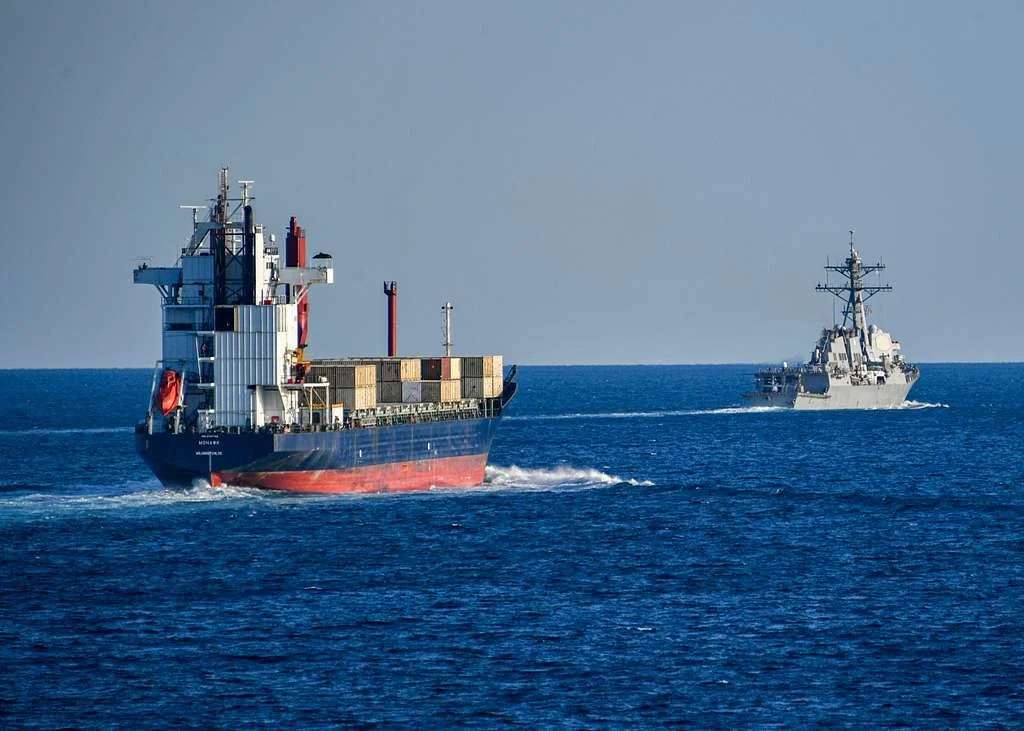
Gulf Energy Shock: Qatar Warns of Export Shutdowns as Hormuz Crisis Tightens Global Supply
The Gulf’s energy system is entering dangerous territory. Qatar has halted LNG production and warned that exporters across the region could soon suspend shipments if the Strait of Hormuz crisis deepens. As shipping stalls, insurance markets retreat, and geopolitical tensions escalate, one of the world’s most important energy corridors is beginning to seize up, sending tremors through global oil and gas markets.
Doha, Qatar | March 6, 2026 - The world’s energy markets received a stark warning today when Qatar’s Energy Minister, Saad al-Kaabi, delivered a blunt assessment of the crisis now unfolding across the Gulf: if current conditions persist, nearly every energy exporter in the region may soon be forced to halt shipments.
“Everybody that has not called for force majeure we expect will do so in the next few days if this continues,” al-Kaabi said in an interview published March 6. “All exporters in the Gulf region will have to call force majeure.”
The remarks arrived as QatarEnergy formally declared force majeure on liquefied natural gas (LNG) contracts after suspending production earlier in the week, an extraordinary step by the LNG-exporting giant that underscores how quickly geopolitical conflict has begun translating into physical supply disruption.
For markets already on edge after weeks of escalating confrontation between the United States and Iran, the statement amounts to an ante-up in one of the most strategically sensitive energy corridor on earth.
Brent crude futures have already surged past the $89 per barrel threshold. Analysts increasingly warn that if Gulf exports stall more broadly, the next waypoint could be dramatically higher.
Al-Kaabi’s own estimate is stark: oil could reach $150 per barrel if the shutdowns cascade.
From Regional Conflict to Energy Shock
The current disruption did not begin in energy markets. It began in the escalating military confrontation between Washington and Tehran.
In late February and early March, U.S. and allied forces launched sustained strikes against Iranian military infrastructure under the campaign known as Operation Epic Fury, targeting naval assets, missile systems, and command structures tied to Iran’s regional operations.
American officials have framed the campaign as decisive. President Donald Trump declared this week that the Iranian regime’s naval and air capabilities had been “obliterated,” asserting that it was now “too late” for Tehran to recover strategic leverage.
Yet the conflict has not remained confined to Iranian territory.
Over the following days, Iran launched missile and drone strikes against several regional targets, dramatically escalating tensions across the Gulf. The Gulf Cooperation Council warned that it would take “all necessary measures,” including potential military responses, if attacks continued.
The result has been a rapid deterioration in the security environment surrounding the Persian Gulf’s most critical shipping artery.
Hormuz: Diplomacy, Deterrence, and the Insurance Freeze
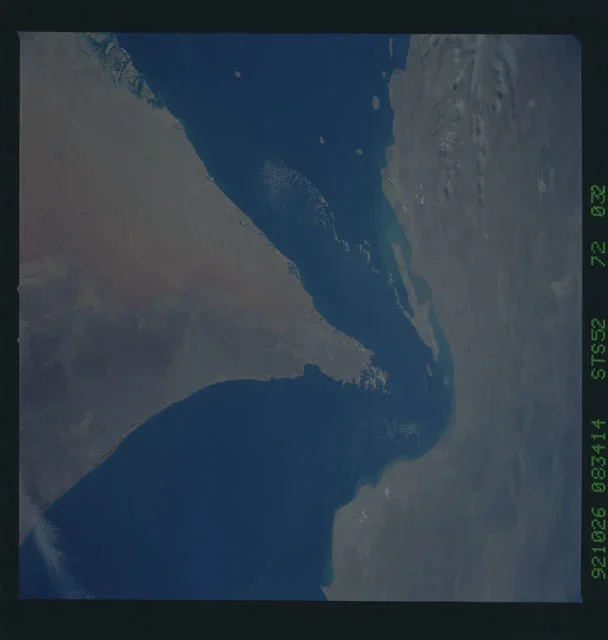
At the center of the unfolding energy shock lies the Strait of Hormuz, the narrow maritime corridor through which roughly 10 to 20 percent of the world’s oil supply typically flows. What is happening there now illustrates how geopolitical conflict can disrupt energy markets even without a formal blockade.
The crisis has been shaped by a striking divergence between diplomatic messaging and military signaling.
On March 1, Iran’s Foreign Minister Abbas Araghchi publicly insisted that Tehran had no intention of closing the strait, telling international media that Iran did not plan to take steps that would disrupt navigation through the waterway. The statement was widely interpreted as an attempt to calm markets and avoid an immediate price spike.
Yet developments around the Gulf quickly complicated that message.
Within days, Iran’s Islamic Revolutionary Guard Corps began projecting a far more assertive posture. The Guards declared that they maintained “complete control” over the waterway and reiterated warnings that the strait could be closed if the conflict escalated further. Ships attempting to pass, officials suggested, could face missile or drone threats.
Shipping behavior changed accordingly.
By early March, tanker traffic through the strait had slowed dramatically. Tracking data showed vessels hesitating at the Gulf’s entrance or anchoring outside the corridor rather than attempting transit, amid signal disruptions and growing security concerns.
What initially appeared to be a temporary military precaution soon revealed a deeper logistical breakdown.
The constraint, analysts say, is no longer purely strategic. It is financial.
Geopolitical systems analyst Shanaka Anslem Perera argues that the disruption resembles less a traditional naval blockade than what he calls an “actuarial siege.” Seven major protection and indemnity clubs, which collectively insure roughly 90 percent of global commercial shipping tonnage, have withdrawn war-risk coverage for vessels operating in the region.
Without that insurance, tankers cannot legally sail.
In effect, one of the world’s most important energy arteries has stalled not because it was formally closed, but because the financial architecture that enables global shipping has abruptly stepped aside.
The marine reinsurance market is highly concentrated and governed by strict capital requirements. Once insurers withdraw from a war-risk zone, restoring coverage can take months rather than weeks, even if military tensions ease.
That creates a mismatch with how markets typically model geopolitical shocks. Most trading models assume a kinetic disruption lasting four to eight weeks before flows normalize. Insurance systems operate on a slower clock.
In practical terms, the Strait of Hormuz now occupies a strange strategic gray zone. Iran says it has not closed the waterway. Its military signals that it controls it. And global shipping companies, facing uninsured risk, have largely chosen not to test the distinction.
It is in this logic that Washington is taking steps to keep maritime commerce alive. On March 3, the White House ordered the U.S. Development Finance Corporation to provide political risk insurance and financial guarantees for maritime trade. If necessary, President Trump said, the U.S. Navy could begin escorting tankers through the Strait of Hormuz.
For energy markets, the difference between “closed” and “unusable” has become increasingly academic.
Qatar Pulls the First Lever
The operational consequences began to appear in Qatar at the start of the week.
On March 2 and 3, QatarEnergy announced it would suspend production of liquefied natural gas and associated products, citing the deteriorating regional environment. Soon after, the company expanded the halt to downstream operations, including urea, polymers, methanol, aluminum, and other industrial outputs.
By March 4, the state energy giant formally declared force majeure on affected LNG contracts, effectively notifying buyers that deliveries could not be guaranteed under current conditions.
The ripple effects were immediate.
European natural gas prices surged as traders recalibrated supply expectations. For Europe, which has come to rely heavily on LNG imports following the reconfiguration of global gas marketsearlier in the decade, Qatar’s disruption carries particular weight.
Markets Begin to Price the Shock
Oil markets have begun responding in stages.
Brent crude climbed sharply through the week, breaching $89 per barrel by March 6. The price move reflects both the direct threat to Gulf production and the logistical paralysis surrounding Hormuz.
Markets are now watching whether other Gulf exporters follow Qatar’s lead. Energy Minister Saad al-Kaabi warned that regional producers may soon be forced to declare force majeure if the conflict persists.
If they do, supply expectations could tighten dramatically.
Some policymakers are already attempting to pre-empt that scenario.
In an effort to cushion the market, the U.S. Treasury has reportedly moved to allow previously sanctioned Russian crude to re-enter global trade flows, according to commodity analyst Javier Blas. The move would effectively loosen the sanctions architecture around Russian oil exports in order to ease supply pressure.
At the same time, Washington is taking steps to keep maritime commerce alive.
On March 3, the White House ordered the U.S. Development Finance Corporation to provide political risk insurance and financial guarantees for maritime trade. If necessary, President Trump said, the U.S. Navy could begin escorting tankers through the Strait of Hormuz.
Such escort missions were a hallmark of earlier Gulf crises, but analysts caution that military protection cannot easily solve an insurance market collapse.
Producers Confront Demand Destruction
Even for producers still capable of exporting, the market calculus has grown more complex.
Amena Bakr, head of Middle East energy and OPEC+ insights at Kpler, notes that the central challenge now may not be supply capacity but demand.
Higher prices tend to trigger demand destruction as consumers cut consumption and governments intervene.
For Gulf exporters still able to move cargoes, Bakr argues that pricing strategy will become critical. Moderate increases in official selling prices may help maintain revenue without accelerating the collapse in demand that extreme price spikes can produce.
The political implications may prove just as significant.
Blas notes that U.S. gasoline prices approaching four dollars per gallon could weaken domestic support for the ongoing military engagement in the region, potentially reshaping Washington’s strategic calculus.
Energy Security Rewrites the Climate Debate
The crisis is also exposing the fragile balance between climate policy and energy security.
In periods of acute supply risk, long-term decarbonization goals often yield to immediate energy needs. Bakr observes that if supply tightens significantly, European buyers may rapidly abandon green constraints and seek hydrocarbons wherever they can find them.
Russian barrels could reappear in force. Coal plants could return to service.
The energy transition does not halt in such moments. It simply pauses while markets scramble to keep the lights on.
The Uncertain Road Ahead
What began as a regional military confrontation has now evolved into a multi-layered disruption spanning geopolitics, shipping, insurance, and commodity markets.
The chronology has unfolded rapidly:
Late February – Early March: U.S. strikes against Iranian military infrastructure escalate regional tensions.
Early March: Iranian missile and drone attacks widen the conflict across the Gulf.
March 2–3: QatarEnergy suspends LNG and associated product production.
March 4: QatarEnergy declares force majeure on LNG deliveries.
March 3–6: Shipping through the Strait of Hormuz slows dramatically amid insurance withdrawals.
March 6: Qatar’s energy minister warns that Gulf exporters could soon halt shipments entirely.
For now, the global energy system remains in a precarious holding pattern. Oil is rising. Gas markets are tightening. Tankers wait offshore.
And in Doha, the warning from one of the world’s largest LNG exporters hangs over the market like a storm front gathering force: if the Gulf shuts down, the energy shock will not be gradual.
It will be immediate.