Cabinda Refinery Targets Pre-Q2 2026 Supply Start After Prolonged Build-Out
Angola’s long-delayed Cabinda Refinery is edging into supply mode, with its developers targeting first product flows before Q2 2026 after months of final testing. The milestone marks a decisive shift for a project once stalled by financing and timelines, now poised to bolster domestic fuel security and reshape the country’s downstream balance.
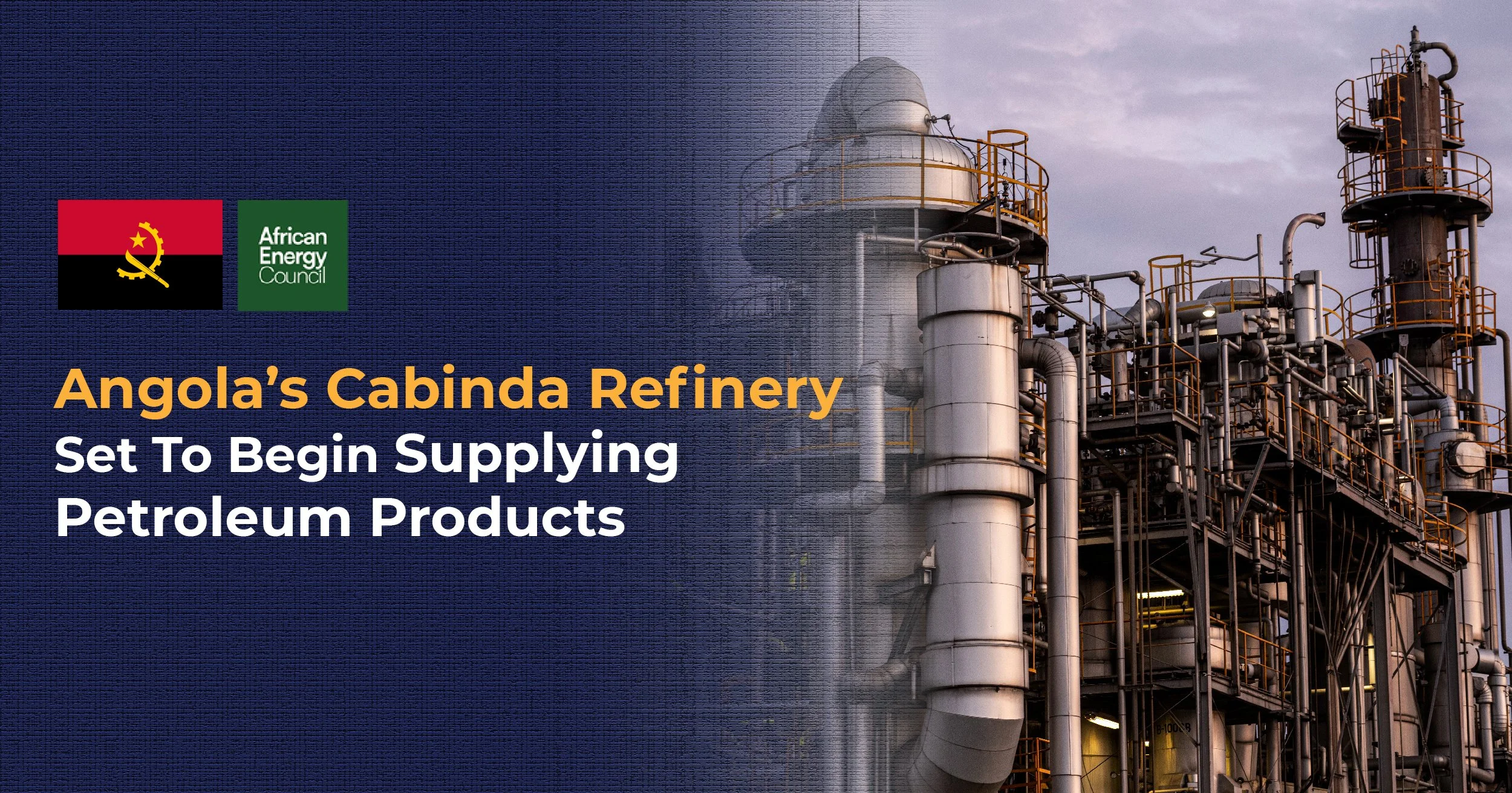
Cabinda, Angola | March 25, 2026 - Angola’s Cabinda Refinery is set to begin supplying petroleum products before the second quarter of 2026, its owners have confirmed, marking a critical inflexion point for a project that has navigated years of financing hurdles, construction delays and stringent safety checks.
The announcement signals the imminent transition of the refinery from commissioning into market supply, positioning it as a strategic asset in Angola’s long-running push to reduce refined product imports and deepen domestic value addition.
A Delayed Start, Driven by Safety Priorities
Commissioned in September 2025, the Cabinda Refinery received its first crude shipment from Malongo that same month, triggering the final phase of testing and operational validation. The facility had initially been slated to begin commercial operations by December 2025—a target it ultimately missed.
According to Marcelo Hofke, Chief Executive Officer of Gemcorp, the lead developer and 90 per cent majority stakeholder, the delay was deliberate.
The refinery, he indicated, prioritised strict adherence to safety and operational integrity standards over accelerated timelines. Engineers are currently undertaking performance testing, with completion expected by the end of March 2026—clearing the path for product supply shortly thereafter.
Phased Development Strategy Anchors Capacity Growth
The Cabinda project has been structured as a two-phase development, reflecting both financing realities and demand expectations.
Phase one, now nearing operational readiness, is designed with a processing capacity of 30,000 barrels per stream day (bpsd). It will produce a slate of refined products including diesel, jet fuel, naphtha and heavy fuel oil—key inputs for both domestic consumption and regional markets.
Work on the second phase is already advancing in parallel. Engineering activities are expected to continue through October 2026, ahead of a formal construction tender. Developers are targeting the first half of 2027 for the commencement of phase two, which will double installed capacity to 60,000 barrels per day.
The expansion is projected to require an additional capital outlay of approximately $700 million, underscoring the scale and long-term ambition embedded in the project.
From Concept to Commissioning: A Six-Year Trajectory
First introduced in 2019, the Cabinda Refinery has followed a protracted development path shaped largely by financing constraints and execution complexities.
The project ultimately reached financial close through a consortium of African and international partners, with backing from institutions including the Africa Finance Corporation (AFC), Afreximbank, the Industrial Development Corporation (IDC) of South Africa, the Arab Bank for the Economic Development in Africa (BADEA), Banco de Fomento Angola (BFA) and other development finance actors. The total project cost has been estimated at approximately $473 million for the initial phase, supported by a $335 million financing facility.
This financing architecture reflects a broader trend in African energy infrastructure, where blended finance and public-private partnerships are increasingly deployed to de-risk capital-intensive projects.

Strategic Partnership Model
At its core, the Cabinda Refinery is a public-private partnership between Gemcorp and Sonangol, Angola’s national oil company, with an equity split of 90 to 10.
Gemcorp, a private investment firm focused on emerging markets, leads project development and execution, while Sonangol brings sovereign backing and integration into Angola’s upstream and downstream value chains.
Supporting financiers and stakeholders include AFC—a multilateral institution established by African sovereign states to address infrastructure deficits—and Afreximbank, a pan-African trade finance bank with a growing footprint in industrial and energy projects across the continent.
Together, these partners have anchored the refinery within a broader ecosystem aimed at advancing industrialisation, trade integration and energy security.
Market Implications: Import Substitution and Regional Supply
Once operational, the Cabinda Refinery is expected to play a pivotal role in reducing Angola’s reliance on imported refined petroleum products—a longstanding structural vulnerability despite the country’s status as a major crude oil producer.
The refinery’s product slate is tailored to domestic demand patterns, particularly for diesel and jet fuel, while also offering export potential into regional markets where refining capacity remains constrained.
In this context, the project aligns with a wider continental push to localise refining capacity, improve supply chain resilience and capture greater value from upstream resources.
The Road Ahead
With performance testing nearing completion and supply targeted before Q2 2026, the Cabinda Refinery is approaching its most consequential milestone yet.
Its successful ramp-up will not only validate years of capital deployment and coordination across public and private actors, but also test the viability of phased, partnership-driven refinery development in Africa’s evolving energy landscape.
For Angola, the stakes are clear: translating resource wealth into industrial capability—one barrel at a time.
