
Dangote Refinery Scales Exports as Africa’s Fuel Anchor Amid Hormuz Shock
As geopolitical fault lines tighten around the Strait of Hormuz and fuel supply chains fray, Africa is turning inward—and increasingly toward a single asset. Dangote Refinery’s shift from domestic stabiliser to regional exporter comes at a moment of acute market stress, with surging cross-border demand, active price interventions, and a clear signal from its leadership: the plant is no longer ramping up—it is shaping the market.
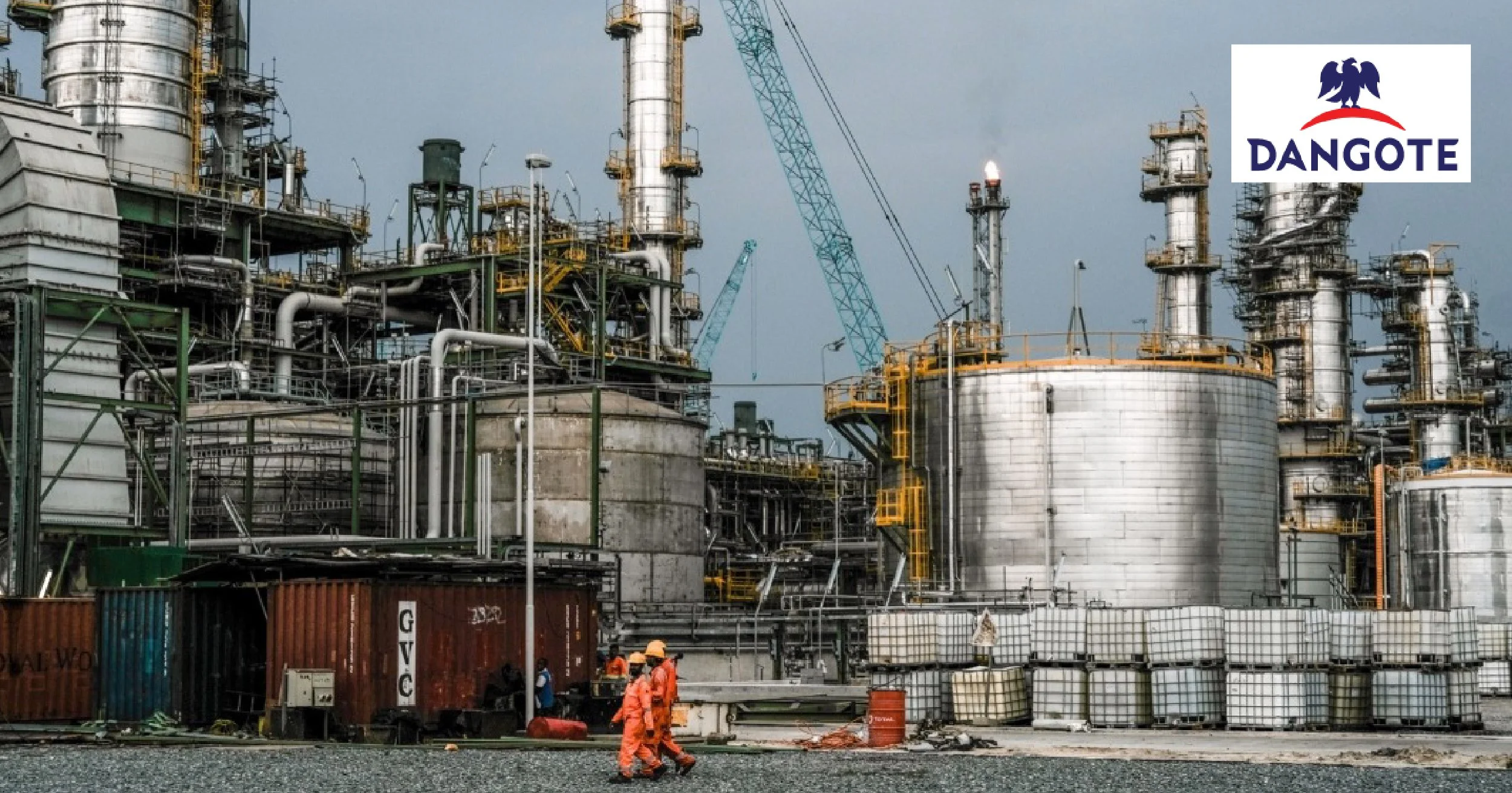
Lekki Free Zone, Ibeju Lekki Lagos, Nigeria | March 27, 2026 - Nigeria’s Dangote Petroleum Refinery has begun exporting refined petroleum products across Africa, marking a decisive shift from domestic ramp-up to regional supply leadership just as global fuel markets tighten under renewed geopolitical strain.
The pivot follows a forward-leaning media engagement by the refinery’s leadership, where the chief executive set out the facility’s operating posture in clear terms: domestic supply would remain the priority, but the refinery is now positioned to serve regional markets as output stabilises at scale. In the interview, he underscored both the strain on global supply chains triggered by tensions around the Strait of Hormuz and the refinery’s role in cushioning those shocks, noting that while demand from across Africa is accelerating, Nigeria’s energy security remains the anchor of its allocation strategy. The crisis has injected fresh volatility into global fuel markets, with ripple effects felt acutely across import-dependent African economies.
From Domestic Stabiliser to Regional Supplier
The refinery’s emergence as a continental supplier is not incidental—it is the culmination of a carefully sequenced ramp-up. After months of phased commissioning, Dangote reached its full nameplate capacity of 650,000 barrels per day in March, unlocking the scale required for sustained exports.
Within weeks, shipments began flowing. Approximately 456,000 tonnes of refined products—comprising petrol, diesel and jet fuel—have already been dispatched to at least five African countries, with cargoes reaching markets as far as Tanzania. While this represents less than a fifth of the plant’s monthly output, it signals the operational transition from a Nigeria-focused facility to a regional export hub.
This export push sits atop a formidable production base. At full tilt, the refinery can deliver up to 75 million litres of petrol daily, alongside 25 million litres of diesel and 20 million litres of jet fuel—volumes that materially alter West Africa’s supply calculus.
From Cost Pressures to Price Intervention: Dangote’s Market Signalling Pivot
The refinery’s outward push was anchored in two early interventions that moved beyond signalling capacity to actively shaping the domestic market.
On March 5, Dangote Refinery set out the structural pressures underpinning its operations, pointing directly to upstream supply constraints and elevated input costs. Nigeria’s producers, it noted, had “failed to supply crude oil to the refinery as required under the PIA,” forcing reliance on international traders at a premium. The statement laid bare the economics: crude priced at global benchmarks plus $3–$6 per barrel premiums, freight costs of about $3.50 per barrel, and landing costs rising into the $88–$91 range—well above earlier baselines. Despite this, the refinery emphasised that local refining at this scale would “reduce exposure to international supply disruptions, moderate foreign exchange demand and protect the country from severe shortages,” positioning itself as a buffer rather than a price driver. It also flagged operational responses, including the rollout of CNG-powered logistics to improve distribution efficiency and dampen downstream cost pressures.
By March 10, the posture shifted from diagnosis to intervention. The refinery announced a decisive reduction in refined product prices, cutting the gantry price of PMS from ₦1,175 to ₦1,075 per litre and the coastal price from ₦1,150 to ₦1,028 per litre, while diesel prices fell from ₦1,620 to ₦1,430 per litre. The move was framed explicitly as a pass-through of global price dynamics and a demonstration of pricing discipline in a deregulated environment. Management underscored that all crude inputs—whether local or imported—were benchmarked to international prices plus premiums, with foreign exchange sourced at prevailing market rates, reinforcing that the cuts were not subsidy-driven but commercially absorbed.
Crucially, the refinery tied the price reductions to a broader narrative of “economic patriotism” and market responsiveness, noting that in 2025 alone it had reduced gantry prices multiple times while limiting increases. The underlying message was strategic: even under cost pressure, pricing would be used as a tool to stabilise the domestic market and reinforce trust in local refining.
Taken together, the two statements trace a deliberate arc—from exposing cost realities and supply frictions to executing price relief as a stabilisation lever—setting the foundation for the surge in regional demand and subsequent export flows later in the month.

Photo Credit: Dangote Group
War-Driven Demand Surge
By mid-March, the external environment had shifted decisively. Escalating tensions around the Strait of Hormuz raised fears of supply disruptions, prompting a scramble among African governments to secure alternative fuel sources.
Dangote Refinery quickly became a focal point.
Inquiries surged from across the continent, including formal approaches from Southern Africa. South Africa, in particular, has explored the possibility of a 12-month supply contract, reflecting the urgency with which governments are seeking predictable fuel streams outside traditional Middle Eastern supply chains.
The demand spike is not merely opportunistic—it reflects structural vulnerability. Many African countries remain heavily reliant on imported refined products, leaving them exposed to shipping disruptions and price spikes during geopolitical crises. Dangote’s proximity and scale offer a rare combination of logistical advantage and supply security.
Balancing Export Ambitions with Domestic Priorities
Despite the export momentum, the refinery’s leadership has been careful to emphasise domestic obligations. In earlier remarks, the chief executive noted that Nigeria would remain a priority market, particularly in periods of heightened volatility.
That balancing act is increasingly complex.
To sustain both domestic supply and export commitments, the refinery is seeking to deepen its crude intake from Nigeria’s state oil company. Currently receiving around five cargoes per month, the facility has indicated it could “easily” process 13 or more—an expansion that would not only stabilise feedstock supply but also support higher utilisation rates.
This upstream constraint is emerging as a critical variable. Without sufficient crude inflows, the refinery’s ability to fully capitalise on surging regional demand could be tempered.
A New Axis in Africa’s Fuel Trade
The timing of Dangote’s export debut is consequential. As Gulf supply risks intensify, Africa is—perhaps for the first time in decades—witnessing the rise of an intra-continental refining anchor with the capacity to reshape trade flows.
Early shipment volumes may be modest relative to total capacity, but the direction of travel is unmistakable. Fuel-starved nations are increasingly looking westward, not eastward, for supply security.
In that context, Dangote Refinery’s move into exports is more than a commercial milestone—it is a structural inflection point. The combination of scale, geography, and timing positions the facility as a potential stabiliser in an otherwise fragile global energy landscape.
For now, the refinery’s message—once cautiously delivered through press statements—is being reinforced in cargoes: Africa may finally be building its own buffer against global fuel shocks.
