Chimera of Chaos: Q1 2026 Sets Oil Markets Ablaze
Q1 2026 has ignited the global oil market in chimeric, hydra-headed fashion, each disruption fueling the next. Venezuelan upheaval, Eurasian strikes, and escalating Middle Eastern tensions sent Brent crude surging past US$100, while emerging African refining hubs began rewriting the rules of regional supply security. In just three months, the market has revealed its fragility, its volatility, and its capacity for wildfire-frenzied swings that no production target or forecast could tame.
The first quarter of 2026 has delivered a sharp reminder that global energy markets operate within a geopolitical system as much as an economic one. Supply expectations that began the year with forecasts of surplus quickly gave way to a market shaped by transport disruption, conflict risk, and infrastructure vulnerability.
From political upheaval in Latin America and infrastructure strikes in Eurasia to a mounting maritime crisis in the Persian Gulf, the opening months of the year exposed how fragile the global energy network becomes when geopolitical pressure converges with physical supply chains. Prices climbed rapidly, market sentiment tightened, and attention returned to the strategic corridors through which the world’s hydrocarbons move.
Brent crude, the international benchmark, illustrates the scale of the shift. After averaging US$62.54 per barrel in December 2025, prices rose through early 2026 and reached US$82.20 per barrel on March 5, 2026, amid escalating geopolitical tensions. By March 9, 2026, Brent surged to US$103.15 per barrel, reflecting an 11.28% single-session increase driven by the deteriorating security environment around the Strait of Hormuz.
The surge reinforced a central reality of modern markets. Production volumes alone do not determine price stability. Transport corridors, maritime insurance systems, and geopolitical risk now exert comparable influence over the cost of energy.

A Triple Shock Reshapes Market Expectations
Oil markets entered 2026 with broadly bearish expectations. Forecasts published during 2025 frequently projected oversupply, with some analysts suggesting Brent could fall toward US$50 per barrel as global production expanded.
Instead, the first weeks of the year delivered three geopolitical shocks that reshaped market sentiment.
The first occurred on January 3, 2026, when Venezuelan president Nicolás Maduro was captured during a United States military operation known as Operation Absolute Resolve. Maduro was later arraigned in New York under a superseding indictment filed by the United States Department of Justice in the Southern District of New York on narcotics-related charges.
The event introduced sudden uncertainty into one of the Western Hemisphere’s largest oil-producing states and prompted traders to reassess supply risk across Latin America.
A second disruption unfolded across Eurasia. According to the Ministry of Defense of Ukraine, Ukrainian forces conducted strikes on 13 Russian oil and gas facilities between January and February 2026, targeting installations including Ilsky, Slavyansk ECO, Volgograd, and Ukhta. The attacks disrupted segments of Russia’s processing infrastructure and export chain.
At the same time, logistical constraints emerged in Central Asia when the Caspian Pipeline Consortium experienced operational disruption. On January 22, 2026, Tengizchevroil declared force majeure on shipments moving through the system, limiting crude flows from Kazakhstan toward global markets.
The third shock developed in the Middle East, where tensions involving Iran and the United States escalated during late February and early March. Military strikes targeting Iranian assets triggered retaliatory missile and drone attacks across the Gulf region, raising perceived risks around one of the world’s most critical maritime oil corridors.
Together, the events forced traders to reassess geopolitical risk across global oil pricing.
The Strait of Hormuz Crisis
The most consequential disruption has unfolded around the Strait of Hormuz, the narrow maritime corridor connecting the Persian Gulf to international shipping lanes. Under normal conditions, roughly 16–20 million barrels per day of crude oil transit the strait, representing between 10% and 20% of global supply.
By early March 2026, tanker traffic through the corridor had fallen sharply. Estimates suggested flows declined to roughly 4 million barrels per day as vessels hesitated to enter the region amid escalating military tensions and insurance constraints.
The deterioration of the shipping environment has been driven not only by military risk but also by financial infrastructure. Several protection and indemnity insurers withdrew war-risk coverage for vessels operating in the Gulf.
Without such coverage, tankers cannot legally enter high-risk maritime zones. Even without a formal blockade, the withdrawal of insurance can effectively halt commercial shipping.
The result is a logistical bottleneck capable of constraining global oil supply even when production capacity remains available elsewhere.

Qatar Signals a Regional Energy Shock
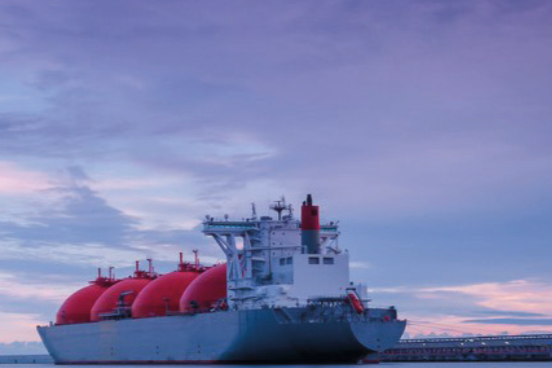
The operational consequences of the crisis became visible in early March when QatarEnergy suspended production of liquefied natural gas (LNG) and associated products amid the deteriorating regional security environment.
On March 4, 2026, the company declared force majeure on LNG deliveries, notifying buyers that shipments could not be guaranteed under prevailing conditions.
Shortly afterward, Qatar’s energy minister Saad al-Kaabi warned that the disruption could spread across the Gulf energy system if tensions persist. Exporters across the region could be forced to suspend shipments if maritime access through the Strait of Hormuz remains constrained.
The remarks carried immediate weight in global markets. Qatar is among the world’s largest LNG exporters, and disruptions to its supply chain have direct implications for European and Asian gas markets.
Traders reacted quickly. Brent crude futures moved above US$89 per barrel by March 6, 2026, as markets began pricing the possibility of broader export interruptions.
Some analysts warn that a sustained shutdown of Gulf exports could push prices significantly higher. Al-Kaabi suggested that if shipments across the region were halted, oil prices could potentially reach US$150 per barrel.
The Return of the “War Risk Premium”
The price surge observed in early March reflects the re-emergence of what traders describe as the “war risk premium” in global oil markets.
Analysts estimate that geopolitical tension could add roughly US$10–12 per barrel to the Brent benchmark. This premium reflects expectations that conflict, infrastructure damage, or transport disruption could suddenly remove supply from the market.
The situation also highlights a structural feature of modern energy systems. Oil production capacity depends not only on geology or field output but also on the stability of infrastructure that transports crude from producing regions to refining centres.
When pipelines, export terminals, or maritime corridors are disrupted, oil that exists in reserves or storage cannot easily reach international markets. Under such conditions, the physical market tightens even when production capacity elsewhere remains available.
The crisis surrounding the Strait of Hormuz illustrates this dynamic. Hydrocarbon reserves across the Gulf remain substantial, yet when vessels cannot safely transit the corridor those barrels effectively disappear from the global trading system.
Prices therefore respond not only to production volumes but also to the reliability of the logistical networks linking producers to consumers.
Refining Geography and Supply Security
While geopolitical tensions have dominated headlines, structural shifts in refining capacity are also reshaping the global energy map.
Regions capable of processing crude domestically are increasingly insulated from disruptions affecting long-distance fuel supply chains. Across the Atlantic Basin, several emerging refining hubs are beginning to alter product flows.
In West Africa, Nigeria’s Dangote Refinery reached its full nameplate capacity of 650,000 barrels per day in February 2026. Located in the Lekki Free Zone, the facility produces approximately 75 million litres of gasoline per day, reducing Nigeria’s dependence on imported fuels.
Expansion plans are underway. Phase two of the project aims to increase refining capacity to approximately 1.4 million barrels per day by 2028 or 2029.
Ghana is also experiencing change within its downstream sector. The Tema Oil Refinery continues to function as the country’s primary storage backbone, maintaining capacity exceeding 1 million m³.
Alongside it, Sentuo Oil Refinery Limited has expanded rapidly. According to the Chamber of Bulk Oil Distributors 2024 Petroleum Sector Report, output increased from 86,877 metric tonnes in 2023 to 312,070 metric tonnes in 2024, representing a 260% increase.
Operating as a 40,000 barrels per day hydrocracking refinery, Sentuo has supplied the domestic market since June 2025 and plans to expand capacity to 120,000 barrels per day.
Meanwhile, Angola joined the regional refining expansion in March 2026 when the Cabinda Refinery began marketing its first commercial petroleum products. The facility’s initial phase provides refining capacity of 30,000 barrels per day.
A More Fragmented Energy System
Taken together, the developments of early 2026 suggest the emergence of a more fragmented and geopolitically sensitive global oil system.
Strategic maritime corridors such as the Strait of Hormuz exert disproportionate influence on global energy markets. Even partial disruption can trigger rapid price adjustments.
At the same time, the concept of surplus supply depends heavily on infrastructure stability. Oil that cannot move through pipelines, ports, or shipping lanes effectively disappears from the physical market.
Refining capacity is therefore becoming a stabilising element within the global energy architecture. Countries capable of processing crude domestically can reduce exposure to disruptions in long-distance fuel supply chains.
For energy markets, the lesson of Q1 2026 extends beyond a temporary price spike. The global oil system has entered a period in which geopolitical tension, financial infrastructure, and transport logistics play decisive roles in determining the price of the barrel.
As tankers wait offshore and markets recalibrate supply risk, the energy grid that powers the modern world appears increasingly interconnected, contested, and politically charged.
