
Controlled Waters: Hormuz Reopens on Paper, Rewired in Practice
The Strait of Hormuz is moving again—but not freely. In the fragile aftermath of a ceasefire meant to restore global energy flows, a new system of controlled passage has taken hold, rerouting ships, conditioning access and reshaping the rules of one of the world’s most critical energy chokepoints. What was expected to be a reopening is fast emerging as something far more consequential: a test case for how strategic waterways can be governed, monetised and leveraged in a fractured geopolitical order.
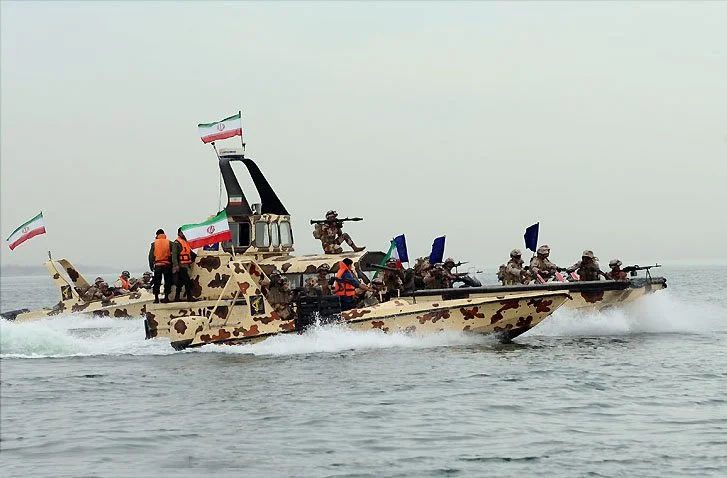
Strait of Hormuz | April 10, 2026 - Few ships are testing the Strait of Hormuz.
That stark reality sits in direct tension with President Donald Trump’s call for a “complete, immediate and safe opening” of the waterway as a condition for his two-week ceasefire. On the water, however, a different regime has taken hold—one defined not by openness, but by protocol.
According to a marine radio transmission shared with The Wall Street Journal, vessels anchored near the strait were instructed to seek clearance from the Islamic Revolutionary Guard Corps (IRGC) Navy before attempting passage—or risk destruction. The message was unambiguous: transit is no longer assumed; it is granted.
From Ceasefire to Conditional Access
The sequence that produced this moment traces back to the February–April conflict, when, according to Iranian media and subsequent analyst interpretation, anti-ship mines were deployed across parts of the Strait’s main shipping lanes as a defensive measure. Those same mine risks are now being cited as the basis for a new transit architecture.
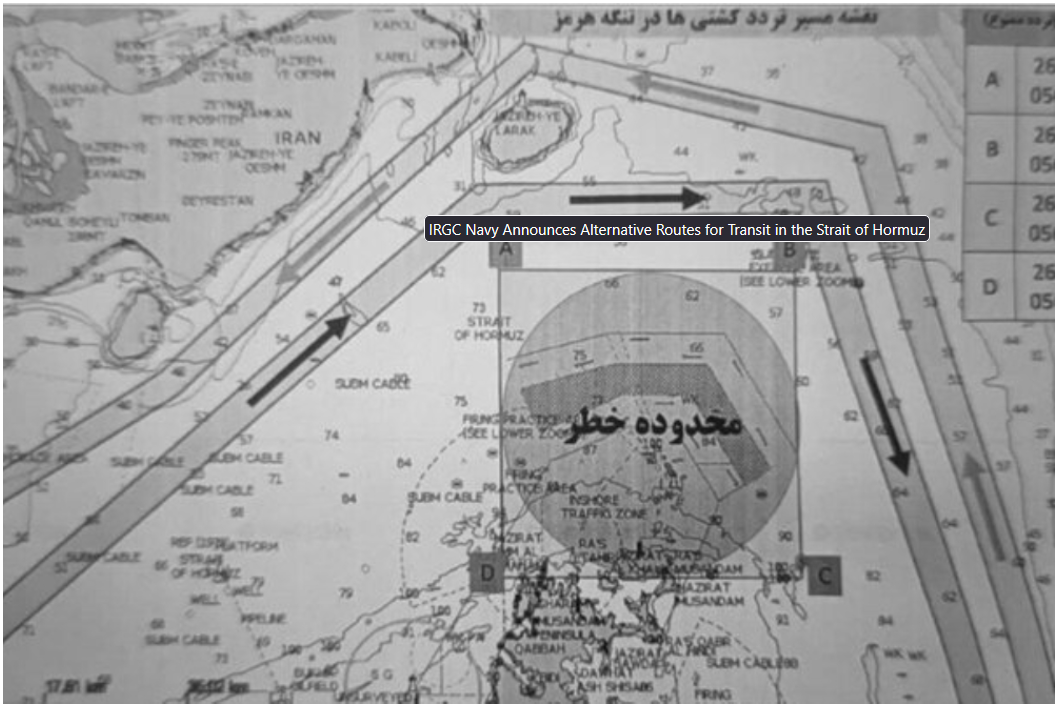
Within hours of the ceasefire announcement—widely expected to restore flows—the IRGC Navy issued a directive rerouting commercial traffic through newly designated corridors near Larak Island. Iranian state-linked media framed the shift as a safety measure to avoid “the presence of various types of anti-ship mines in the main traffic zone.”
The geometry of the revised Traffic Separation Scheme is deliberate. Both inbound and outbound lanes now arc north of traditional routes, cutting into Iranian territorial waters. The effect is twofold: vessels avoid reportedly mined zones, but in doing so, enter a tightly controlled channel under direct IRGC supervision.
The Alternative Route Gambit
What is emerging is not merely a workaround, but the early contours of a system.
Analysts describe a layered process that begins well before a vessel reaches Hormuz. Operators are understood to submit detailed documentation—including IMO numbers, cargo manifests, ownership structures and crew lists—through intermediaries linked to Iranian authorities. Clearance, in this account, is conditional and sequenced.
Once approved, vessels are issued route instructions and clearance codes, then guided through the corridor under patrol escort—“one ship at a time”, as described in analyst commentary tracking early movements through the channel.
Initial throughput remains sharply constrained. Early estimates suggest between 15 and 20 vessels completed transit in the first 24 hours following the directive, compared with a pre-conflict daily average of roughly 138. Separate tracking indicates that hundreds of vessels remain queued outside the strait, awaiting access or clarity on passage conditions.
Commercial terms remain contested and opaque. Analysts estimate that transit under this system may involve per-barrel charges, with some suggesting settlement mechanisms denominated in non-dollar channels, including yuan or digital assets. These claims, however, remain unverified by independent or official sources.
Gulf states have rejected any such fees as unlawful. Japan’s prime minister has characterised the strait as an international public good, while regional officials, including Oman’s transport authorities, have pointed to international agreements prohibiting the imposition of transit charges. None of this, however, appears to have halted the practical enforcement of controlled passage in the affected lanes.
Law, Leverage, and the Limits of Navigation
The legal fault line is clear. Under the United Nations Convention on the Law of the Sea (UNCLOS), the Strait of Hormuz constitutes a transit passage where freedom of navigation is guaranteed.
Dr Sultan Al Jaber, UAE Minister of Industry and Advanced Technology and ADNOC Group Chief Executive, was unequivocal: “The Strait of Hormuz is not open. Access is being restricted, conditioned and controlled.”
“Conditional passage is not passage. It is control by another name.”
His intervention reflects mounting pressure from producers and consumers alike. An estimated 230 oil-laden vessels remain ready to sail, while the final cargoes that exited before the conflict are only now arriving at their destinations—exposing what he described as a 40-day gap between paper markets and physical supply.
“The immediate priority is clear: close that gap,” he said, warning that each day of restricted access compounds supply delays, tightens markets and amplifies price pressures—particularly across Asia, which absorbs the bulk of Hormuz-bound flows.
Controlled, Not Closed
What has emerged is a distinction with far-reaching implications.
A closed strait halts trade and invites confrontation. A controlled strait does something more subtle: it channels flows, introduces conditions of access and, potentially, creates mechanisms for revenue extraction—all without formally declaring a closure.
Analysts argue that the current configuration—routing vessels through narrowly defined corridors under direct supervision—could, if sustained, begin to reshape the operational norms of one of the world’s most critical energy chokepoints. In this framing, the risks associated with mines necessitate coordination; that coordination, in turn, creates a structure through which access is managed.
Much remains uncertain. Mine clearance timelines are unclear, and the durability of the alternative routes will depend on both security conditions and international response. Likewise, the extent to which reported payment mechanisms or clearance procedures become institutionalised remains to be seen.
What is clear is that the Strait is not functioning as it did before the conflict. President Trump declared it open. In practice, it is operating under a system of conditional access—where movement is possible, but no longer presumed.
