
A Strait in the Crosshairs: Kill Order Lands as Oil Choke points Tighten and Seizures Multiply
The world’s most critical oil artery is no longer governed by charts and conventions, but by crosshairs and calculation. In the span of days, the Strait of Hormuz has shifted from a contested passage to a pressured corridor where tankers are fired upon, sanctioned cargo is hunted across oceans, and storage bottlenecks at Kharg Island are tightening the economic vise. With President Trump now authorising lethal force against perceived threats at sea, the crisis has entered a phase where enforcement is counted in barrels, not warnings, and where a fifth of global oil supply moves, if at all, under the shadow of escalation.
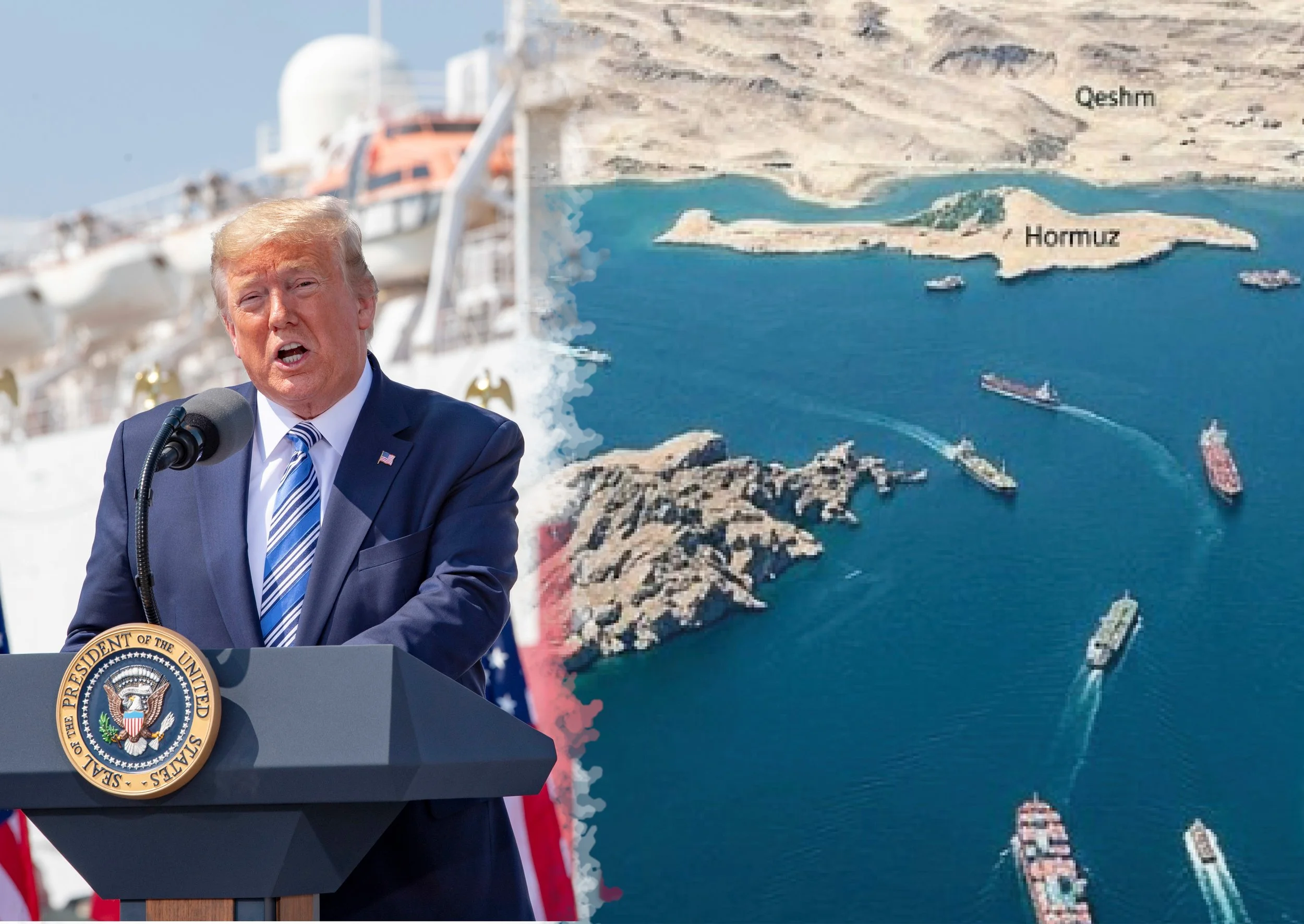
Strait of Hormuz | April 24, 2026 - On April 23, President Donald J. Trump ordered U.S. naval forces in the Strait of Hormuz to “shoot and kill any boat” engaged in mine-laying operations, while tripling ongoing clearance efforts. The instruction did not escalate a stable situation. It formalised one already spiralling, where Iranian interdictions, U.S. blockade enforcement, and collapsing commercial confidence had compressed the Strait into a corridor governed by force, not protocol.
And yet, even now, ships are still moving.
April 17–19: A Strait That Fractured Faster Than It Closed
The opening phase of the crisis unfolded as a contradiction. Washington and Tehran publicly aligned on keeping the Strait open under ceasefire conditions, with Abbas Araghchi signalling that commercial transit could proceed. Within a day, an IRGC-attributed broadcast asserted that passage required military authorization, effectively overriding diplomatic assurances.
Traffic initially held before tipping into confrontation. By April 18, vessels were being fired upon, including a fully laden VLCC carrying nearly 1.85 million barrels. The following day, the United States shifted from posture to action, intercepting the Iranian-linked Touska in the Gulf of Oman, disabling and boarding it after non-compliance. At the same time, dozens of vessels were forced to turn back under a tightening blockade.
By the end of April 20, the Strait had not closed, but it had changed character. Transit collapsed, oil prices surged, and risk replaced routine as the governing logic of movement.
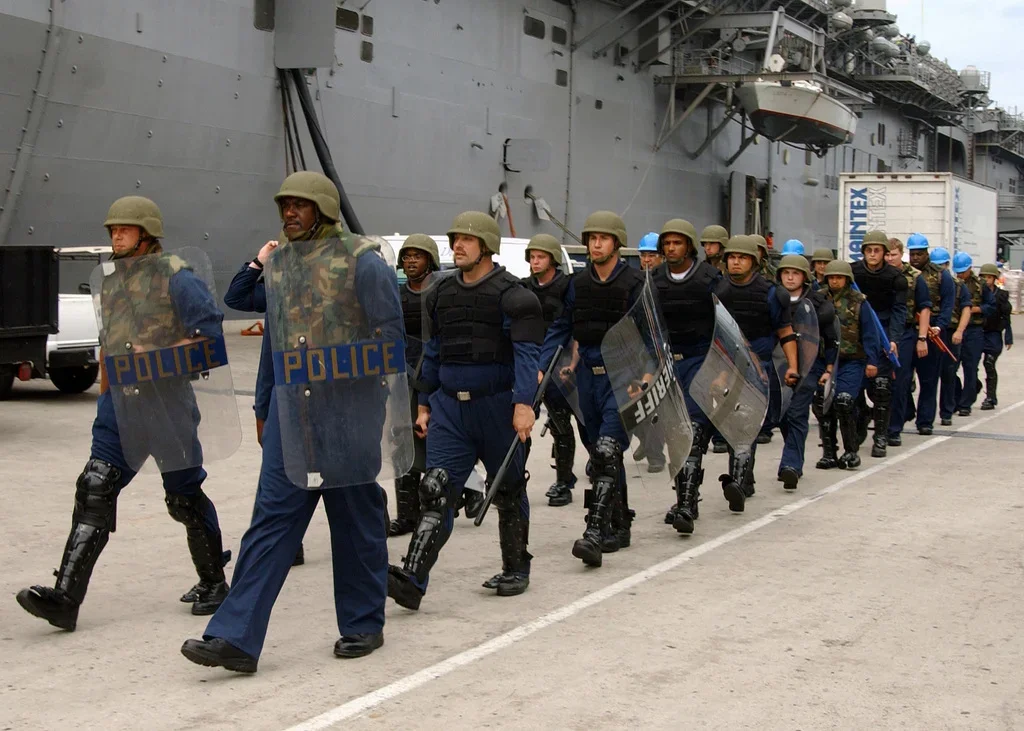
Kharg Island: The Real Chokepoint Emerges
While attention remained fixed on the Strait, the constriction began to crystallise at Kharg Island.
Export data between April 13 and 19 showed a sharp collapse. Roughly 3 million barrels cleared the terminal over the week, far below the typical 8 million. On April 18, satellite imagery captured a near-unprecedented pause in loading activity. No active transfers. No outbound momentum.
By April 20, activity resumed, but only partially. A single large tanker loaded approximately 2 million barrels. The system was not recovering. It was rationing throughput.
The strain extended beyond throughput into storage. With exports constrained under the U.S. blockade, crude began to accumulate. Iran responded by reactivating aging infrastructure, including NASHA, a 30-year-old VLCC brought out of dormancy to function as floating storage. Even that adaptation showed inefficiency, with transit speeds and turnaround times reflecting a system under mechanical and logistical stress.
Kharg was no longer just a terminal. It has become a pressure chamber, the kind the US has been engineering with the blockade of Iranian ports.
April 21: Pressure Turns Inward
As maritime disruption deepened, the internal Iranian picture grew more complex. Reports suggested that senior figures, including Abbas Araghchi, were operating under constraint, while the IRGC consolidated operational control, particularly at sea, with zero certifiable indication of the actual figure running Iran.
Public messaging attempted to project unity. Coordinated statements from political leadership emphasized alignment with the principles of the Islamic Revolution, repeating a common refrain of singular direction and purpose.
Yet the choreography itself pointed to underlying strain, with competing factions seeking to define the state’s response to mounting external pressure, further amplified by the crateringof the relationship between Iran its neighbours - the Gulf Cooperation Council (GCC) member states. This is in the backdrop of Iran threatening to destroy energy and associated infrastructure in these same states, should hostilities resume or when they deem it fit.
For Tehran, the Strait had become both leverage and liability. Closing it amplifies global disruption. Opening it relieves pressure on an economy losing hundreds of millions of dollars daily under blocked exports.
April 22–23: Seizures, Convoys, and the Expansion of Enforcement
By April 22, transit remained unstable, fluctuating in single digits. Vessel presence across the Gulf rose again, suggesting a tentative re-entry of traffic, but without any restoration of predictability.
Then came April 23.
IRGC naval forces escalated decisively, opening fire on multiple vessels within a convoy that had been operating in the Gulf since before the conflict. The Greek-owned Epaminondaswas targeted after reportedly ignoring warnings. A second vessel, Euphoria, was stopped under fire. The Panama-flagged MSC Francesca was also intercepted.
Iranian authorities confirmed the seizure of at least two vessels, citing unauthorized navigation and tampering with tracking systems. The convoy itself told a deeper story. Several companion ships successfully crossed the Strait, some doing so with transponders switched off, reinforcing the emergence of dual-layer maritime activity: compliant traffic and covert passage.
The operational message has become unmistakable. There is no safe perimeter. The enforcement net follows the cargo - a message captured solidly with the latest in Operation Economic Fury’s maritime results.
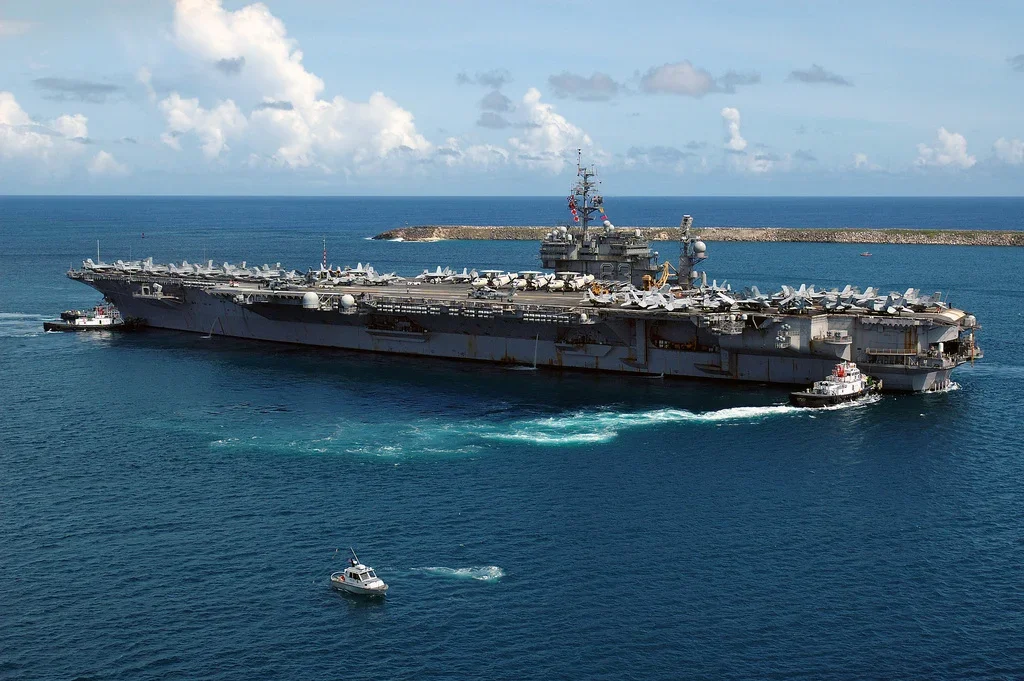
The enforcement architecture underpinning the U.S. blockade on Iranian oil has expanded decisively beyond the Strait of Hormuz, with the United States Central Command confirming on April 24 that it has directed 34 Iranian or Iran-linked vessels to turn around or return to port since the blockade began on April 13, and for the first time in history, three US aircraft carriers and their strike groups operating in the Middle East simultaneously.
That widening net has been matched by kinetic interdictions at sea. At least four sanctioned vessels have been boarded or intercepted east of the blockade line in the Indian Ocean in recent days, with open-source reporting suggesting a possible fifth. In each case, the vessels share a consistent profile: sanctioned status under OFAC designations and active involvement in transporting Iranian crude outside formal tracking systems.
The most recent enforcement actions underscore the scale and specificity of the campaign.
The Majestic X (IMO 9198417), a sanctioned oil tanker intercepted in the Bay of Bengal on April 23, was carrying Iranian crude and has a documented history of disguising its operations under false flag registration, including prior activity under a Guyanese flag. The vessel had been integrated into Iran’s broader export workaround network before being boarded by U.S. forces.
On the same operational cycle, the Deep Sea (IMO 9357353) was intercepted while partially loaded with Iranian crude. The vessel had been operating with its AIS transponder disabled since March 22, a pattern consistent with deliberate attempts to obscure routing and cargo movement.
The Sevin (IMO 9357353), also sanctioned, was carrying approximately 650,000 barrels of Iranian oil at the time of interception. Like the Deep Sea, it had maintained AIS silence for over a month, having switched off tracking systems on March 15.
Further south, the Iranian-flagged Dorena (IMO 9569669) was intercepted under U.S. Navy destroyer escort in the Indian Ocean after attempting to run the blockade. The vessel was carrying a full cargo of 2 million barrels of oil, representing one of the largest single-capture volumes in the current enforcement cycle.
Reporting also indicates that the Iranian-flagged Derya (IMO 9569700), another OFAC-sanctioned tanker, may have been intercepted while transporting crude after departing the Gulf on March 9, though its final status remains under verification.
Navigating Schroedinger’s Strait
Despite sustained confrontation, the Strait has not fully shut. Between April 20 and 22, vessels continued to pass in fluctuating numbers, sometimes rebounding, sometimes collapsing again. Fleet composition remains diverse, and movement, though constrained, persists.
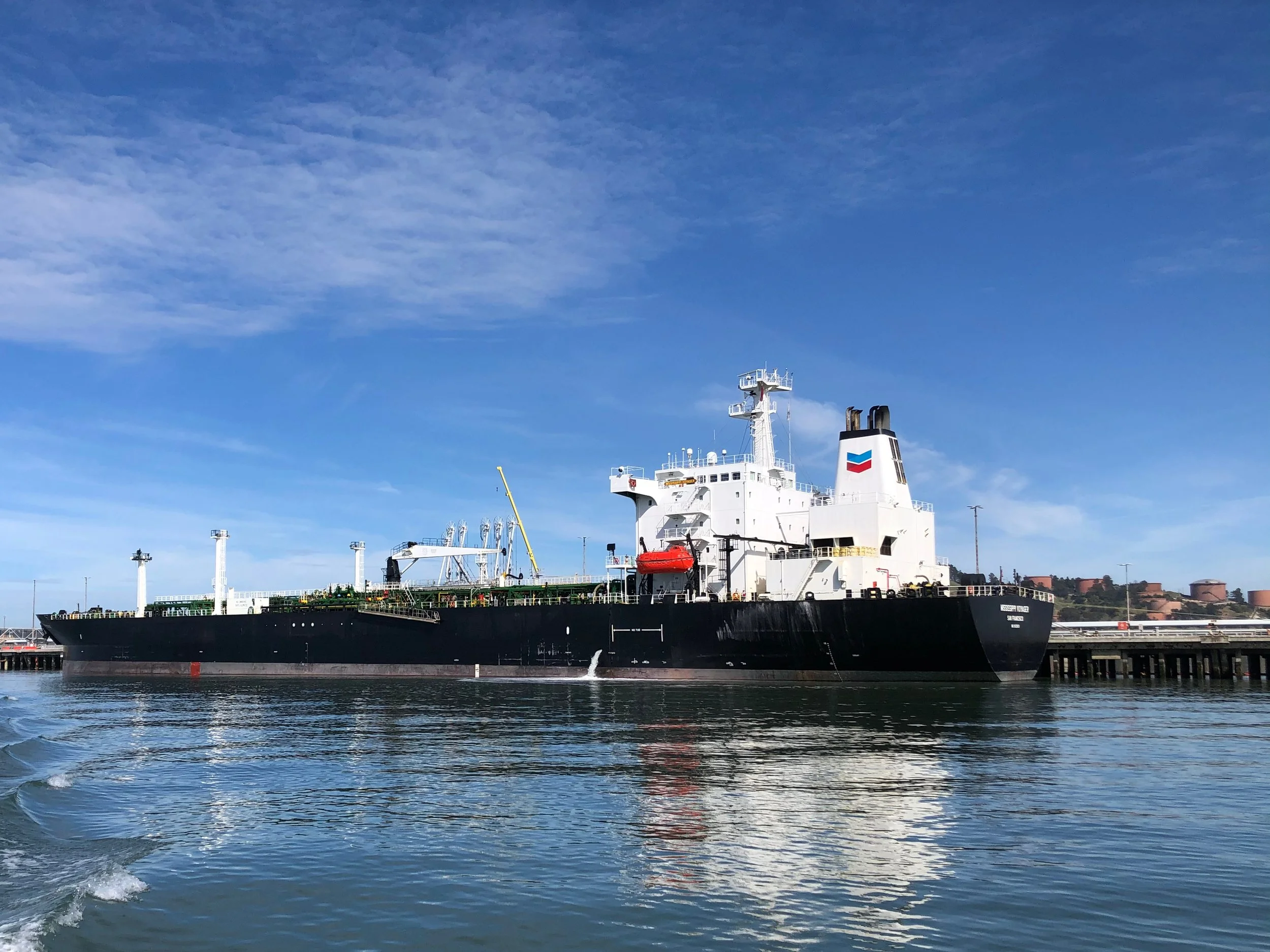
Activity on April 22 staged a modest recovery, but the underlying instability remained intact. Nine vessels completed the transit, with six entering the Gulf and three exiting, a movement pattern that reflected caution rather than confidence. Inbound traffic included two tankers under Mali and Bahamas flags alongside a mix of cargo vessels registered in Liberia, Cameroon, India, and Comoros. Outbound movement was thinner, consisting of a Panama-flagged LPG tanker, a Panama-flagged container ship, and a bulk carrier sailing under the Marshall Islands flag, all maintaining active AIS signals as they cleared the corridor.
Across the wider Gulf, vessel presence climbed to 868, suggesting a tentative re-entry after the previous day’s drawdown. Panama continued to dominate the registry mix, followed by Comoros, Iran, the Marshall Islands, Liberia, and the UAE, while the fleet composition underscored the breadth of exposure, spanning bulk carriers, product and crude tankers, container ships, gas carriers, and chemical vessels.
Beneath that visible movement, the shadow layer thickened again. Dark activity rose to 132 recorded instances. Ships now transit through a corridor defined by overlapping threats: interdiction, seizure, miscalculation, and sudden escalation. AIS suppression, convoy behaviour, and flag dispersion have become tools of navigation as much as charts and coordinates.
The system is no longer governed by commercial logic. It is governed by risk tolerance.
Conclusion: Pressure Concentrating at Chokepoints
The April 23 shoot-to-kill order did not reshape the battlefield. It acknowledged where it already stood.
The visible crisis sits in the Strait, where ships are harassed, fired upon, and seized. The structural crisis sits behind it, at Kharg Island, where constrained exports, rising storage pressure, and improvised logistics are tightening the economic and military vise on Iran. That calculus remains unchanged; in fact, it has only intensified with the continuing seizure of Iranian vessels.
Between those two points, the global oil system is being forced into adaptation under extreme conditions.
Amid talks of a possible new round of talks in Islamabad, the Strait remains open, Kharg remains constrained, and between them lies a narrowing channel where a fifth of the world’s oil flows are no longer assured, only negotiated passage by passage.
