African Development Bank’s SEFA Opens Green Hydrogen Pipeline as Africa Eyes Industrial Leap
The African Development Bank has moved to operationalise Africa’s green hydrogen ambitions, opening a competitive financing window under SEFA that targets one of the sector’s most persistent bottlenecks: getting projects from concept to bankability. Backed by German capital and structured around reimbursable grants, the programme places early-stage project development—often the missing middle in Africa’s energy pipeline—at the centre of a broader push to anchor new industrial value chains while advancing the continent’s energy transition.
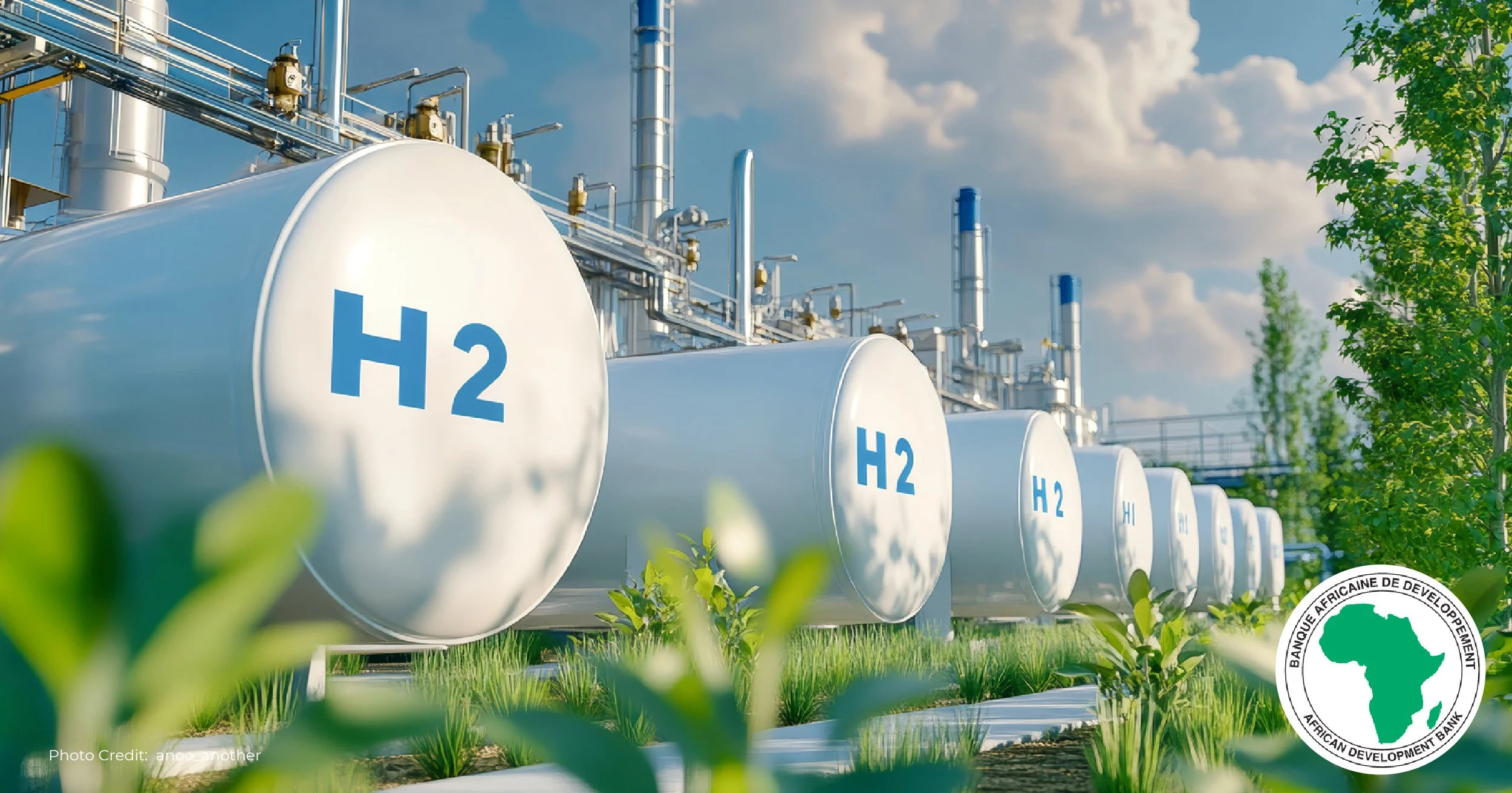
Abidjan, La Côte D’Ivoire | April 29, 2026 - The African Development Bank’s Sustainable Energy Fund for Africa (SEFA) has launched a Call for Proposals under its newly established Green Hydrogen Programme, opening a tightly structured financing window aimed at accelerating green hydrogen and derivative projects across the continent.
The programme marks a deliberate pivot by the Bank toward early-stage de-risking in an emerging sector widely viewed as critical to decarbonising heavy industry while anchoring new domestic and international value chains. Private sector developers of green hydrogen and derivative projects are now eligible to compete for pre-investment support of up to $20 million, to be allocated across three to five top-ranked projects following due diligence.
A Targeted Push Into Bankability
The architecture of the programme reflects a clear focus on one of the sector’s defining challenges: advancing credible projects beyond early-stage development into financeable pipelines. Financing will be deployed primarily as reimbursable grants—an instrument calibrated to bridge the costly, high-risk development phase that typically stalls projects before Final Investment Decision.
Eligible activities include feasibility studies, front-end engineering design, and transaction advisory services—precisely the inputs required to transition projects from conceptual pipelines into finance-ready assets. Applicants are expected to be registered private sector entities operating in African Development Bank Regional Member Countries, with projects demonstrating access to renewable resources, land and water, as well as clear pathways to domestic or international offtake markets.
“Green hydrogen represents a real opportunity for Africa, both to decarbonise hard-to-abate industries and to build new value chains, while contributing to socio-economic development,” said Daniel Schroth, Director of Renewable Energy and Energy Efficiency at the Bank. He added that the programme is “designed to contribute to the transition of projects from development to bankability, considering the rigour that is required in supporting an emerging sector.”
From Donor Capital to Strategic Deployment
The Green Hydrogen Programme is not an isolated intervention but the latest evolution of SEFA’s catalytic finance model. Seeded with funding from the German government and approved at the end of 2025, the initiative builds on SEFA’s broader mandate as a multi-donor facility designed to crowd in private capital.
Managed by the African Development Bank, SEFA operates at the intersection of technical assistance and concessional finance, targeting market failures that inhibit renewable energy investment. Its donor base—spanning European governments, the United States, Japan, and multilateral partners—has historically underwritten early-stage risk to unlock downstream capital flows.
The hydrogen push extends that logic into a frontier segment, where capital intensity, technology uncertainty, and fragmented regulatory frameworks have slowed deployment despite Africa’s competitive renewable resource base.

Positioning Within a Broader Energy Strategy
The programme’s timing aligns with a broader continental push to reconfigure Africa’s energy system—not only to expand access but to reposition the continent within future global energy markets.
Under initiatives such as Mission 300—a joint effort between the African Development Bank and the World Bank Group—Africa is targeting the connection of 300 million people to electricity by 2030, while catalysing private investment and modernising energy infrastructure. Within that framework, green hydrogen offers a complementary pathway: enabling industrial decarbonisation while creating export revenues that can, in turn, support broader energy system expansion.
Critically, the private sector sits at the centre of this strategy. The Call for Proposals underscores the Bank’s expectation that commercially viable hydrogen projects will be developer-led, with public finance instruments deployed selectively to improve risk-return dynamics rather than substitute for private capital.
A Compressed Timeline for Developers
The application window opens on 10 April 2026 at 09:30 GMT, with submissions due by 11 May 2026 at 17:00 Abidjan time via SEFA’s dedicated platform. The compressed timeline signals both urgency and selectivity, with only three to five projects expected to advance.
For developers, the stakes are high: successful applicants secure not just financing, but a pathway into one of the most strategically positioned segments of the global energy transition.
The Emerging Signal
The launch sends a clear signal to the market. Africa’s hydrogen ambitions are moving beyond policy rhetoric into structured capital deployment—albeit cautiously, and with a sharp focus on project fundamentals.
If executed effectively, the programme could begin to close the persistent gap between Africa’s theoretical hydrogen potential and its investable pipeline—a gap that has, until now, defined the sector.
In that sense, SEFA’s intervention is less about scale in the immediate term and more about sequencing: identifying credible projects, advancing them through development bottlenecks, and establishing the early benchmarks that will determine whether Africa can compete in the global hydrogen economy.
