
Trump Halts Iran Strike as Strait Crisis Spirals into Fragmentation, Firepower, and Financial Siege
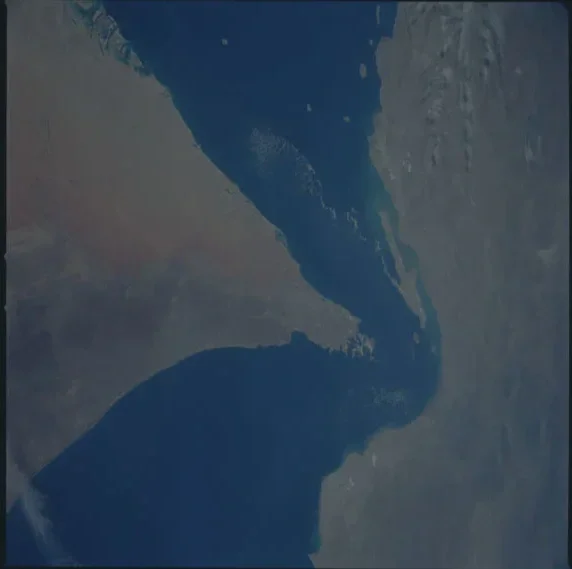
Five days. That is all it took for the world’s most critical oil artery to unravel once again into a theatre of warning shots, boarded vessels, and dueling chains of command. What began as a coordinated signal to keep the Strait of Hormuz open has collapsed into a volatile standoff defined by live fire at sea, a widening U.S. naval blockade, and signs of fracture at the very top of Iran’s leadership. Now, with President Trump abruptly suspending planned military strikes, the conflict enters a tense intermission, one where the ships are stalled, global oil flow is stranded, and the next move could redraw the energy map and geopolitical matrices overnight.
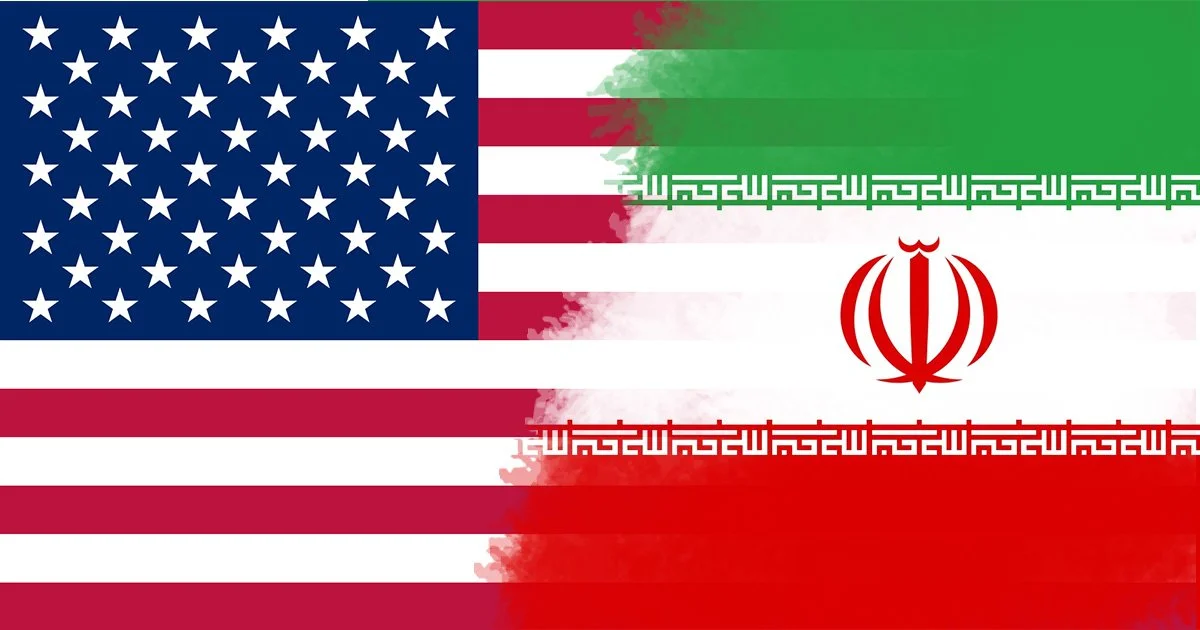
Strait of Hormuz | April 22, 2026 - The signal, when it came, was not de-escalation so much as suspension. Late Tuesday, Donald J. Trump announced that planned U.S. military strikes on Iran would be held in abeyance, citing a “seriously fractured” Iranian government and a request from Pakistan’s military and political leadership to allow time for a unified negotiating position to emerge. The blockade stays. The ceasefire stretches. The war, in effect, pauses mid-breath.
Behind that decision lies five days in which the Strait of Hormuz ceased to behave like a maritime corridor and instead resembled a contested instrument panel of global power, flickering between open declarations, live fire, and internal rupture inside Tehran. This is a break down of
April 17–18: The Strait Opens, Then Splinters
The crisis begins with a contradiction dressed as coordination.
On April 17, both Washington and Tehran signaled that the Strait would remain open under the terms of the ongoing ceasefire. Iran’s Foreign Minister, Abbas Araghchi, publicly aligned with this posture, indicating that commercial transit could proceed along designated routes.
Within 24 hours, that position was undercut from within Iran’s own command structure.
A VHF broadcast attributed to the Islamic Revolutionary Guard Corps declared the Strait effectively closed, asserting that passage required explicit IRGC authorization and warning that vessels linked to Iran’s adversaries would be targeted. The message was less about navigation than authority. Control of the Strait, it implied, did not sit with diplomats.
The market hesitated. Operators recalibrated. Yet traffic still moved.
On April 18, 35 vessels transited the Strait, including 12 tankers, a residual pulse of normalcy in a system already destabilizing.
By mid-morning, that illusion collapsed.
An India-flagged VLCC, SANMAR HERALD, carrying approximately 1.848 million barrels of crude, came under direct fire from IRGC gunboats northeast of Oman despite reportedly holding Iranian clearance. Within hours, a container vessel was struck by a projectile, and another India-linked bulk carrier, JAG ARNAV, aborted transit after a near-miss.
No major casualties were recorded. The strategic effect was immediate. The Strait had crossed from contested to kinetic. Many other such incidents would follow, effectively shutting the strait down.
April 19: Retaliation, Blockade, and First Blood at Sea
Washington responded with escalation wrapped in enforcement language.
President Trump accused Iran of violating the ceasefire, warning that continued aggression would trigger systematic strikes on Iranian infrastructure. Simultaneously, the United States reinforced its maritime posture, maintaining a blockade that had already begun redirecting global shipping flows.
At least 28 vessels were ordered to turn around.
Then came the moment that reset the rules of engagement.
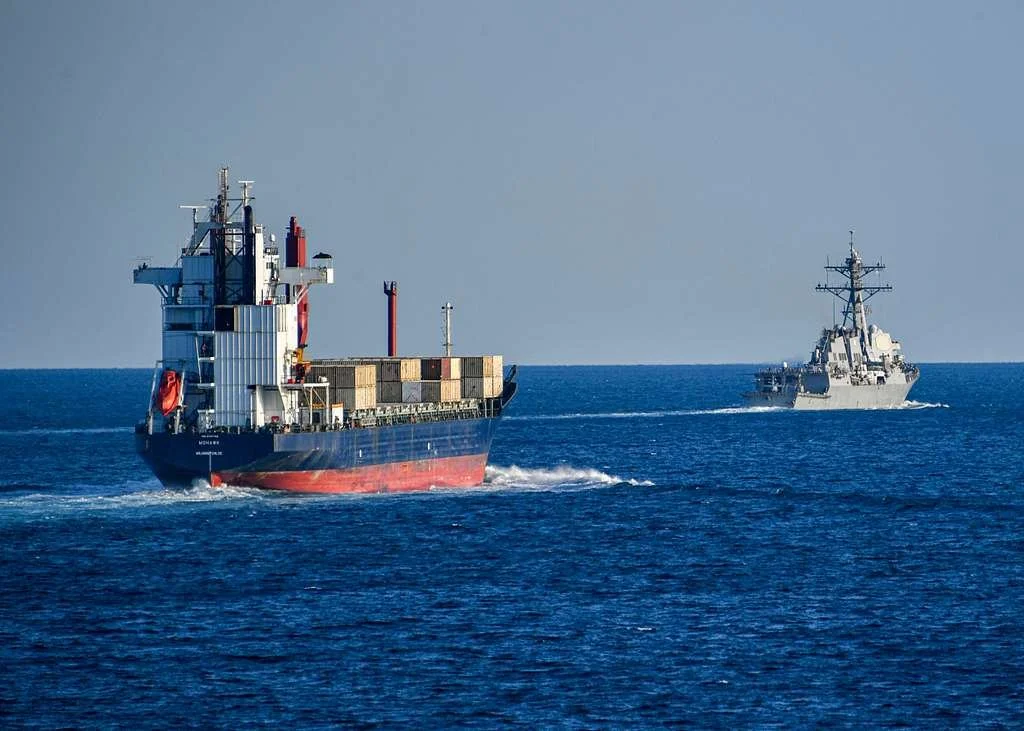
The Iranian-flagged cargo vessel TOUSKA, sanctioned and linked to Iran’s shipping network, attempted to run the blockade en route to Bandar Abbas. It was intercepted in the Gulf of Oman by the U.S. Navy destroyer USS Spruance. After failing to comply with repeated orders, U.S. forces disabled the vessel’s propulsion with naval gunfire before boarding it. Marines took custody.
This was the first kinetic U.S. interdiction of an Iranian-linked vessel since the blockade began and, critically, the first outside the immediate Strait. Enforcement had expanded geographically and operationally, with another Iran-linked container ship being boarded and seized by the US shortly thereafter
By the week’s debut, maritime intelligence painted a stark picture. Transit through Hormuz collapsed to just three vessels. Brent crude surged back to $100.63 per barrel, up from $71.32 before the conflict’s escalation in late February. Roughly 20 percent of global oil flows now sat behind a corridor that was technically open but functionally avoided.
April 20: The Strait Empties, the Gulf Reconfigures
If April 18 shattered confidence, April 19 and 20 erased it.
Transit activity fell to its lowest level since the blockade began. Just one inbound and two outbound crossings were recorded. Across the Gulf, 870 vessels remained in holding patterns, their movement dictated less by scheduling than by survivability.
The system adapted.
Iranian export behavior began shifting eastward. Seven VLCCs clustered near Chabahar, representing potential capacity of up to 14 million barrels. Ship-to-ship transfers and AIS “dark activity” persisted at scale, indicating that while formal flows were constrained, informal networks were compensating.
The U.S., for its part, expanded interdiction into the Gulf of Oman, signaling that enforcement would follow Iranian adaptation beyond traditional chokepoints.
The result was a maritime chessboard where each move redrew the board itself.
April 21: Pressure Mounts, Talks Stall, Tehran Fractures
Diplomacy faltered as quickly as it had been proposed.
Planned ceasefire talks failed to materialize. U.S. representatives had been dispatched to Islamabad, but no coherent Iranian negotiating position emerged.
Inside Iran, reports pointed to a more consequential development. Senior political figures, including Araghchi and parliamentary leadership, were said to be under house arrest, with the IRGC consolidating control. Whether fully verified or not, the narrative aligned with observable behavior: a state speaking in multiple, conflicting voices while its most powerful military institution asserted operational primacy.
Meanwhile, the economic vise tightened.
Iran’s oil exports, already constrained by sanctions, were now physically blocked. At an estimated $500 million per day in lost revenue, the financial hemorrhage carried strategic implications. Storage constraints loomed. Production shutdowns, if triggered, would ripple into military readiness and internal stability.
President Trump framed it bluntly: Iran was “collapsing financially,” with unpaid security forces and mounting fiscal strain.
The Strait, in this calculus, was Iran’s last lever. Closing it hurts the world. Opening it relieves pressure on its own economy. Either choice extracts a cost.
April 22: A Pause Over the Abyss
The decision to delay U.S. strikes arrives at this intersection of maritime paralysis, economic attrition, and political fragmentation.
Trump’s statement makes clear that the pause is conditional. The blockade remains intact. Military readiness is unchanged. The ceasefire is extended not as an endpoint, but as a waiting room for an Iranian system that may not currently possess the coherence to negotiate.
For energy markets, the implications are immediate and unresolved.
A corridor that carries one-fifth of global oil supply is operating at a fraction of capacity. Prices have already repriced risk sharply upward. Alternative routing, stock draws, and strategic reserves can cushion the shock, but not indefinitely.
For maritime operators, the Strait is no longer a question of legality but of liability. The capability to transit exists. The willingness does not.
And for the geopolitical balance, the past five days have revealed a conflict no longer defined solely by state-to-state confrontation, but by the internal fragmentation of one of its principal actors.
The guns have not gone silent. They have simply been instructed to wait.
