
TOR’s Compliance Surge: From Dormancy to Discipline, Refinery Ranks Second in MoF League Table
From the depths of operational strain to the upper tier of public financial discipline, Tema Oil Refinery’s latest ranking in the Ministry of Finance’s PFM Compliance League Table signals more than a statistical uplift—it marks a decisive shift in institutional credibility. Coming at a time when the refinery is steadily rebuilding throughput from 28,000 bpd with a defined pathway toward 60,000 bpd, the recognition reflects a broader turnaround story where governance reform, operational recovery, and policy alignment are beginning to converge into a single narrative of revival.
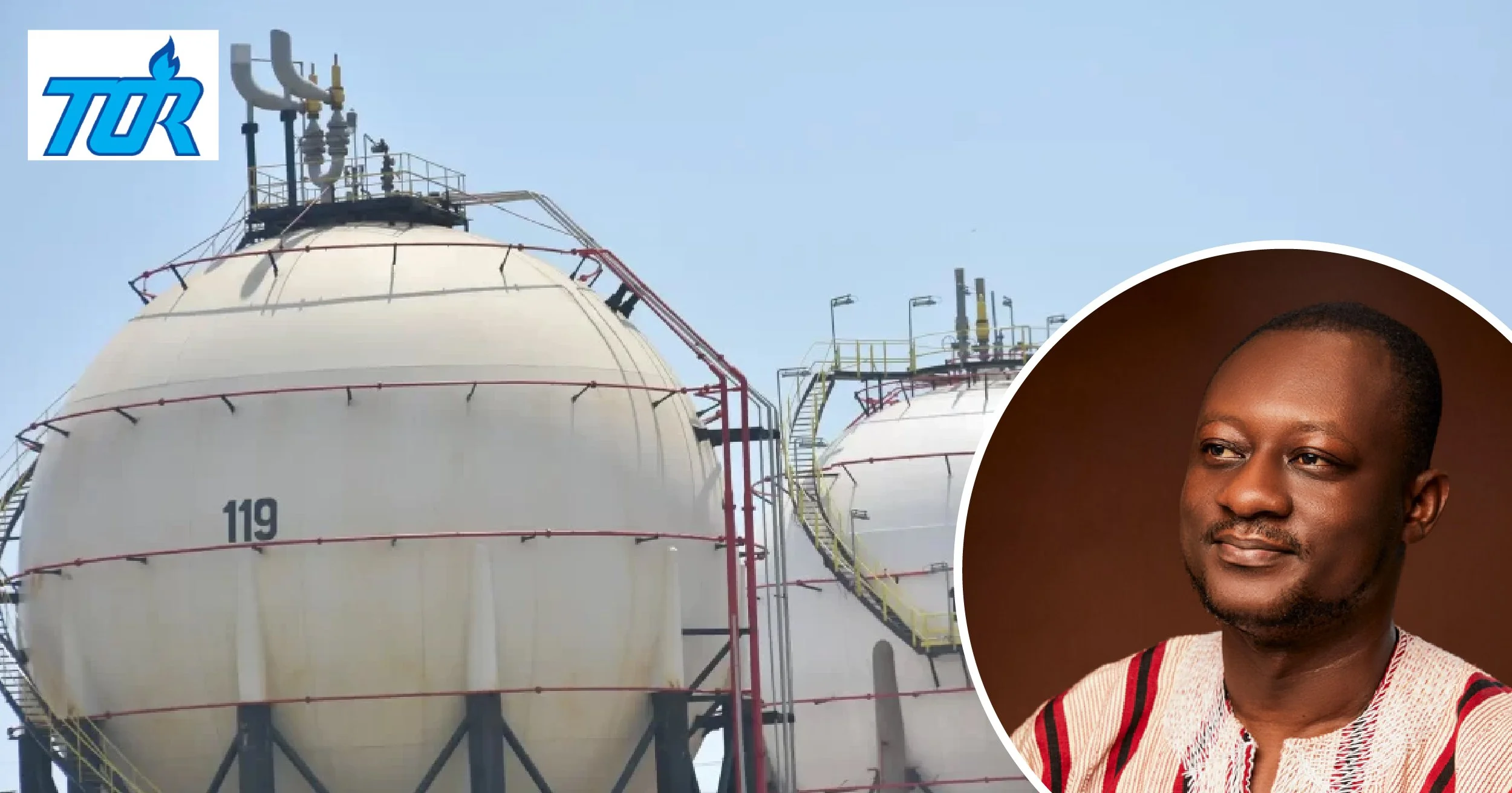
Industrial Area, Tema, Ghana | March 24, 2026 - Tema Oil Refinery (TOR) has secured a striking institutional endorsement—ranking second in the Ministry of Finance’s 2026 Public Financial Management (PFM) Compliance League Table—marking a pivotal moment in its ongoing operational and reputational rehabilitation.
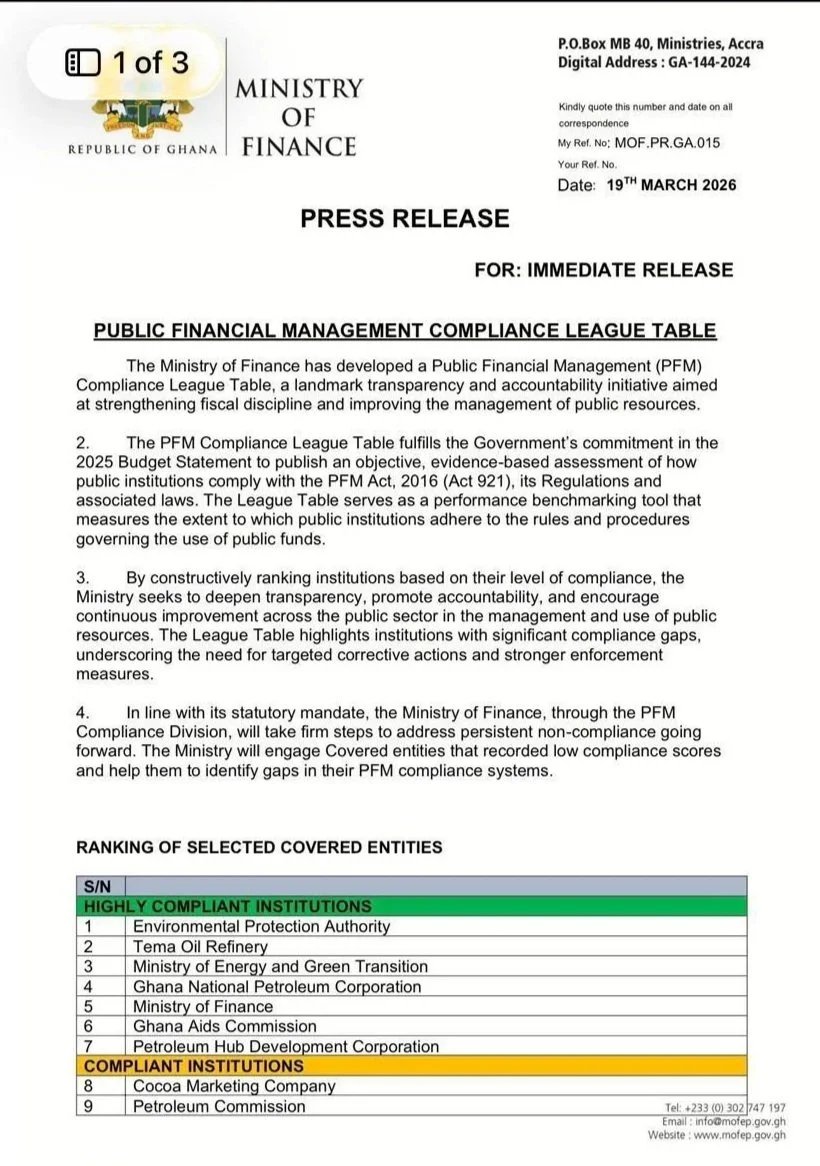
“We are pleased to announce to the general public our recognition as the second-best institution in the Financial Management Compliance League Table released on 19th March 2026 by the Ministry of Finance,” the refinery said in a statement, underscoring what it described as a “historic milestone in the history of the refinery.”
The ranking places TOR among the top-performing public institutions under the Ministry of Finance in adherence to financial management protocols—an outcome that would have seemed improbable just a few years ago, when the refinery was synonymous with operational paralysis, mounting debt, and governance lapses.
A League Table with Teeth
The PFM Compliance League Table is not merely ceremonial. Designed as a performance accountability instrument, it evaluates covered entities across core pillars of Ghana’s public financial management architecture—budget credibility, expenditure controls, financial reporting, and audit compliance. Institutions are scored against statutory obligations under the Public Financial Management framework, making the rankings a proxy for fiscal discipline and governance integrity.
Against this yardstick, TOR’s second-place finish signals more than compliance—it reflects an internal recalibration of controls, reporting discipline, and financial oversight mechanisms.
From Distress to Discipline—and Capacity Recovery
The ranking lands against the backdrop of a broader operational revival that has seen TOR transition from prolonged inactivity into a functioning downstream asset with defined throughput targets.
At present, the refinery operates at an estimated capacity of 28,000 barrels per day (bpd)—a level that, while below its design potential, represents a meaningful recovery from its previously constrained operational state. This baseline capacity provides the platform for incremental scale-up, as management aligns operational stability with financial and technical upgrades.
Strategically, TOR has outlined a phased expansion pathway: first to 45,000 bpd, its original nameplate capacity, and ultimately to 60,000 bpd. These targets point to a long-term ambition not only to restore the refinery’s original processing capability but to reposition it as a more material contributor to Ghana’s domestic fuel supply balance.
The chronology of this recovery is instructive.
Following years of inactivity and financial distress, TOR’s turnaround efforts began to take shape through renewed operational activity, workforce stabilisation, and institutional support. As refining activity resumed in earnest, the narrative gradually shifted from survival to strategic relevance—anchored on reducing reliance on imported refined products and strengthening downstream sovereignty.
This repositioning gained further traction as the refinery secured 1,144 direct jobs, reinforcing its role as both an industrial asset and an employment anchor within the Tema industrial enclave.
Governance as the Quiet Driver
Parallel to its operational reset, TOR appears to have undertaken a less visible but equally significant internal transformation: strengthening compliance and governance systems.
That internal discipline now appears to be bearing external validation. TOR’s statement following the PFM ranking emphasised collective effort and institutional alignment: “We are honored by this recognition, and on behalf of Management, Tema Oil Refinery extends its gratitude to all staff and stakeholders for their collective effort in achieving this historic milestone.”
The refinery further reaffirmed its posture going forward, stating that “TOR remains committed to compliance across all facets of good corporate governance.”
In the context of the PFM framework, such compliance is not cosmetic. It signals adherence to expenditure controls, timely and accurate financial reporting, and alignment with audit requirements—areas that have historically posed challenges for many state-owned enterprises.
A Revival with Policy Weight
TOR’s resurgence has not unfolded in isolation. Its operational and institutional recovery has been accompanied by broader policy attention and high-level acknowledgements that frame the refinery as part of Ghana’s downstream industrial strategy.
The cumulative effect of operational resumption, job creation, and improving governance has been a gradual re-legitimisation of TOR as a functioning national asset rather than a fiscal liability.
The Road Ahead
Despite the momentum, the trajectory remains conditional. Scaling from 28,000 bpd to 45,000 bpd—and eventually 60,000 bpd—will require sustained capital investment, technical upgrades, and consistent feedstock supply, alongside continued adherence to governance standards.
Equally, maintaining a top-tier position in the PFM Compliance League Table will depend on institutionalising the controls that underpin the current ranking, rather than treating it as an endpoint.
For TOR, the convergence of compliance credibility and capacity expansion now defines the next phase of its revival. The refinery’s recent ranking suggests that, for the first time in years, its financial governance and operational ambitions may be moving in tandem—an alignment that will be critical if its turnaround is to endure beyond headline milestones.
