
Protecting Safety, Revenue and the Grid: Energy Commission Tightens Port Surveillance at Tema
As Ghana accelerates its energy transition, the weakest link is no longer policy ambition but regulatory enforcement. The Energy Commission’s Board inspection of the Tema Port, prompted by uncovered lapses in licensing and standards compliance, places the spotlight on the port as a frontline of energy governance—where public safety, market integrity and state revenue are decided long before products reach consumers.
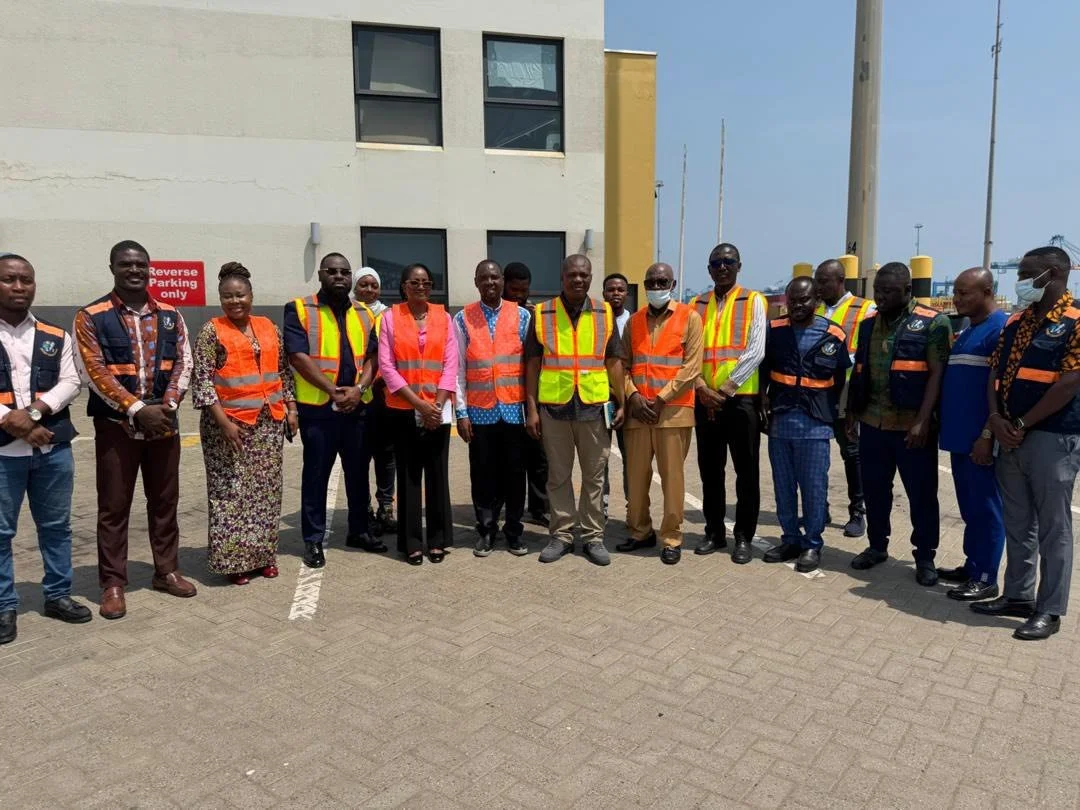
Tema Port, Ghana | February 10, 2026 - At Ghana’s busiest maritime gateway, where containers, capital goods and regulatory risk converge, the Energy Commission is making a deliberate point: enforcement begins at the border.
The Energy Commission’s Board—led by Chairman Professor John Gartchie Gatsi and accompanied by Executive Secretary Mrs Ing. Eunice Biritwum—undertook a working inspection of the Tema Port, focusing on the Commission’s regulatory footprint in the importation of electrical and renewable energy appliances. The visit, which covered Meridian Port Services’ Terminal 3 and the Golden Jubilee Terminal, was neither ceremonial nor routine. It was the culmination of an internal investigation into compliance failures at the port and an early test of a reconstituted Board’s mandate to tighten regulation across Ghana’s rapidly evolving energy transition value chain.
In regulatory terms, the message was unambiguous: the port is not a neutral transit space, but a frontline of energy governance.
What the Energy Commission Does at the Port—and Why It Matters
The Energy Commission’s presence at Tema Port is anchored in statute. Under Ghana’s energy efficiency and licensing framework, all imported electrical appliances and renewable energy equipment—including solar PV modules, inverters, batteries and related components—must meet prescribed technical standards and licensing requirements before they can enter the domestic market.
In practice, this involves conformity assessment, verification of energy efficiency labelling, validation of importer licences, and coordination with Customs to prevent the clearance of non-compliant goods. The objective is threefold: protect public safety, prevent the dumping of substandard equipment, and safeguard state revenue that would otherwise be lost through regulatory arbitrage.
As Ghana accelerates solar adoption, experiments with electric mobility, and expands distributed energy solutions, the port has become a critical choke point. A weak regulatory gate at Tema does not merely distort markets—it compounds safety risks, undermines legitimate operators, and erodes confidence in the state’s ability to govern the energy transition.

Why the Investigation Was Launched
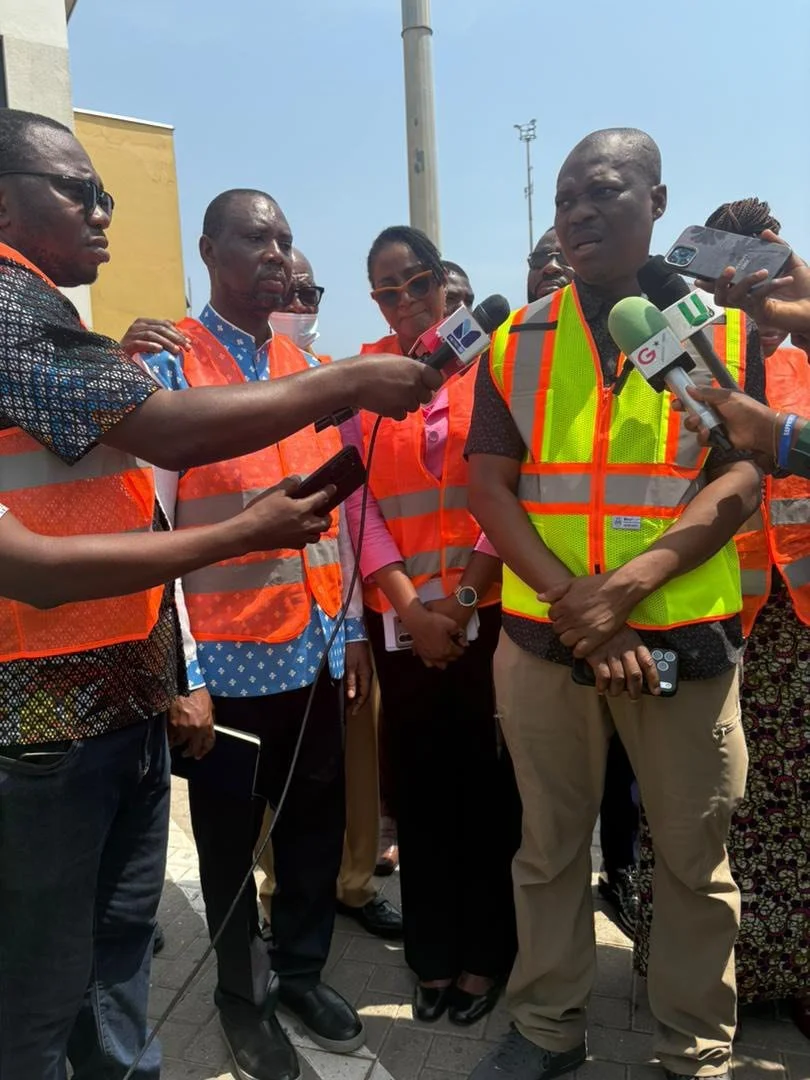
The Board’s inspection followed an internal investigative report into the Energy Commission’s operations at the port, commissioned amid growing concerns about compliance gaps and enforcement slippage. According to disclosures made during the visit, the investigation uncovered multiple breaches, including the importation of unlicensed solar PV products, procedural lapses by staff, and the entry of electric vehicle batteries that failed to meet required technical standards.
These were not isolated administrative oversights. They pointed to systemic weaknesses in surveillance, inter-agency coordination, and internal controls—precisely the kind of vulnerabilities that allow non-compliant imports to scale quietly until they become entrenched market distortions.
For a Commission tasked with regulating both safety-critical infrastructure and fast-growing clean energy markets, the findings were sufficiently serious to warrant Board-level intervention.
From Findings to Action: Surveillance, Systems and Sanctions
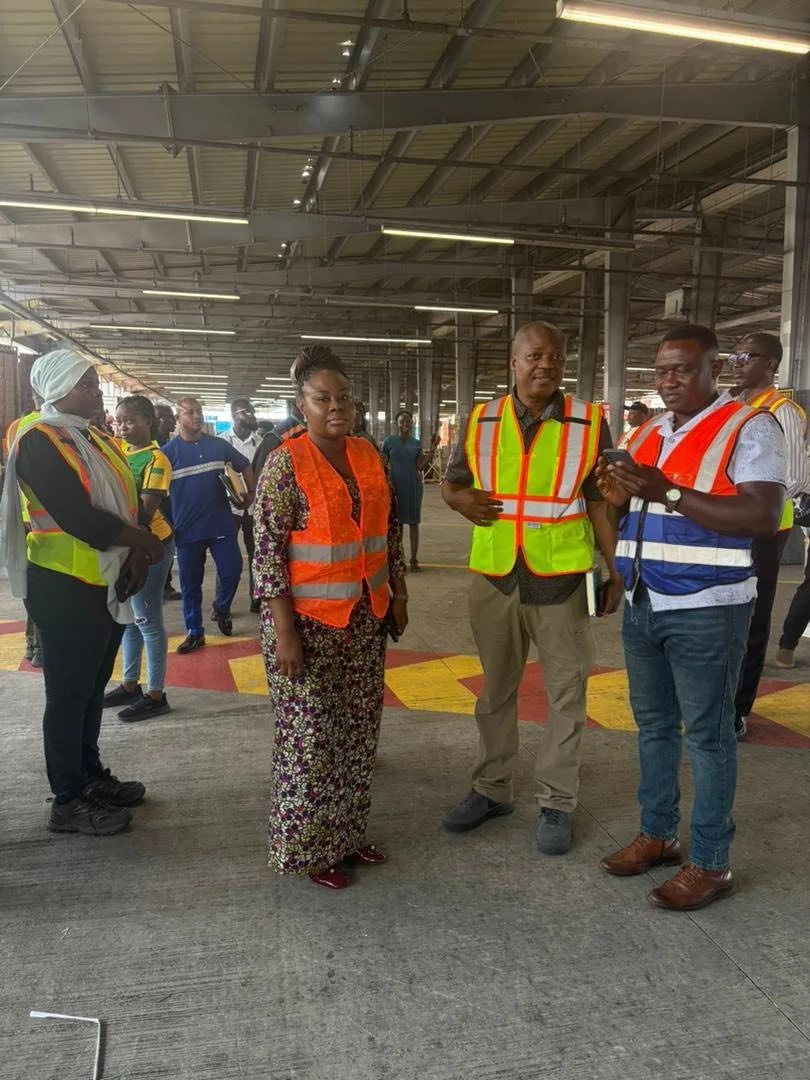
The Tema Port visit was framed explicitly as follow-through after an initial inspection at the port on the 16th of January 2026 to strengthen collaboration with the frontline officials as part of a broader commitment to transparency, accountability, and proactive governance. At both terminals, the Board interrogated operational bottlenecks, assessed inspectorate capacity, and reviewed how Energy Commission officers interface with Customs and other port agencies.
More importantly, the Commission used the inspection to signal a shift from reactive enforcement to continuous surveillance. Chairman Gatsi indicated that port monitoring would be stepped up, internal processes tightened, and disciplinary issues addressed decisively. The Commission also confirmed it is exploring closer collaboration with the Ghana Revenue Authority, recognising that revenue protection and energy regulation increasingly intersect at the point of importation.
This enforcement push is being reinforced by institutional reform. The Commission has already announced an updated enforcement roadmap to support newly passed regulations, clarifying compliance expectations and sanctions. It has also launched a digital portal for online licence applications, designed to eliminate manual delays, reduce discretion, and improve traceability across the licensing lifecycle.
Together, these measures reflect a regulator attempting to modernise its toolkit while restoring credibility where it matters most—on the ground.
The Broader Context: A Board with a Mandate
The significance of the Tema Port inspection is amplified by timing. The Energy Commission’s Board was only recently reconstituted, with a clear directive from the Minister for Energy to strengthen regulation, improve transparency, and align enforcement with Ghana’s green transition ambitions.
In that sense, the port visit functions as an early proof point. It demonstrates a willingness to confront uncomfortable findings, expose internal weaknesses, and reassert regulatory authority in spaces where compliance failures are most costly.
For importers, the implication is clear: the margin for regulatory ambiguity is narrowing. For policymakers, the episode underscores a deeper truth—energy transition is not governed by targets alone, but by institutions capable of enforcing standards consistently, especially at the border.
A Signal, Not a Slogan
Tema Port has long been a mirror of Ghana’s regulatory strengths and weaknesses. By taking the Board itself to the port floor, the Energy Commission is signalling that enforcement will no longer be abstract, delegated, or episodic.
Whether this moment translates into durable compliance will depend on follow-through: sustained surveillance, credible sanctions, and inter-agency discipline. But as a statement of intent, the inspection lands with weight.
In a sector where the costs of regulatory failure are borne quietly—through unsafe products, distorted markets and lost revenue—the Energy Commission appears determined to remind the system where regulation truly begins.
