
Petroleum Commission Subjects Tullow’s Fast Crew Boat Proposal to Multi-Agency Regulatory Scrutiny
Ghana’s offshore safety architecture moved to the foreground as the Petroleum Commission convened Tullow Ghana Limited and key maritime and security agencies to rigorously interrogate a proposal to deploy fast crew boats for personnel transfer. Framed explicitly as regulatory scrutiny—not approval—the engagement underscores the Commission’s insistence that operational efficiency in the upstream sector must be matched, step for step, by uncompromising safety, technical and maritime governance standards.

Accra, Ghana | February 20, 2026 - Ghana’s offshore regulatory architecture is being tested not by crisis, but by process. The Petroleum Commission convened a high-level stakeholder engagement with Tullow Ghana Limited and key maritime, security and health agencies to rigorously interrogate a proposal to introduce fast crew boats for offshore personnel transfer.
At issue is not merely a change in transport modality. It is the operational recalibration of how personnel move between shore and offshore installations in one of West Africa’s most strategically sensitive maritime corridors.
Regulatory Process, Not Procedural Formality
The meeting—chaired by Acting Deputy Chief Executive Officer Nasir Alfa Mohammed on behalf of Acting Chief Executive Officer Emeafa Hardcastle—formed part of the Commission’s established review and assurance process. From the outset, the tone was measured and procedural.
“This engagement is intended to allow regulators and stakeholders to carefully review the information submitted, seek clarification on the technical and safety assessments, and interrogate the key assumptions underlying the proposal,” Mr Mohammed stated, underscoring that the forum was investigative rather than declarative.
He was unequivocal that the session did not constitute approval. The Commission’s intervention was framed as an upstream safeguard: no operational shift—particularly one implicating offshore safety, maritime traffic and emergency response protocols—would proceed without layered scrutiny.
That clarification matters. In Ghana’s offshore environment, personnel transfer is a safety-critical operation governed by overlapping technical, maritime and security regimes. Any proposed transition from or supplementation of helicopter transport to high-speed marine vessels demands a cross-agency assessment of risk exposure, redundancy systems and compliance thresholds.
The Proposal in Context
During the session, Tullow Ghana Limited provided technical background to the proposal, situating it within prior engagements with the Commission. The company outlined concept development phases, preliminary design parameters and initial safety evaluations, signalling that the proposal is the product of structured feasibility analysis rather than ad hoc cost optimisation.
Fast crew boats, also known as crew transfer vessels, are high-speed maritime vessels specifically designed to transport personnel, equipment, and light cargo to and from offshore installations such as oil rigs, Floating Production Storage and Offloading units (FPSOs), and wind farms. They offer advantages in flexibility, cost efficiency and weather resilience in certain operating conditions. However, their viability is heavily contingent on sea state limitations, journey duration, docking compatibility and integration with offshore asset configurations.
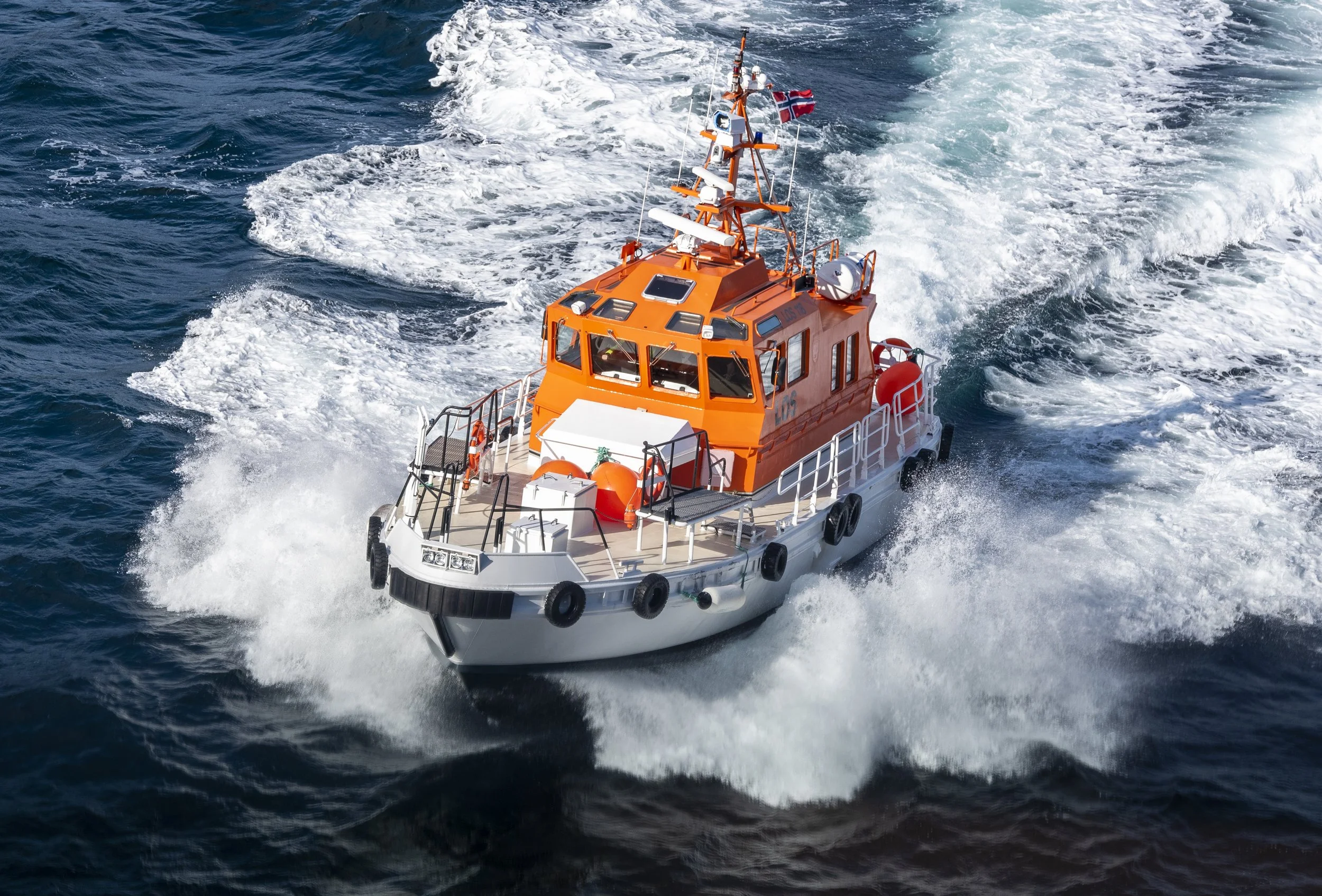
Discussions during the engagement were accordingly granular.
Regulators and stakeholders interrogated vessel design specifications, hull performance under prevailing Gulf of Guinea sea conditions, crew transfer mechanisms at offshore platforms, and the integrity of landing and embarkation systems. Particular attention was paid to weather operating windows, response times, and journey duration relative to offshore fatigue management frameworks.
Equally central were personnel safety and contingency arrangements. Emergency response planning—including medical evacuation protocols, coordination with shore-based health facilities, and redundancy in the event of mechanical or environmental disruption—was subjected to review. Interfaces with existing offshore infrastructure, including platform access systems and safety exclusion zones, were also examined.
Tullow clarified that helicopter operations remain operational and that no decision has been taken to eliminate aviation support. The proposal, at this stage, contemplates integration rather than wholesale substitution.
A Whole-of-Government Lens
The breadth of agencies present underscored the systemic implications of the proposal. Representatives from the Ministry of Energy and Green Transition, Ghana Navy, Ghana Maritime Authority, Ghana Ports and Harbours Authority, the Marine Police and the Ghana Health Service contributed sector-specific perspectives.
Security agencies sought clarity on access control, maritime domain awareness implications and potential interaction with broader coastal surveillance frameworks. Maritime regulators probed vessel certification standards, navigational compliance and alignment with international safety conventions. Health authorities examined medical preparedness and response escalation pathways.
The line of questioning extended to luggage handling protocols, embarkation logistics and contingency measures should operations be suspended mid-transfer due to weather or mechanical failure.
Such detail reflects a regulatory environment increasingly attuned to the intersection between energy infrastructure and maritime security. Ghana’s offshore installations sit within a region historically exposed to piracy, trafficking and other maritime threats. In recent months, the Petroleum Commission has amplified its focus on maritime governance, emphasising that offshore security is inseparable from national economic resilience.
Mr Mohammed reiterated this principle in his closing remarks, stressing that safety and regulatory compliance remain non-negotiable. The engagement concluded with agreement that Tullow would furnish additional technical documentation and clarifications to support the Commission’s ongoing assessment, with further sessions to follow as required.
Maritime Governance as Economic Strategy
The fast crew boat review does not exist in isolation. Across Ghana’s energy value chain, regulators have signalled a firmer posture on enforcement and security integration. Recent engagements between downstream and naval authorities, coupled with upstream maritime governance initiatives, reflect a broader state objective: secure the maritime domain as a strategic economic asset.
Over 90 per cent of Ghana’s trade moves through its ports. Offshore hydrocarbon infrastructure, supply chain vessels and service craft operate within that same maritime ecosystem. Operational adjustments—however technical—must therefore be stress-tested against national security doctrine, safety benchmarks and international maritime standards.
The Petroleum Commission’s handling of the proposal illustrates an institutional reflex increasingly characterised by procedural rigour. By convening a multi-agency review before any determination, the regulator signals that efficiency gains in offshore logistics will not come at the expense of layered oversight.
For operators, that process can be exacting. For the integrity of Ghana’s offshore environment, it is foundational.
As the Commission continues its assessment, the outcome will likely shape not only personnel transfer protocols but also the template for how future offshore operational innovations are introduced—through consultation, documentation and inter-agency validation rather than administrative fiat.
In Ghana’s upstream sector, operational evolution is being filtered through governance discipline. That may be slower. It is also structurally more durable.
