GOIL Reclaims Market Leadership as Price War Strategy Pays Off
GOIL’s return to the top of Ghana’s fuel retail market is less a moment of triumph than the culmination of a calculated campaign. After ceding ground in 2025, the company leaned into aggressive pricing, expanded its footprint, and rode a wave of investor confidence to outmanoeuvre rivals in a compressed, high-stakes market. Fresh data from the National Petroleum Authority now confirms the outcome: a swift but deliberate climb back to number one.
Accra, Ghana | March 31, 2026 - GOIL has returned to the top of Ghana’s retail fuel market, reclaiming the number one position in market share, according to the January–February 2026 performance statistics released by the National Petroleum Authority (NPA). The data shows GOIL leading the oil marketing companies (OMCs) league table with a market share of 11.65% over the two-month period, edging past close competitors in a tightly contested field.
A Market Lost: The 2025 Reset
The turnaround follows a year in which StarOil had taken the top position. NPA’s full-year 2025 statistics placed StarOil ahead with a 10.68% market share, while GOIL trailed at 10.32%, underscoring the erosion of its long-held lead in an increasingly competitive downstream market.
The narrow spread between the two players highlighted just how contestable leadership had become. With less than half a percentage point separating first and second place, the market was primed for a reversal should competitive conditions shift.
The 2025 data also reflected the broader fragmentation of the downstream market. The top ten OMCs collectively accounted for over 50% of total market share, with the remainder distributed among a long tail of smaller players—evidence of intensifying competition and low barriers to customer switching.
Even as it slipped in the rankings, GOIL’s financial indicators pointed to a company in strategic transition. The firm recorded a 95% growth in share performance in 2025, with its stock price reaching GH¢3.60 by 17 February 2026. This divergence—between market share pressure and investor confidence—set the stage for a more assertive competitive response.
The Inflexion Point: Early 2026 Price Wars
The decisive shift began in early 2026, when a renewed price war took hold across the sector. Retail fuel prices became the primary lever for volume acquisition, compressing margins across the board.
GOIL moved aggressively. It reduced petrol prices to align with the NPA’s pricing floor, at points pushing pump prices back into single digits. These interventions were part of a coordinated effort to regain lost volumes.
The effect was immediate. Competitors responded with price cuts of their own, but GOIL’s scale and network reach allowed it to translate pricing into throughput more effectively. The company simultaneously expanded and optimised its retail footprint, ensuring that increased demand could be absorbed across its stations.
Strategy Meets Execution: Rebuilding Volumes
The January–February 2026 NPA data captures the outcome of this strategy. GOIL’s market share rose to 11.65%, reflecting a gain of over one percentage point from its 2025 position. In contrast, StarOil’s share edged up more modestly to 11.36%, allowing GOIL to close the gap and move ahead.
The shift, while numerically tight, is strategically significant. In a market where leadership margins are often measured in fractions of a percentage point, a swing of this magnitude signals a meaningful change in competitive positioning. This makes GOIL’s recovery particularly notable: the shift from second position in 2025 to first place in early 2026 occurred within a compressed margin of a few percentage points, highlighting how responsive the market is to pricing and operational strategy.
Importantly, this recovery did not trigger a loss of investor confidence. GOIL’s share price stability through the price war period suggests that the market viewed the pricing strategy as deliberate and sustainable within its broader growth framework.
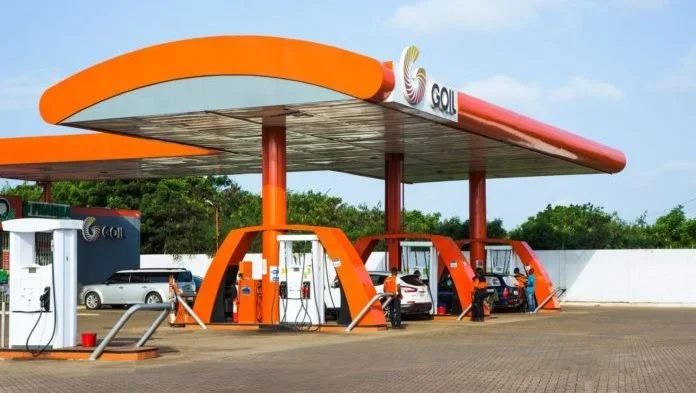
Return to the Top: Leadership Reclaimed
By the close of February 2026, the numbers confirmed the turnaround. GOIL had regained the leading market share position, reversing the order seen at the end of 2025.
The chronology is clear in the data. GOIL exited 2025 in second place with 10.32%, behind StarOil’s 10.68%. Within two months, it had expanded its share to 11.65%, surpassing StarOil at 11.36% and re-establishing itself at the top of the market.
Leadership Signals: Momentum, Not Complacency
GOIL’s Group CEO and Managing Director acknowledged the milestone while signalling a forward-looking stance. “We’ve reclaimed our position, but this is just the beginning,” he said, adding, “Thank you, Team GOIL, for your hard work and belief… To our cherished customers—you made this possible.”
The message reflects both achievement and caution. In a market defined by tight spreads and rapid competition, leadership gains remain inherently fragile.
The Road Ahead
The NPA data reinforces a central reality of Ghana’s downstream sector: it is structurally competitive, with high price transparency and low switching costs. The difference between first and second place can be marginal—and temporary.
For GOIL, sustaining its regained position will depend on consolidating volumes without reigniting aggressive price competition, deepening customer loyalty beyond price, and maintaining operational efficiency amid external pressures such as exchange rate volatility and global oil price movements.
For now, however, the figures are unambiguous. GOIL is back at the top of Ghana’s fuel retail market—its recovery driven by a tightly sequenced strategy that aligned pricing, network expansion, and execution discipline with market timing.
