Energy Ministry Advances Gas, Power, And Refining Capacity In Early 2026 Interventions
In the opening weeks of 2026, the Ministry of Energy and Green Transition advanced a series of operational and investment interventions across the power, gas, and downstream petroleum sectors. From new generation capacity and refinery recovery to upstream gas agreements, domestic manufacturing, and regulatory oversight, the measures collectively strengthen energy supply while reducing import exposure and reinforcing market confidence.
Power Reliability Strengthened As AKSA Ahwomaso Joins The Grid
Ghana’s electricity generation capacity expanded early in the year when the AKSA Ahwomaso Power Plant was successfully tied into the national transmission system.
During an inspection on January 10, 2026, the minister for energy and green transition confirmed that the plant would contribute 141 MW to Ghana’s national grid, adding approximately 2.5% to the country’s installed capacity of 5,749 MW. The connection, completed by the Ghana Grid Company Limited (GRIDCo), strengthens supply reliability across the middle belt while easing pressure on the national system during peak demand periods.
The additional capacity reduces the need for emergency power imports and reinforces domestic generation stability as electricity demand continues to expand alongside industrial and commercial activity.
Three days later, on January 13, 2026, the minister convened a ministry-wide operational review, commending staff for sustaining sector performance throughout 2025 while outlining operational priorities for 2026. The engagement underscored policy continuity as the ministry advanced investments across the energy value chain.
Gas Supply Agreements Expand Domestic Feedstock For Power And Industry
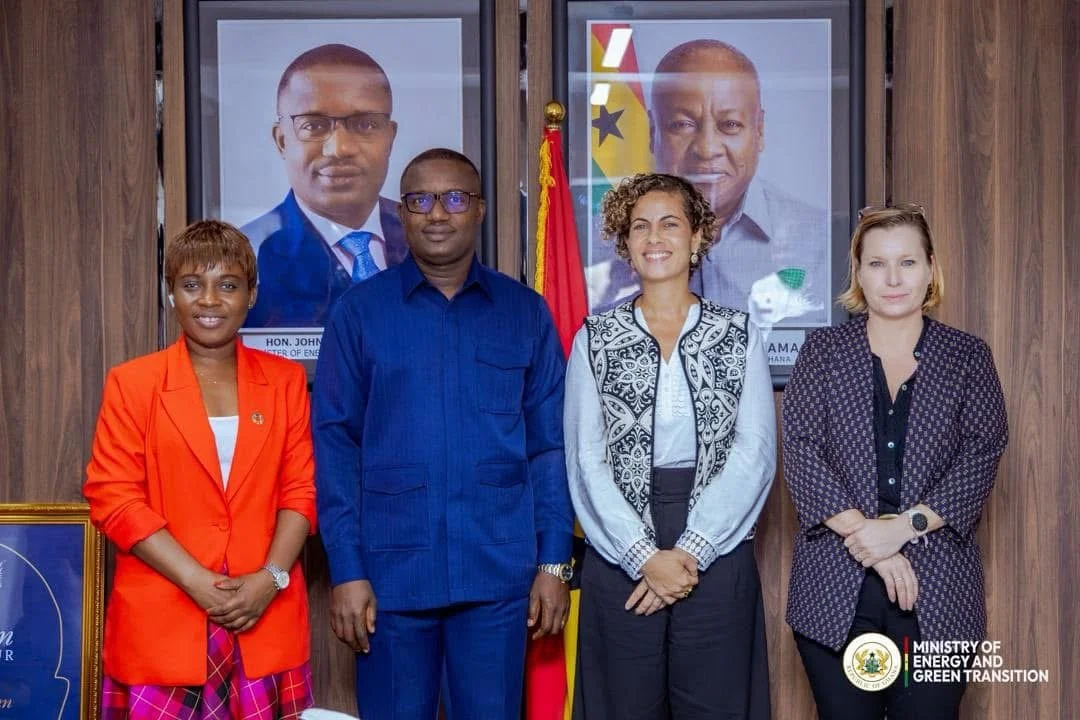
The next phase of Ghana’s energy strategy emerged during a courtesy call by Vice President Professor Jane Naana Opoku-Agyemang at the Ministry of Energy and Green Transition on January 27, 2026, where the minister for energy and green transition announced two upstream investment agreements aimed at strengthening domestic gas supply.
The agreements include US$2 billion with the Jubilee partners and US$1.5 billion with the Sankofa partners, investments expected to expand domestic gas availability while reducing supply costs.
Under the framework, gas prices are projected to decline from US$3.10 to US$2.50 per MMBtu, while domestic gas consumption is expected to increase from approximately 200 million standard cubic feet per day (MMSCFD) to 270 MMSCFD.
Expanded gas supply carries implications across the energy value chain. Greater feedstock availability supports electricity generation, provides input for industrial activity, and strengthens refining operations.
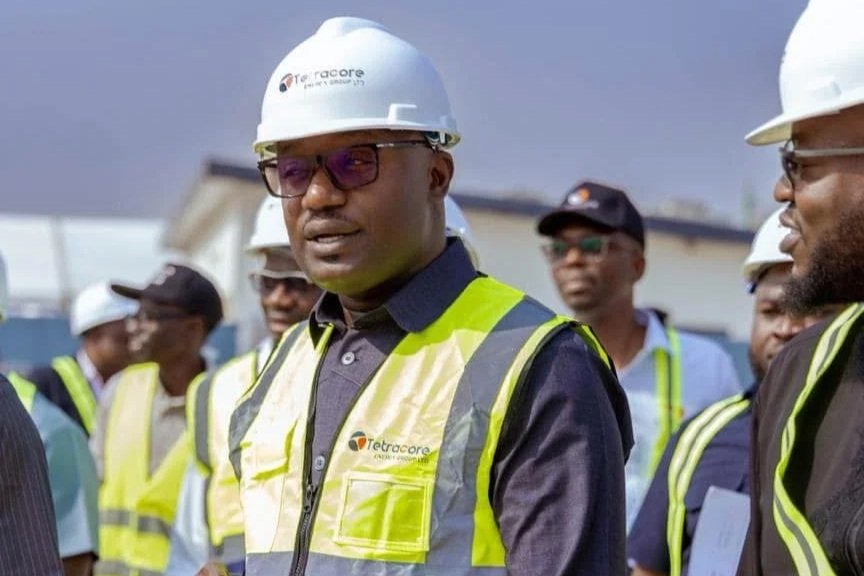
The same day also marked a development in Ghana’s gas utilisation infrastructure. On January 27, 2026, the minister joined Tetracore Gas Ghana Limited to commission Ghana’s first Compressed Natural Gas (CNG) facility.
Compressed Natural Gas is natural gas stored at high pressure for transportation and industrial use, enabling distribution to locations not directly connected to pipeline infrastructure. The facility therefore expands gas utilisation beyond pipeline-served areas, enabling industries and transport operators to access domestically produced gas as an alternative to liquid fuels.
The commissioning introduces a new delivery channel within Ghana’s gas value chain, complementing existing pipeline infrastructure and supporting broader utilisation of domestic gas resources.
During the event, the minister stated that the project supports national energy policy objectives, noting that “this project is a decisive step toward cleaner, more affordable, and reliable energy, reducing our dependence on expensive liquid fuels while supporting industrial growth and job creation.”
The development aligns with government policy to expand domestic gas utilisation under President John Dramani Mahama’s Gas-to-Power Policy, which prioritises the use of indigenous gas resources to support electricity generation, industrial activity, and energy security.
By reinforcing gas supply and expanding delivery infrastructure, the January interventions collectively strengthen the role of domestic gas within Ghana’s power generation and industrial energy systems.
Tema Oil Refinery Recovery Anchors Downstream Market Stability
While upstream agreements strengthen feedstock supply, Ghana’s downstream petroleum sector is being reinforced through the operational recovery of the Tema Oil Refinery (TOR).
During a meeting with refinery management on January 19, 2026, the minister reviewed TOR’s operational performance and outlined its production roadmap for 2026.
The refinery currently operates at 28,000 barrels per stream day (bpsd), with near-term plans to increase throughput to 45,000 bpsd, and a medium-term target of 60,000 bpsd.
Placed against Ghana’s 2024 crude production of approximately 42.8 million barrels, the expansion highlights TOR’s role in processing domestic feedstock while reducing reliance on imported refined petroleum products.
Higher refinery throughput strengthens supply security across Ghana’s downstream fuel market, supporting transportation, manufacturing, and commercial sectors that depend on refined petroleum products.
The ministry indicated that TOR’s operational recovery will proceed alongside strengthened fiscal oversight to ensure that production gains translate into sustainable operations and stable downstream pricing.
LPG Manufacturing Expansion Strengthens Household Energy Access
Household energy access also featured in the ministry’s January policy announcements.
During the Vice Presidential visit on January 27, 2026, the minister highlighted the progress of the Ghana Cylinder Manufacturing Company (GCMC) in expanding domestic liquefied petroleum gas (LPG) cylinder production.
The facility refurbished 57,000 cylinders by the end of 2025, compared with 6,500 cylinders in 2024.
The expansion supports Ghana’s LPG penetration rate of 47.4%, while contributing to national efforts to reduce household dependence on biomass fuels such as charcoal and firewood.
Offtake agreements secured with the Ghana Oil Company Limited (GOIL) ensure distribution of the cylinders within the domestic market, reinforcing stability within the LPG supply chain while supporting local manufacturing capacity.
Domestic Meter Manufacturing Expands Power Sector Infrastructure
Ghana’s electricity supply chain also expanded with the commissioning of MBH Power Ghana Limited’s smart meter manufacturing facility in Tema.
At the inauguration on February 26, 2026, the minister joined power-sector stakeholders to commission the facility, which has a production capacity of 750,000 smart meters annually.
The investment aligns with government policy to source electricity meters locally, reducing reliance on imported metering equipment while strengthening domestic industrial capacity.
Metering systems form a critical component of electricity distribution infrastructure, enabling accurate billing, demand monitoring, and system management.
For several years, Ghana’s utilities relied heavily on imported meters to meet domestic demand. Local manufacturing capacity therefore introduces a domestic supply channel for metering infrastructure within the electricity value chain.
Regulatory Oversight And Standards Reinforce Consumer Confidence
Alongside infrastructure expansion, regulatory oversight within the sector also advanced in late February.
On February 27, 2026, the minister, acting on behalf of President John Dramani Mahama, swore in Ms. Adwoa Serwaa Bondzie as a member of the board of the Energy Commission of Ghana.
Later the same day, the minister conducted a working visit to the Ghana Standards Authority (GSA) Energy Meter Testing Laboratory, accompanied by Ms. Bondzie and officials from the ministry.
The visit provided direct observation of the laboratory’s technical processes used to verify the accuracy, safety, and reliability of energy meters deployed across the national electricity system.
Energy meter testing plays a central role in maintaining transparency between electricity distribution companies and consumers. By verifying measurement accuracy and compliance with technical standards, the laboratory supports fairness in electricity billing and strengthens confidence in the electricity supply system.
The engagement also underscored institutional collaboration between the Energy Commission of Ghana and the Ghana Standards Authority in maintaining technical integrity across the electricity distribution chain.
Integrated Infrastructure Strategy Reshapes The Energy System
The developments recorded between January 10 and February 27, 2026, illustrate coordinated interventions across the energy value chain.
New generation capacity at Ahwomaso strengthens electricity reliability. Expanded upstream agreements increase domestic gas supply for power generation and industry. Refinery recovery improves downstream fuel processing capacity. LPG cylinder manufacturing expands household energy access. Domestic meter manufacturing strengthens electricity distribution infrastructure, while regulatory oversight reinforces consumer protection and technical standards.
Measured against sector benchmarks, the interventions introduce tangible capacity increases. The 141 MW addition to the national grid strengthens generation stability, the 70 MMSCFD increase in gas consumption expands feedstock supply for power generation, TOR’s planned 60,000 bpsd refining capacity reduces import dependence, 57,000 refurbished LPG cylinders support household energy access, and 750,000 locally manufactured smart meters annually expand domestic metering infrastructure.
Together, these developments reinforce domestic capacity across Ghana’s energy system while strengthening operational coordination between generation, gas supply, refining, distribution infrastructure, and regulatory oversight.
