COMAC, CBOD Move to Close Ranks as Ghana’s Downstream Industry Searches for Stability
As Ghana’s downstream petroleum sector navigates pricing tensions, regulatory tightening and evolving market dynamics, two of its most influential industry bodies are moving to deepen coordination. A recent engagement between the Chamber of Oil Marketing Companies (COMAC) and the Chamber of Bulk Oil Distributors (CBOD) signals a strategic push toward closer collaboration across the fuel supply chain — from bulk importation and storage to retail distribution — as the industry searches for stronger mechanisms to safeguard stability, discipline and long-term growth.
Accra, Ghana | March 9, 2026 - In a sector recently rattled by bruising price wars, regulatory resets, and a widening debate over market discipline, two of Ghana’s most influential downstream industry groups are signalling a shift toward closer institutional cooperation.
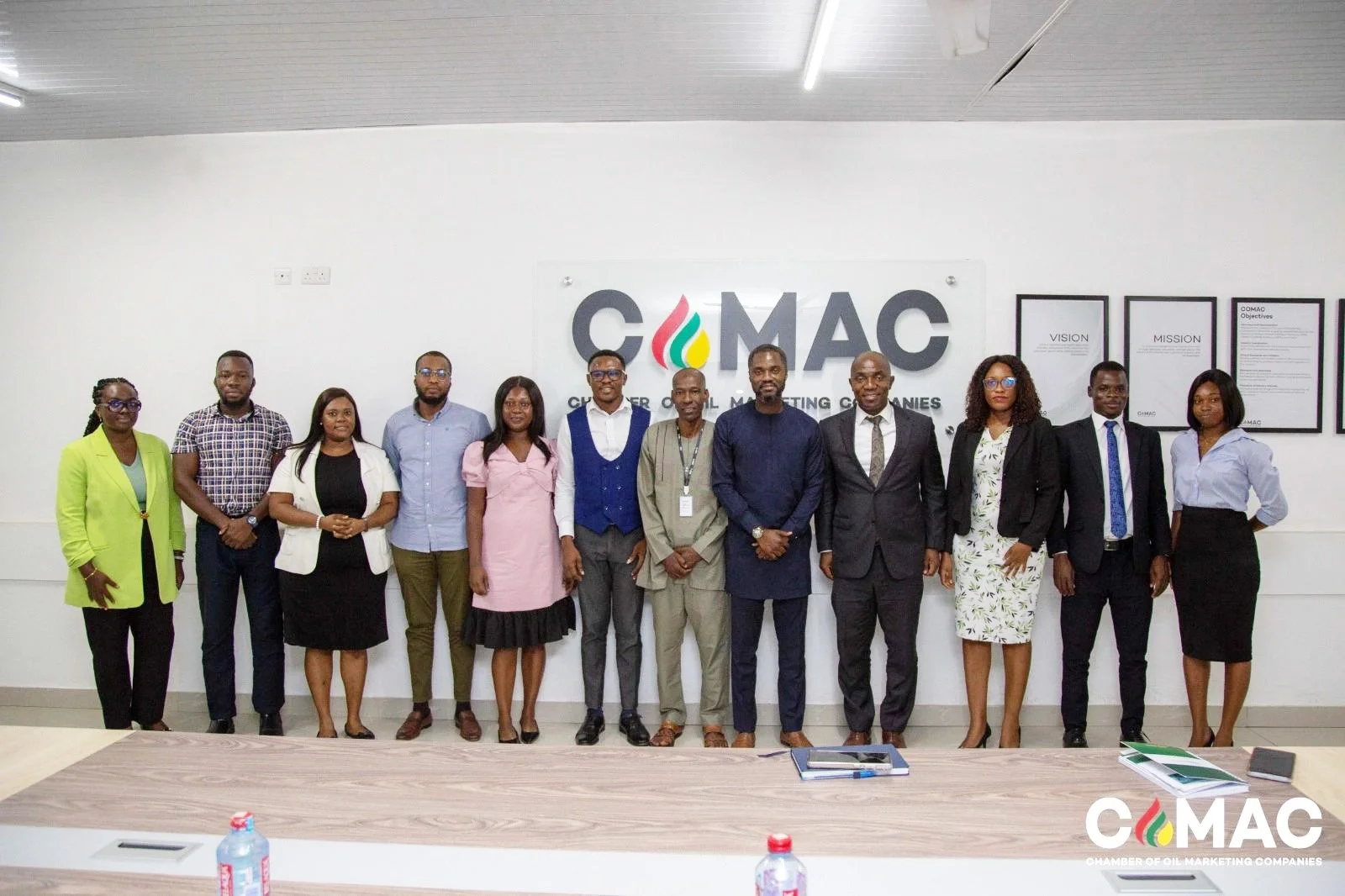
On March 3, 2026, the Chamber of Bulk Oil Distributors (CBOD) paid a courtesy visit to the Chamber of Oil Marketing Companies (COMAC), opening what both sides framed as a deeper engagement aimed at strengthening collaboration across the petroleum value chain.
The CBOD delegation was led by Chief Executive Officer Patrick Ofori, accompanied by Richard Kissi (Head – Finance & Industry Operations), Angela Osei-Badu (Member Relations & HR Manager), Ebenezer Yidana (Research Officer), Evelyn Asare (Corporate and External Affairs Officer) and Oscar Cyril K. Mingah (Operations Assistant Officer).
COMAC’s team was headed by Chief Executive Officer Riverson Oppong, alongside Mohammed Issah (Director for Policy & Regulations), Samuel Wristberg (Head of Policy & Research), Adjoa Baah Akuffo (Head of Administration and Legal Advisor), Abena Ofosua Larbi (Senior Corporate Communication Officer), Courage Agblevor (Senior Compliance Officer), and Genny Dodoo (Executive Assistant).
While formally described as a courtesy call, the meeting reflected a broader effort by the two industry chambers to consolidate dialogue at a time when the downstream sector faces a confluence of regulatory, commercial and reputational pressures.
As COMAC noted following the meeting: “While our mandates differ, our shared responsibility to the industry remains the same.”
From Parallel Mandates to Converging Interests
The two organisations occupy different but closely interlinked segments of Ghana’s downstream petroleum ecosystem.
COMAC represents the collective interests of Oil Marketing Companies (OMCs) and LPG Marketing Companies (LPGMCs), coordinating with key public-sector institutions including the Ministry of Energy and Green Transition, National Petroleum Authority, Energy Commission, Environmental Protection Agency, Bank of Ghana and the Ghana Revenue Authority.
The association traces its institutional roots to October 2003, when the previously loose coalition of oil marketing companies formalised their coordination under the Association of Oil Marketing Companies through the adoption of a constitution.
CBOD, by contrast, represents bulk importers, storage facilities and other petroleum service providers operating earlier in the supply chain. The chamber currently counts 56 member entities — including 44 Bulk Import, Distribution and Export Companies (BIDECs), eight storage depots and four other petroleum service providers — and serves as both an advocacy platform and industry research hub focused on commercial viability and sector sustainability.
If COMAC represents the retail face of Ghana’s fuel market, CBOD speaks for the infrastructure and trading backbone that supplies it.
A Sector Tested by Price Wars and Market Discipline
The renewed dialogue between the two chambers comes after months of unusually intense debate across Ghana’s downstream sector.
Fuel pricing tensions dominated much of the industry discourse in recent months, with marketing companies engaging in aggressive retail discounting that triggered concerns over sustainability and regulatory compliance. COMAC emerged as a prominent voice in the debate, pushing for mechanisms to enforce price floors and preserve market discipline.
At the same time, CBOD cautioned against reactionary measures, urging a measured approach as the pricing contest exposed structural vulnerabilities within the supply chain.
Regulators have since moved to tighten enforcement. The National Petroleum Authority recently stepped in to enforce uniform pricing compliance across the sector, an intervention aimed at stabilising market behaviour and restoring confidence among operators.
Against that backdrop, closer coordination between bulk distributors and marketers increasingly appears less optional than necessary.
Building Mechanisms for Industry Stability
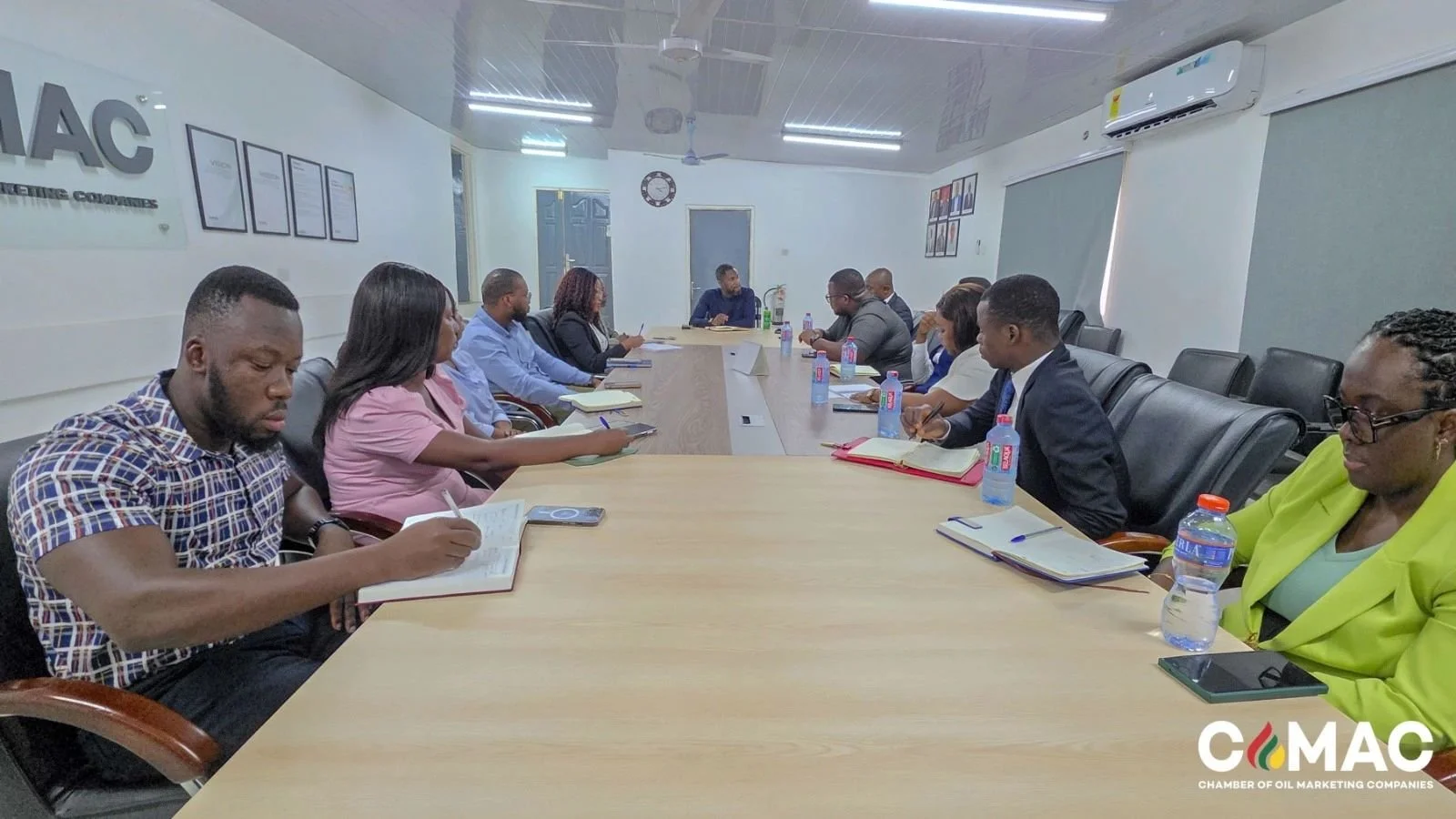
During the March 3 engagement, both sides moved beyond introductory exchanges into detailed discussions on operational and governance issues shaping the downstream market.
Participants shared perspectives on their organisations’ governance structures, operational realities and the emerging pressures affecting member companies across the value chain.
The dialogue focused on compliance and enforcement standards, member subscription frameworks, pricing dynamics across the supply chain and the broader commercial and regulatory environment guiding the industry.
Discussions also emphasised product quality assurance, brand integrity and operational discipline as drivers of market confidence.
One proposal gaining traction during the meeting was the potential establishment of a joint Dispute Resolution Committee, aimed at providing an industry-level mechanism to address conflicts before they escalate into regulatory or commercial crises.
The two chambers also explored ways of strengthening credit and financial risk management mechanisms — a persistent challenge in Ghana’s downstream sector, where delayed payments and credit exposure can ripple across the supply chain.
Converging on Strategic Industry Advocacy
The meeting further mapped out pathways for structured collaboration, particularly in areas where unified advocacy could carry greater policy weight.
Such alignment is becoming increasingly important as the sector grapples with multiple strategic questions — from supply security and refining capacity to the implications of government policy initiatives.
Both organisations have already been active participants in broader policy debates. They jointly condemned the alleged diversion of funds earmarked for LPG sector development, warning of possible industry action if the issue was not addressed.
The chambers have also contributed to discussions around Ghana’s proposed 24-hour economy policy, exploring how the downstream sector would support round-the-clock economic activity through fuel availability and logistics.
Meanwhile, CBOD has been vocal about the implications of reviving the Tema Oil Refinery, arguing that a functioning domestic refinery could reshape supply dynamics and strengthen national energy security.
From Dialogue to Institutional Collaboration
For COMAC, the March engagement signals an intent to move beyond episodic interactions toward more structured cooperation with its upstream counterpart in the supply chain.
The organisation framed the meeting as the beginning of a deeper partnership.
“COMAC looks forward to translating this dialogue into measurable, results-driven collaboration.”
In practical terms, that could mean coordinated policy engagement, joint industry standards, and shared mechanisms to manage disputes and financial risk across the sector.
For an industry navigating regulatory recalibration and commercial volatility, the signal from both chambers is clear: stabilising Ghana’s downstream market may increasingly depend on how effectively its institutional actors work together.
And in a market where every litre sold begins upstream and ends at the pump, alignment between bulk distributors and marketers may prove one of the most consequential variables shaping the sector’s next phase.