
APRA Trains Local EPCs to Anchor Ghana’s 400-Mini-Grid Ambition in Bankable Execution
Ghana’s 400-mini-grid ambition has moved from pledge to preparation. Under the Accelerated Partnership for Renewables in Africa, with technical leadership from the International Renewable Energy Agency, sponsorship support from the Government of Japan and policy backing from the Ministry of Energy and Green Transition, local Engineering, Procurement and Construction contractors are being drilled in the hard mechanics of bankable project delivery. The message is unmistakable: if decentralised electrification is to scale, Ghana must first scale the competence of those who will build it.
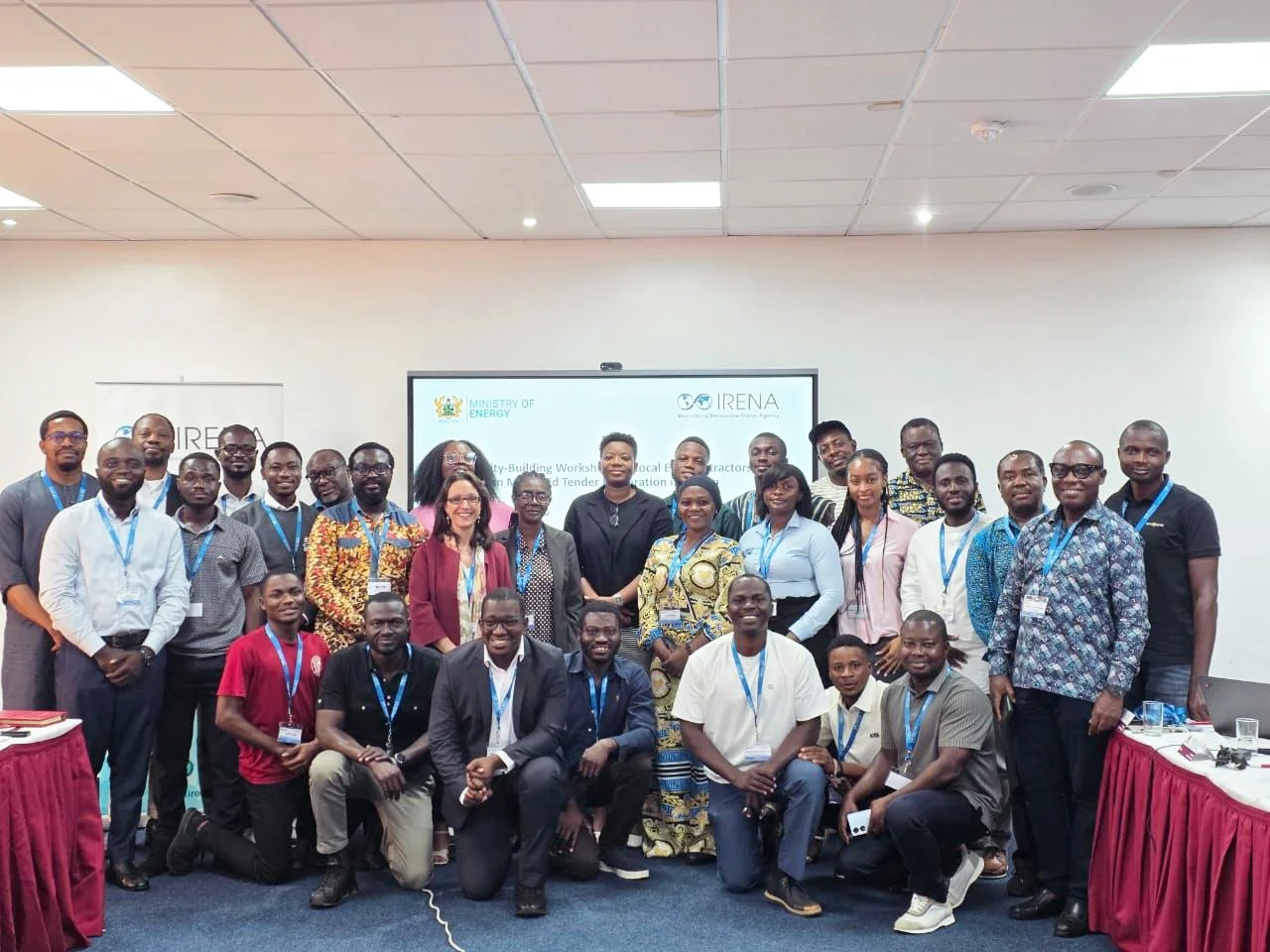
Aflivie, Ada East, Ghana | February 16, 2026 - Ghana’s push to deploy 400 new mini-grid plants by 2030 is shifting from policy aspiration to procurement discipline.
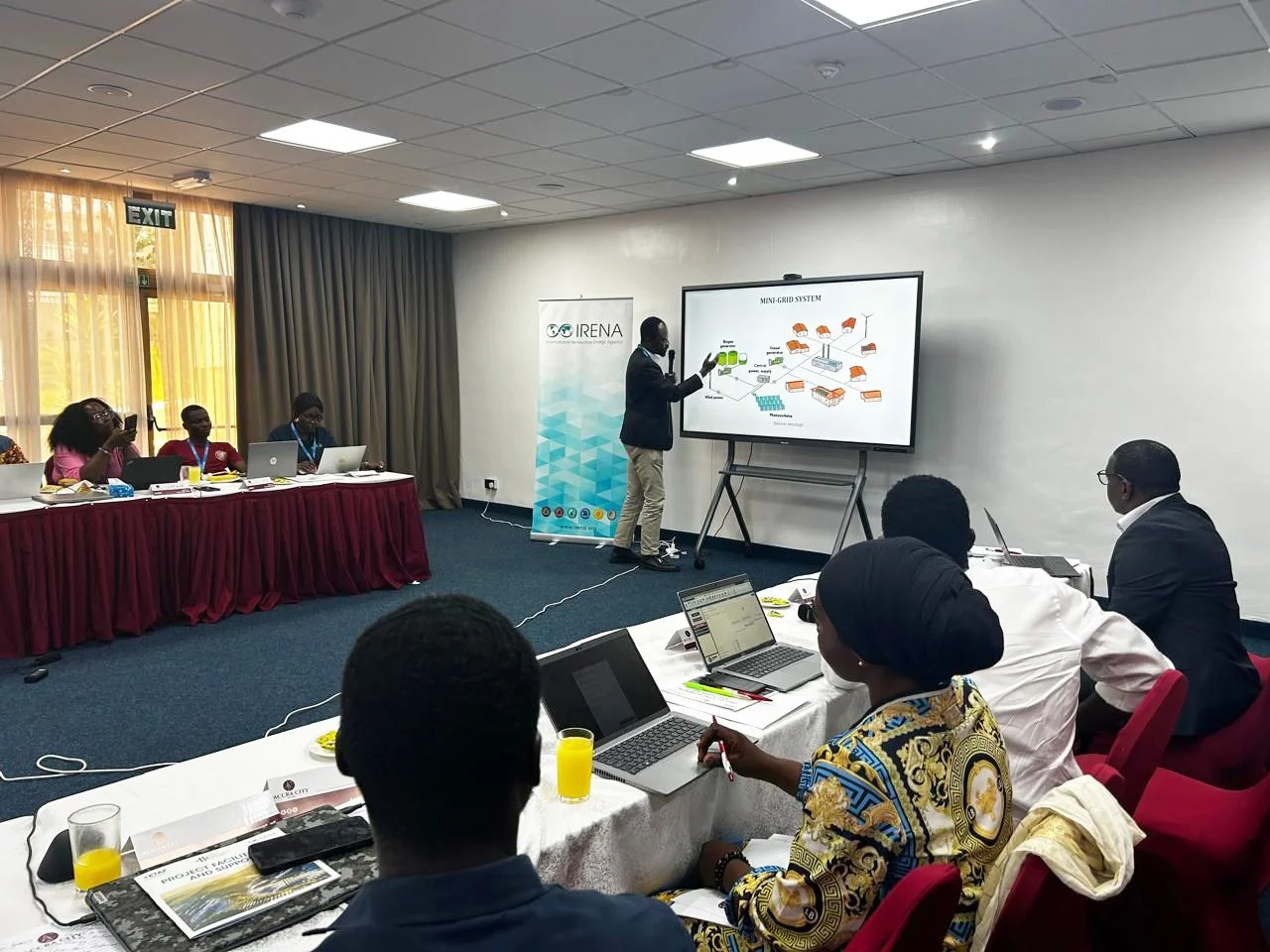
In Accra and Ada East, the Accelerated Partnership for Renewables in Africa (APRA), working through the International Renewable Energy Agency (IRENA), convened and trained local Engineering, Procurement and Construction (EPC) contractors in the mechanics that determine whether mini-grids get built on time, on budget and at scale: technical design optimisation, financial costing and tender preparation.
The three-day capacity-building programme—delivered in partnership with Ghana’s Ministry of Energy and Green Transition and sponsored by the Government of Japan—is more than a workshop. It is an intervention at the most failure-prone node of decentralised electrification: project bankability.
From Ambition to Execution
Mini-grids—small-scale generation and distribution systems operating independently of the national transmission network—are increasingly recognised as the least-cost pathway to electrify remote and island communities. Solar photovoltaic-battery configurations in particular have emerged as a scalable solution to serve populations beyond the economic reach of grid extension.
Ghana’s record to date is instructive. Five pilot mini-grids in Pediatorkope, Aglakope, Kudorkope, Atigagome and Wayokope have been rehabilitated, alongside three new facilities in Azizakpe, Aflivie and Alorkpem in Ada Municipality. Together, they now provide uninterrupted electricity to more than 20,000 people.
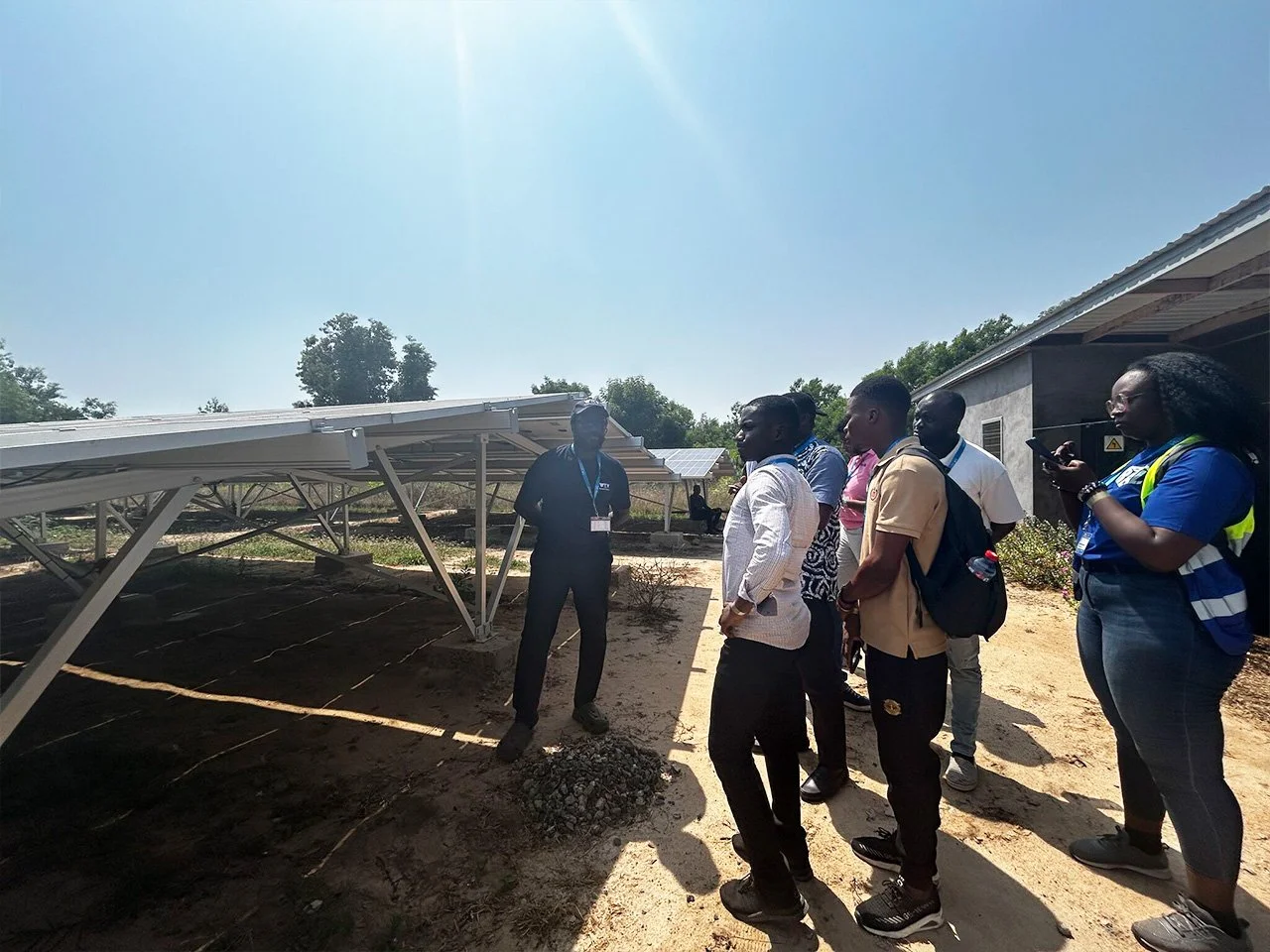
At Aflivie in Ada East—one of the eight operational plants—the training cohort conducted a site visit to interrogate system architecture, storage integration, distribution layout and load management in a live environment. The aim: translate design theory into execution readiness.
More than 30 additional mini-grids are scheduled for commissioning this year, with feasibility studies completed for 150 island and lakeside communities in the Afram Plains North and South districts. The scale is no longer pilot. It is pipeline.
Why Engineering, Procurement and Construction Capability Is the Constraint
Under standard Engineering, Procurement and Construction contracting frameworks—often aligned with the Fédération Internationale des Ingénieurs-Conseils (FIDIC) suite of contracts—contractors assume end-to-end responsibility: engineering design, procurement of components, construction, commissioning and handover under fixed price and schedule obligations.
In mini-grid deployment, weak bid preparation and underpriced risk assumptions routinely undermine viability. Projects stall, financiers retreat and communities revert to diesel dependence.
By equipping local Engineering, Procurement and Construction firms with granular competencies in load forecasting, storage sizing, lifecycle costing and tender documentation, APRA is targeting a structural bottleneck: the mismatch between policy ambition and contractor readiness.
If Ghana is to install 400 mini-grids by 2030, the market will require not just capital but a domestic cadre of contractors capable of producing technically sound, bankable proposals that withstand commercial due diligence.
APRA’s Continental Template
Launched at the twenty-eighth Conference of the Parties to the United Nations Framework Convention on Climate Change (COP28) in Dubai and rooted in the Nairobi Declaration’s call for at least 300 gigawatts of renewables by 2030, APRA positions political leadership as the accelerant of implementation. Member states—including Sierra Leone, Kenya, Ethiopia, Namibia, Rwanda and Zimbabwe—are deploying country-specific transition blueprints, from geothermal-hydrogen integration in Kenya to green industrial zones in Namibia.
In Sierra Leone, APRA-linked engagement has focused on leveraging regional interconnection lines to expand cross-border power trade. In Zimbabwe, emphasis has turned to bankability training for developers to crowd in private solar Independent Power Producers (IPPs). Ghana’s mini-grid training workshop fits squarely within this architecture: technical assistance as a precursor to capital mobilisation.
Through the IRENA-led Africa Renewable Policy and Regulatory Advancement initiative, Ghana is also working toward establishing a Renewable Energy Authority and mobilising grant-backed support for decentralised systems. The mini-grid programme is thus embedded within a broader institutional reform agenda.
Ghana’s Broader Renewable Trajectory
The training arrives amid a widening renewable push.
Parliament has approved GH¢1.2 billion for the Ministry of Energy and Green Transition, earmarked for renewable expansion and efficiency. The “Government Goes Solar” initiative—backed by Germany’s Kreditanstalt für Wiederaufbau (KfW) Development Bank—targets 22 megawatts of rooftop solar across public institutions. A 30 megawatt floating solar plant is under construction at Bui. Private capital is moving too, with new utility-scale solar investments announced and grid-supportive assets under development.
Decentralised systems are a central pillar of this strategy. Under the Scaling-Up Renewable Energy Programme (SREP), Ghana is installing 35 additional solar mini-grids and 12,000 net-metered rooftop systems, expected to benefit over 70,000 people in off-grid communities.
The 400-mini-grid ambition under APRA is therefore not an isolated programme. It is the decentralised flank of a multi-layered energy transition strategy that spans public facilities, utility-scale renewables, electric mobility and industrial decarbonisation.
The Political Economy of Local Participation
Crucially, the workshop signals a deliberate localisation strategy. Rather than relying exclusively on foreign Engineering, Procurement and Construction firms, APRA and its partners are cultivating Ghanaian contractors to compete, price and deliver.
That matters for three reasons.
First, local contractors shorten supply chains and reduce foreign exchange exposure.
Second, domestic capability anchors job creation and skills transfer—explicit objectives of APRA’s green industrialisation agenda.
Third, competitive local bidding deepens market liquidity, lowering long-term system costs.
Japan’s sponsorship underscores the geopolitics at play: development finance increasingly tied to capacity-building rather than pure hardware delivery.
The Real Test
Training programmes do not build power plants. Bankable tenders do.
The credibility of Ghana’s 400-mini-grid plan will ultimately be measured in executed contracts, financed balance sheets and operational uptime across lake and island communities. Yet the logic is sound: build the contractor ecosystem before scaling procurement.
In the economics of electrification, capacity precedes capital.
If Ghana succeeds in translating workshop theory into bid-winning discipline, the country may not only expand energy access—it may demonstrate how African-led partnerships can convert climate ambition into infrastructure reality.
