UAE Breaks from OPEC, Fracturing a Cartel Forged in Oil’s First Power Struggle
The United Arab Emirates has triggered a major rupture at the heart of the global oil order, exiting OPEC at a moment when war, market paralysis, and strategic mistrust have converged into a decisive break. What was once a cartel built to defend producer sovereignty is now being abandoned in its name, as Abu Dhabi trades collective discipline for unilateral power in a fractured, post-Hormuz energy landscape.
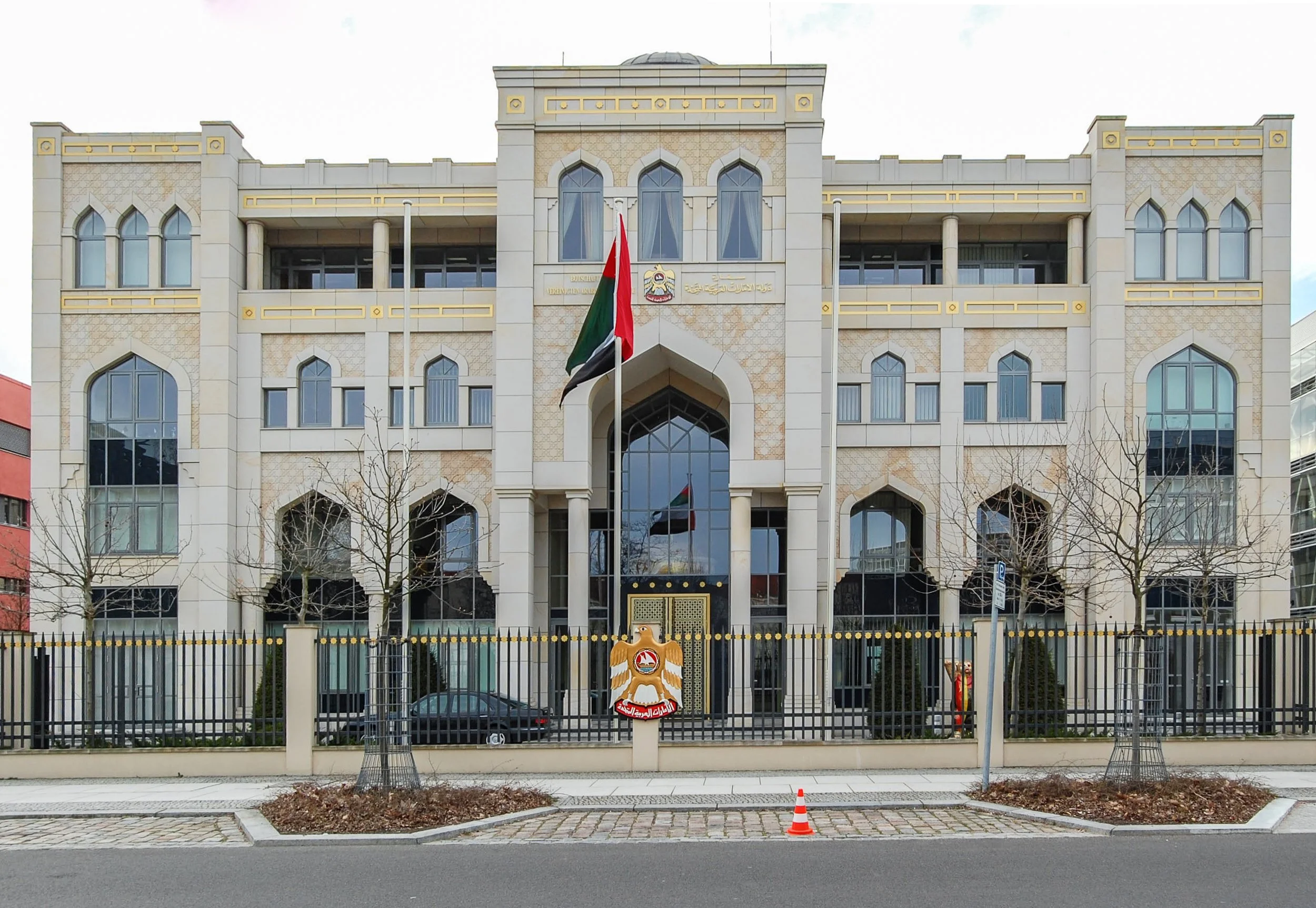
Abu Dhabi, UAE | April 30, 2026 - The United Arab Emirates will exit OPEC effective May 1, 2026, invoking “the UAE’s long-term strategic and economic vision and evolving energy profile,” in a move that slices through the cartel’s core at a moment of maximum geopolitical strain. The departure of OPEC’s third-largest crude exporter, and the world’s seventh-largest, is not a bureaucratic adjustment. It is a strategic rupture, born of war, sharpened by disillusionment, and timed to exploit a market already buckling under disruption.
From Baghdad to Bretton Woods’ Afterlife
OPEC was never just about oil. It was a counterstroke. Founded in Baghdad in 1960 by Iran, Iraq, Kuwait, Saudi Arabia, and Venezuela, the organization emerged as a geopolitical rebuttal to the dominance of the Seven Sisters, the Anglo-American oil majors that dictated prices and, by extension, the fiscal destinies of producing states: Standard Oil Company of New Jersey (later Exxon), the Standard Oil Company of New York (Socony, later Mobil, which eventually merged with Exxon), the Standard Oil Company of California (Socal, later renamed Chevron), the Texas Oil Company (later renamed Texaco), Gulf Oil (which later merged with Chevron), Anglo-Persian (later British Petroleum), and Royal Dutch/Shell.
When those companies slashed posted prices in 1959 and 1960 without consultation, they did more than cut revenues. They exposed the asymmetry of power. OPEC was the answer, a collective instrument to reclaim sovereignty over natural resources and wrest control of pricing from corporate hands.
Its mandate evolved into a dual function: stabilize markets for producers while ensuring predictable supply for consumers. In practice, this meant managing output through quotas, calibrating supply to influence price. The cartel’s real power, however, was amplified in the 1970s by an adjacent architecture: the petrodollar system.
After the collapse of the Bretton Woods gold standard, Washington and Riyadh reached a quiet accommodation, popularly referred to as the Petrodollar System. Oil would be priced in dollars, and in return, the United States would provide security guarantees and military support to Saudi Arabia, and by extension, OPEC. The effect was systemic. Global demand for oil translated into structural demand for dollars. Exporters accumulated dollar surpluses and recycled them into U.S. Treasuries and financial markets, underwriting American deficits while anchoring the dollar’s reserve status.
That system still stands, but its edges are fraying. Incrementally, large consumers such as China and India have experimented with settling trades in yuan and rupees. Even the UAE has explored local currency arrangements. The dollar remains dominant, but no longer unchallenged. The architecture is intact, though no longer unquestioned.
Cracks in the Cartel
OPEC’s cohesion has long depended on a delicate balance between collective discipline and national ambition. That balance has been eroding. “At some point, membership stops being a seat at the table and starts being a cage,” as SEMAFOR’s latest analysis puts it, capturing a sentiment that has steadily migrated from the margins to the mainstream.
The exits tell the story. Qatar left in 2019, pivoting toward liquefied natural gas. Ecuador followed in 2020, citing fiscal pressures. Angola’s 2024 departure was more confrontational, triggered by a quota dispute after its production ceiling was cut below capacity. Its oil minister, Diamantino Azevedo, framed the decision bluntly: Angola “gains nothing by remaining in the organization” and would act “in defense of its interests.”
These were warning tremors. The UAE’s latest move is an earthquake. Unlike previous departures, Abu Dhabi is not a marginal producer or a structurally constrained one. It is a capacity heavyweight with expansion ambitions, targeting output of 5 million barrels per day. Its exit removes one of the few members capable of rapidly scaling supply, weakening the cartel’s ability to act as a credible swing producer.
War as Catalyst, Sovereignty as Doctrine
The immediate trigger lies not in Vienna’s conference rooms but in the skies over the Gulf. On February 28, 2026, the shadow conflict between the United States, Israel, and Iran detonated into open war. Iran’s retaliation extended beyond traditional targets, unleashing a barrage of roughly 550 missiles and more than 2,200 drones at the UAE. Infrastructure was hit. The illusion of insulation shattered.
For years, Abu Dhabi pursued a strategy of calibrated alignment, security ties with Washington, economic integration with Beijing, and a managed détente with Tehran. The war exposed the limits of that balancing act. Wealth did not confer immunity. Diplomacy did not deflect missiles.
What followed was a strategic recalibration. Senior officials, including Anwar Gargash, publicly criticized Gulf partners for what he described as a “weak” response during the attacks. The conclusion in Abu Dhabi hardened quickly: if the UAE must absorb the costs of regional conflict, it will no longer subordinate its economic decisions to a cartel that offers no reciprocal security guarantee.
The Strait of Hormuz crisis sharpened the logic. With roughly 8 million barrels per day of Gulf output shut in and Brent crude surging past $111, OPEC’s capacity to coordinate supply became, in practical terms, paralyzed. For the UAE, the constraint of quotas under such conditions appeared increasingly abstract. The exit, in this context, reads less like defection and more like timing. A clean break while the system is already under stress.
After OPEC: Freedom, Friction, and a Rewired Gulf
The advantages are immediate and tangible. Outside OPEC, the UAE can produce at will, positioning itself to add as much as 1.6 million barrels per day once export routes normalize. It can compete aggressively in Asia, where the bulk of its crude already flows, and channel higher revenues into its Vision 2031 agenda and energy transition investments.
The trade-offs are equally real. Without OPEC’s informal price floor, Abu Dhabi becomes more exposed to volatility, particularly in oversupplied markets. It forfeits influence within a body that, despite its fraying edges, still shapes global oil policy. And it risks deepening friction with Saudi Arabia, the cartel’s de facto leader, whose own economic transformation depends on disciplined oil revenues.
The geopolitical aftershocks may prove even more consequential. The UAE’s exit lays bare a structural weakness within the Gulf Cooperation Council. During the weeks of Iranian bombardment, regional coordination amounted to logistics rather than defense. The promise of collective security dissolved under pressure. For smaller Gulf states, the message is stark: hosting major powers’ military infrastructure invites retaliation without guaranteeing protection.
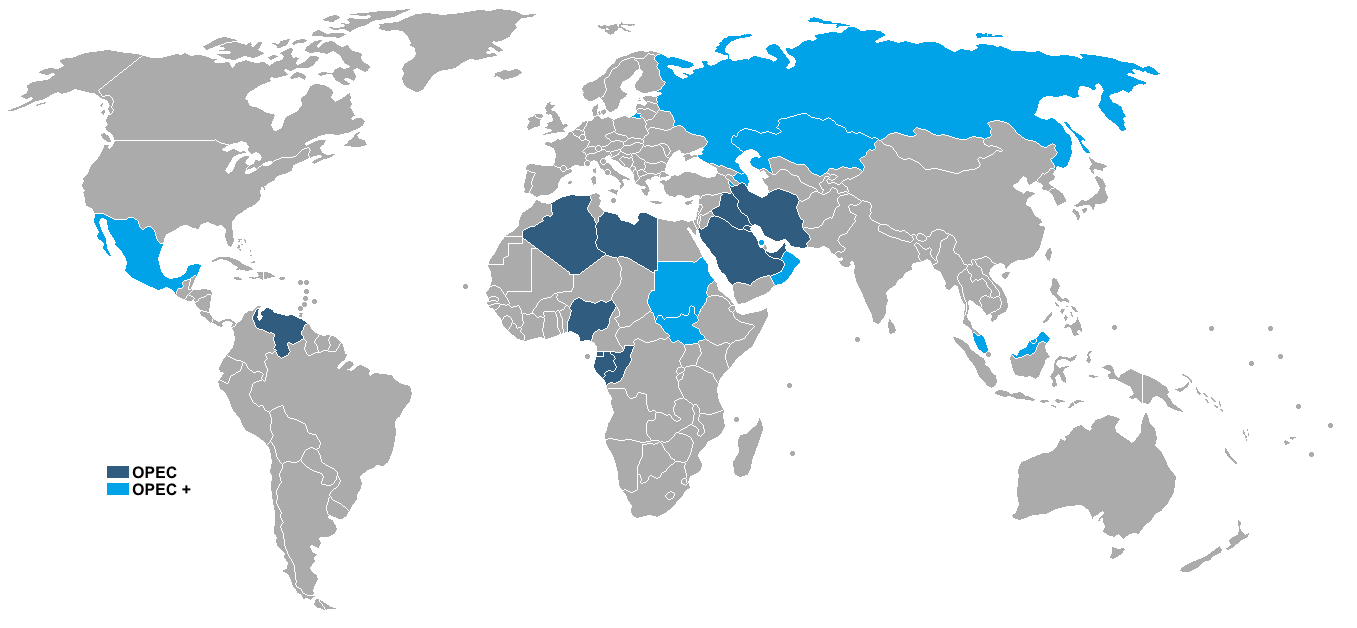
OPEC now stands at eleven members: Algeria, the Republic of Congo, Equatorial Guinea, Gabon, Iran, Iraq, Kuwait, Libya, Nigeria, Saudi Arabia, and Venezuela. Several have reaffirmed their commitment in the wake of the UAE’s departure, a show of unity that underscores, rather than resolves, the underlying strain.
In Washington, the reaction has been characteristically transactional. President Donald Trump, noting that “they’re having some problems in Opec,” described the UAE’s move as “great,” arguing it could help drive oil and gasoline prices lower. The remark captures a broader truth. For consumers, fragmentation can mean relief. For producers, it signals a more competitive, less coordinated future.
The deeper question is whether the UAE’s move marks a singular break or the opening chapter of a wider unravelling. OPEC was born as a collective assertion of sovereignty against external control. Six decades on, that same instinct is now, somewhat ironically, turning inward, as members reassess whether the cartel still serves their national interest.
If the past defined OPEC as a shield, the present is testing whether it has become, for some, a constraint. The UAE has answered that question decisively. Others are now watching the market, and each other, with sharpened attention.
