
Shock to the System: Coordinated Strikes on Saudi Energy Infrastructure Deepen Global Supply Crisis
A coordinated strike on Saudi Arabia’s energy heartland has jolted an already fragile global system into a deeper state of crisis—knocking out critical supply routes, stranding cargo across the Gulf, and tightening the Strait of Hormuz into a strategic choke point. What began as a regional conflict has now metastasized into a full-spectrum supply shock, rippling from oil markets into fertilizers, food systems, and financial stability. With infrastructure damaged, flows disrupted, and geopolitical fault lines widening, the world is no longer bracing for impact—it is absorbing it in real time.
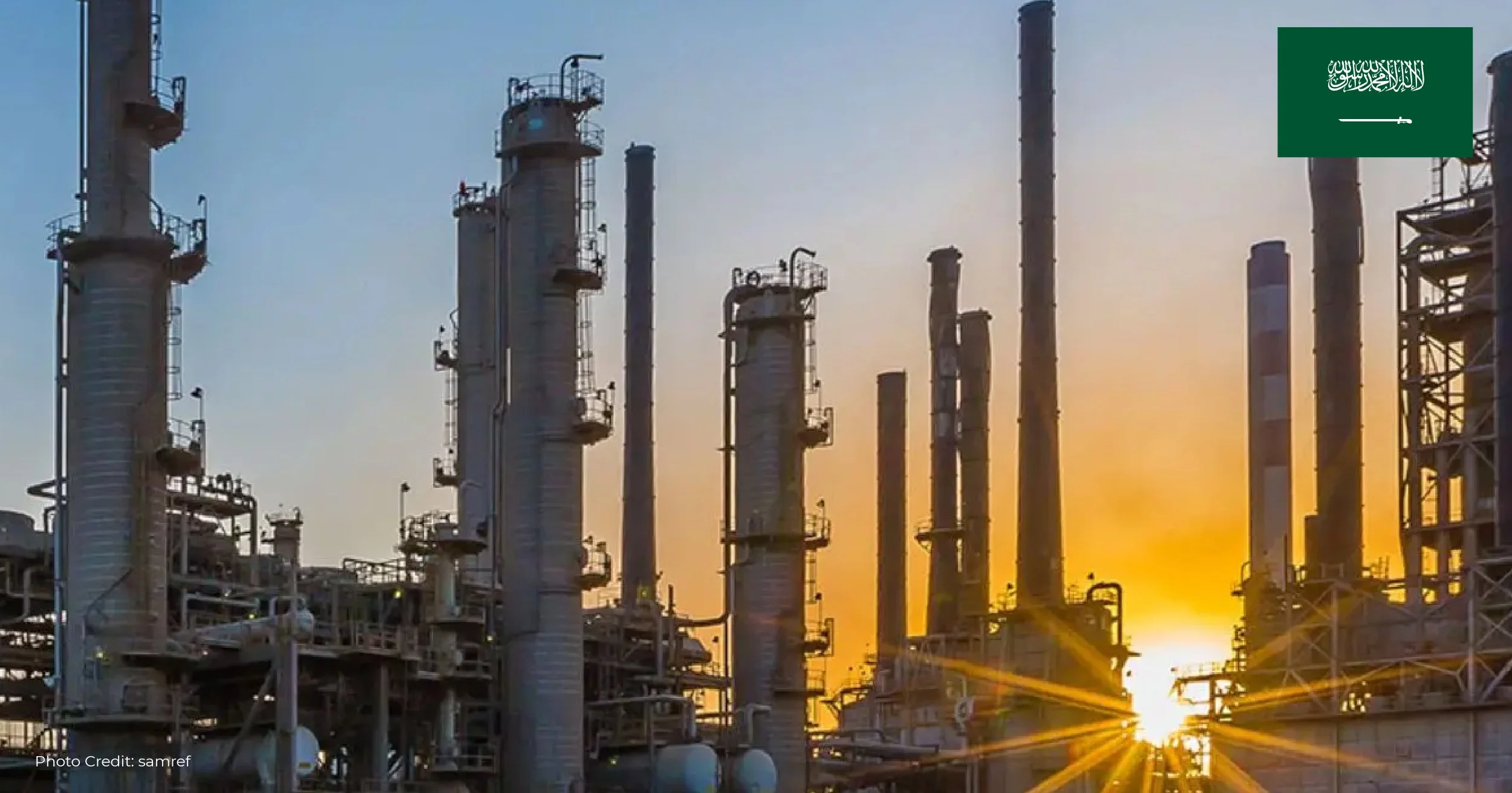
Riyadh, Saudi Arabia | April 10, 2026 - The global energy system, already strained by weeks of conflict disruption, absorbed a direct hit this week as Saudi Arabia, confirmed a sweeping wave of attacks across its oil, gas, and refining backbone—triggering immediate supply losses, compounding logistical choke points, and amplifying what the IMF now characterizes as a full-scale global supply shock, in the latest chapter of the Israel-US Iran War. .
An official statement from the Saudi Ministry of Energy on April 9 detailed the scope with unusual clarity: multiple critical facilities—spanning production, transportation, refining, petrochemicals, and electricity—were targeted across Riyadh, the Eastern Province, and Yanbu. The attacks resulted in one fatality among Saudi Aramco’s industrial security personnel and injuries to seven others, while forcing operational disruptions across key nodes of the Kingdom’s energy system.
The material impact is already measurable. A strike on the East-West pipeline alone cut flows by approximately 700,000 barrels per day, undermining one of the Kingdom’s principal arteries for supplying global markets. Additional hits to upstream assets—including the Manifa and Khurais fields—reduced output by a combined 600,000 barrels per day. Downstream, major refining centers at Jubail, Ras Tanura, Yanbu, and Riyadh sustained disruptions, directly affecting exports of refined products, while fires at Ju’aymah constrained liquefied petroleum gas (LPG) and natural gas liquids shipments.
The cumulative effect is not simply lost barrels, but a tightening vice on global supply flexibility. Saudi authorities warned that continued targeting risks prolonging shortages, slowing recovery timelines, and eroding already depleted global emergency stockpiles—leaving markets with limited shock-absorption capacity.
From Interception to Escalation
The strikes mark a sharp escalation from what, only days earlier, appeared to be a contained exchange. On April 8, Saudi Arabia’s Ministry of Defense confirmed the interception of five ballistic missiles targeting the Eastern Region, an incident that, in hindsight, reads less like an isolated provocation and more like a prelude.
Within 48 hours, the conflict crossed a threshold—from attempted strikes to sustained infrastructure degradation.
This escalation has unfolded against a broader regional paralysis. The Strait of Hormuz—through which roughly a fifth of global oil supply transits—remains functionally constrained, not by formal closure but by risk calculus. Tanker hesitancy, insurance spikes, and security ambiguity have throttled flows just as physical supply is being impaired.
Greg Carlstrom, Middle East correspondent at The Economist, captures the logistical aftershock starkly: 187 oil tankers and 15 LNG vessels remain stranded in the Gulf, alongside 1.9 million tonnes of fertilizer cargo. Even under a stable ceasefire, clearing the backlog could take weeks, with additional delays as ships avoid re-entry into a still-volatile corridor.
The IMF’s Diagnosis: A Classic Supply Shock—at Scale
At the macro level, the International Monetary Fund has moved quickly to frame the crisis in systemic terms.
Speaking at the IMF–World Bank Spring Meeting’s curtain raiser on April 9, Managing Director Kristalina Georgieva described the situation as “a supply shock that is large, global, and asymmetric,” noting that oil flows have already been reduced by approximately 13 percent and LNG by 20 percent.
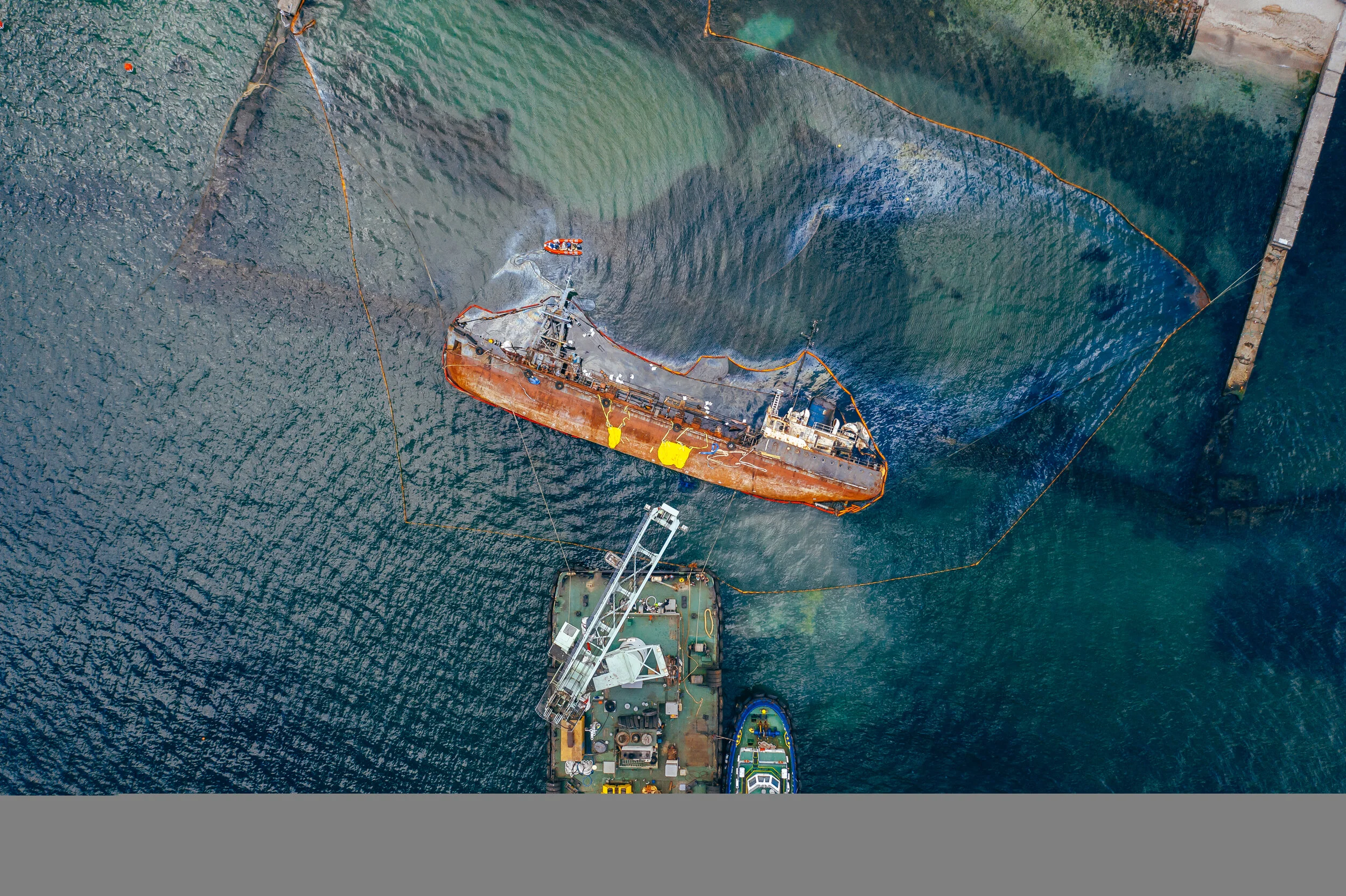
The consequences are cascading.
Refinery disruptions are emerging globally due to minimum flow constraints. Shortages of diesel and jet fuel are disrupting transportation and trade networks. And critically, the shock is bleeding into food systems: an additional 45 million people are at risk of food insecurity, pushing the global total beyond 360 million.
The transmission channels are familiar but unforgiving. Higher input costs are feeding inflation. Inflation expectations are shifting. Financial conditions are tightening. Growth, even under optimistic scenarios, is now expected to slow.
Yet what distinguishes this episode is not just the scale of the energy disruption, but its entanglement with industrial dependencies—from sulfur and naphtha to helium—embedding the shock deep within manufacturing and technology supply chains.
Fertilizer: The Storm Brewing Silently
Beyond hydrocarbons, a second, less visible crisis is intensifying—one with potentially longer-lasting consequences.
Fertilizer markets, heavily dependent on Gulf production and transit routes, are fracturing under the same pressures. According to commodities intelligence firm CRU, multiple production facilities across the Middle East have been impacted, with Oman emerging as the only exporter able to operate outside the Strait of Hormuz bottleneck.
Data from Argus Media indicates a near-collapse in ammonia exports—from typical monthly volumes of 350,000 tonnes to just 30,000 tonnes in March. Urea prices have surged by roughly 50 percent within weeks, while ammonia prices have climbed by nearly a quarter.
Rystad Energy estimates that the region accounts for approximately 21 percent of global urea trade and 15 percent of ammonia flows, warning of a “sustained logistics shock” with direct implications for agricultural output.
Kathryn Rooney Vera, StoneX Chief Market Strategist, distills the second-order risk with precision: fertilizer, not oil, may prove the more consequential disruption. With the Northern Hemisphere planting season underway, delays in input delivery risk becoming irreversible losses—translating into lower yields, higher food prices, and macroeconomic stress across import-dependent regions.
India, Brazil, Australia, and parts of Southeast Asia sit at the sharp end of this exposure, with knock-on effects already reverberating through global commodity pricing structures, and potentially devastating cascading effects for countries that import agricultural products from these nations, as strucutral pillars of global agriculture.
NATO Fractures and the Security Vacuum
If the physical disruption is acute, the geopolitical response has been anything but cohesive.
In Washington, NATO Secretary-General Mark Rutte signaled that European allies may move to secure the Strait of Hormuz, suggesting a coalition approach if the alliance itself is not formally engaged. “If NATO can help, obviously, then there is no reason not to be helpful,” he said.
Yet this position was undercut almost immediately by the White House, which dismissed any expectation of NATO involvement. A U.S. official characterized the alliance as having “failed” the test of the conflict, with President Donald Trump reportedly expressing “zero expectations” for NATO participation.
The divergence is not merely rhetorical. It reflects a deeper structural tension over burden-sharing, operational scope, and strategic priorities. European reluctance to fully align with U.S. military objectives—evidenced by restrictions on base access and airspace—has complicated operational coherence from the outset.
Rutte himself acknowledged the imbalance, warning of an “unhealthy codependence” on U.S. military capacity, even as he pointed to ongoing, if uneven, allied support.
The result is a fragmented security architecture at precisely the moment when maritime assurance is most critical.
A System Under Strain
What is emerging is not a single crisis, but an interlocking set of disruptions—physical, logistical, financial, and geopolitical—feeding into one another.
Energy infrastructure damage reduces supply. Supply constraints elevate prices. Elevated prices strain economies and food systems. Meanwhile, logistical bottlenecks and security uncertainty delay recovery, even where physical capacity remains intact.
And above it all sits the Strait of Hormuz—not fully closed, but effectively constricted, its risk premium now as consequential as any physical blockade.
Even under the most optimistic scenario—a durable ceasefire and gradual restoration of flows—the system does not snap back. As Georgieva cautioned, there will be no “neat and clean return” to pre-war conditions. Infrastructure damage, depleted reserves, and shaken confidence ensure a longer tail.
For energy markets, the message is clear: the shock is no longer hypothetical, nor contained. It is structural, it is spreading, and it is rewriting the assumptions that underpin global supply security.
