Dangote Refinery Becomes Africa’s Fuel Shock Absorber as Aliko Dangote Takes the Model East
Once derided as an industrial moonshot, Dangote Refinery has become Africa’s most powerful test case for energy self-reliance. Now running at full 650,000 barrels-per-day capacity, exporting fuel across the continent and drawing new demand as geopolitical shocks unsettle global supply lines, the Lagos mega-refinery is no longer just Nigeria’s downstream gamble. It is becoming a continental buffer — and the blueprint Aliko Dangote now wants to carry into East Africa.
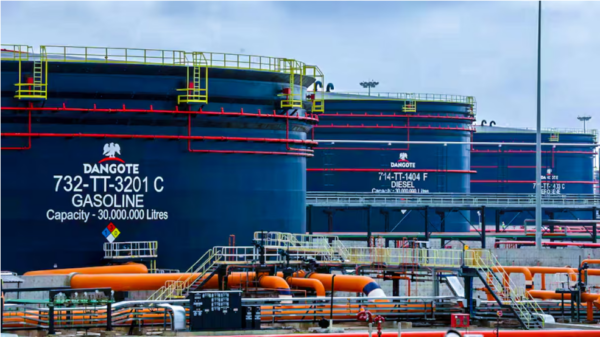
Photo Credit: Financial Afrik
Lekki, Lagos, Nigeria | May 2, 2026 — The Dangote Petroleum Refinery, long regarded as one of Africa’s most technically demanding industrial bets, has emerged as Africa’s most consequential downstream energy asset, reaching full 650,000 barrels-per-day capacity, exporting gasoline across the continent, and drawing urgent demand from fuel-importing African states exposed to geopolitical supply shocks.
The refinery, located in the Lekki Free Zone in Lagos, is Africa’s largest oil refinery and the world’s largest single-train facility. Its infrastructure is built at a scale rarely seen on the continent: 1,100 kilometres of pipeline infrastructure designed to handle three billion standard cubic feet of gas per day, a 435MW power plant, and an integrated refining and petrochemicals complex designed to meet Nigeria’s domestic requirements while leaving surplus volumes for export.
That scale now matters beyond Nigeria. In a market shaken by Middle East tensions, surging freight and insurance costs, and renewed anxiety over fuel security, Dangote Refinery has moved from being a Nigerian industrial bet to a continental supply instrument. By March 2026, the refinery had exported 12 cargoes of Premium Motor Spirit, totalling 456,000 metric tonnes, to Côte d’Ivoire, Cameroon, Tanzania, Ghana and Togo after reaching full capacity in February.
For Africa’s downstream market, the timing is decisive. The continent has long carried the contradiction of producing crude oil while importing large volumes of finished fuels. Dangote’s argument is that this model exports value, jobs and strategic leverage. At the West African Refined Fuel Conference in Abuja, he put the scale of the problem at more than 120 million tonnes of refined petroleum products imported annually at a cost of about $90 billion.
“So, while we produce plenty of crude, we still import over 120 million tonnes of refined petroleum products each year, effectively exporting jobs and importing poverty into our continent,” Dangote said at the conference. “That’s a $90 billion market opportunity being captured by regions with surplus refining capacity.”
From Mega-Project to Strategic Asset
The Dangote refinery story began as an answer to one of Nigeria’s most stubborn economic contradictions: a major crude producer dependent for decades on imported petrol, diesel and aviation fuel because of weak domestic refining. The refinery was conceived to break that dependence by creating a domestic market for Nigerian crude, reducing foreign exchange pressure, and turning Nigeria into a refining and export hub.
Even before full operations, Dangote Industries framed the project not only as a plant, but as an industrial ecosystem. The refinery was designed to process Nigerian crude while retaining the flexibility to process other crude grades, a feature that has become increasingly important as crude supply challenges and global market disruptions intensify.
The build-out, however, was punishing. Dangote later described the refinery as one of the most capital-intensive and logistically complex industrial facilities ever constructed in Africa. The project required the clearing of 2,735 hectares of land, about 70% of it swampy. Some 65 million cubic metres of sand had to be pumped to stabilise and raise the site by 1.5 metres. More than 250,000 foundation piles were driven into the ground, alongside millions of metres of piping, cabling and electrical wiring, according to Dangote Industries.
“At peak, we had over 67,000 people on-site of which 50,000 are Nigerians, coordinating around the clock across hundreds of disciplines and nationalities,” Dangote said. “Then, of course, came the COVID-19 pandemic which set us back by two years and brought new levels of complexity, disruption, and risk. But we persevered.”
That perseverance extended to infrastructure usually taken for granted elsewhere. Existing Nigerian ports could not handle the scale and volume of refinery equipment, forcing the construction of a dedicated seaport. The project moved more than 2,500 pieces of heavy equipment, deployed 330 cranes, and established what Dangote described as the world’s largest granite quarry, with annual production capacity of 10 million tonnes.
“In short, we didn’t just build a refinery—we built an entire industrial ecosystem from scratch,” he said.
The Human-Capital Bet
As the refinery moved toward completion, Dangote Industries also made a pointed decision to deepen local technical capacity. During a tour by then Central Bank of Nigeria Governor Godwin Emefiele, Aliko Dangote said Nigerian graduates and engineers were being prepared to manage the refinery when operational. The company said Nigerian engineers had been trained in major refineries in India and elsewhere to gain direct operating experience.
“One thing that gladdens my heart is the young Nigerians we have trained to take over the operation of the Dangote Refinery,” Dangote said in the company’s statement. “We want a situation whereby the operation of the refinery will be the sole responsibility of Nigerian graduates.”
The refinery’s local-content ambition would later become part of a broader expansion plan. In November 2025, Dangote moved to expand the facility from 650,000 barrels per day to 1.4 million barrels per day, a move that would make it the world’s largest petroleum refinery by throughput if delivered as planned. Honeywell said Dangote Petroleum Refinery and Petrochemicals FZE had selected it to supply advanced technology, services, proprietary catalysts and equipment to help double production capacity by 2028.
Reuters also reported that the agreement would allow Dangote to process a broader range of crude grades and increase polypropylene production to 2.4 million metric tonnes per year through Honeywell’s Oleflex technology.
The Crude Problem Inside the Refining Triumph
The refinery’s technical success has not insulated it from Nigeria’s deeper oil-sector contradictions. Dangote has repeatedly raised concerns over crude availability, pricing, logistics, port costs and regulatory fragmentation.
Those constraints have become more visible as the refinery has scaled. Reuters reported in April 2026 that although the plant had become fully operational and was producing at maximum capacity, a significant portion of Nigeria’s crude output is tied to oil-backed loans and pre-export deals, leaving Dangote reliant on imported crude from the United States, other African producers and Brazil.
Dangote had earlier disclosed that the refinery was importing between nine and 10 million barrels of crude monthly from the United States and other countries, while appreciating NNPC Limited for making some Nigerian crude cargoes available from the start of production.
That point has become central to the refinery’s public defence. Dangote’s refinery may sit in Nigeria, but it is still exposed to the global commodity cycle. It pays market-linked crude prices, faces higher freight and insurance costs, and operates in a deregulated downstream market where price relief depends not only on refining capacity but also on crude costs, currency movements and logistics.
The pressures have been sharpened by the Middle East conflict. Reuters reported that disruptions linked to the Iran conflict had squeezed traditional fuel supply routes, reduced cheap fuel flows into West Africa and created openings for suppliers with shorter supply chains.
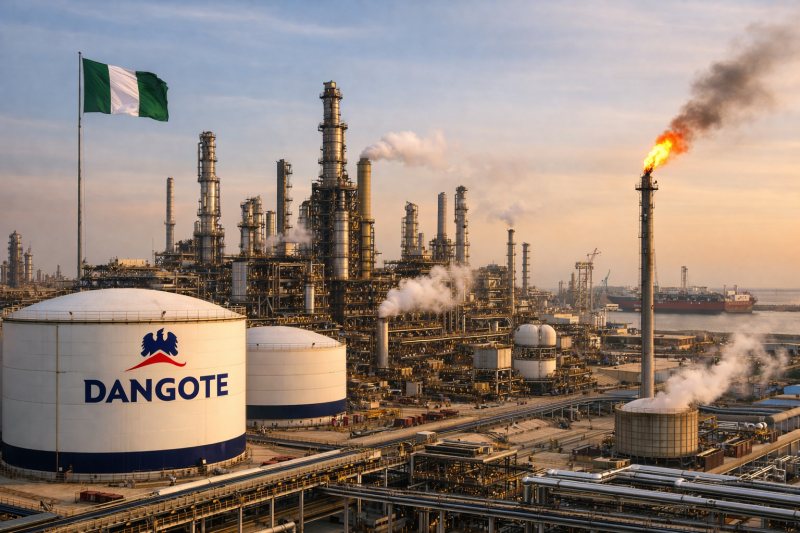
Photo Credit: akwaibomtimes
A Buffer, Not a Miracle
Dangote Refinery’s emergence has changed Nigeria’s supply balance, but it has not repealed the economics of oil. The refinery can produce significant volumes, but prices still track global crude, freight, financing, insurance and exchange-rate realities.
In early 2026, the refinery said it could supply 75 million litres of Premium Motor Spirit daily, compared with estimated Nigerian domestic consumption of 50 million litres; 25 million litres of Automotive Gas Oil against estimated demand of 14 million litres; and 20 million litres of aviation fuel, far above estimated domestic aviation fuel consumption of four million litres.
That surplus capacity is strategically important. It gives Nigeria inventory cover, reduces dependence on emergency imports, and provides a platform for export earnings. But it does not automatically guarantee low pump prices in a deregulated market. Reuters reported on April 27, 2026, that although the refinery’s full operations had improved local fuel availability, Nigerian domestic prices remained high because the market is fully deregulated and prices are not subsidised as they are in many African countries.
Still, the counterfactual is significant. Without local refining at this scale, Nigeria would be far more exposed to product shortages, foreign exchange drain and the freight premiums now hitting import-dependent markets. In that sense, Dangote Refinery has become less a price-control mechanism than a strategic shock absorber.
Beyond Africa’s Fuel Map
That shock-absorber role is no longer confined to Nigeria or even the continent. Latest flow data show Dangote Petroleum Refinery and Petrochemicals moving from a regional supplier to a more consistent exporter of aviation fuel into Europe, where buyers are searching for alternative high-spec barrels amid Middle East supply disruptions tightening the market. Reuters reported in mid-April that Europe was seeing record jet-fuel inflows from the United States and Nigeria, with Nigerian exports to Europe at around 66,000 barrels per day — the highest on record — boosted by the opening of Dangote Refinery.
The shift is commercially revealing. Jet-fuel exports from Dangote are understood to have risen from roughly 50,000 barrels per day in March to about 70,000 barrels per day in April 2026, implying April movements of about 2.1 million barrels, or roughly 334 million litres. The export pattern suggests that the Lekki terminal’s Atlantic Basin position is becoming a logistical advantage as European buyers seek shorter-haul alternatives to disrupted Middle Eastern supply.
It is not yet enough to make Dangote a dominant global jet-fuel supplier. But it is enough to make the refinery a useful swing supplier in a tight market. Reuters has separately reported that Dangote is benefiting from record jet-fuel margins while selling much of its aviation fuel abroad, even as Nigerian airlines face high domestic prices — a reminder that the refinery’s global reach is also testing Nigeria’s own downstream policy balance.
Africa Comes Calling
The refinery’s continental role became clearer in March 2026, when African governments and traders turned more aggressively toward Lagos for product supply as geopolitical disruption threatened established import routes. Reuters reported that Dangote Refinery had stepped up gasoline exports across Africa as energy-flow disruptions squeezed traditional supply routes and curbed cheap imports that had long dominated West African markets.
The company’s exports to Côte d’Ivoire, Cameroon, Tanzania, Ghana and Togo signalled more than a commercial milestone. They demonstrated that Africa’s largest crude producer could begin supplying refined products into neighbouring and regional markets, shortening supply chains that have often stretched through Europe, the Middle East and Asia.
For West Africa in particular, the implications are immediate. A functioning 650,000 barrels-per-day refinery in Lagos can alter product flows, influence pricing competition, improve availability and provide an alternative to long-haul imports. For the continent more broadly, it offers a working template for industrialising around resource endowments rather than exporting raw commodities and importing finished goods.
But Dangote has warned that the refinery model cannot fully serve Africa if the continent’s regulatory systems remain fragmented. He has criticised the lack of harmonised fuel standards across African markets, noting that products acceptable in one country may not automatically be sold in another.
“The fuel we produce for Nigeria cannot be sold in Cameroon or Ghana or Togo, even though we all drive the same vehicles,” Dangote said. “This lack of harmonisation benefits no one—except, of course, international traders, who thrive on arbitrage.”
He also pointed to diesel cloud-point requirements and port charges as examples of technical and regulatory rules that raise costs and limit regional trade. In his view, Africa’s refinery problem is therefore not only one of capital and construction, but of policy architecture.
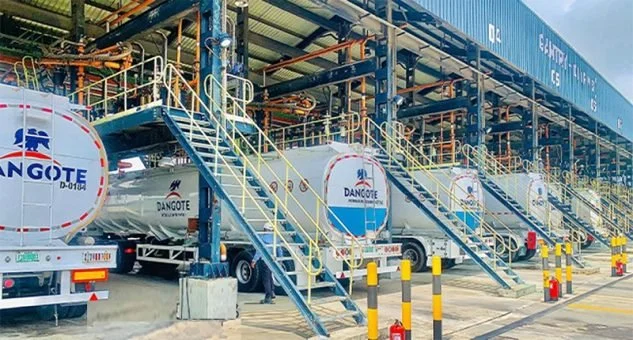
The Toxic Fuel Question
Dangote has also framed the refinery debate as a public-health and product-quality issue. At the Abuja conference, he warned that Africa was becoming a destination for cheap and often substandard petroleum products that would not be allowed in Europe or North America.
The concern is sharpened by global sanctions dynamics and discounted product flows. Dangote cited the rising presence of low-quality fuels blended with Russian crude under price-cap conditions and dumped into African markets. For him, this is both a commercial and regulatory challenge: domestic refiners investing in high-standard production are being asked to compete against lower-quality imports entering markets with uneven enforcement.
“And to make matters worse, we are now facing increasing dumping of cheap, often toxic, petroleum products—some of which are blended to substandard levels that would never be allowed in Europe or North America,” he said.
This perspective is particularly illuminating, considering Dangote’s Refinery was initially accused, back in July 2024, of producing fuel more substandard than the imported European product, by former Nigerian Midstream and Downstream Petroleum Regulatory Authority (NMDPRA) capo, Farouk Ahmed.
Following the claim by NMDPRA CEO Farouk Ahmed on July 18, 2024, that Dangote’s diesel was inferior and contained sulfur levels ranging from 650 ppm to 1,200 ppm, Aliko Dangote conducted a live demonstration on July 20, 2024, using an Energy Dispersive X-ray Fluorescence (ED-XRF) Spectro Photometer to prove the quality of his product. The laboratory test, conducted according to ASTM D4294 standards, revealed that the refinery's diesel actually contained 87.6 ppm of sulfur—drastically lower than the imported samples, which tested as high as 2,653 ppm.
During this validation, Dangote reaffirmed the refinery's ultimate goal of reducing sulfur content to 10 ppm by August 2024 to align with the highly stringent Euro-V global emissions standard.
The said capo would then lose his job shortly thereafter, resigning after being embroiled in a corruption scandal, with Aliko Dangote being the one to file the petition.
The billionaire’s criticism places Dangote Refinery inside a broader policy debate: whether Africa can use refining, harmonised standards and regional market integration to reduce exposure to imported fuel of questionable quality while capturing more of the value chain at home.
The East Africa Push
The most striking sign that Dangote sees the Lagos refinery as a replicable model came in April 2026, when he signalled readiness to spearhead a new mega refinery in East Africa.
Reuters reported on April 23, 2026, that East African countries were discussing a joint oil refinery at Tanzania’s Tanga port, modelled on Nigeria’s Dangote plant. Kenyan President William Ruto said the refinery would take in oil from the Democratic Republic of the Congo, Kenya, South Sudan and Uganda, while reducing the region’s dependence on imported refined petroleum products.
“We're going to have a joint refinery in Tanga to benefit all of us because that refinery is going to take on board the oil from DRC, the oil from Kenya, the oil from South Sudan, and the oil from Uganda,” Ruto said at an infrastructure financing conference in Nairobi.
“My commitment today here is that if we agree with the three or four governments here about the refinery, we will lead and we'll make sure that refinery is built within the next four or five years,” Dangote said.
The East Africa proposal therefore extends the logic of Lagos: build refining capacity close to crude sources and consumption markets, then use petrochemicals and related industries to create a wider manufacturing base.
A Continental Test Case
The Dangote Refinery has now crossed the threshold from ambition to operation. It has reached full nameplate capacity, exported to African markets, supported Nigeria’s domestic supply security, and established itself as a reference point in the debate over Africa’s industrial future.
Yet its evolution also exposes the unresolved problems that could define the next phase: crude allocation, currency volatility, port charges, freight costs, regulatory fragmentation, fuel-standard harmonisation and competition from lower-quality imports. The refinery is a success story, but not a simple one. It is simultaneously an industrial milestone, a policy stress test and a continental wager on whether Africa can capture more value from its own resources.
Dangote’s planned expansion in Nigeria and proposed East African refinery suggest that the next phase will not be about a single asset in Lagos. It will be about whether the Dangote model can be translated into a wider African refining network capable of insulating the continent from the volatility of distant markets.
The wager is no longer simply whether Nigeria can refine its own crude. It is whether Africa can turn refining capacity into strategic autonomy before the next global supply shock arrives.
