
Courts, Climate and Crude: African Energy Chamber Moves to Shape Landmark Climate Ruling
As climate litigation redraws the boundaries of energy policy worldwide, Africa is stepping into the courtroom to defend its development pathway. The African Energy Chamber’s bid to join a landmark climate advisory case signals a turning point—where the continent’s right to industrialise, expand energy access and harness its resources will be tested against rapidly evolving legal standards.
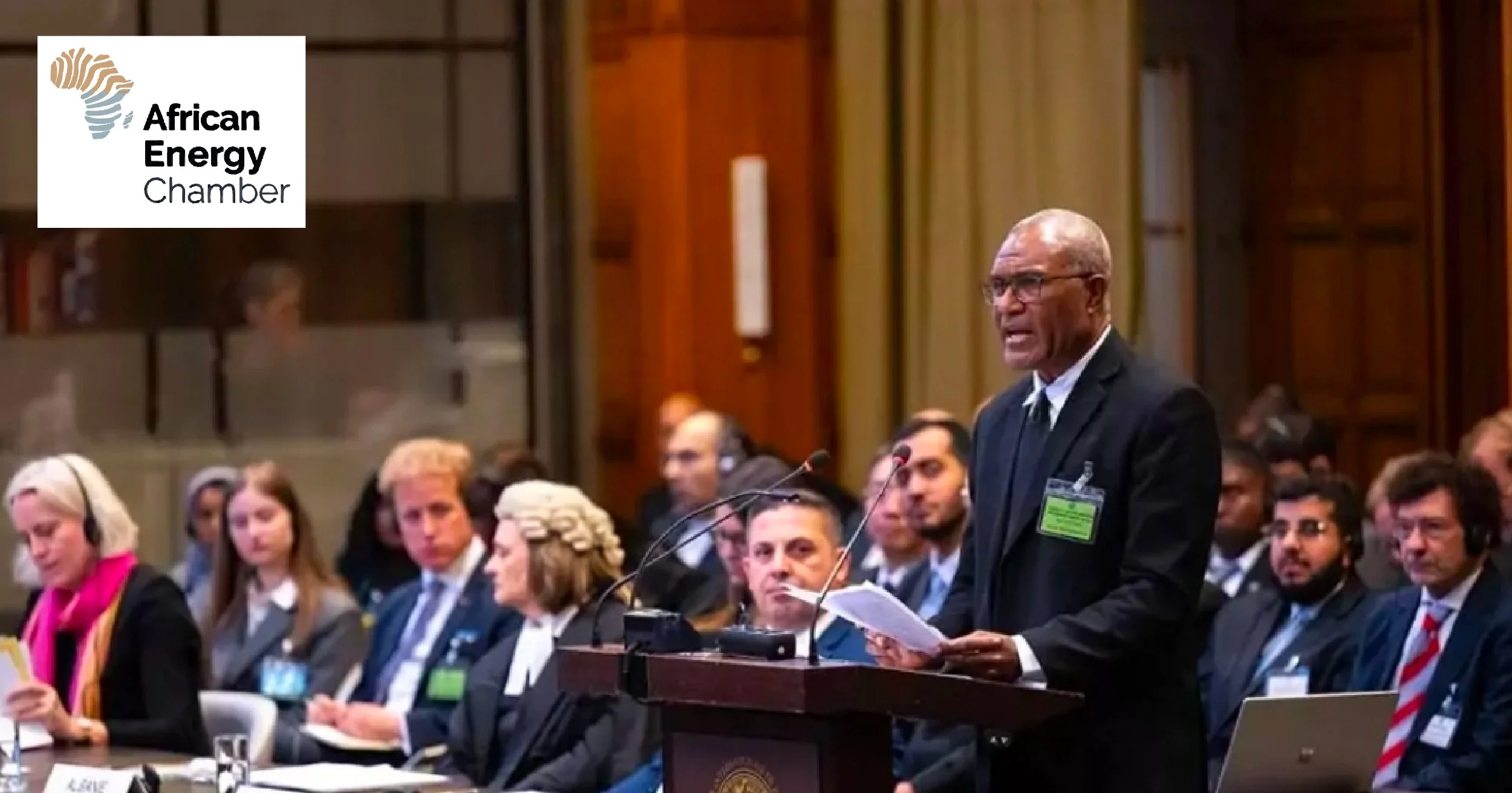
Arusha, Tanzania | April 13, 2026 - The African energy debate is shifting decisively from boardrooms to courtrooms—and the continent’s most vocal industry advocate is moving to shape the outcome from within.
The African Energy Chamber has submitted its application to participate as amicus curiae in a landmark advisory proceeding before the African Court on Human and Peoples’ Rights, seeking to ensure Africa’s energy and development priorities are embedded in what could become a defining legal interpretation of climate obligations on the continent.
The case, initiated by the Pan African Lawyers Union (PALU), asks the Court to clarify the scope of state responsibilities in addressing climate change under African human rights law. At its core, the request probes how governments should balance emissions mitigation, environmental protection and the safeguarding of vulnerable populations with economic development and energy access.
For the Chamber, the intervention is both strategic and urgent. Engagement from African states and institutions in the proceedings has been uneven, raising the prospect that legal standards shaping the continent’s energy future could emerge without sufficient African input. “Africa must not be a passive participant in decisions shaping its energy future,” says NJ Ayuk, the Chamber’s Executive Chairman, framing the application as a response to that risk.
A legal inflection point
The move comes amid a broader surge in climate litigation that is rapidly redefining energy governance worldwide. Advisory opinions from global tribunals such as the International Court of Justice and the International Tribunal for the Law of the Sea are beginning to crystallise expectations around state responsibility for climate harm, extending legal risk well beyond national jurisdictions.
In Africa, this jurisprudential shift is colliding with structural realities. The continent contributes less than 4% of global emissions yet remains the most energy-poor region, with more than 600 million people lacking access to electricity. The legal question, increasingly, is not whether climate obligations exist, but how far they can constrain the pathways available for industrialisation.
The PALU case sits squarely within this tension. It seeks clarity on obligations spanning mitigation, adaptation, accountability and energy policy decisions—areas that, if interpreted expansively, could materially influence project approvals, financing flows and long-term development strategies.
Lawfare and project risk
Recent litigation across the continent underscores the stakes. In East Africa, the long-contested East African Crude Oil Pipeline (EACOP)—a 1,443-kilometre export route linking Uganda’s oilfields to Tanzania’s coast—has faced sustained legal challenges over environmental and human rights concerns. Although the East African Court of Justice ultimately cleared the project, the case highlighted how litigation can delay timelines and elevate investor risk.
In Mozambique, the $20 billion LNG development led by TotalEnergies has navigated both security disruptions and legal scrutiny. Following the lifting of force majeure in late 2025, project activities resumed in early 2026, but the episode reinforced how legal and non-technical risks can derail even strategically critical energy investments.
South Africa presents a further layer of complexity. A series of court challenges—ranging from Shell’s Wild Coast seismic surveys to West Coast exploration activities—have stalled or suspended projects on procedural grounds, including inadequate consultation and flawed environmental assessments. These rulings signal a judiciary increasingly willing to interrogate the legal robustness of energy approvals.
Taken together, these cases illustrate a pattern: climate and environmental litigation is no longer peripheral. It is shaping capital allocation, regulatory certainty and the viability of upstream and downstream developments across Africa.
“Climate litigation is not just a regulatory challenge – it affects financing for our oil and gas sector,” Ayuk notes, pointing to a tightening financing environment where banks and insurers are becoming more cautious amid reputational and legal pressures.
Financing under strain
The financial implications are already visible. Select international lenders, like the Standard Chartered declined to finance the $5 billion East African Crude Oil Pipeline due to civil society pressure and climate concerns, reflecting the weight of civil society pressure and evolving climate mandates. As a result, some otherwise viable projects have struggled to reach final investment decision, while downstream infrastructure critical to domestic energy security faces similar headwinds.
This has triggered a gradual pivot towards African-led financing mechanisms, including the emergence of institutions such as the Africa Energy Bank, partly in response to tightening global financing conditions. Yet the transition remains incomplete, leaving a funding gap that could constrain production growth and delay efforts to address energy poverty.
Competing narratives
It is within this convergence of legal and financial pressures that the AEC’s intervention takes shape. The Chamber argues that climate litigation—often supported by coalitions of domestic and international civil society organisations—risks constraining Africa’s development trajectory if not grounded in the continent’s specific realities.
“Africa is energy-starved,” Ayuk asserts, pointing to the persistence of energy poverty and the centrality of hydrocarbons in enabling industrialisation. The Chamber’s position is that oil and gas will remain indispensable in the medium term, even as renewable capacity expands.
Critics, however, contend that stronger legal obligations are essential to protect vulnerable populations and ecosystems, arguing that unchecked fossil fuel expansion could lock in long-term environmental and economic risks.
The Court’s eventual advisory opinion will not resolve this debate, but it will frame it—potentially setting a legal baseline against which future policies, projects and disputes will be measured.
A defining moment
The AEC’s amicus application is, in essence, an attempt to shape that baseline from within rather than react to it from the outside. By injecting sector-specific expertise into the proceedings, the Chamber aims to influence how the Court interprets the intersection of climate change, human rights and development.
“As a continent, we must lead this debate with clarity and conviction,” Ayuk says. “Decisions made today will shape Africa’s energy future for generations.”
That future is now being negotiated not only in ministries and markets, but in courtrooms—where the contours of Africa’s energy transition, and its right to development, are increasingly being defined
