
Qair Secures Stor’Sun III Funding, Anchoring Hybrid Solar as the New Baseline for Power Systems
Qair’s financial close on the Stor’Sun III hybrid project marks more than a routine project milestone—it is a clear inflexion point in how power systems are being built for reliability, not just capacity. By pairing utility-scale solar with high-capacity storage under a long-term offtake structure and securing backing from domestic banks, the project demonstrates that dispatchable renewables are no longer theoretical on island grids. Instead, they are bankable, scalable, and increasingly central to closing the gap between rising demand, volatile fossil fuel exposure, and the operational realities of modern electricity systems.
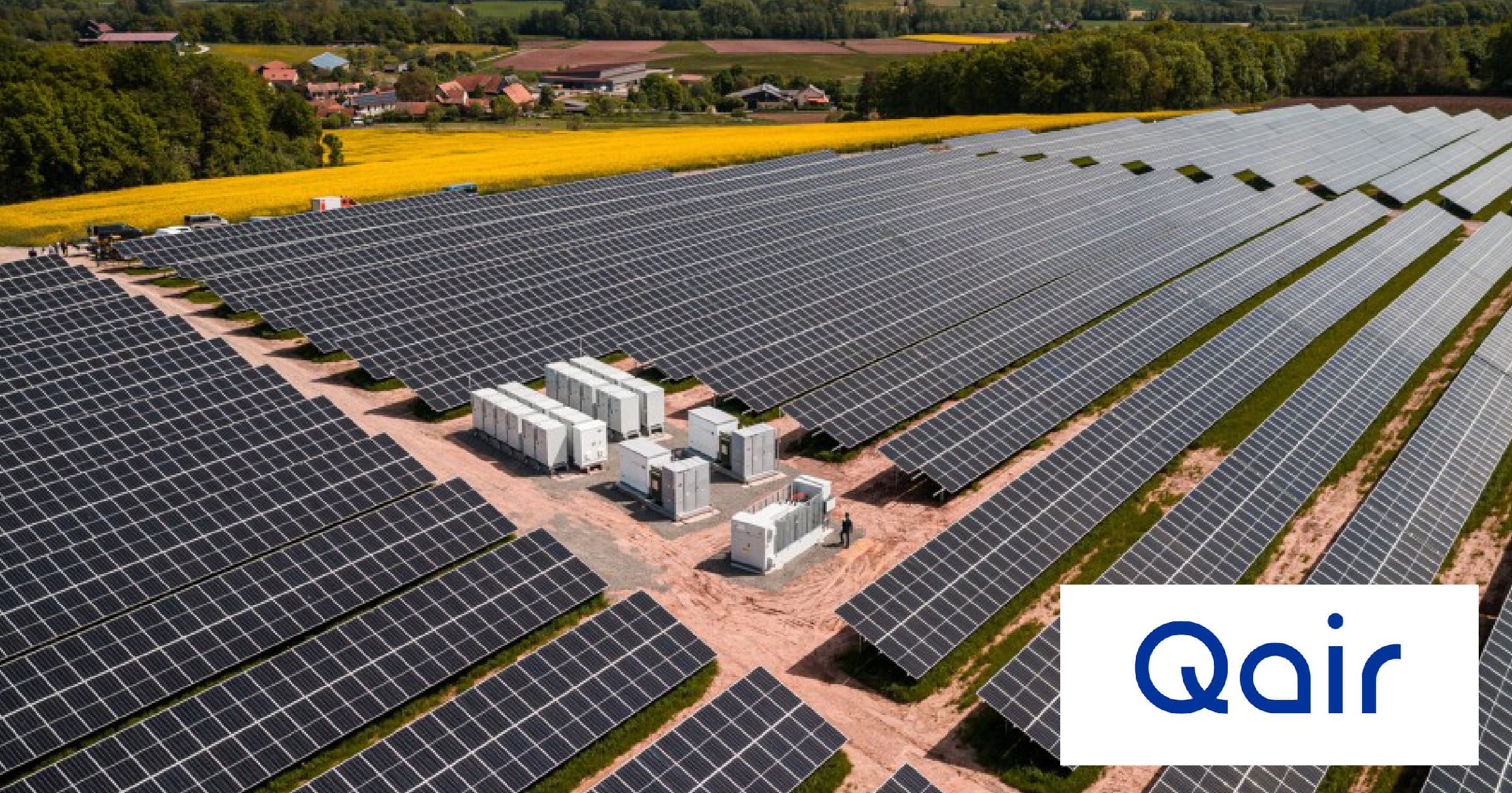
Photo Credit: Martin Fossati, CFA
Balaclava, Mauritius | April 3, 2026 - French independent power producer Qair has reached financial close on Stor’Sun III, a 16.7 MW solar photovoltaic plant paired with a 42.5 MW battery energy storage system (BESS) in Balaclava, crystallising one of the clearest signals yet that hybrid renewables are moving from pilot to mainstream on island grids. The project is backed by a 25-year power purchase agreement with the Central Electricity Board (CEB) and is scheduled for commissioning in the second half of 2026.
The financing—anchored by Mauritius Commercial Bank (MCB)—locks in a critical tranche of a broader four-project rollout under the Stor’Sun programme, a 60 MWac solar and 256 MWh storage portfolio valued at approximately MUR 7 billion ($150 million). Within that structure, SBM Group is backing units I, II and IV, while MCB assumes the lead role on unit III, underscoring a deliberate syndication strategy that leans on domestic liquidity to fund increasingly complex, dispatchable renewable assets.
From PPA to Financial Close: How Stor’Sun III Took Shape
The Stor’Sun platform traces back to March 2023, when Qair signed four PPAs with the CEB for hybrid solar-plus-storage facilities across Trou d’Eau Douce, Balaclava, and Petite-Rivière. That agreement marked one of the largest energy investments in Mauritius in over a decade and set the foundation for a coordinated, multi-asset deployment designed to deliver “clean and firm renewable power to the grid.”
Stor’Sun III’s financial close now represents the conversion of that pipeline into bankable infrastructure. The project’s design—solar generation coupled with high-capacity storage—enables delivery of stable power for up to 12 hours per day, directly targeting the evening peak where standalone solar typically falls short.
The structuring also reflects a maturing financing model: rather than relying on external capital, Qair has mobilised Mauritian banks with established regional footprints and balance sheet depth, signalling confidence in both the asset class and the regulatory framework underpinning long-term offtake.
Technical Architecture: Engineering Firmness into Solar
Stor’Sun III’s configuration—16.7 MW PV paired with a 42.5 MW BESS—tilts decisively toward storage-heavy design. At programme level, the four projects combine 60 MWac of solar capacity with 256 MWh of storage, a ratio that prioritises dispatchability over pure generation volume.
This architecture is not incidental. Hybridisation allows solar output to be shifted into peak demand windows, smoothing intermittency and providing grid services traditionally supplied by thermal plants. In system terms, the asset moves closer to “firm capacity,” a critical attribute for island grids where reserve margins are tight and variability is costly.
Once fully operational, the Stor’Sun portfolio is expected to supply roughly 8% of Mauritius' electricity demand—an outsized contribution for a single programme in a relatively small grid.
Mauritius’ Power Sector: Reliability Meets Structural Strain
The timing of Stor’Sun III’s financial close is tightly linked to structural pressures within Mauritius’ electricity system. While access to electricity is effectively universal and reliability remains comparatively high, the generation mix is still dominated by imported fossil fuels—coal and heavy fuel oil account for more than 80% of supply.
This dependence has translated into financial stress. The CEB reported losses exceeding Rs 4.8 billion (approximately $320 million) in 2023, driven largely by volatile fuel import costs. At the same time, ageing infrastructure—20–30% of assets are more than two decades old—complicates the integration of variable renewable energy.
Demand-side dynamics are also shifting. Peak demand has climbed above 570 MW in early 2025, up from sub-500 MW levels in prior years, reflecting growth in real estate and increased cooling loads. The result is a system under pressure to expand capacity while maintaining reliability.
Policy Direction: Storage Becomes Non-Negotiable
Mauritius’ policy response has been unequivocal. The government is targeting a 60% renewable energy share in the electricity mix by 2030, supported by an estimated $1.35 billion investment pipeline spanning solar, wind, biomass, and storage.
Crucially, storage is no longer optional. Recent policy signals indicate that all new solar projects will be required to incorporate BESS to ensure grid stability and maximise output value. Parallel initiatives—including a planned 20 MW grid-scale battery installation and the rollout of 150,000 smart meters—are designed to reinforce system flexibility and demand management.
A pipeline of 376.8 MW in solar and hybrid projects is already underway, alongside targeted interventions such as floating solar at Tamarind Falls and the revival of wind capacity at Plaine des Roches. Collectively, these measures point to a system transition in which hybridisation is embedded at both policy and procurement levels.
Institutional Backbone: Coordinating the Transition
Execution rests on a multi-agency framework. The Ministry of Energy and Public Utilities sets policy direction, while the CEB retains its central role as off-taker and system operator, generating roughly 47% of electricity and procuring the remainder from independent producers.
Supporting institutions—including the Utility Regulatory Authority (URA), the Mauritius Renewable Energy Agency (MARENA), and the Energy Efficiency Management Office (EEMO)—provide regulatory oversight, strategic planning, and demand-side interventions. The Renewable Energy Strategic Plan (RESP) has been instrumental in aligning these actors around long-term system transformation goals, from grid modernisation to the scaling of on-grid and off-grid renewables.
Financing Model: Local Banks Step Into Infrastructure Scale
Stor’Sun III’s financing structure offers a distinct signal beyond the project itself. MCB’s role as lead financier reflects the evolution of Mauritius as an international financial centre capable of underwriting complex energy infrastructure, while SBM Group’s participation across the other units reinforces a coordinated domestic banking response.
Both institutions bring regional reach and sectoral expertise—MCB through its cross-border energy and commodities financing platform, and SBM through its established presence across the Asia-Africa corridor. Their involvement reduces currency and refinancing risks while anchoring returns within the local financial ecosystem.
The split-financing approach also diversifies exposure across the programme, a pragmatic structure for scaling multi-asset portfolios in relatively small markets.
Strategic Implications: Hybrid as the Island Grid Standard
Stor’Sun III crystallises a broader shift in how island systems are approaching decarbonisation. The move from “solar-only” to “hybrid-by-default” reflects a recognition that renewable penetration at scale requires firmness, not just capacity.
By aligning long-term PPAs, storage-enabled peak support, and local-bank financing, the project establishes a template that is both technically and financially replicable. It also signals that dispatchable renewables—once considered cost-prohibitive—are now within reach for smaller grids with the right policy and financial architecture.
For Mauritius, the implications are immediate: reduced exposure to imported fuel volatility, improved grid stability, and accelerated progress toward its 2030 targets. For the wider region, Stor’Sun III offers a case study in how hybrid systems can be structured, financed, and integrated—at scale, and on local terms.
